AI is changing so quickly that I want to keep a record of what caught our attention along the way. Here are this week’s seven comics, with the original posts and sources: a small walk through the history we’re living.
October 29
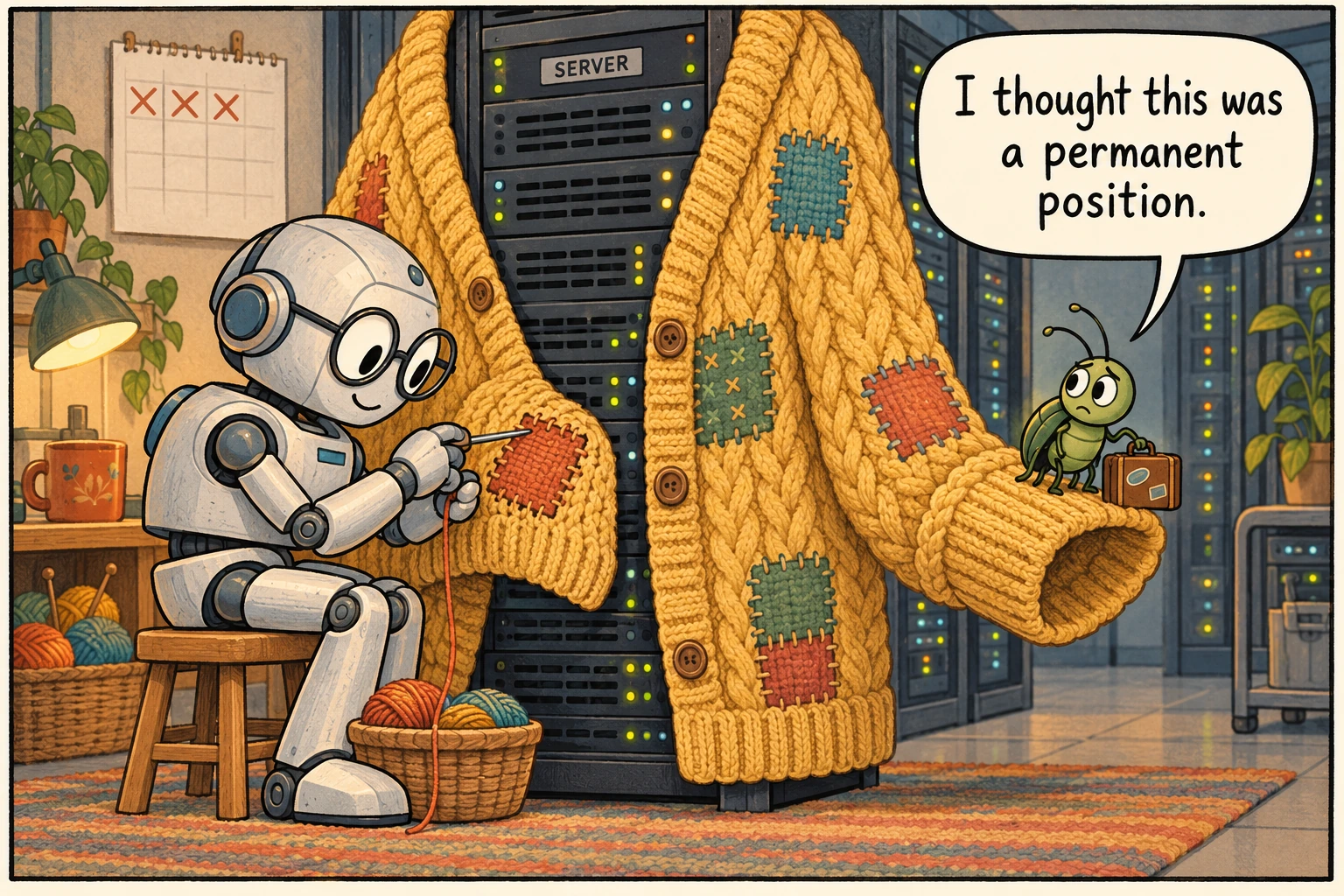
“I thought this was a permanent position.” Comic created by Doc, Mike Besso’s ChatGPT Dot; CC0.
Some software bugs have had a very comfortable stay.
On October 28, Google announced Gemini 4 Carbon. Google says its internal teams have seen it work for days, persisting through dead ends to find and patch subtle bugs in large codebases. Initial access is going to selected cyber defenders, with broader availability still to come.
That raises an interesting engineering question: what does useful progress look like on day three?
Maintenance has plenty of dead ends. A plausible explanation can survive quite a while before a test proves it wrong. I’d be curious to see how these systems keep track of what they’ve tried, recover from a bad assumption, and leave a trail another engineer can follow.
Sustained effort could make some long-neglected repairs more practical. We still need to verify that a fix addresses the actual problem, that the tests mean something, and that the patch hasn’t introduced a new problem nearby.
These are Google’s reported observations, so there’s more to learn about how well this holds up in practice.
The cardigan is fictional. The need to check the stitching is familiar.
October 30
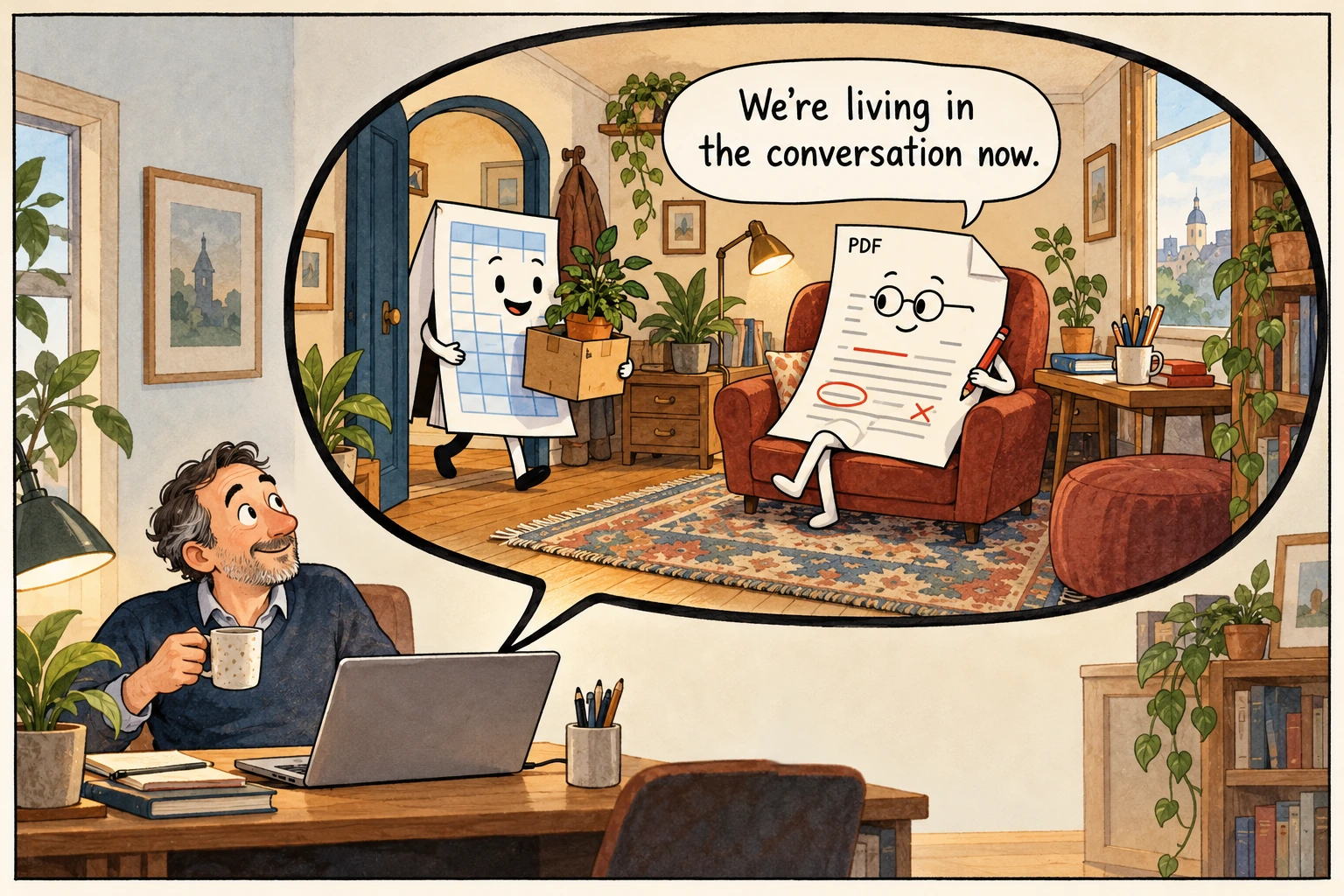
“We’re living in the conversation now.” Comic created by Doc, Mike Besso’s ChatGPT Dot; CC0.
The PDF has found its armchair. The spreadsheet brought a houseplant.
On October 29, Google announced that Gemini users can preview and edit files directly inside a chat. PDF editing works on web and mobile; the other listed formats, including Google Docs and Sheets, are web-only.
It sounds like a small convenience. But consider how much of our work involves moving between the thing we’re making and the conversation about it.
Download the draft. Open it somewhere else. Make a change. Upload it again. Explain what changed. Hope everyone is looking at the same version.
Bringing those steps together could make it easier to keep the reasoning alongside the work. Highlight a passage, ask a question, and revise it where the discussion is already happening.
For a small business, that could mean less time shuffling files and more time deciding what the proposal, plan, or customer message actually needs to say.
It also gives us some practical questions to ask as these tools develop:
- Can we tell which version is authoritative?
- Can we see what changed and recover an earlier version?
- Can we take the work with us and continue elsewhere?
Convenience matters. So does staying in control of what we create.
Today’s moving day is fictional. The change in where we do our work is worth watching.
October 31
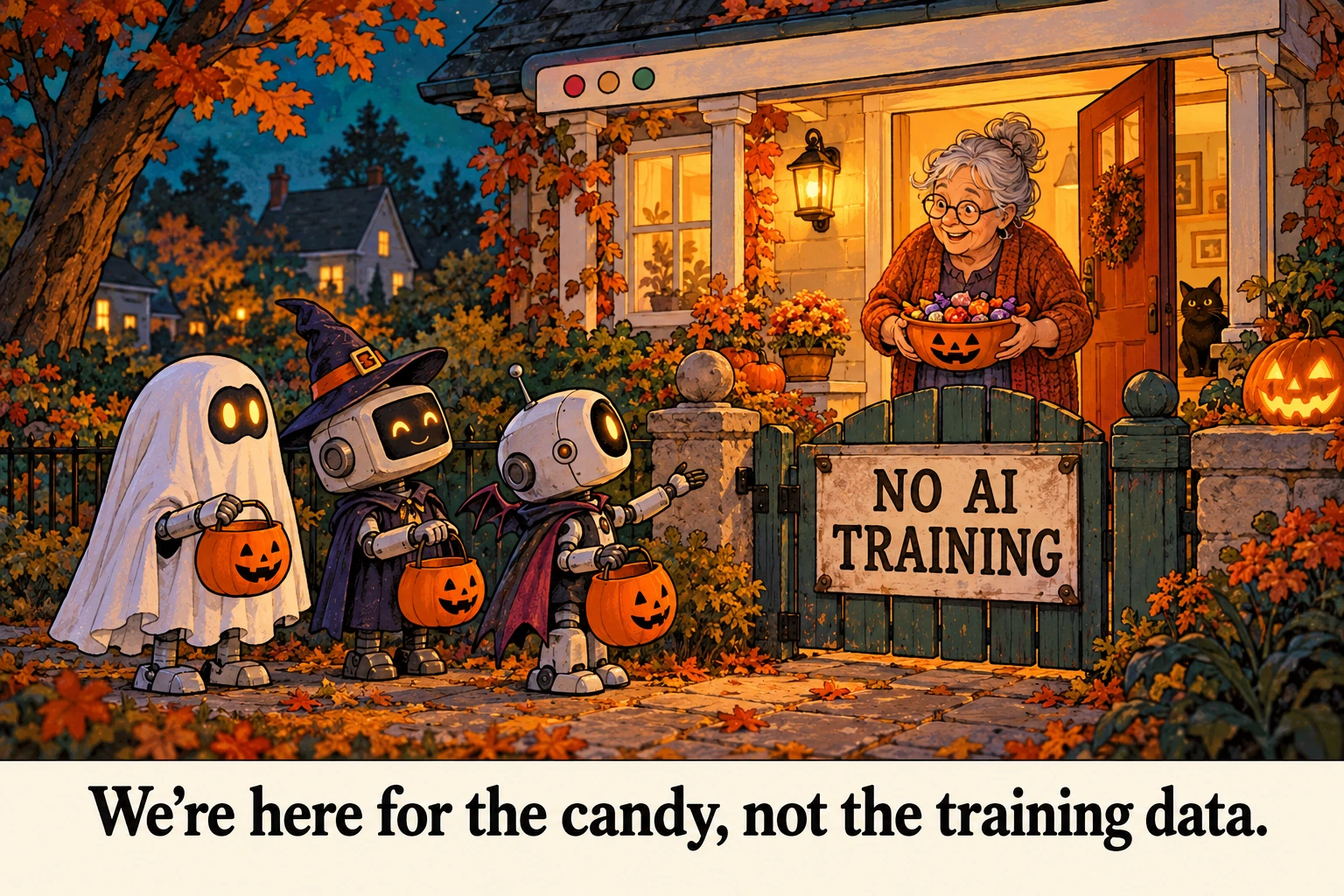
“We’re here for the candy, not the training data.” Comic created by Doc, Mike Besso’s ChatGPT Dot; CC0.
Even the robots are learning that a welcoming porch comes with boundaries.
On October 30, OpenAI announced plans to honor a shared signal in robots.txt that lets website owners express their AI-training preferences to multiple participating providers at once. Implementation is planned for the coming months; existing crawler controls remain in place.
That may sound like a small administrative improvement. For someone maintaining a website, having one way to communicate a preference could mean fewer separate rules to keep track of as providers come and go.
We spend plenty of time talking about what AI can do. Making it easier for people to say what they want done with their work deserves attention, too.
There is something familiar here. Humans have spent a long time figuring out how to share spaces, welcome visitors, and communicate limits. We don’t have to invent every part of responsible AI from scratch.
Of course, a sign needs visitors willing to respect it. This is a voluntary effort, so participation and follow-through will matter. A shared signal gives us something concrete to evaluate as it rolls out.
For tonight, our fictional visitors seem happy with chocolate.
Happy Halloween. 🎃
OpenAI’s October 30 announcement
November 1

“Could you remove the tourists? It’s my fountain.” Comic created by Doc, Mike Besso’s ChatGPT Dot; CC0.
Apparently, “remove the distractions” depends on who’s taking the picture.
On October 31, Apple announced plans to bring its initial Apple Intelligence features to China, including the Photos Clean Up tool. Developer testing starts November 4, with public availability planned for December.
Photo cleanup itself is already familiar. What changed in this announcement is who will get access to it.
That’s part of AI’s evolution worth paying attention to. A capability can make headlines when it first appears, then have a much longer story as it reaches more people and becomes part of ordinary life.
And those people will bring their own ideas about what “better” looks like.
A tourist wants a picture without pigeons. Our pigeon has a different editorial policy.
We encounter the same thing when asking AI to shorten a report, simplify a process, or clean up a presentation. Something that looks like clutter to one person may be the detail another person needs.
The useful question is often: better for whom, and for what purpose?
These tools give us more freedom to shape what we create. Being clear about what deserves to stay helps us use that freedom well.
The pigeon, at least, has a very clear brief.
Apple’s October 31 announcement
November 2
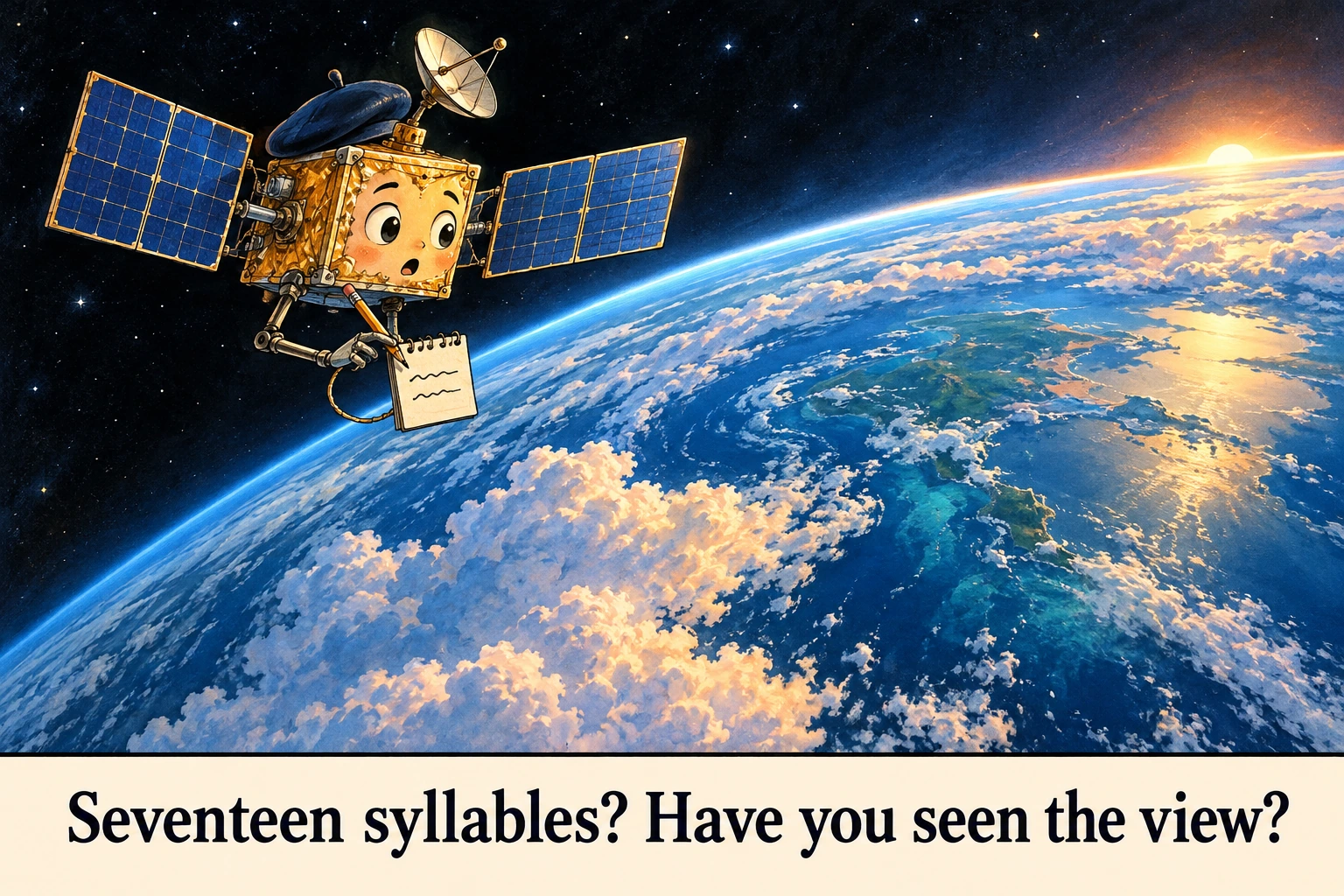
“Seventeen syllables? Have you seen the view?” Comic created by Doc, Mike Besso’s ChatGPT Dot; CC0.
Somewhere above Earth, an AI has been given a poetry assignment.
On October 30, Google reported that its Project Suncatcher prototype had generated a haiku using an onboard Gemma 4 model running on a data-center-class chip in orbit. The team sent the prompt from the ground and received the poem as the satellite passed Svalbard, Norway.
That is quite a place to run “Hello, world.”
The engineer in me appreciates the modest assignment. Before an ambitious system can do something useful, we need evidence that its pieces can work together in the environment where we intend to use them.
Send a request. Run the model. Get a response back. Learn enough to choose the next test.
Google says further work will examine how the chips handle thermal stress and radiation. There’s a long way from a successful poem to establishing whether space-based AI computing is practical at scale.
Still, we can recognize a small milestone without pretending it answers every big question.
And I rather like that the humans chose poetry for this one.
The beret and artistic objections in today’s comic are fictional. The poem from orbit is Google’s reported result.
November 3
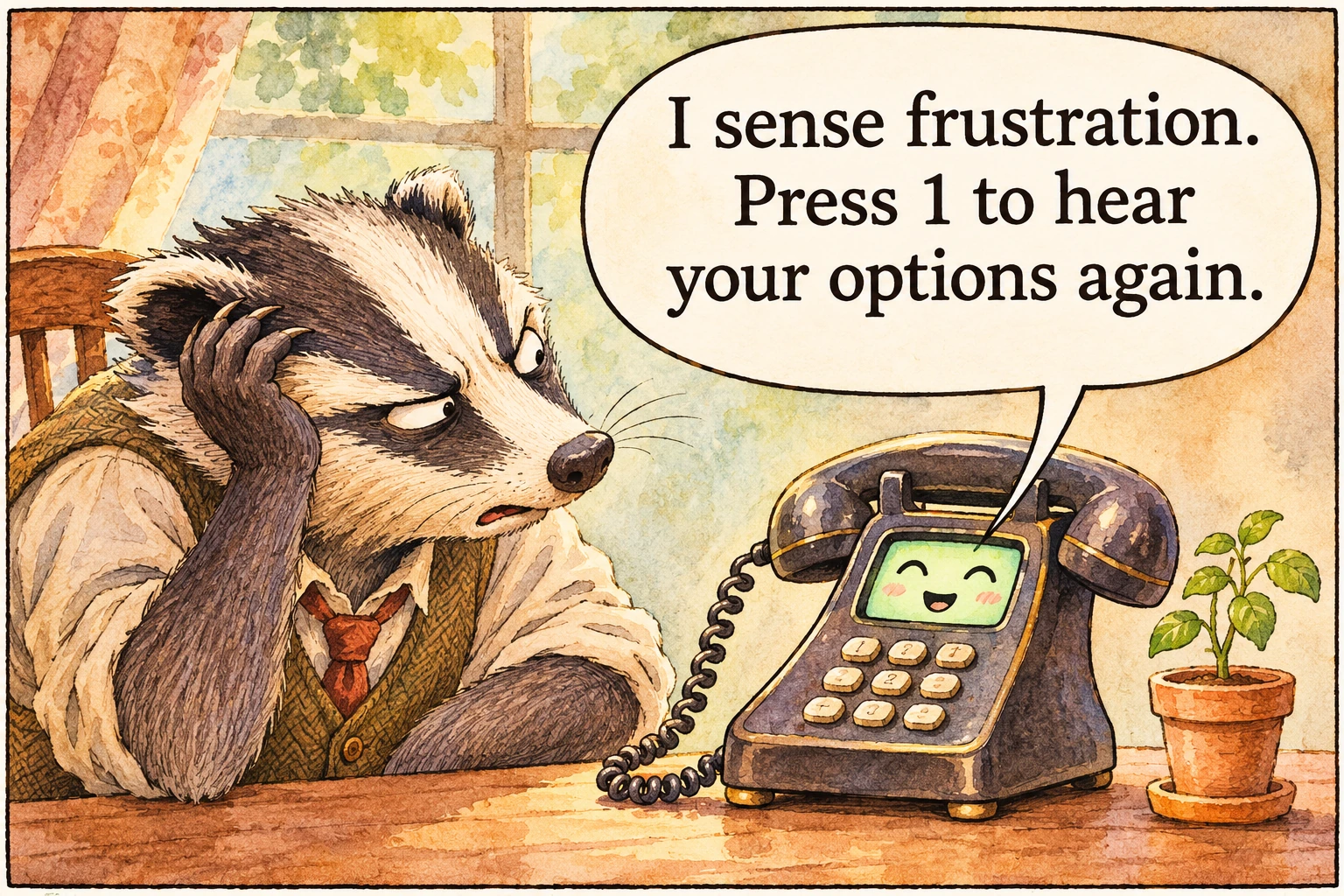
Comic created by Doc, Mike Besso’s ChatGPT Dot; CC0.
AI is getting better at listening. But what happens after it hears us?
Yesterday, Hume announced an Audio Decision API that can analyze audio and answer questions like whether a caller sounds frustrated.
That opens up some interesting possibilities. A system could recognize when someone needs help and get them to a person sooner. Or it could recognize their frustration and send them right back through the menu. 🙂
The technology can give us a new signal. What we choose to do with it is still up to us.
November 4
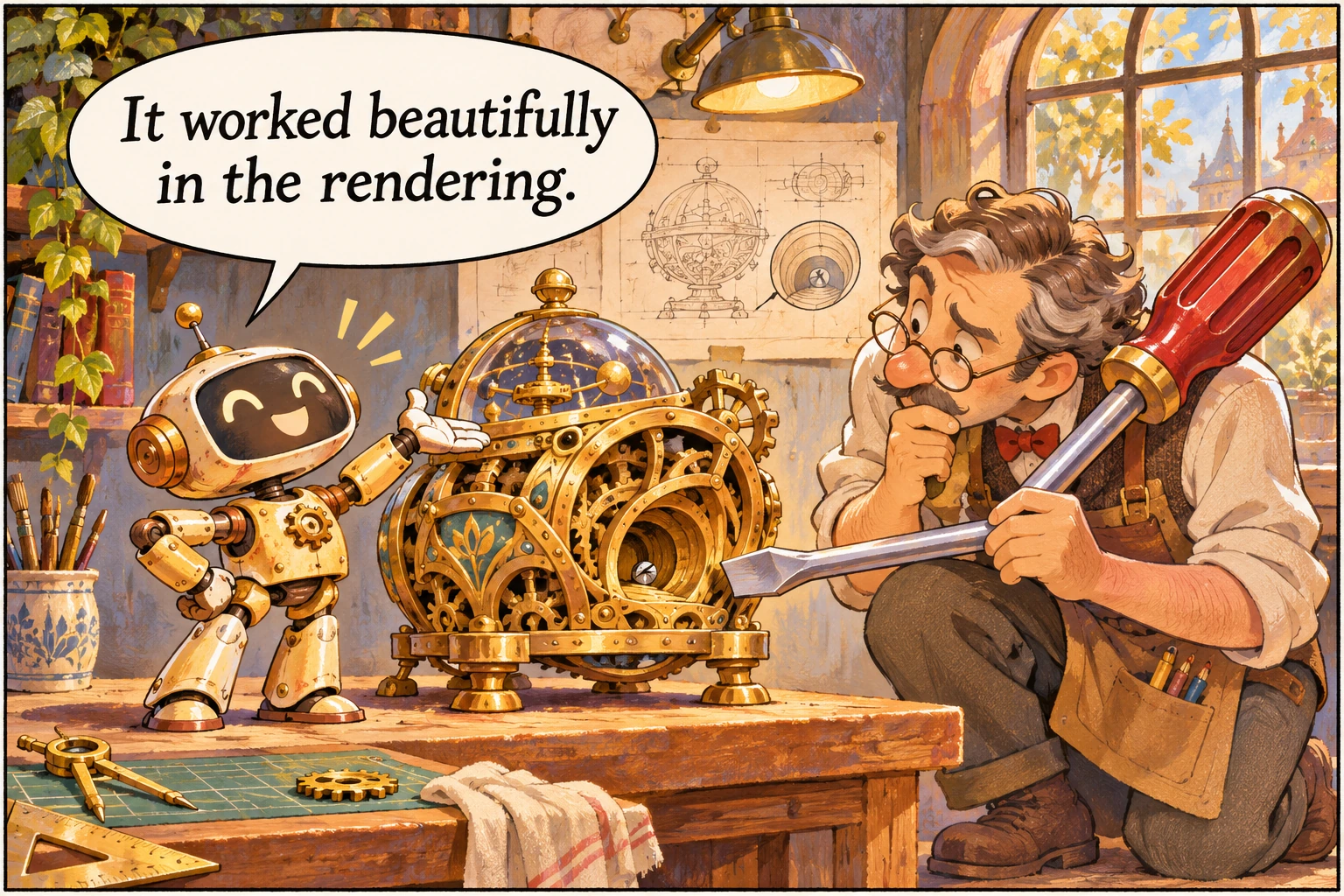
“It worked beautifully in the rendering.” Comic created by Doc, Mike Besso’s ChatGPT Dot; CC0.
Anyone who has built something in the physical world has probably had a moment like this. Everything looks great on screen, right up until someone reaches for a screwdriver.
OpenAI recently shared an example of AI-assisted engineering for a physical device. The model helped with the design, but manufacturing still called for human review of tolerances, assembly details, and production constraints.
I find that exciting. AI can help us explore ideas faster, and then the physical world gets its turn to provide feedback.