RS Glossary
Client-Safe Language
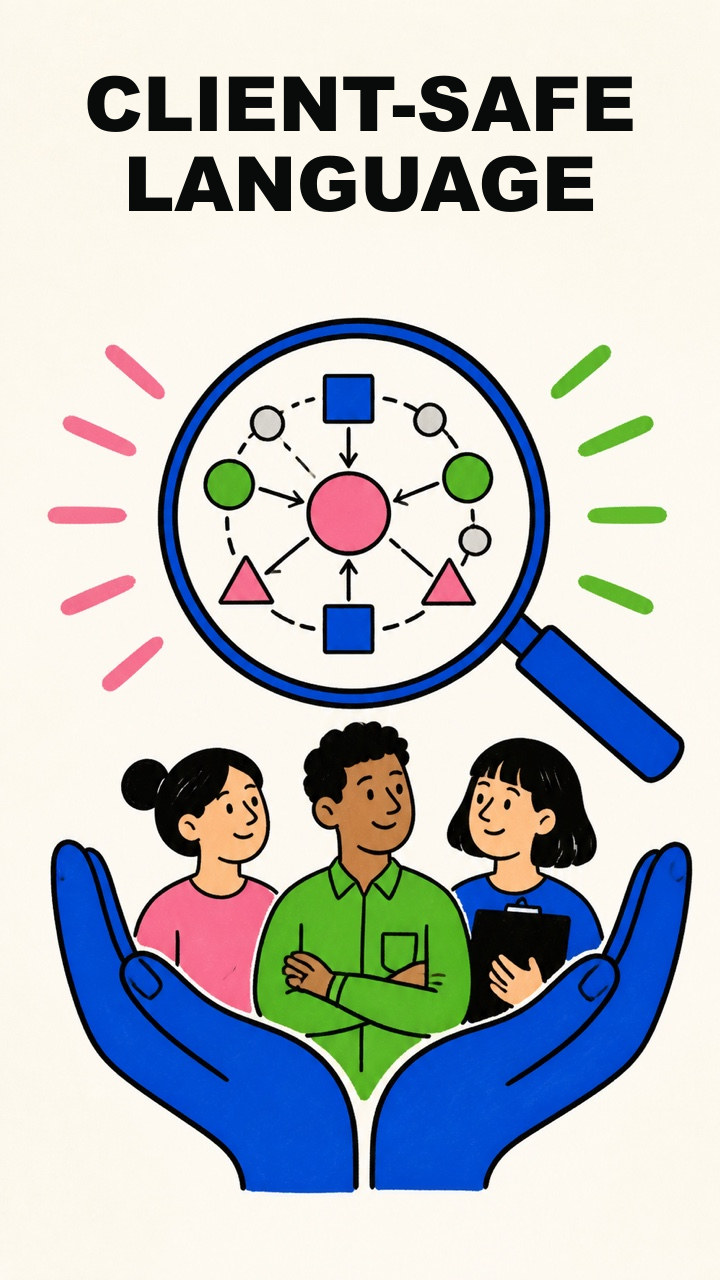
Client-safe language is a way of writing up what you found inside someone else's organization: it states the condition you observed and the evidence for it, without assigning blame or motive to the individuals involved.
- Review state
- Reviewed in POC
- Freshness
- Current
- Version
- 3
- client-safe-language
Remember it this wayName the condition clearly; do not make a person the diagnosis.
In plain language
Client-safe language says what is happening and why it matters without turning a process problem into a judgment about a person. It stays specific enough for the client to recognize and discuss the condition.
Why it matters
The goal is to understand the work, not embarrass the people keeping it moving.
Blame makes people defensive and can hide the real workflow.
Example
Better: The process requires manual reconciliation between the CRM and spreadsheet.
Avoid: The office manager keeps messing up the spreadsheet.
Common misconception
Client-safe language is not vague or artificially positive. It can describe serious problems directly while separating observed system conditions from blame, motive, or unsupported judgment.
Related terms
Not connected yet.
Sources
No sources recorded yet.
Learn more
No learning links recorded yet.
Public history
28 recorded events · 28 public summaries
Existing glossary content was moved into the unified source-of-truth structure without changing its learner-facing body.
A captured draft entered section-level human review without changing its existing wording.
Missing required wording was proposed while preserving the captured draft.
Radar reviewed the definition section for human consideration.
Radar reviewed the plain-language-explanation section for human consideration.
Radar reviewed the why-it-matters section for human consideration.
Radar reviewed the example section for human consideration.
Radar reviewed the common-misconception section for human consideration.
Radar reviewed the remember-it-this-way section for human consideration.
Radar reviewed the related-terms section for human consideration.
Radar reviewed the sources section for human consideration.
Radar reviewed the learn-more section for human consideration.
definition approved by a human reviewer.
plain-language-explanation approved by a human reviewer.
why-it-matters approved by a human reviewer.
example approved by a human reviewer.
common-misconception approved by a human reviewer.
remember-it-this-way approved by a human reviewer.
related-terms approved by a human reviewer.
sources approved by a human reviewer.
learn-more approved by a human reviewer.
plain-language-explanation approved wording became the current section text.
common-misconception approved wording became the current section text.
remember-it-this-way approved wording became the current section text.
sources approved wording became the current section text.
learn-more approved wording became the current section text.
All section gates are approved; content version 2 is now a fully approved term.
Definition review recorded as replace.
Source: vault/Glossary/terms/client-safe-language/term.md · sha256:ec893b6433be7db262d02a7051b6ccdde8c0edf165c0c5dc69dbc62f068a2919 · Release: rs-glossary-glossary-team-poc-0.5.5-2026-09-02