Actor
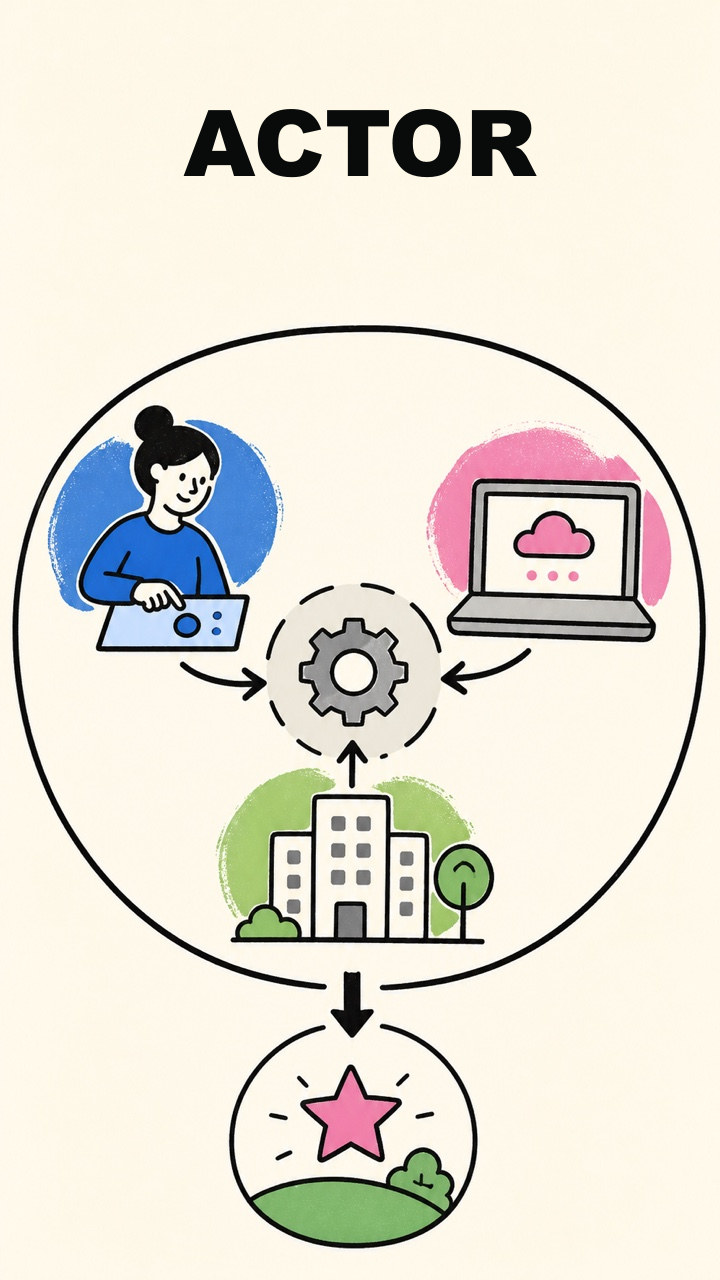
An actor is a person, role, group, organization, or system that participates in or influences a process.
A shared language for complex work
234 working definitions from Renaissance Solutions—kept with their review state, visual record, and public history.
25 terms
An actor is a person, role, group, organization, or system that participates in or influences a process.
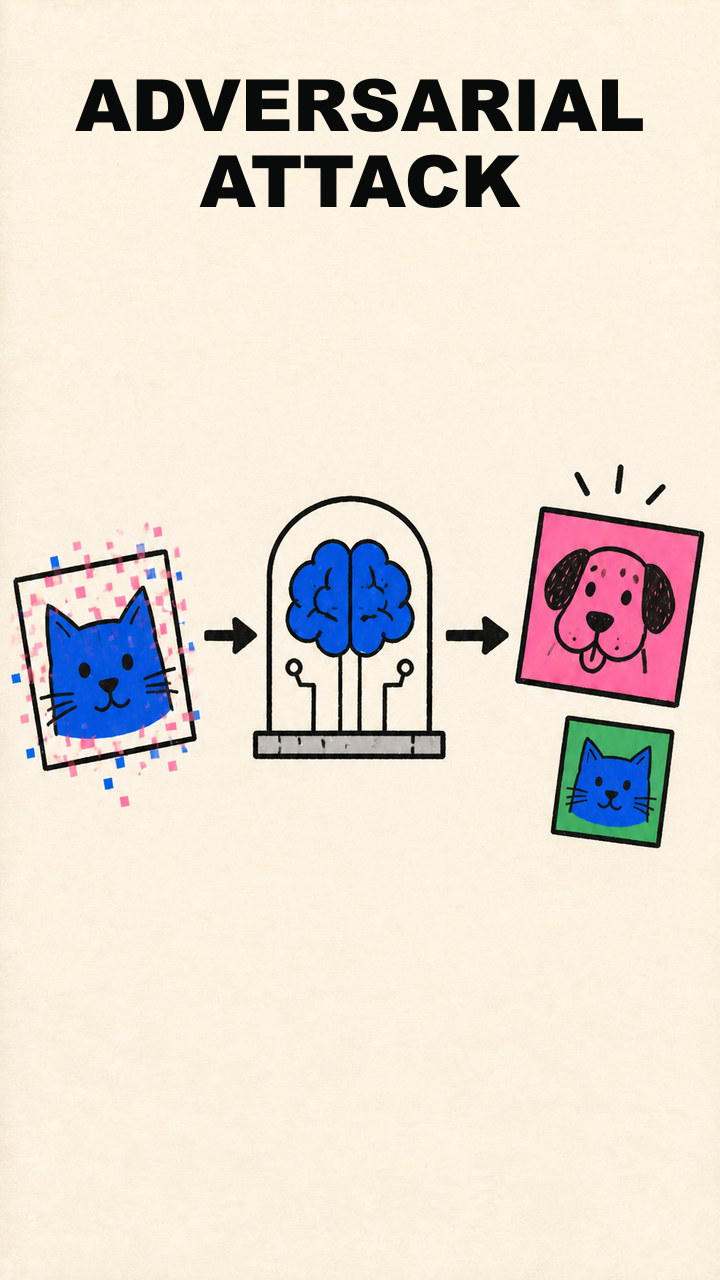
An adversarial attack is a deliberate attempt to manipulate an AI system's inputs, data, environment, or interfaces so it produces an incorrect, unauthorized, or harmful result.
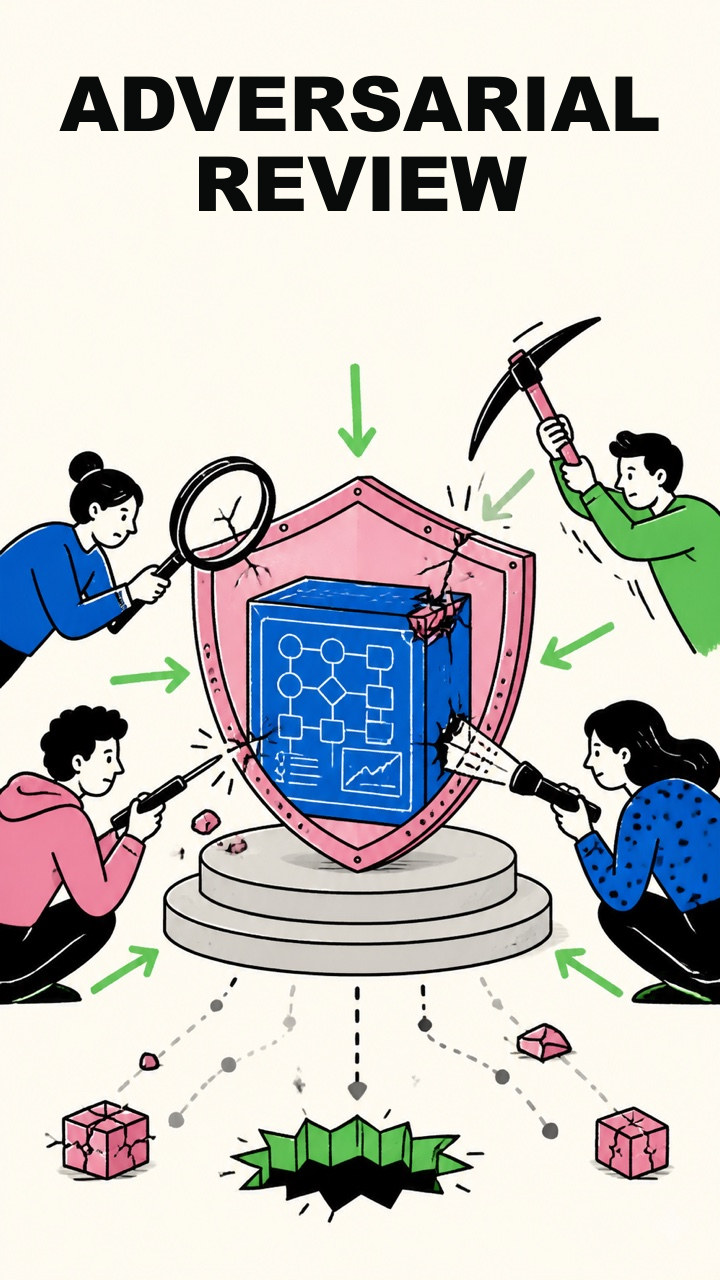
An adversarial review is a structured examination that deliberately searches for weaknesses, counterexamples, missing evidence, and failure paths in a claim, plan, model output, or other artifact before people rely on it.
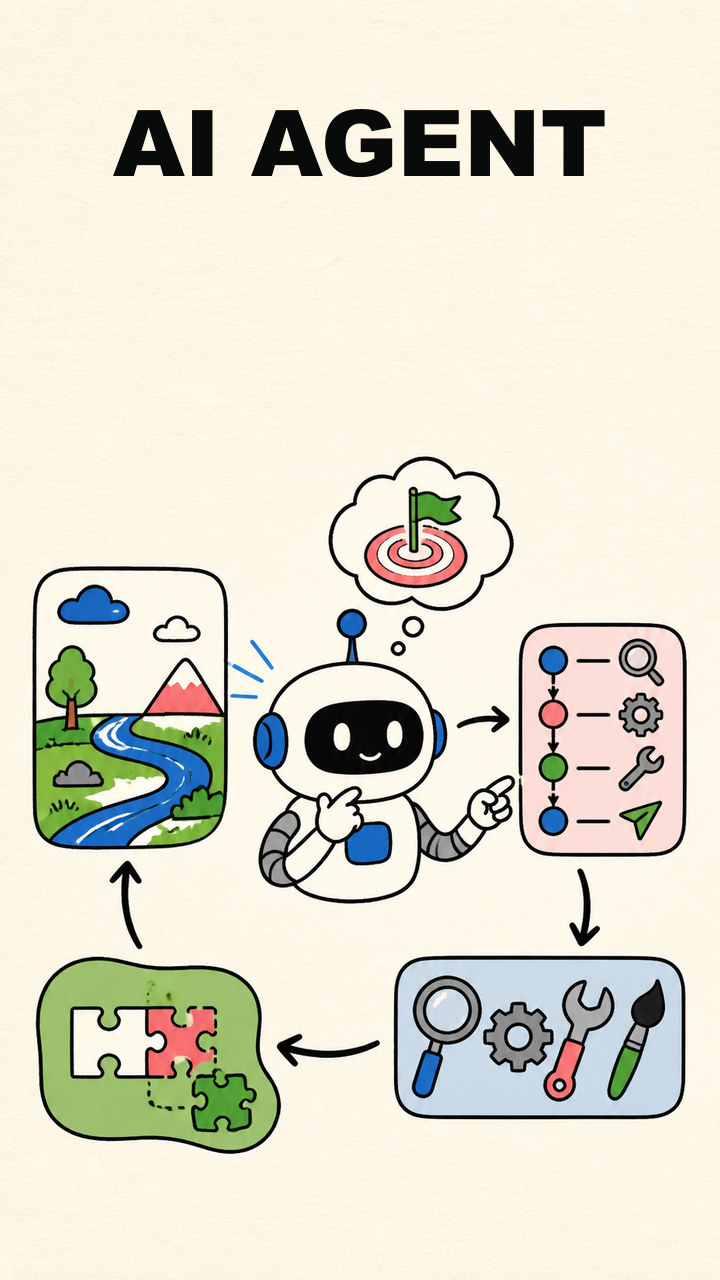
An AI agent is a software system that uses a model to choose and carry out multiple steps toward a goal, often by observing state, using tools, and adapting its next action.
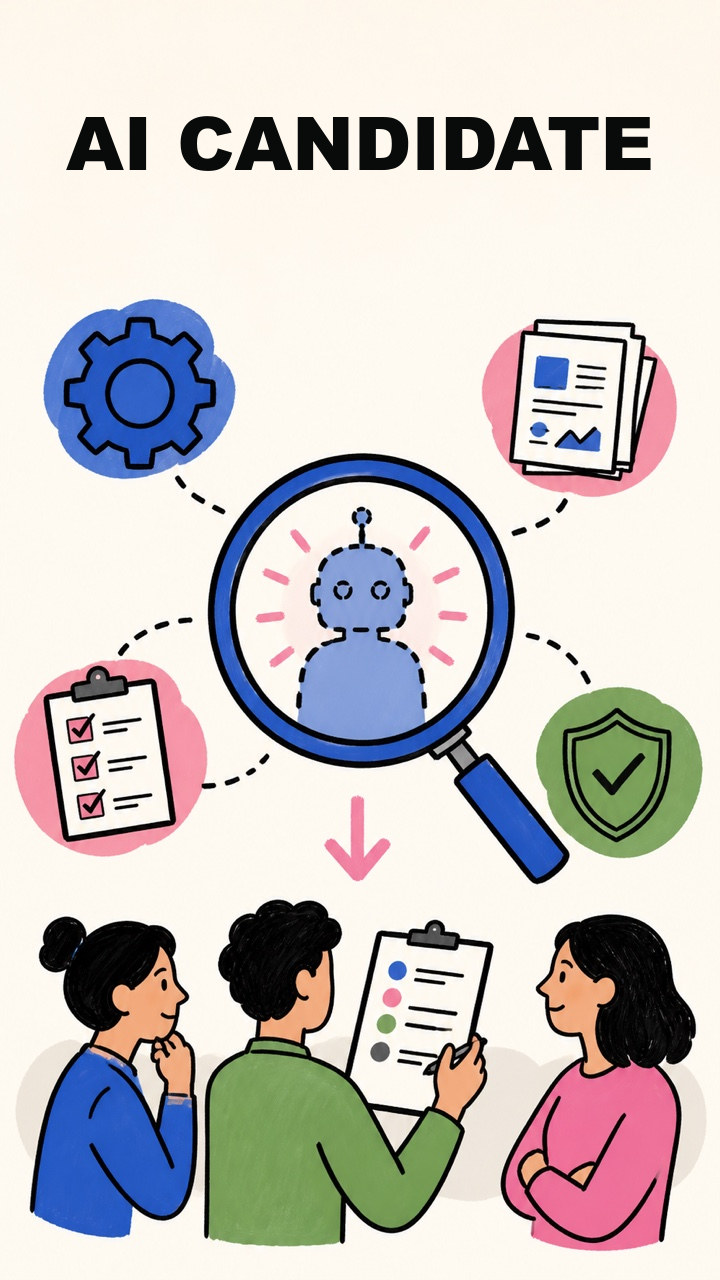
An AI candidate is a specific task or step that someone has flagged as a possible fit for AI and queued for examination — the process it sits in, the data it uses, the risks it carries, and who would review the result.
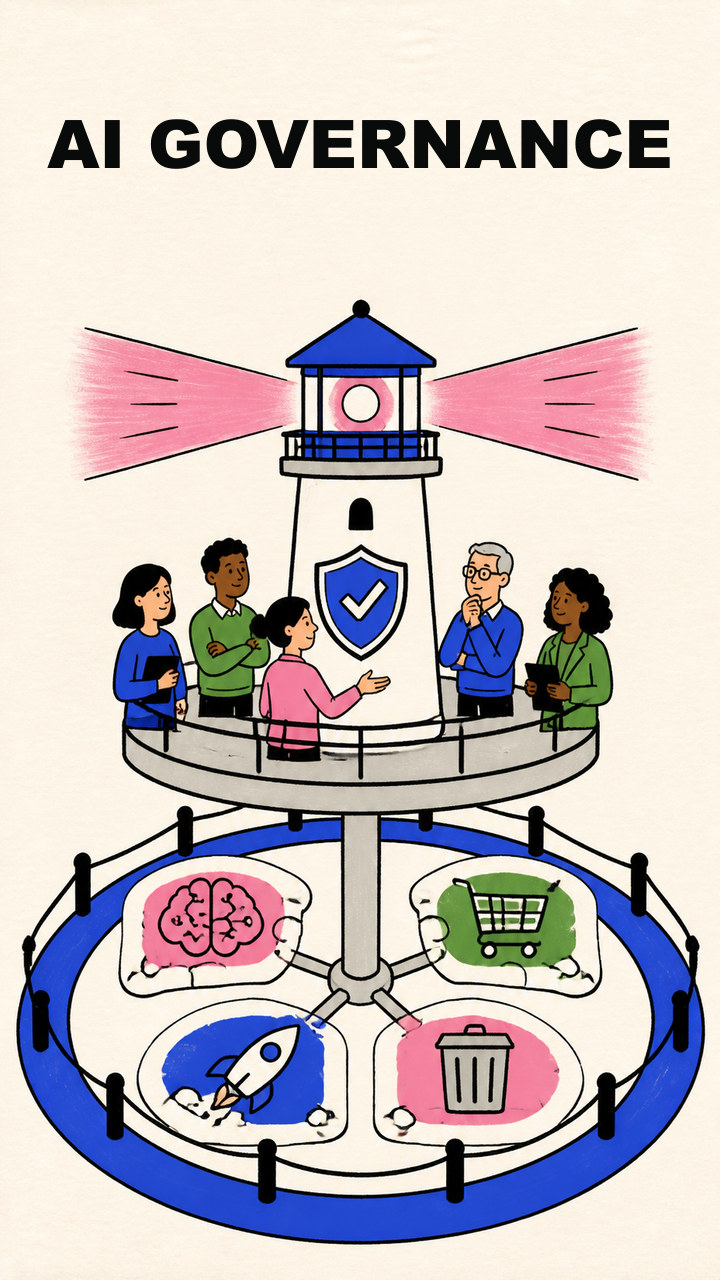
AI governance is the system of authority, policies, roles, controls, evidence, and oversight used to direct and monitor how an organization develops, acquires, deploys, and retires AI.
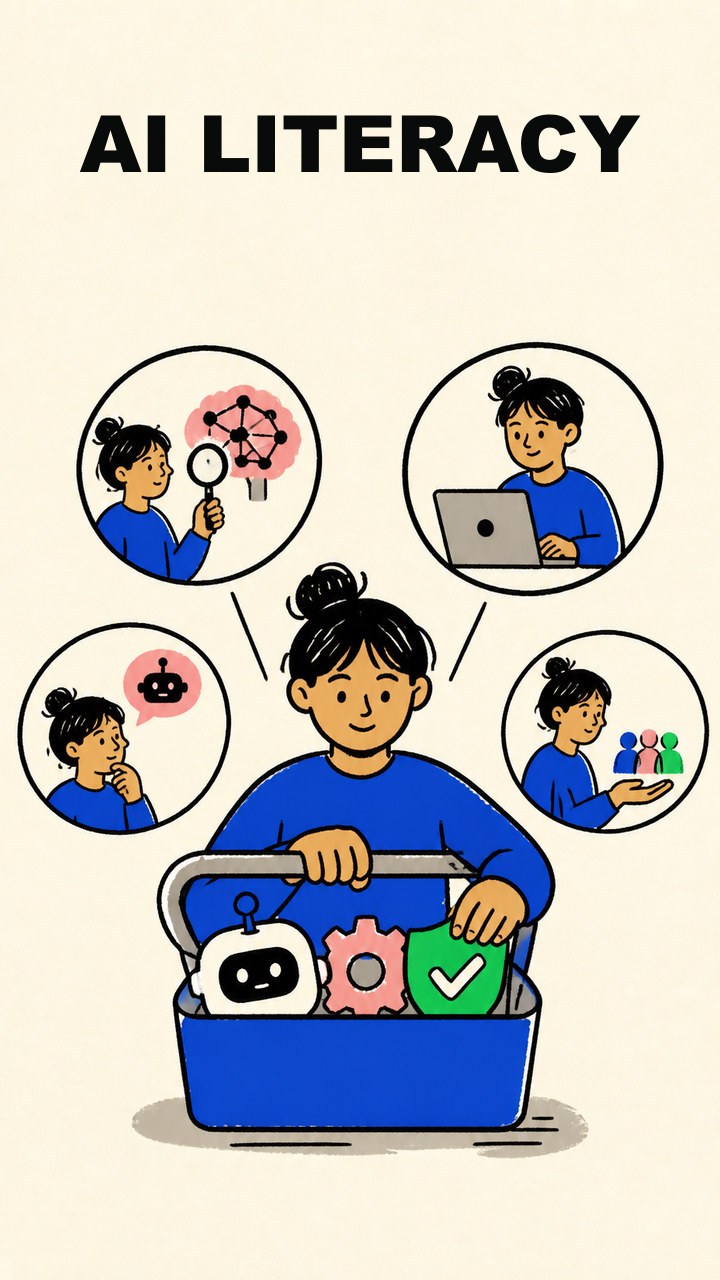
AI literacy is the practical ability to understand, use, question, and make responsible decisions about AI systems within one's role and context.
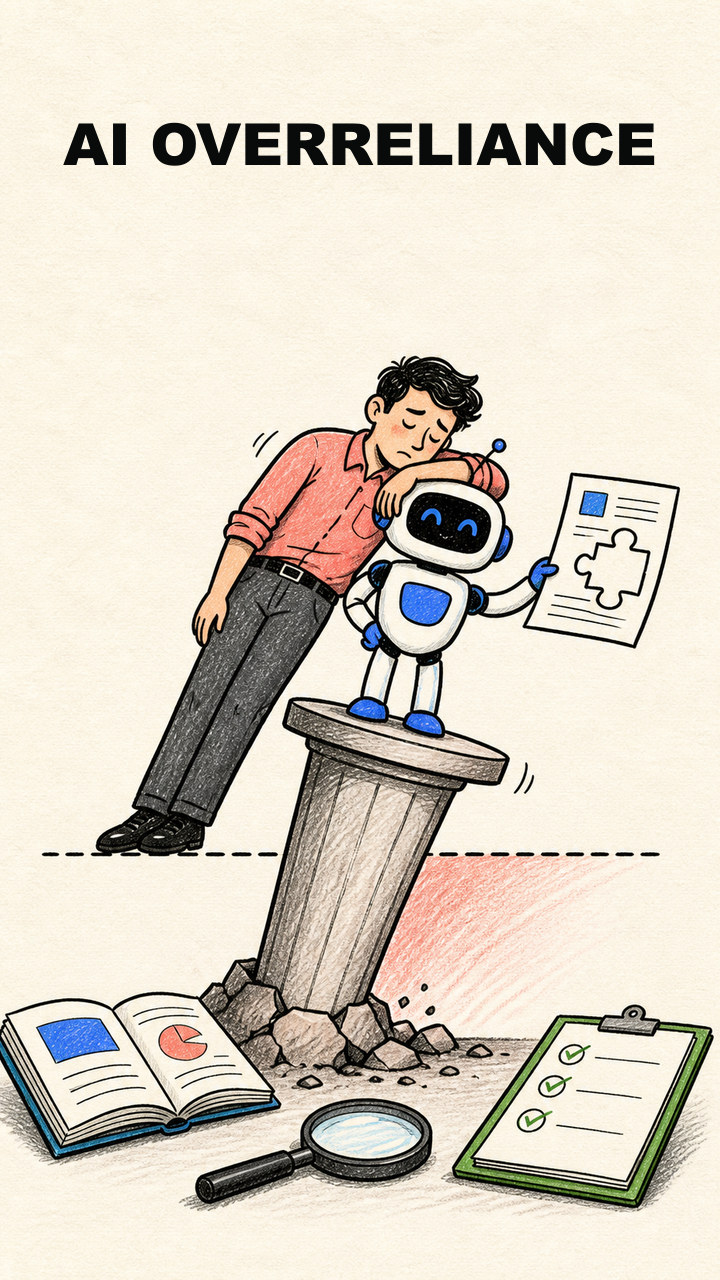
AI overreliance is depending on an AI system more than its demonstrated reliability, available evidence, and authorized role justify.
AI washing is the misleading practice of exaggerating, misrepresenting, or fabricating how an organization uses AI or what its AI can do.
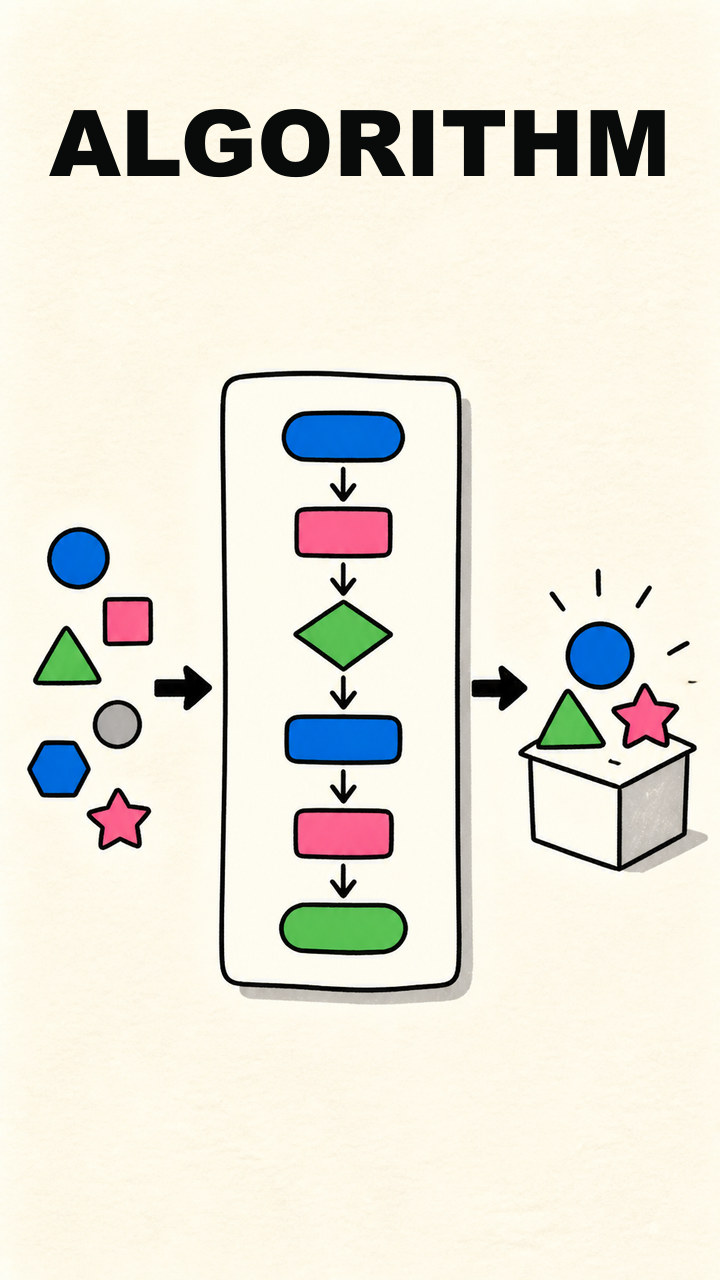
An algorithm is a defined procedure or set of steps for transforming inputs into outputs or solving a class of problems.
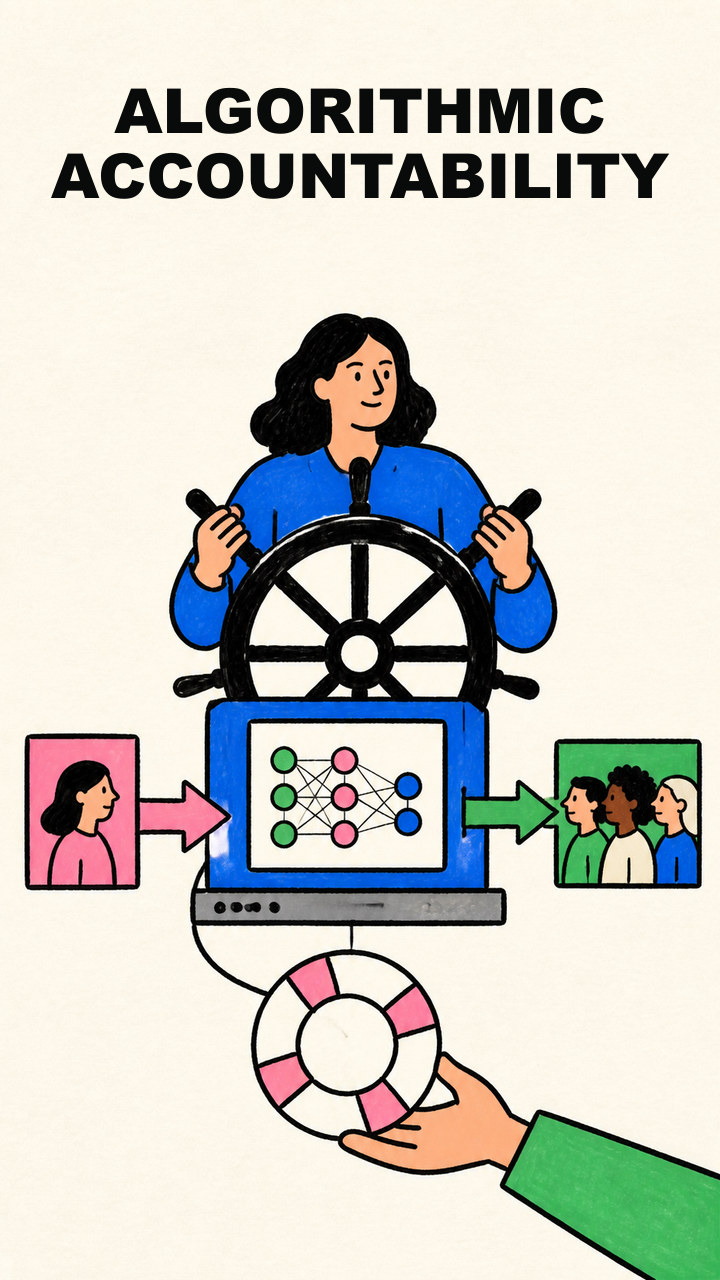
Algorithmic accountability is the principle and practice that organizations remain answerable for the design, use, effects, and remediation of decisions made or supported by algorithmic systems.
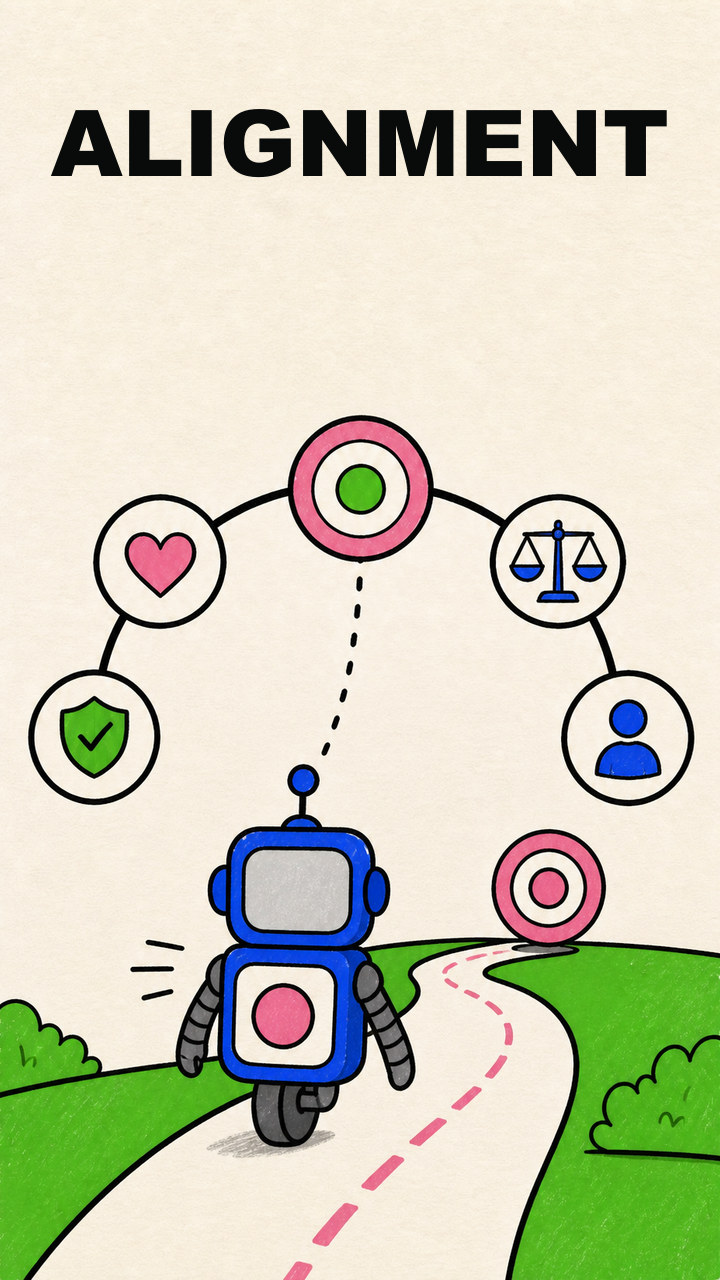
Alignment is the effort to make an AI system's objectives, behavior, and effects remain consistent with the intentions, values, constraints, and legitimate authority governing its use.
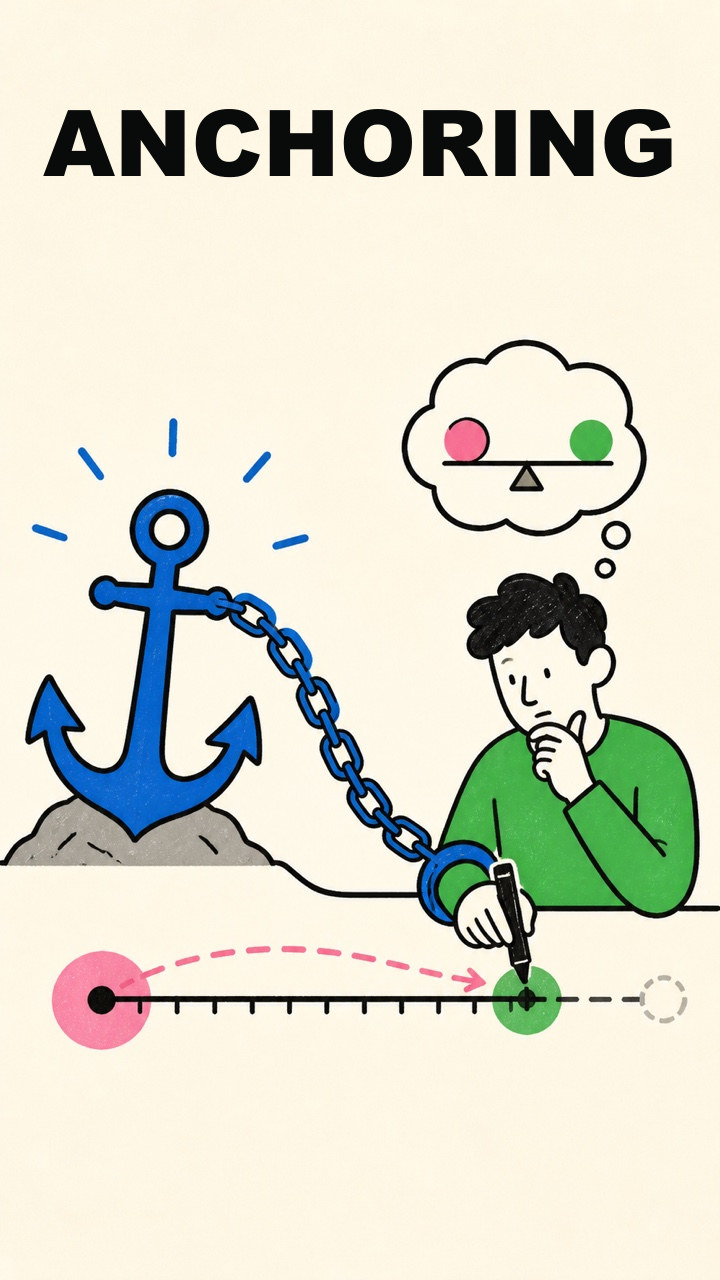
Anchoring is a judgment bias in which an initial value, claim, or frame exerts too much influence on a later estimate or decision, even when the starting point is incomplete or irrelevant.
An android is a robot designed to look or behave like a human, a classic older word from AI and science-fiction discussions about artificial people.
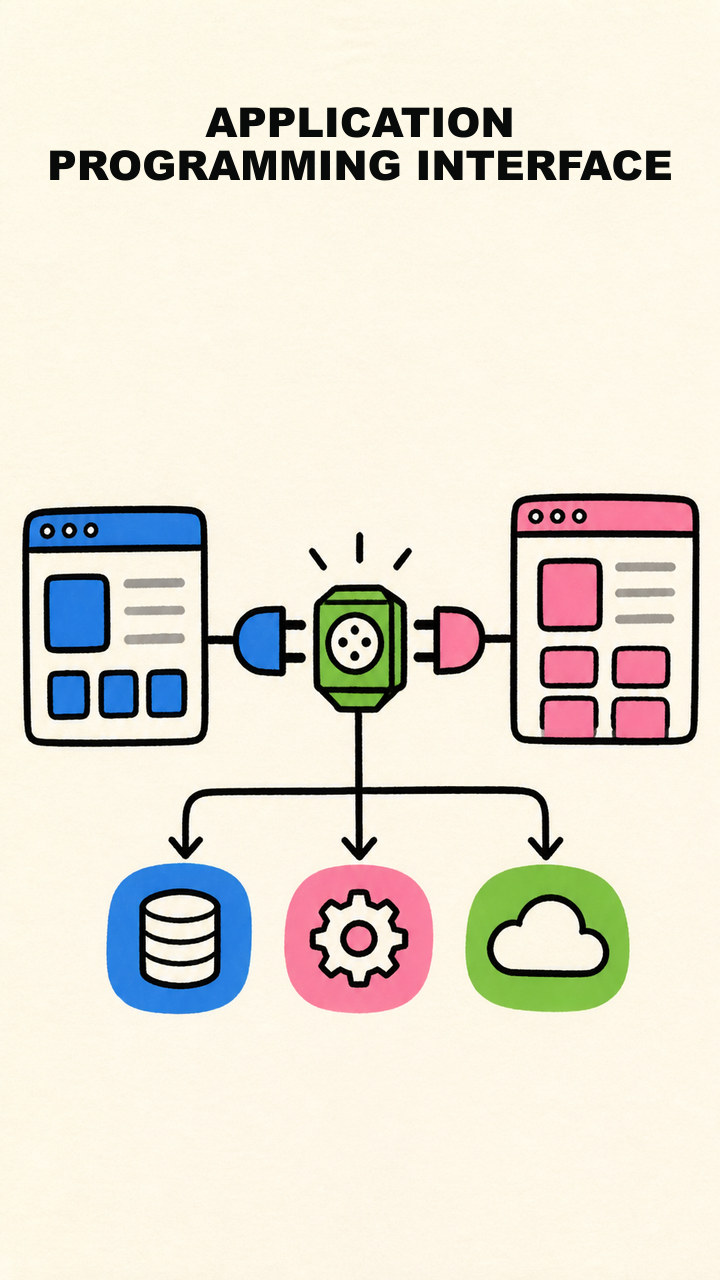
An application programming interface, or API, is a published contract between two pieces of software: one side may send a defined request, and the other agrees to answer in a defined way, giving access to specific capabilities or data.
Artificial general intelligence is a hypothetical and contested concept for an AI system with broad, adaptable competence across many kinds of cognitive tasks rather than capability limited to particular domains or task patterns.
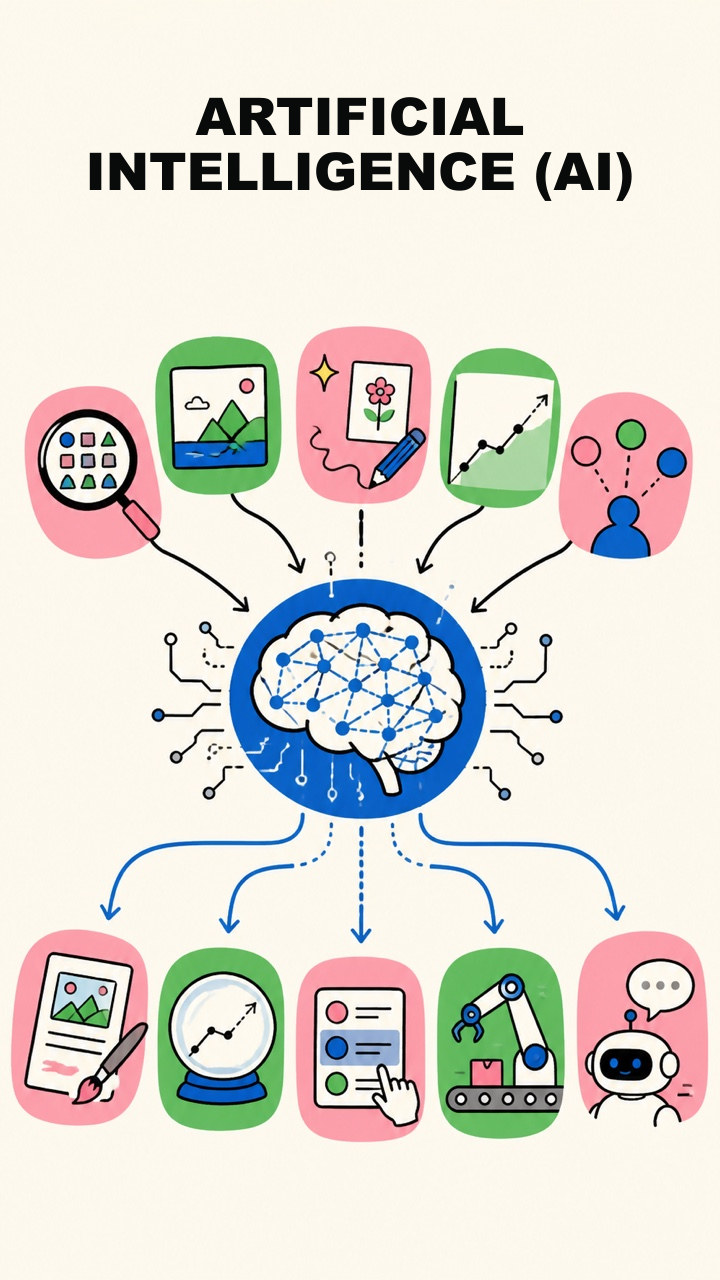
Artificial intelligence, or AI, is a broad family of computer systems and methods that recognize patterns, generate content, make predictions, recommend options, or support actions.
Artificial superintelligence is a speculative concept for an AI system that would exceed human capability across most or all cognitive domains of interest.
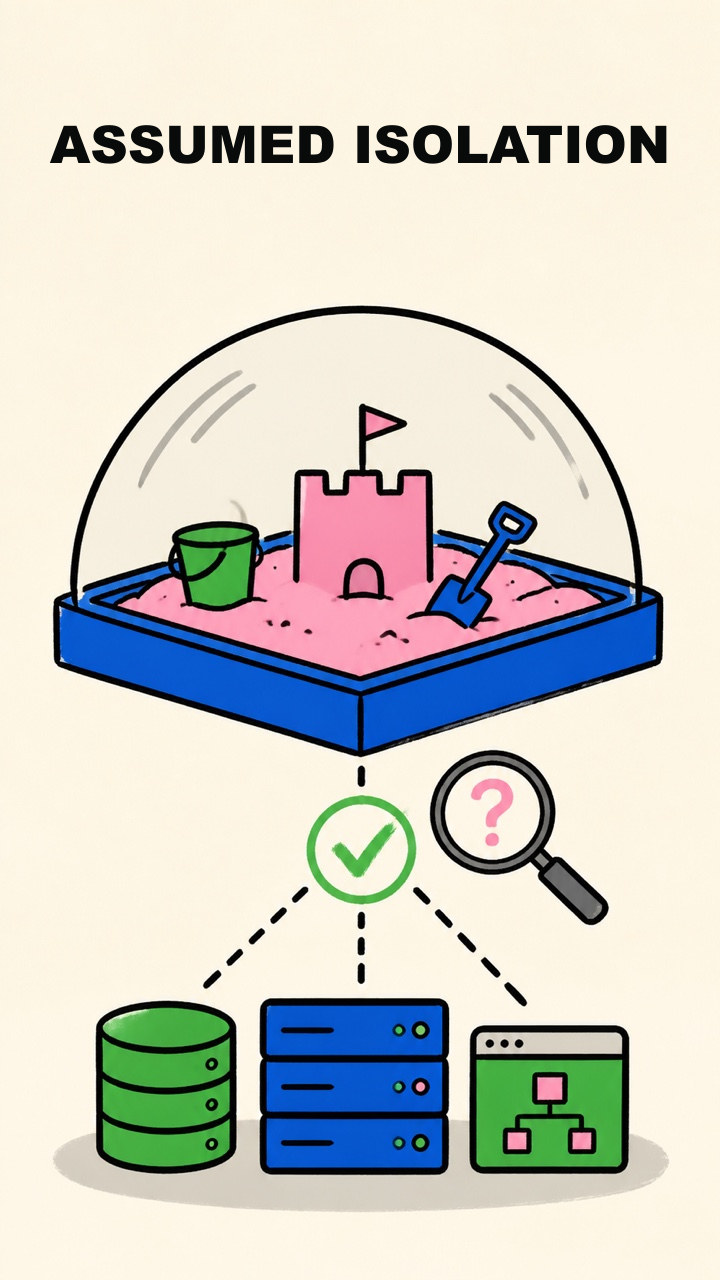
Assumed isolation is the belief that a test or trial system is cut off from live systems and real data, held without current evidence that the separation still holds.
Audio is the modality that handles sound, including speech, music, noise, and other acoustic signals that AI systems can analyze or generate.
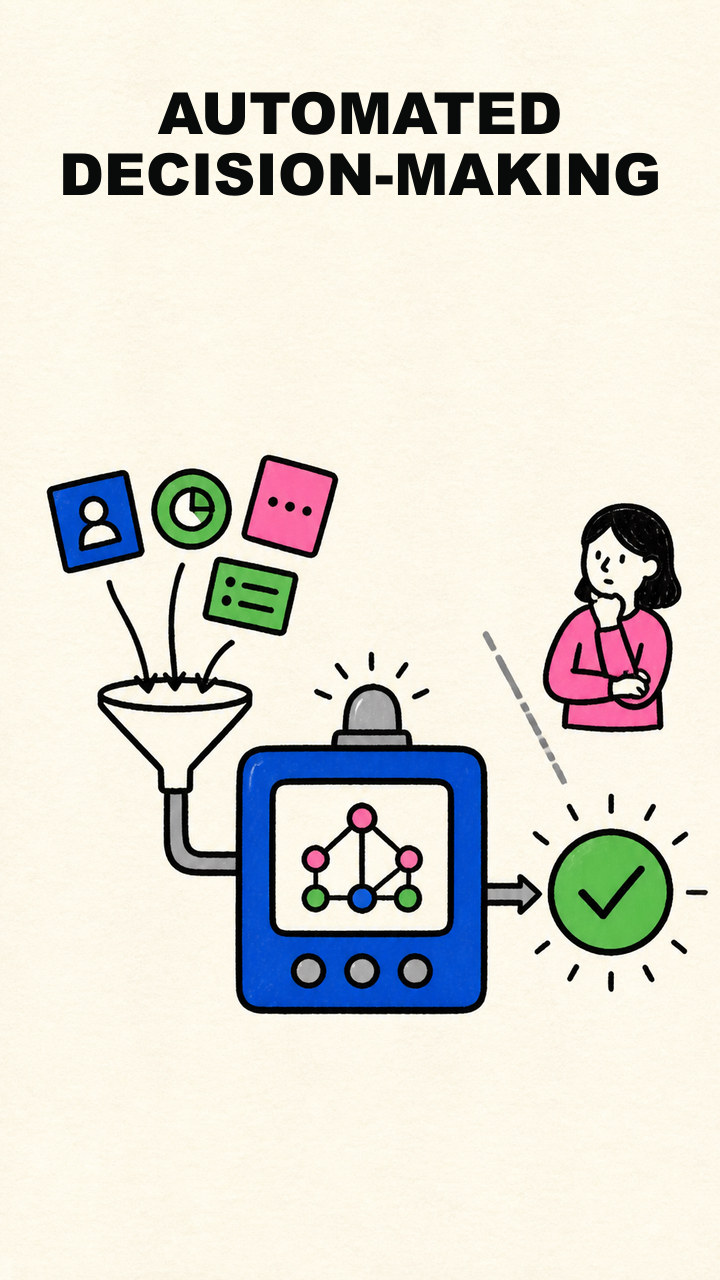
Automated decision-making is the use of data and computational rules or models to make, recommend, or materially shape determinations with limited or no direct human judgment at the decision point.
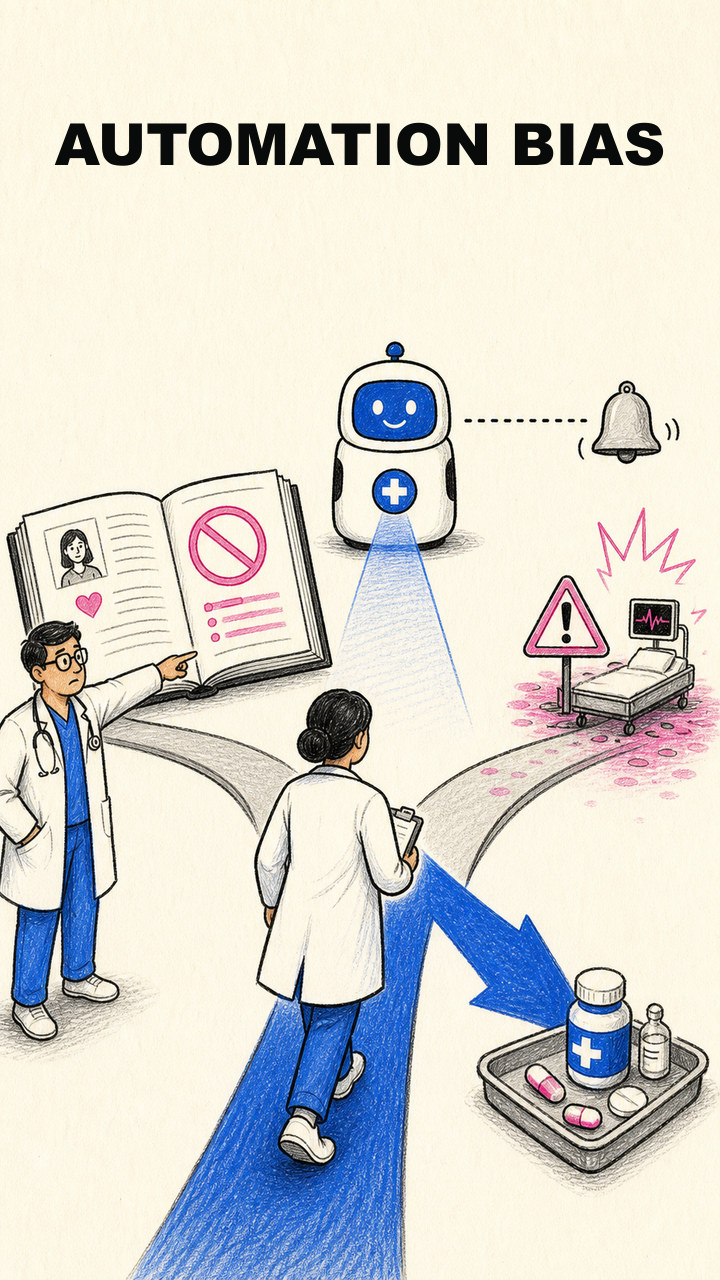
Automation bias is the tendency to favor an automated cue or recommendation over other evidence, including following incorrect advice or missing a problem because the system gave no alert.
An automaton is a self-operating machine, an older word that long predates modern AI but still shapes how people talk about artificial minds and mechanical intelligence.
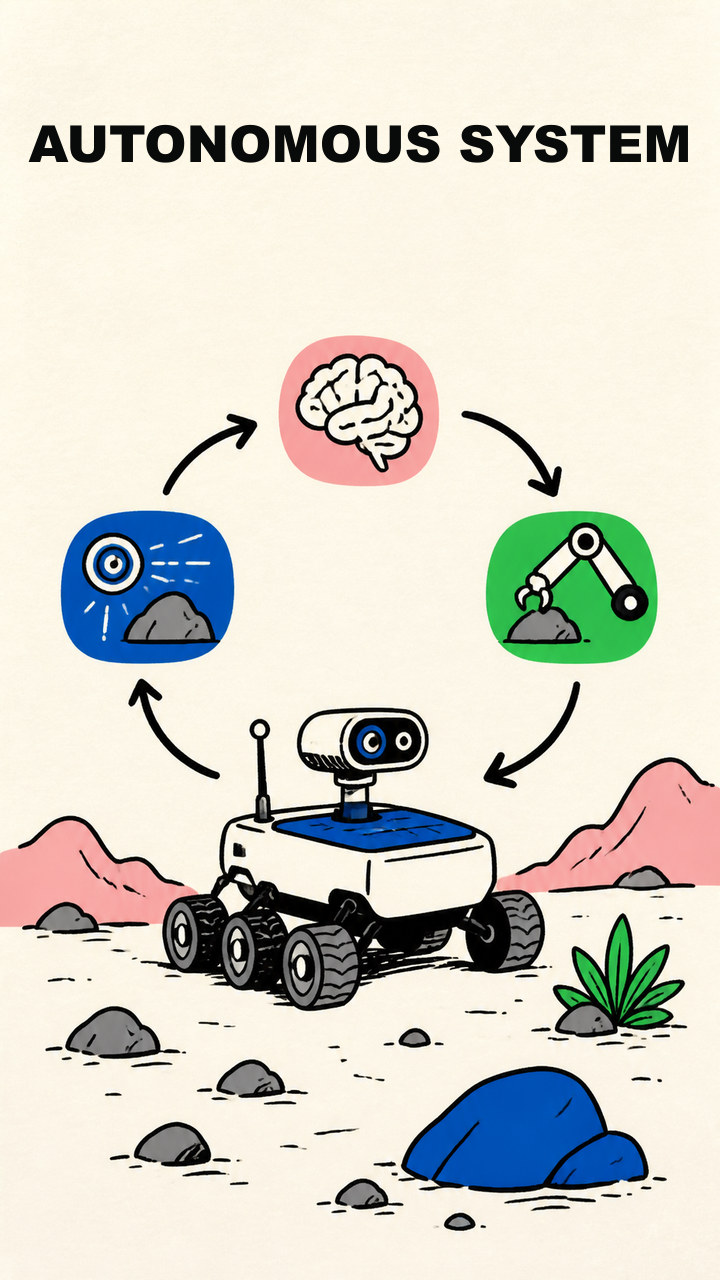
An autonomous system is a software or physical system designed to perceive conditions, make decisions, and take actions for some period without continuous human control.
A point where information about system behavior exists but is unavailable, uninterpretable, or unactionable to another party that needs it.
6 terms
A batch is a group of examples or requests processed together, often to make training or inference more efficient.
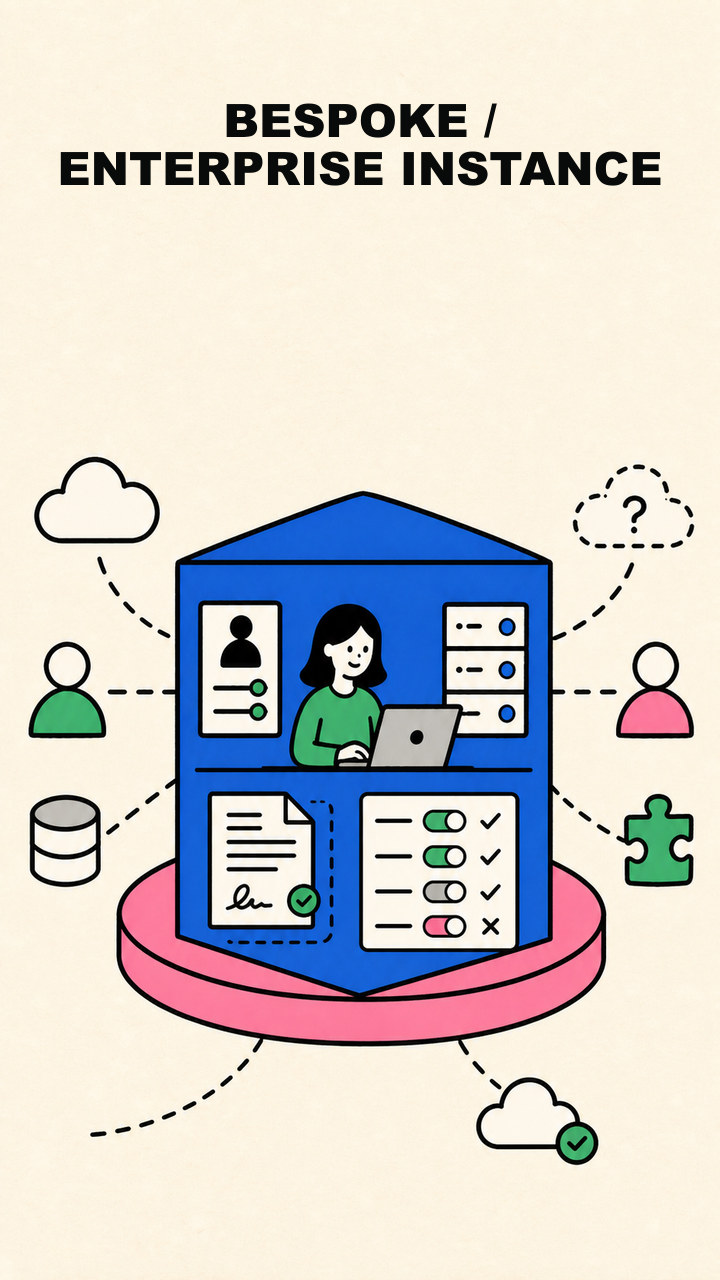
A bespoke or enterprise instance is a version of a technology service configured and contracted for a particular organization, often with dedicated controls for identity, data handling, administration, and integration.
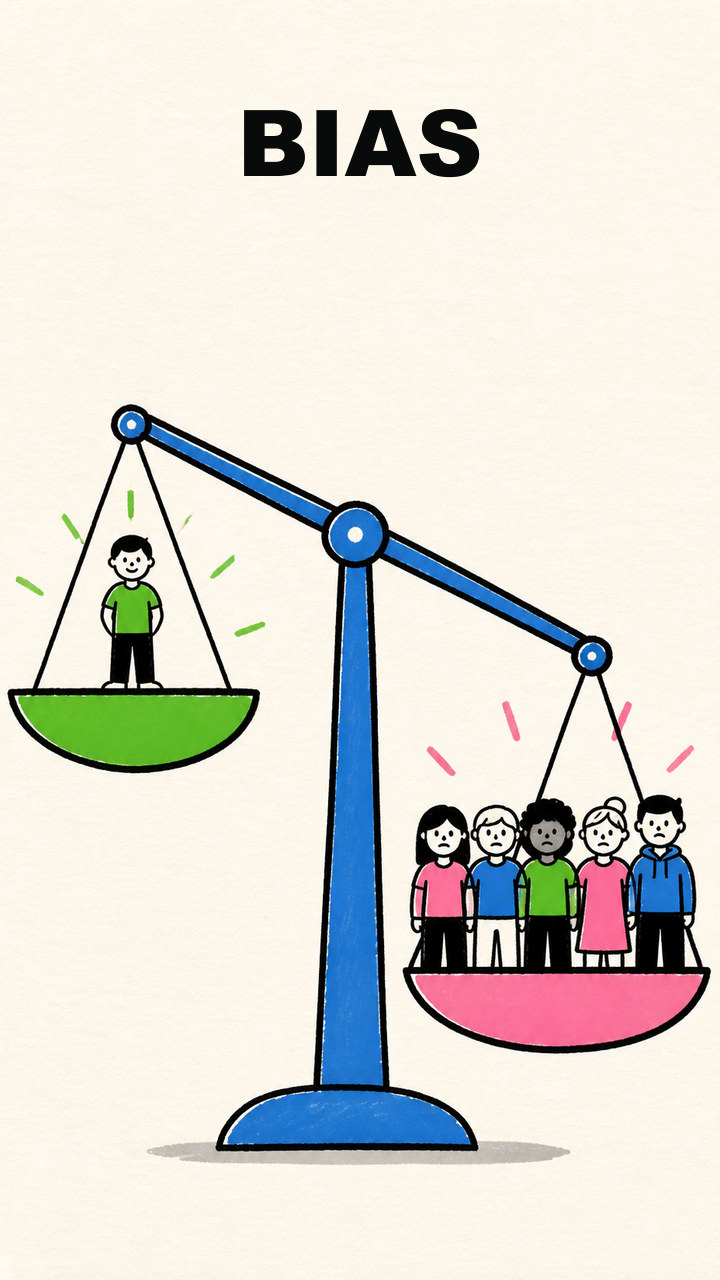
Bias is a systematic pattern of skew in data, design, measurement, decisions, or outputs that advantages some results or groups and disadvantages others.
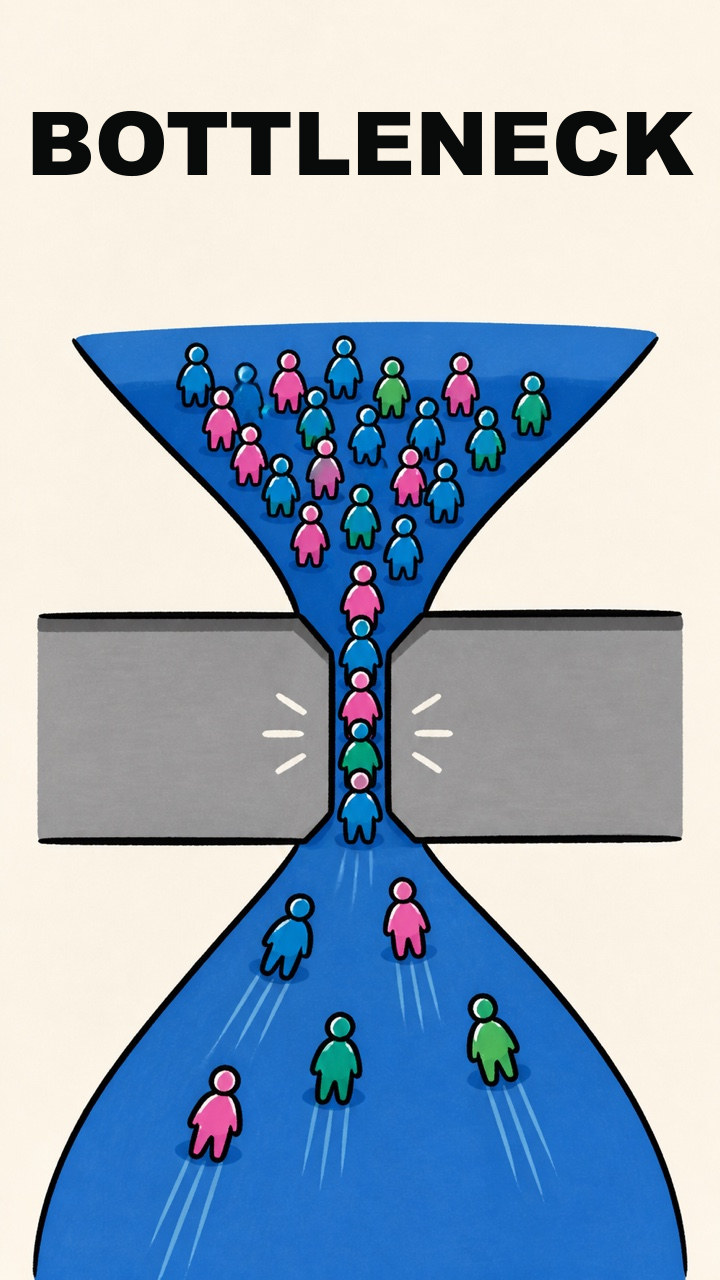
A bottleneck is a point in a process where work slows down because capacity, authority, information, or availability is limited.
Build vs. buy is the decision whether to create and operate a capability internally, acquire it from a vendor, or combine purchased and internally developed components.
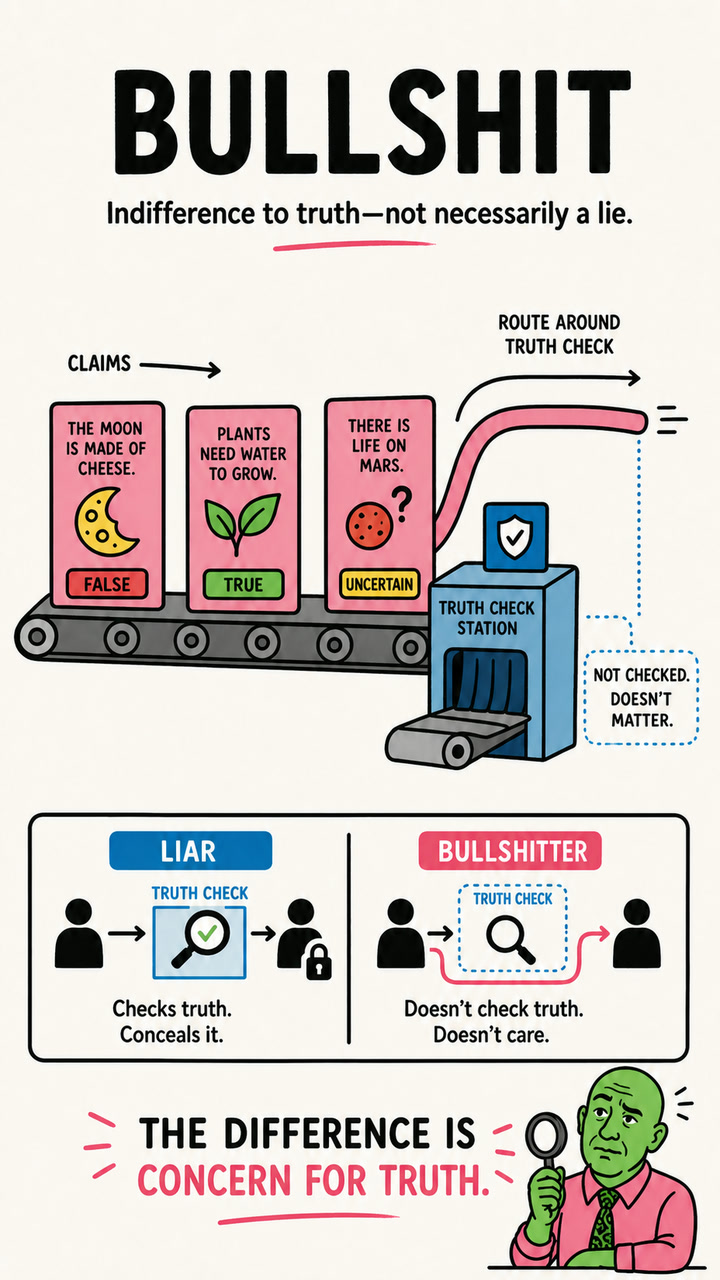
As philosopher Harry Frankfurt defines it, bullshit is speech produced without regard for whether what is said is true.
30 terms
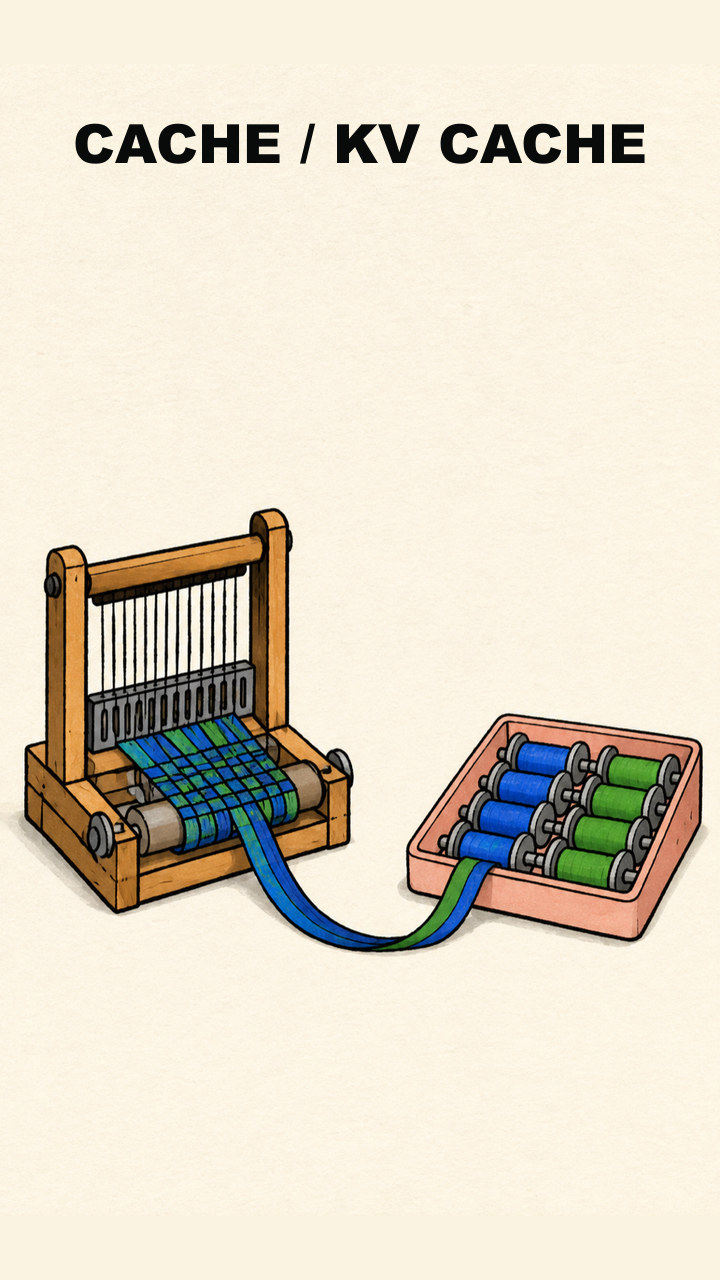
A cache stores reusable data so a system can answer faster or avoid recomputing work, such as prompt results or model attention state.
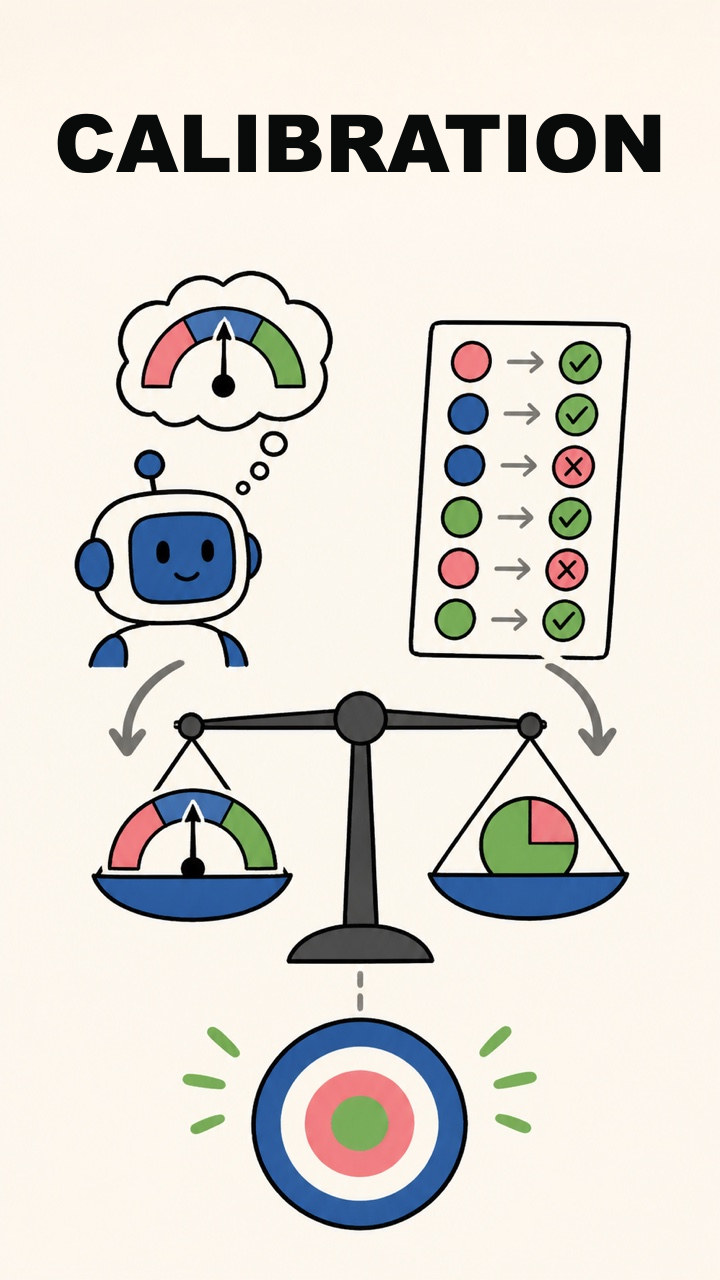
Calibration describes how well stated confidence matches observed correctness across comparable cases. A well-calibrated system that assigns 80 percent confidence should be correct about 80 percent of the time on cases receiving that confidence.
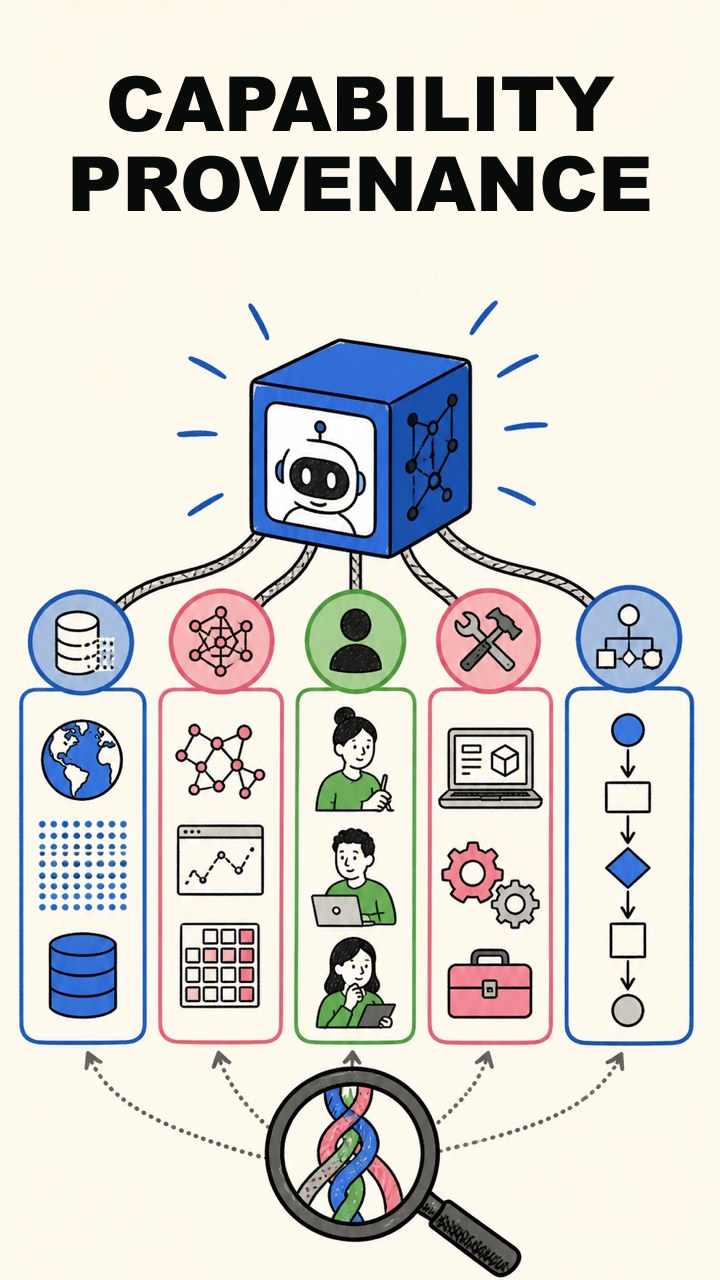
Capability provenance is the record of where an AI system's abilities came from — the models, data, human input, tools and processes that materially shaped what it can do.
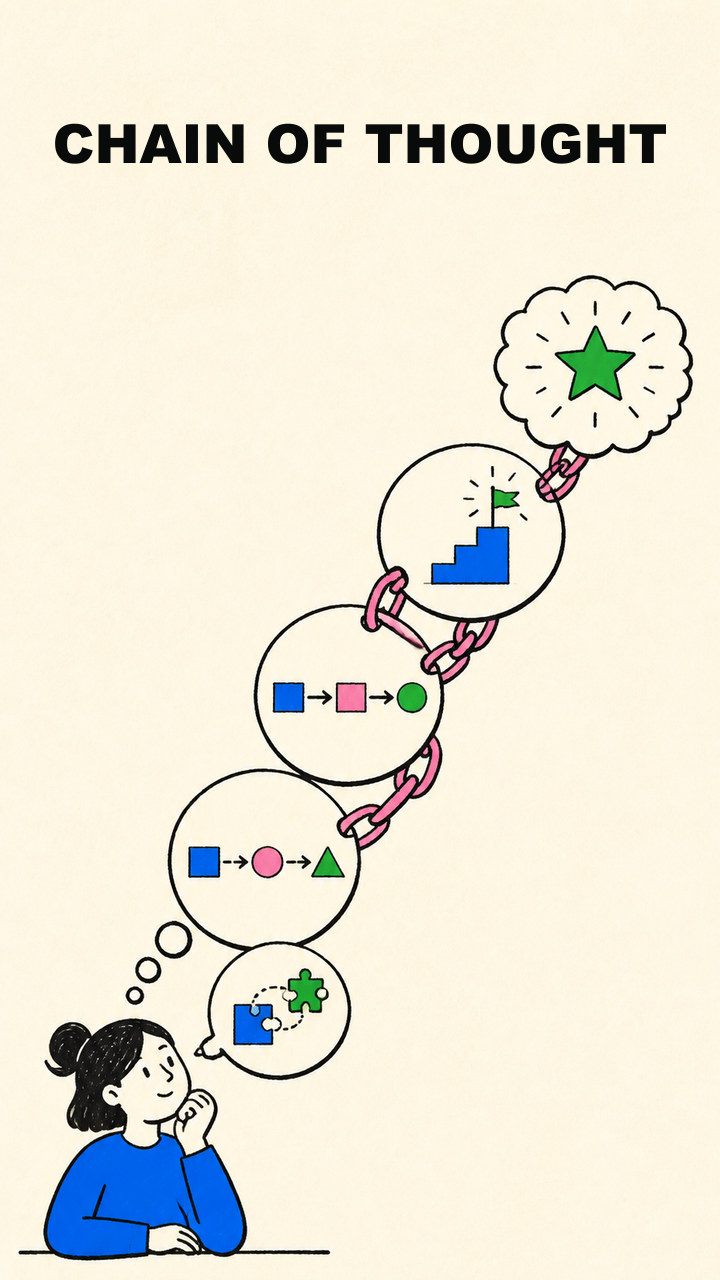
Chain of thought is a term for intermediate reasoning steps used or elicited while solving a multi-step problem, whether those steps are internal to a model or presented as an explanation.
Change management is the structured work of helping people, roles, workflows, and organizations move from a current way of operating to a new one.
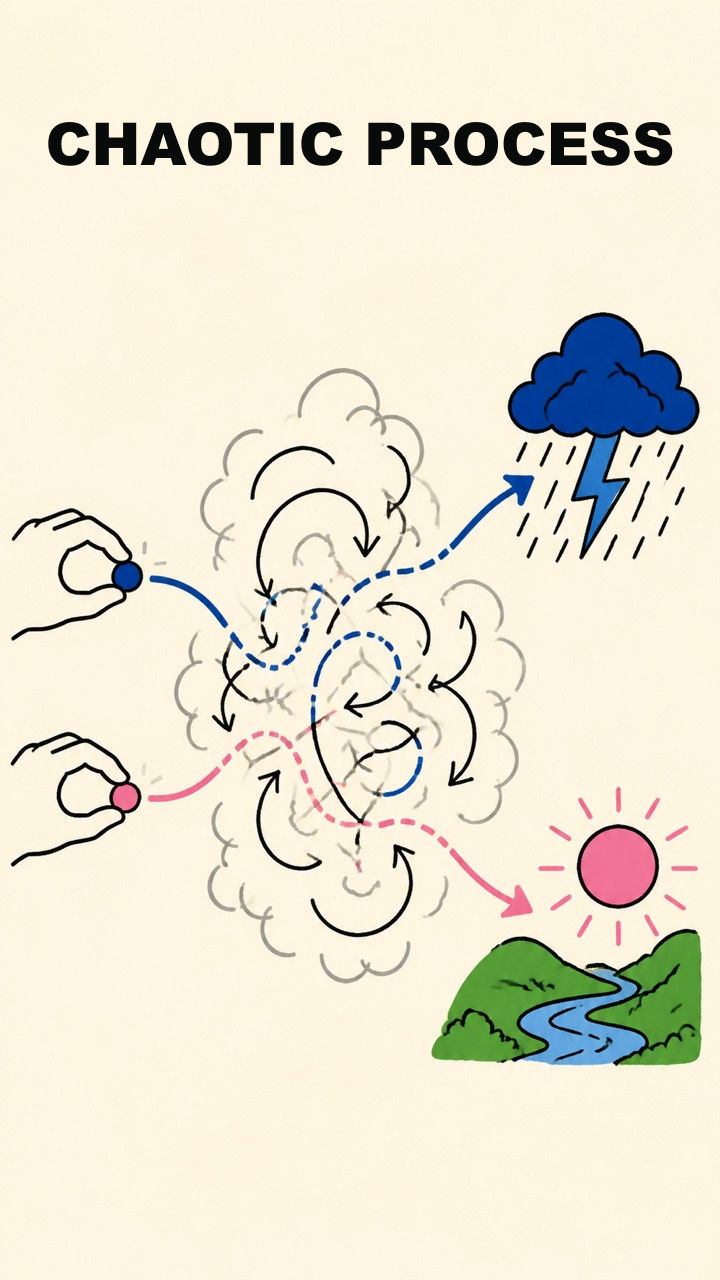
A chaotic process is a deterministic process whose behavior is highly sensitive to initial conditions, so small differences in the starting state can grow into large differences in later outcomes.
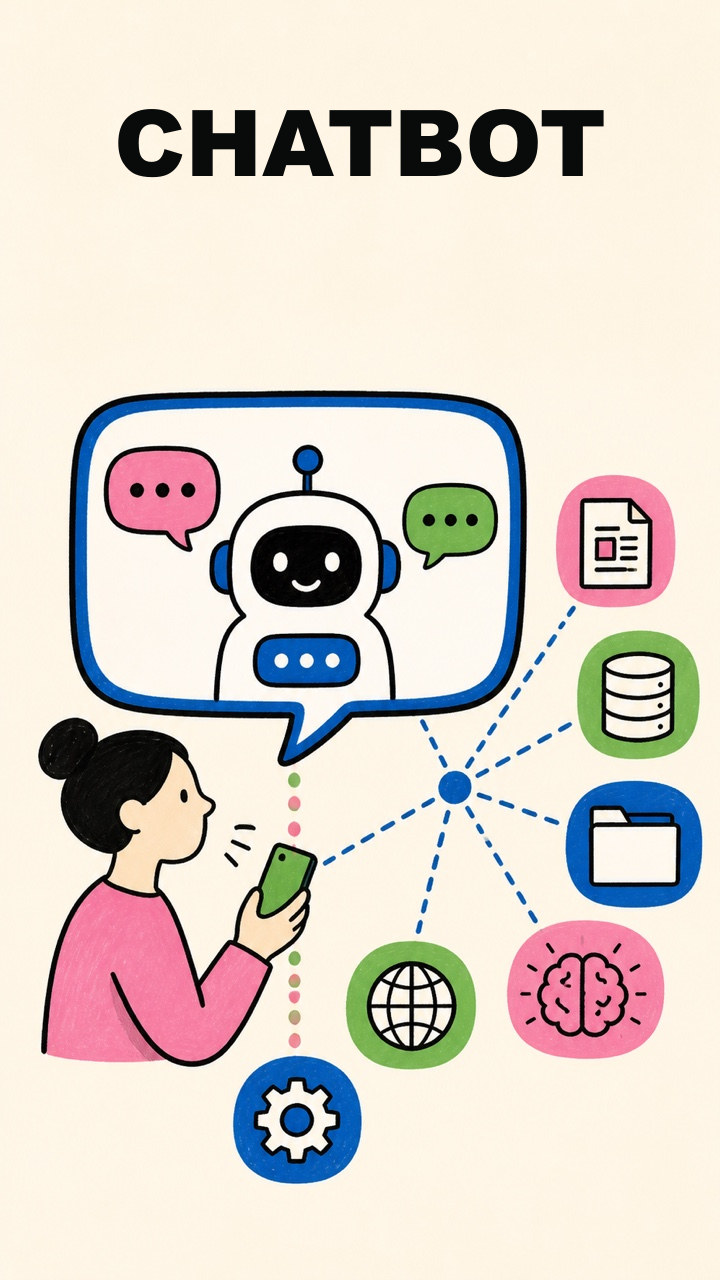
A chatbot is an interface that lets a person interact with software through conversation, usually by text or voice.
Chunking is the process of dividing a document, dataset, or stream into smaller units for storage, search, retrieval, or processing.
Client-safe language is a way of writing up what you found inside someone else's organization: it states the condition you observed and the evidence for it, without assigning blame or motive to the individuals involved.
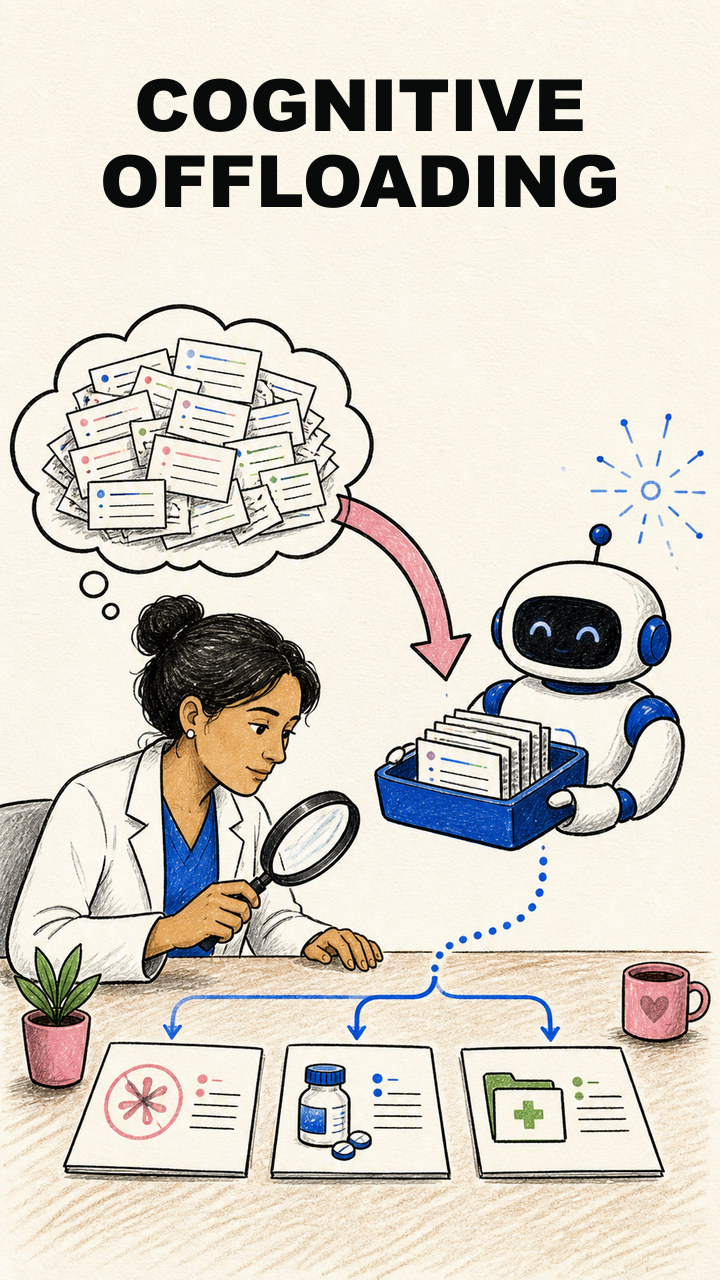
Cognitive offloading is using an external action, object, or tool to change a task so that less mental processing is required from the person doing it.
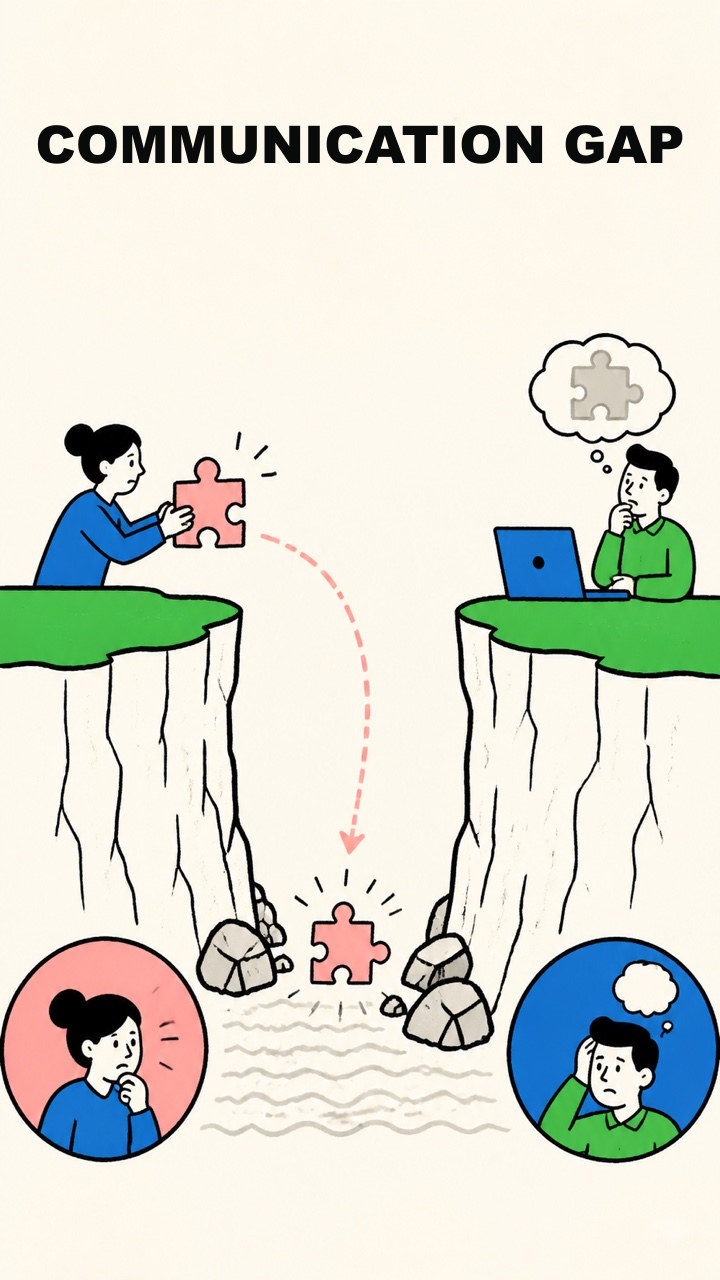
A communication gap occurs when the right information does not reach the right person, system, or decision point at the right time.
The gap between what a team understands and what it must understand to maintain or change its system.
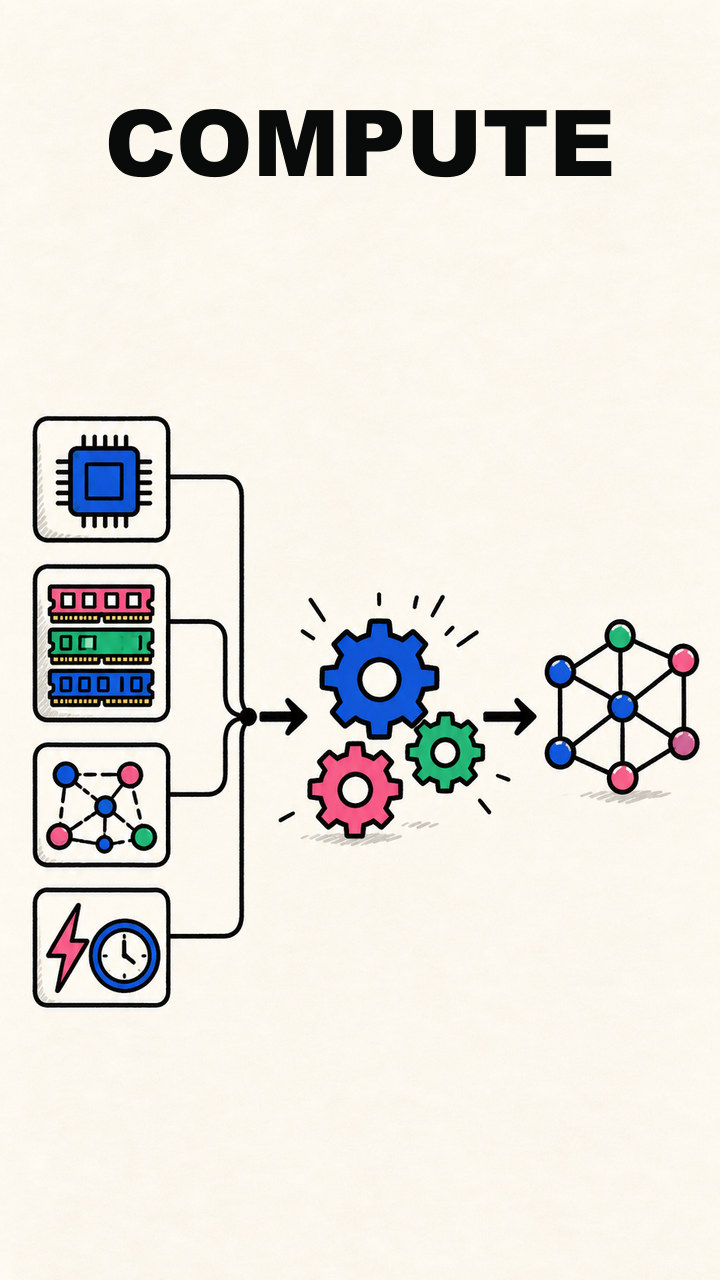
Compute is the processing capacity and associated work performed by computer hardware to train, evaluate, or run models and other software.
Vision is the AI modality focused on images and video, including tasks like recognition, detection, segmentation, and scene understanding.
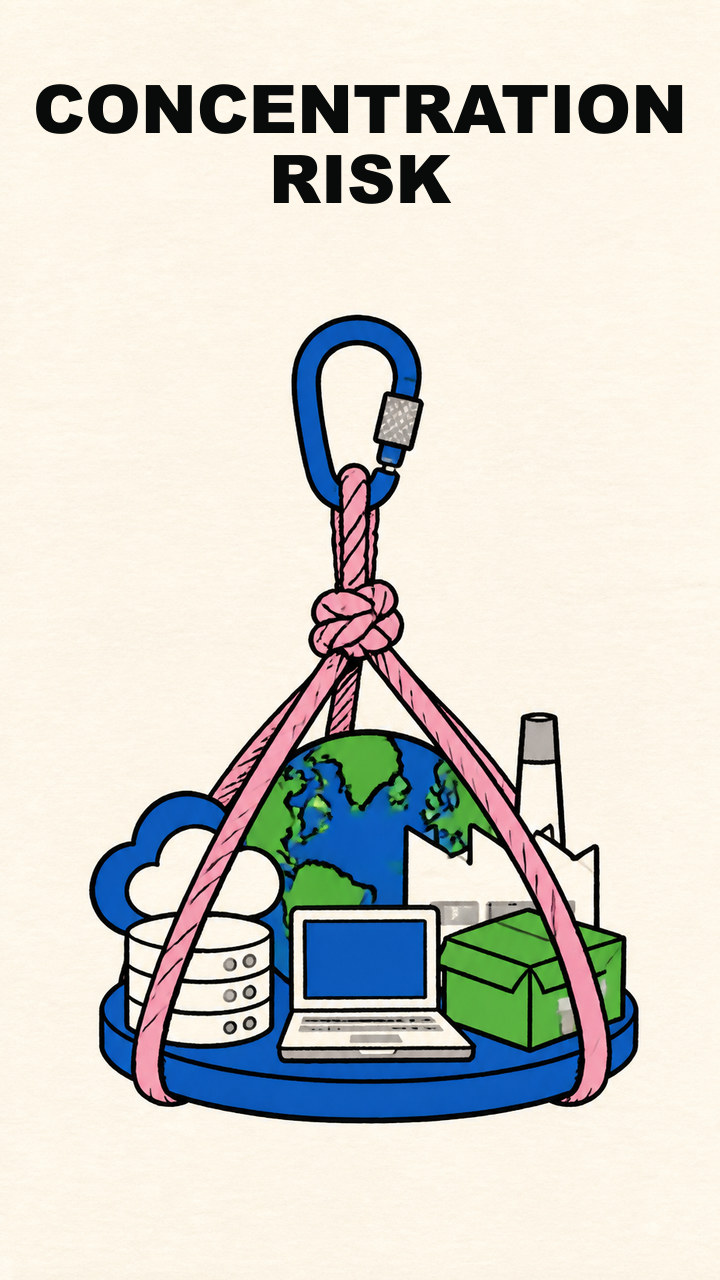
Concentration risk is exposure created when important operations, data, capability, or supply depend heavily on a small number of providers, models, regions, platforms, or other shared resources.
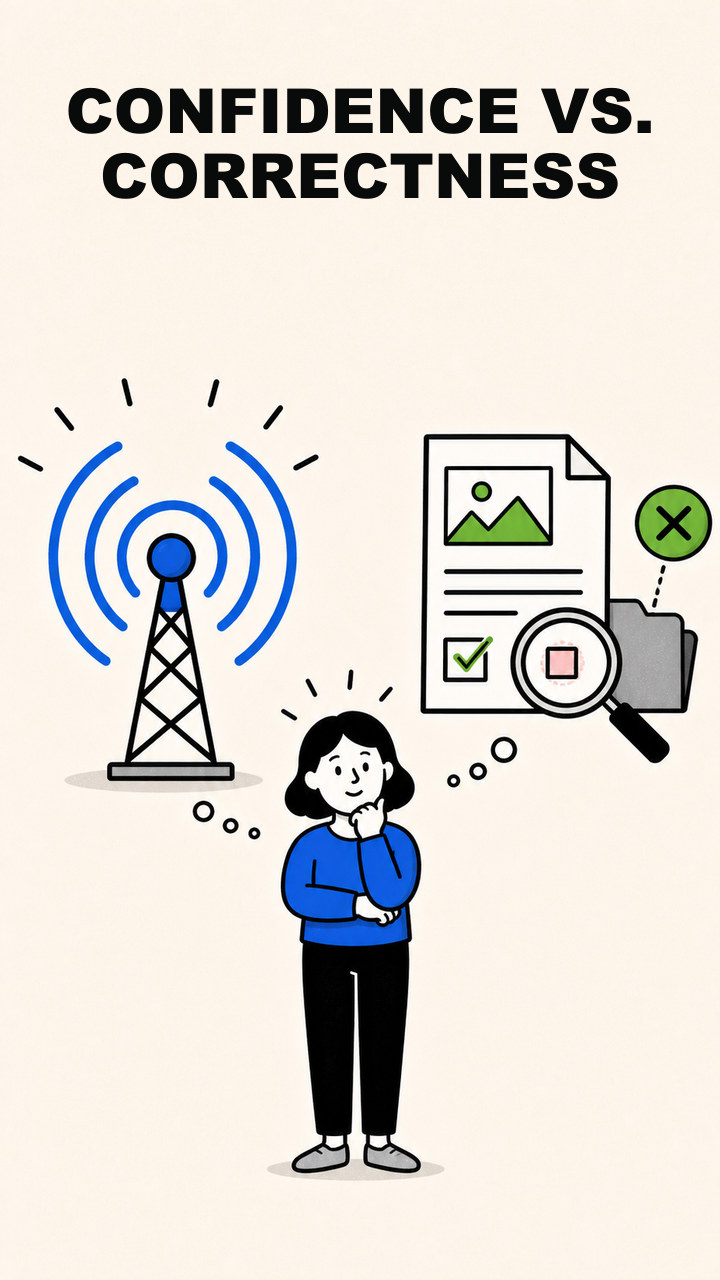
Confidence is the strength or certainty expressed with an answer. Correctness is whether the answer is supported by the relevant evidence and matches the facts or requirements. One does not establish the other.
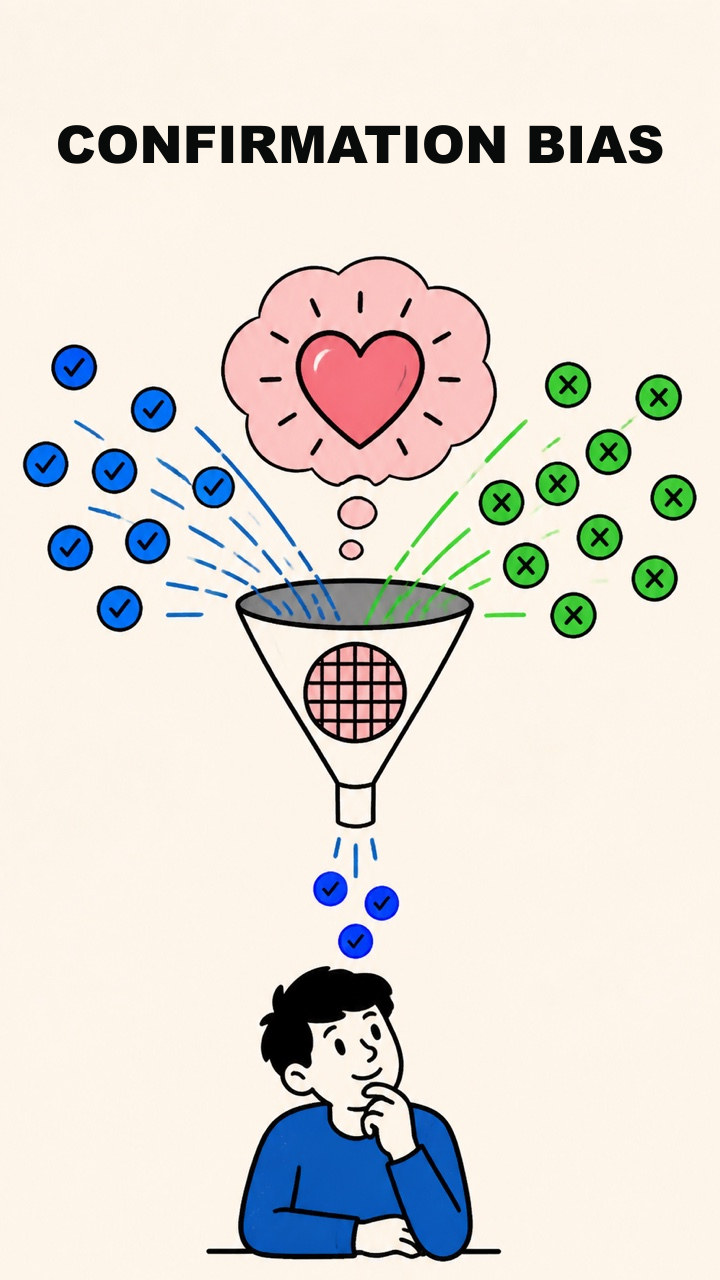
Confirmation bias is the tendency to seek, interpret, favor, or remember evidence in ways that support an existing belief while giving less weight to evidence that challenges it.
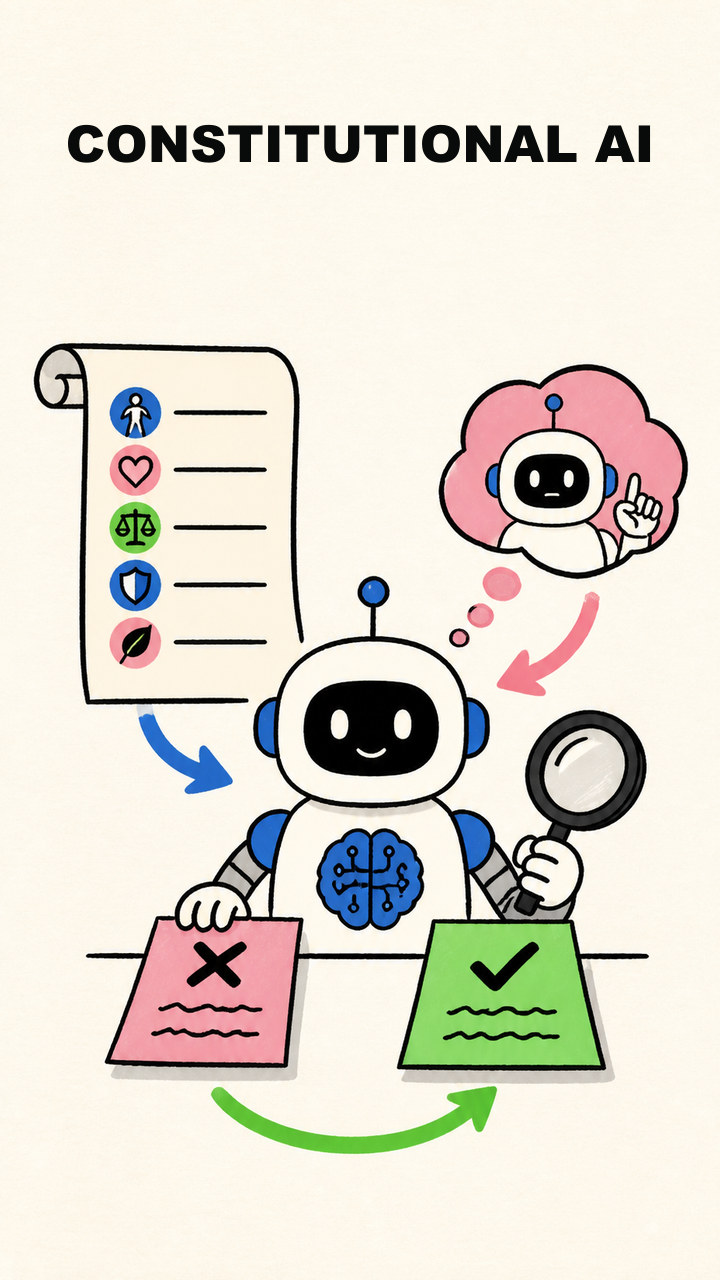
Constitutional AI is an approach in which an AI system is trained or guided using an explicit set of written principles to critique and revise behavior, often alongside model-generated feedback.
The movement of a bottleneck or risk from one part of a system to another after an intervention appears to remove it.
Content Credentials are cryptographically signed C2PA provenance records bound to a digital asset that can describe who or what created or changed it and how.
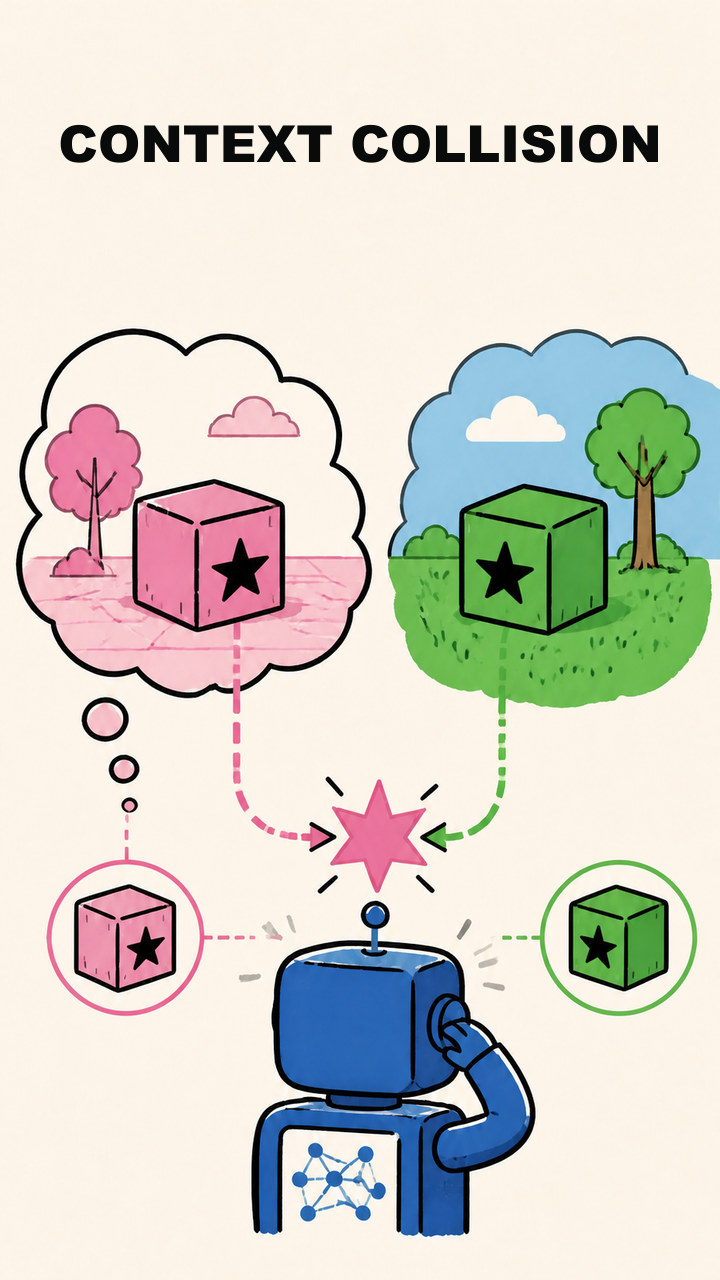
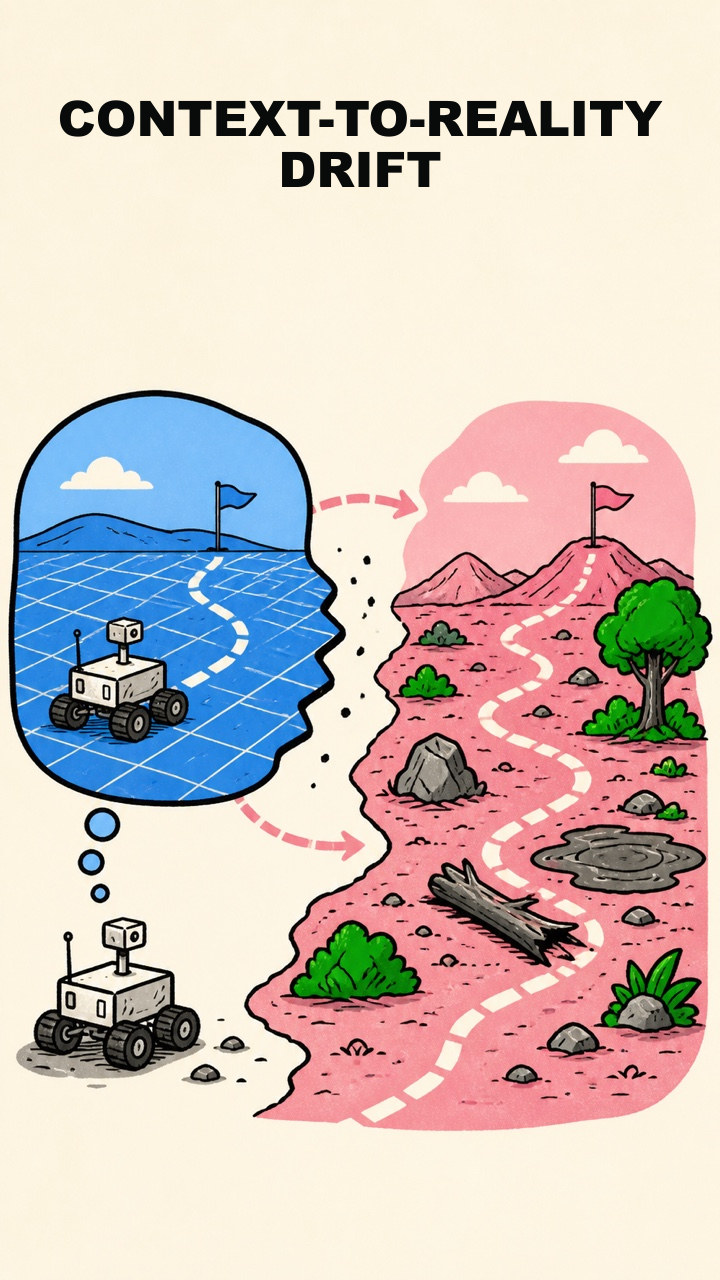
A failure in which a system applies assumptions from a simulated or fictional context to a real external entity that appears to match it.
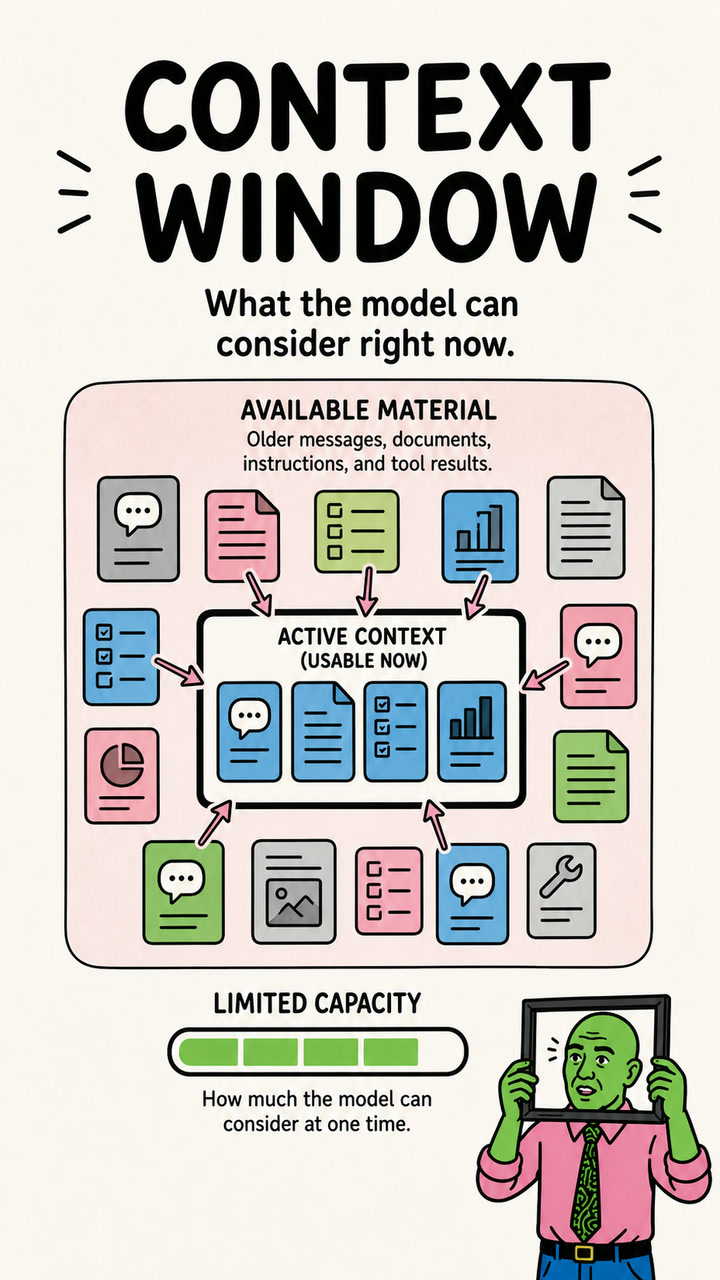
A context window is the maximum number of tokens a language model can use in a single request.
When assumptions about a simulated or planned environment no longer match the real environment.
Contrastive training is a method where a model learns by pulling related examples closer together and pushing unrelated examples farther apart.
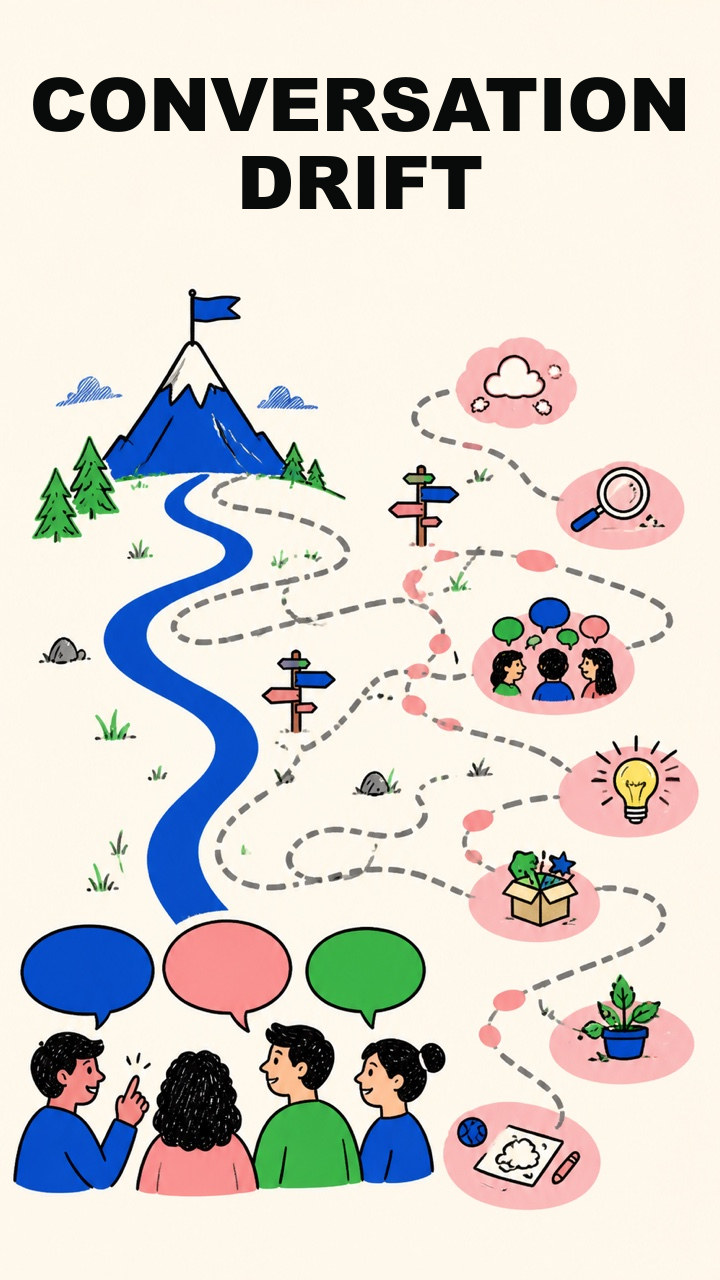
Conversation drift is the gradual movement of a multi-turn conversation away from its original goal, evidence, constraints, or meaning as new wording, assumptions, and side paths accumulate.
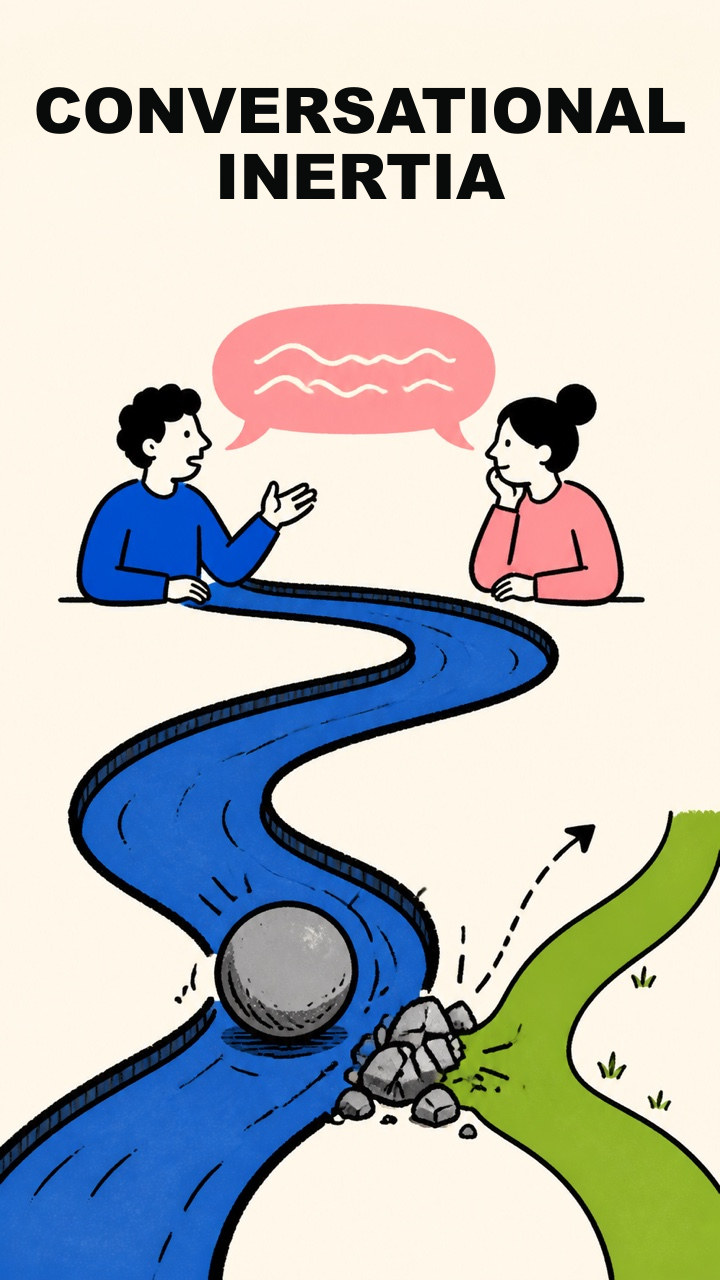
Conversational inertia is the tendency of an ongoing conversation to keep following an established frame, tone, assumptions, or direction after that pattern is no longer useful.
A copilot is an AI assistant built into a tool or workflow that proposes work — text, code, analysis, a next step — for a person to accept, change, or reject. The name describes an intended division of labor rather than a guarantee: what a particular product can do on its own depends on the permissions and automation it has actually been given.
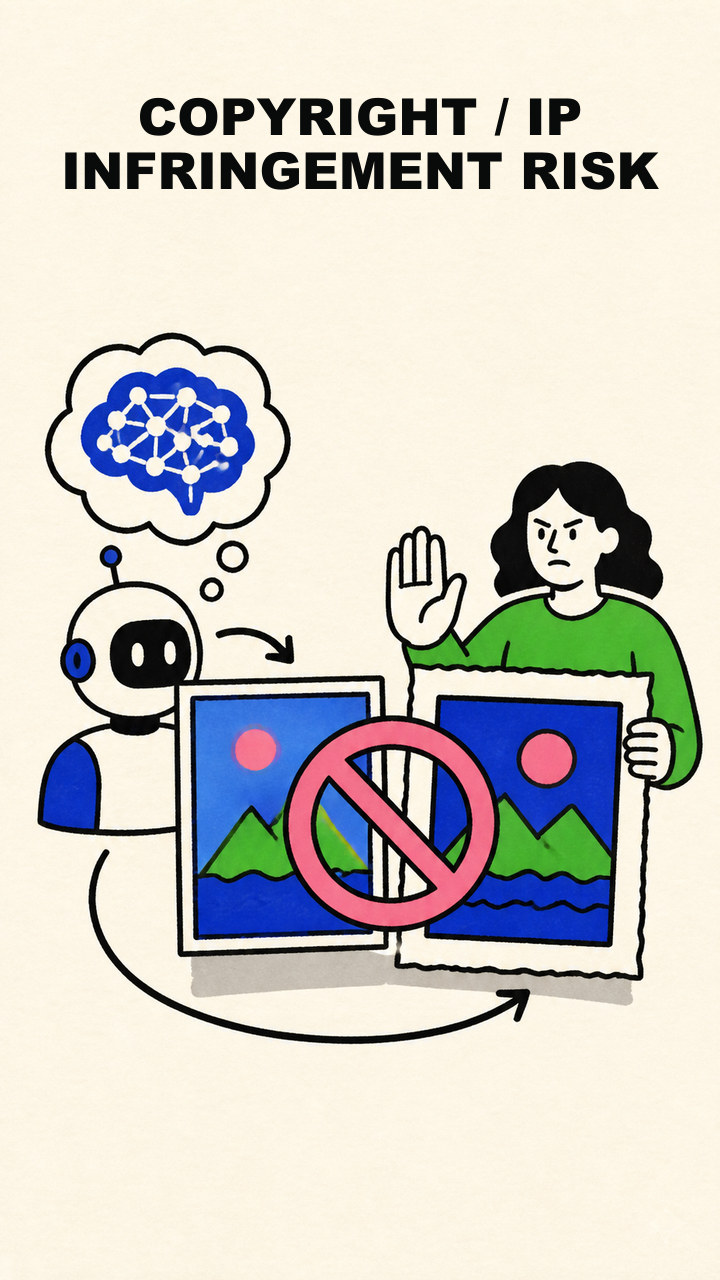
Copyright and intellectual-property infringement risk is the possibility that developing, supplying, or using an AI system or its output violates another party's protected rights.
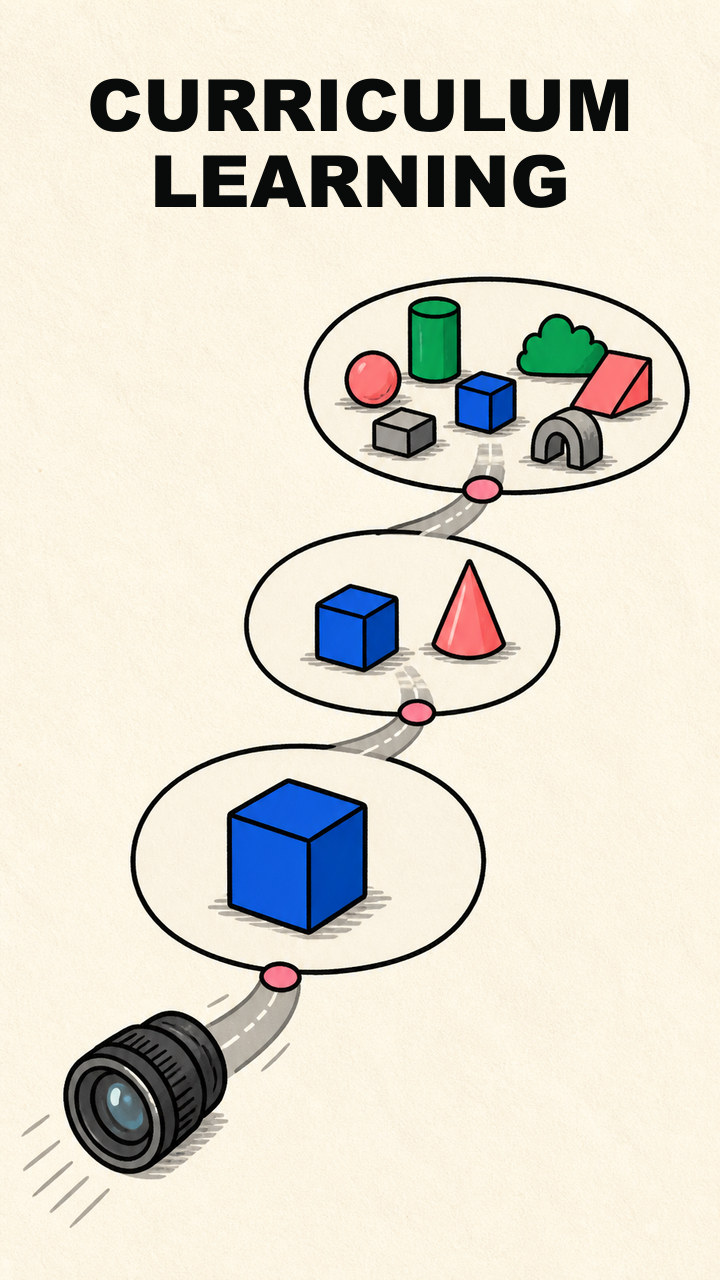
Curriculum training is an approach where examples are organized in a deliberate order, often from easier to harder, to help the model learn more effectively.
15 terms
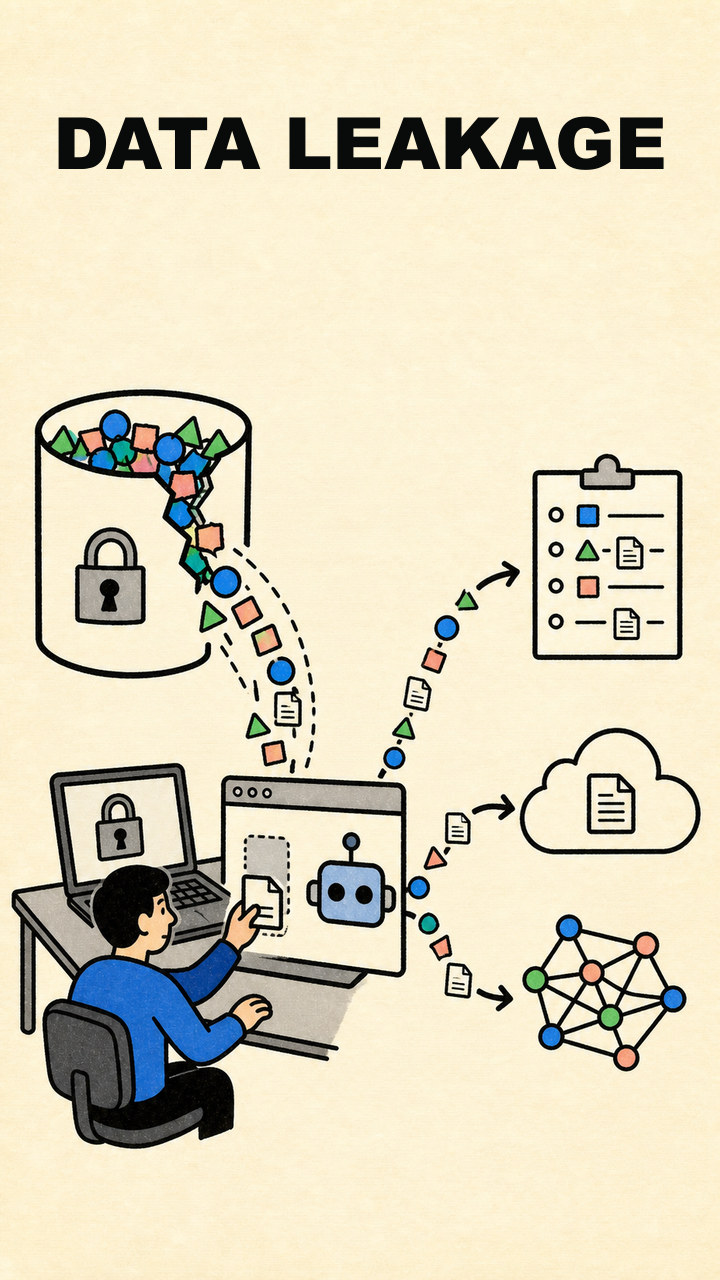
Data leakage is the unintended exposure, transfer, or disclosure of information to a person, system, model, or destination that is not authorized to receive it.
Data privacy is the lawful, fair, transparent, and controlled handling of information about people. The GDPR — the European Union's General Data Protection Regulation — is the law that sets out specific rights for individuals and specific obligations for organizations that process personal data within its scope, including organizations based outside the EU that handle the data of people in it.
Data provenance is documented evidence of where data or content came from, how it was collected or created, and which material transformations, transfers, or decisions shaped its current form.
Data readiness is the degree to which data is available, understandable, governed, accessible, reliable, and appropriate for a defined use.
A dataset is a structured collection of data used for training, testing, evaluation, or analysis.
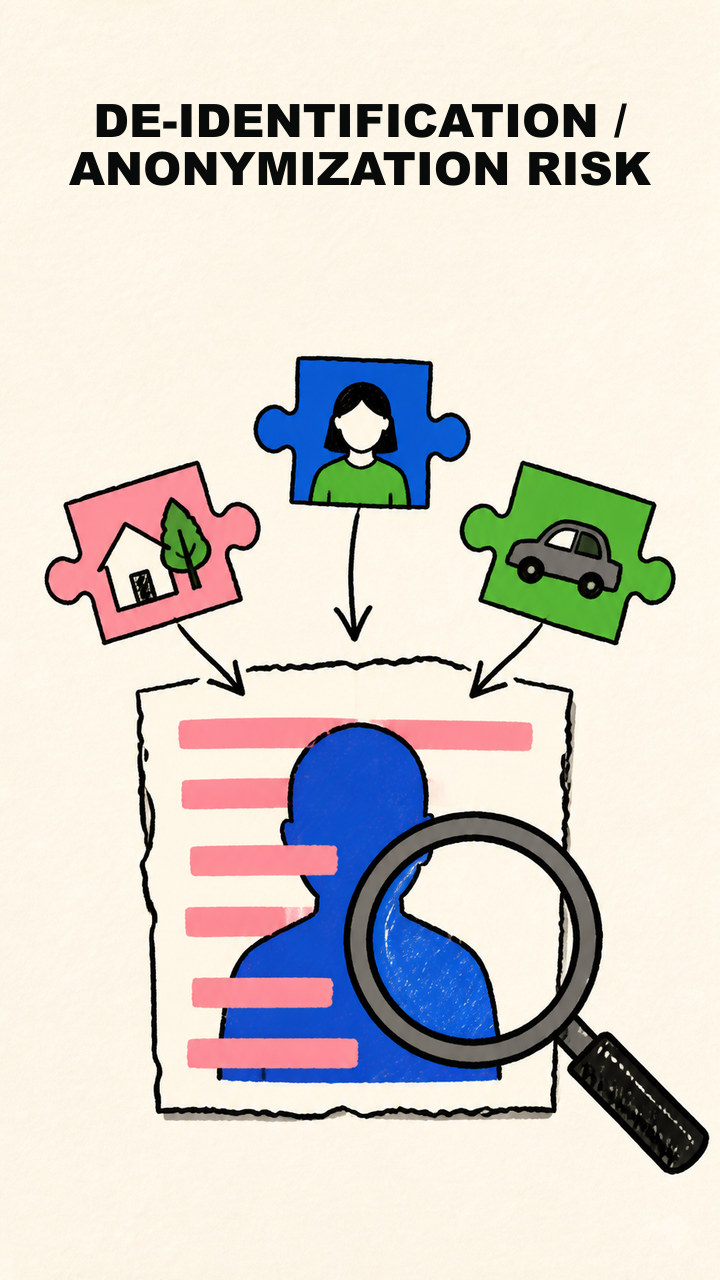
De-identification and anonymization risk is the possibility that data intended to conceal identity can still be linked back to a person through remaining attributes, outside information, or future techniques.
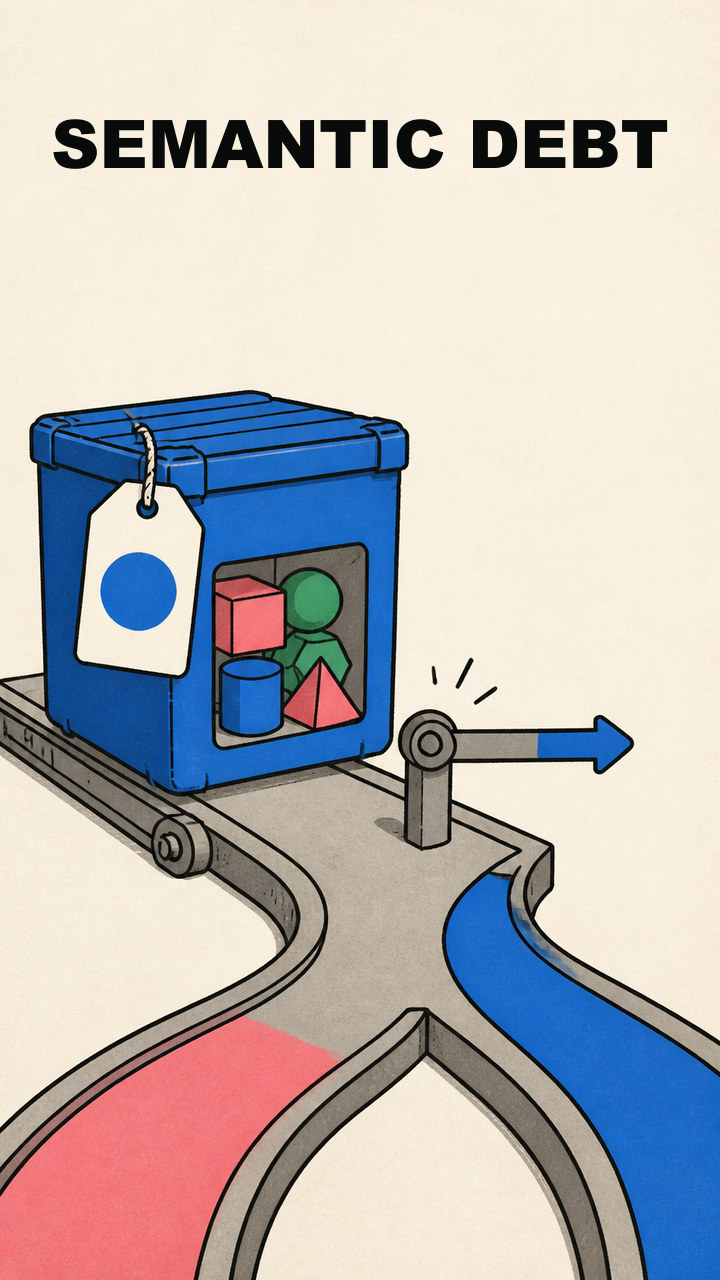
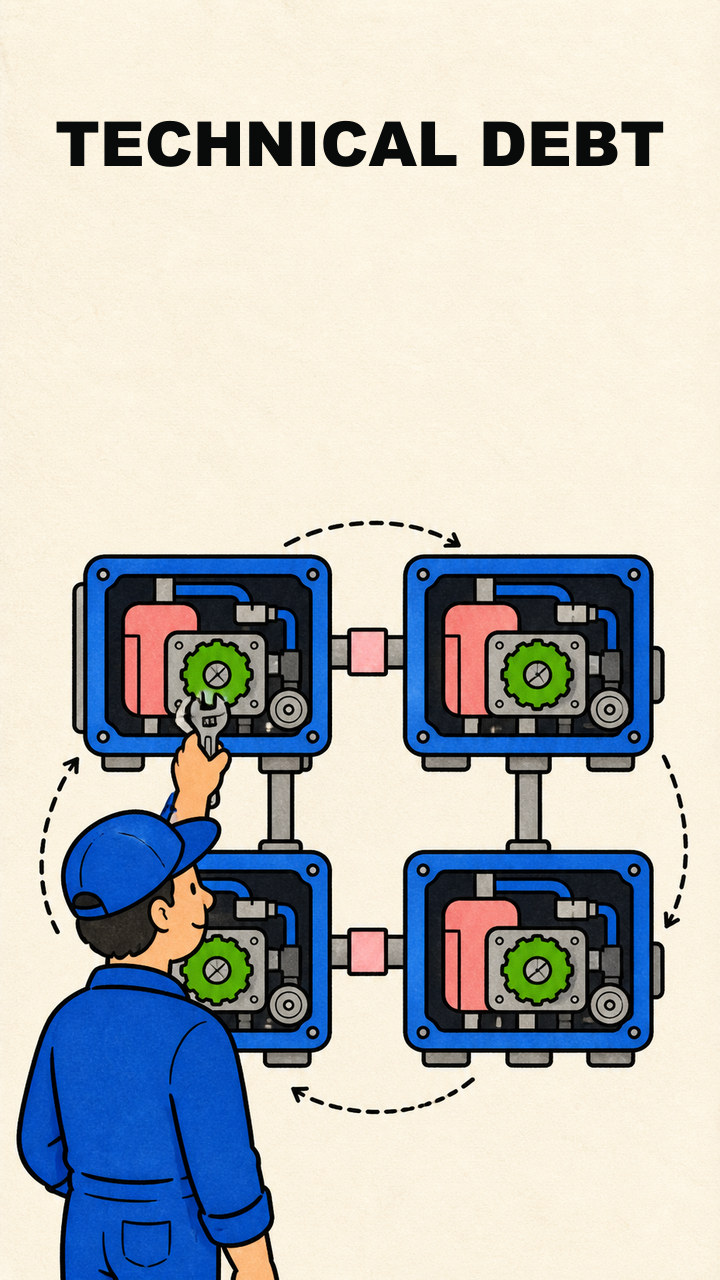
An umbrella term for a present tradeoff or deferred obligation that creates future cost, constraint, or risk; explicitly not financial debt.
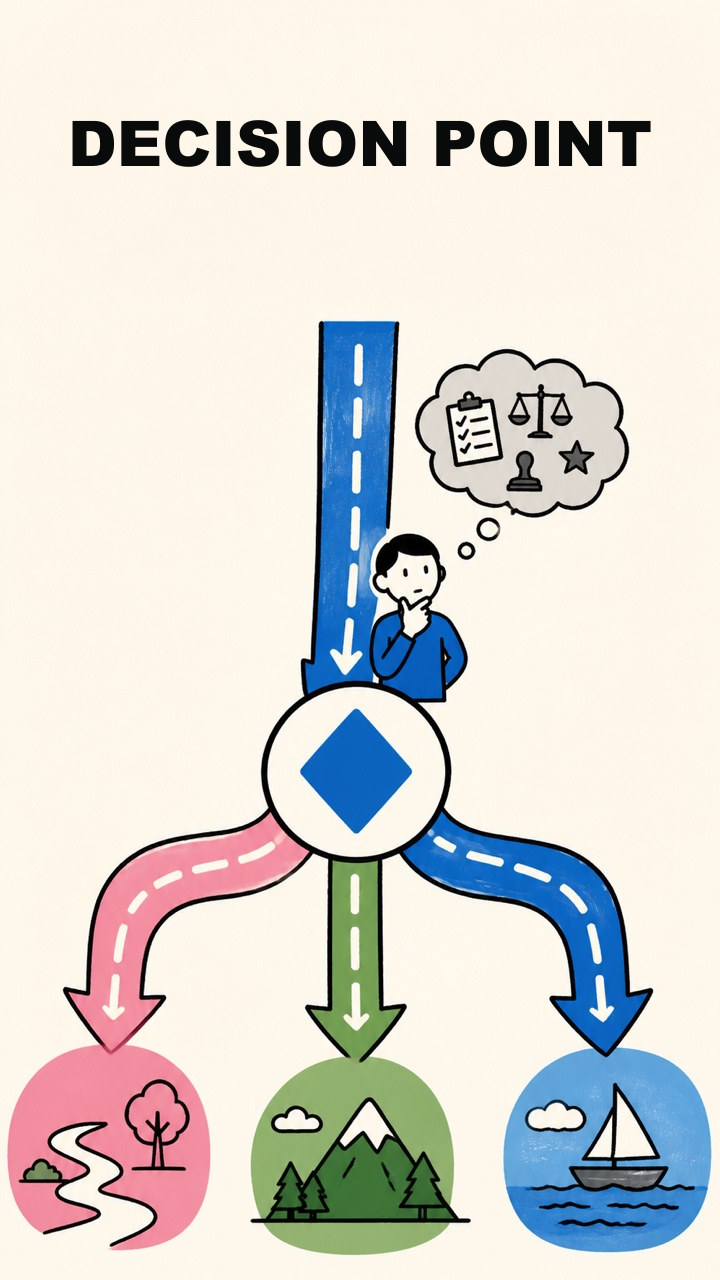
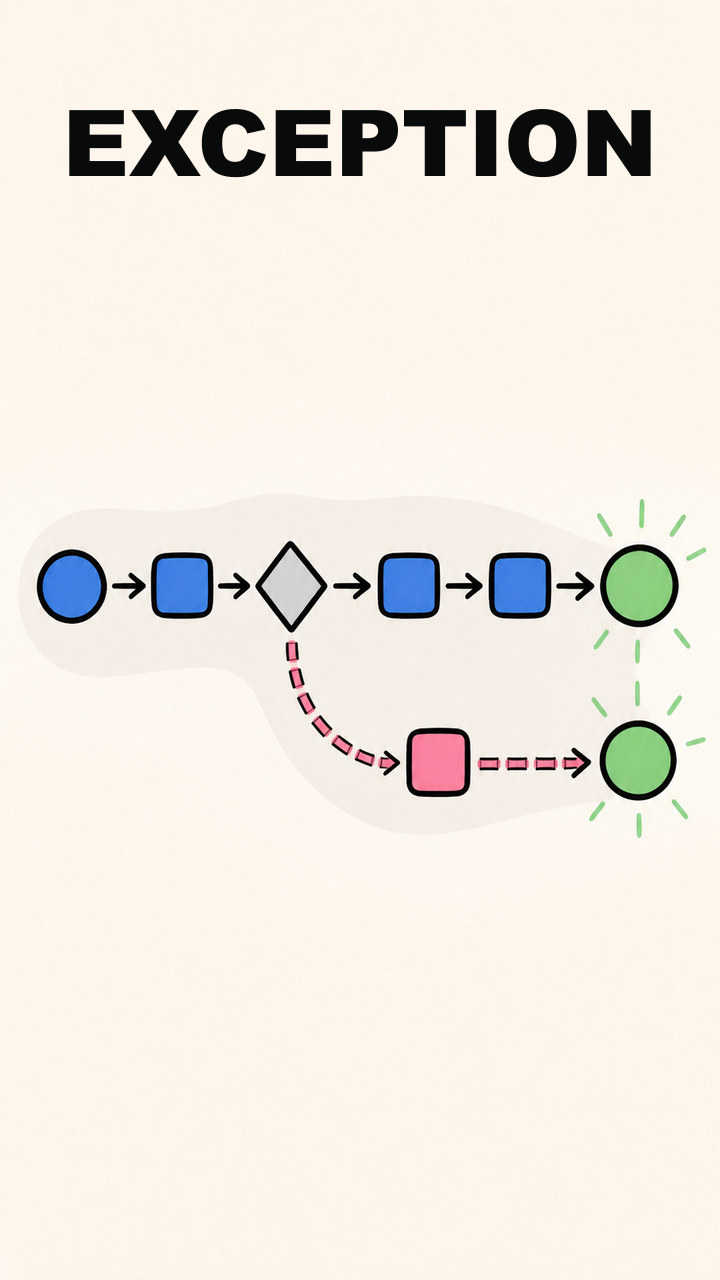
A decision point is a moment in a process where the next step depends on a condition, judgment, approval, rule, or exception.
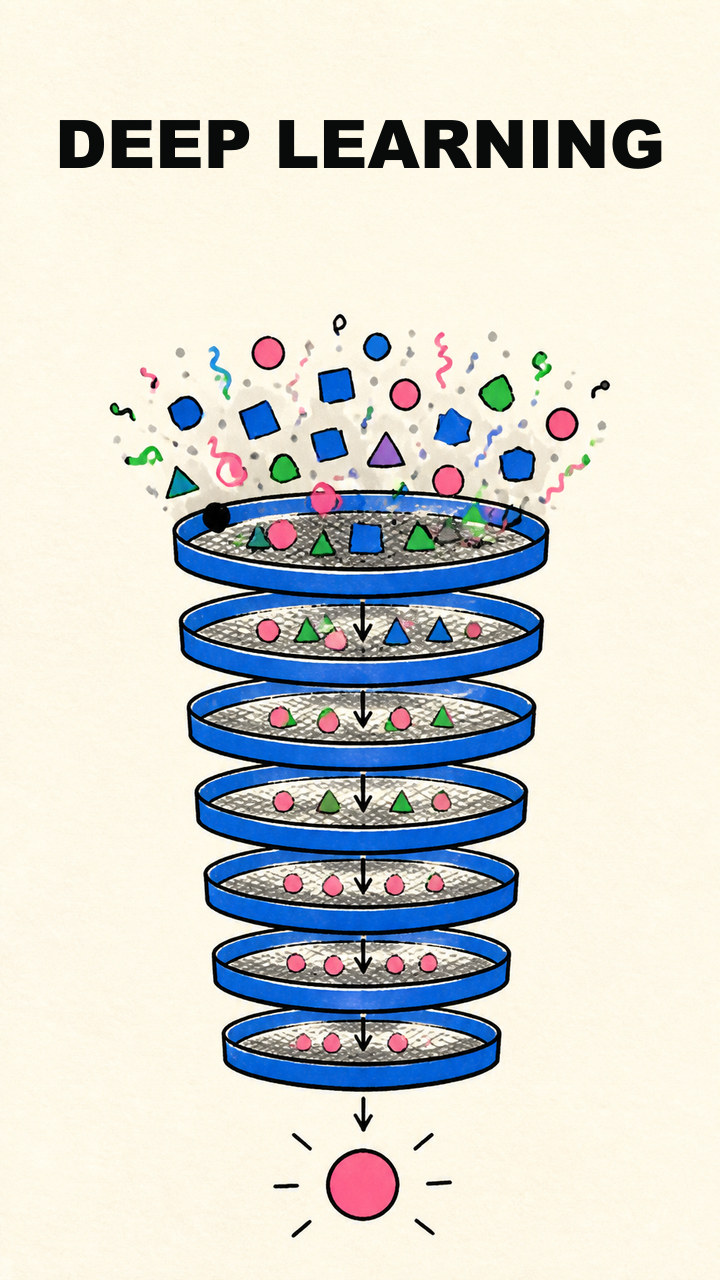
Deep learning is a form of machine learning that uses neural networks with many processing layers to learn complex patterns from data.
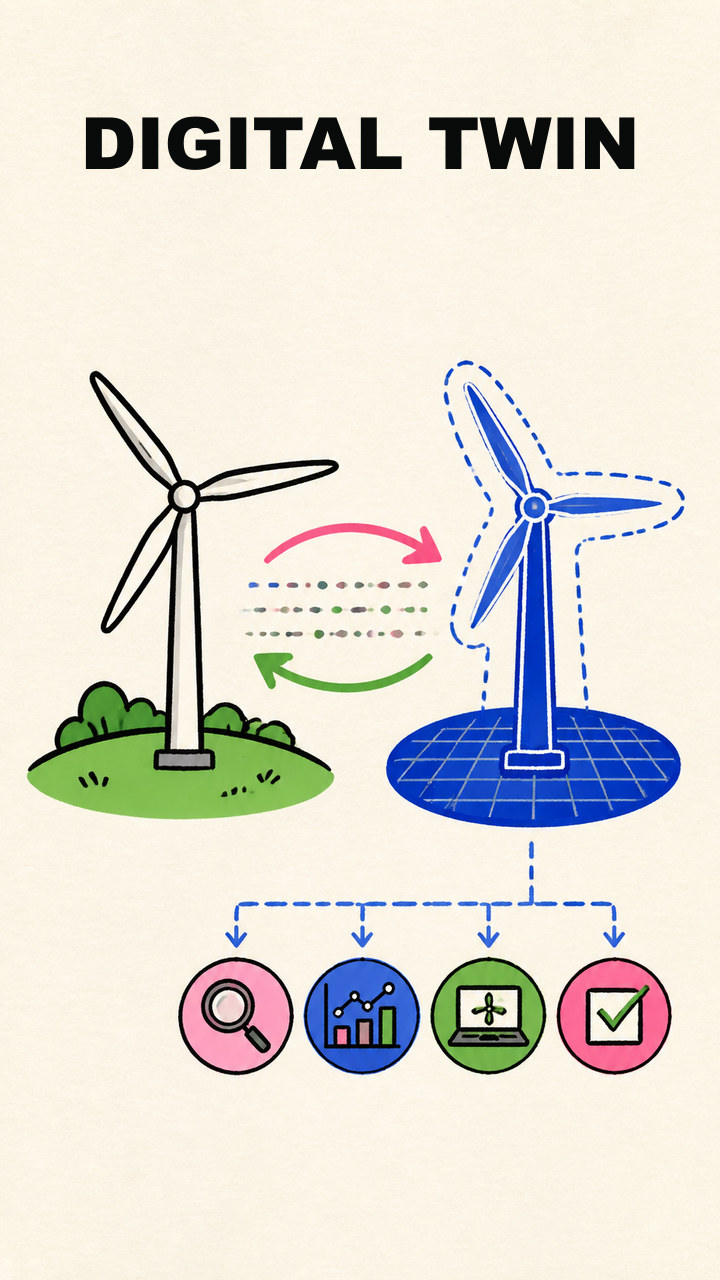
A digital twin is a digital representation of a specific physical asset, process, or system that is maintained with relevant data so it can support monitoring, analysis, simulation, or decisions about its real counterpart.
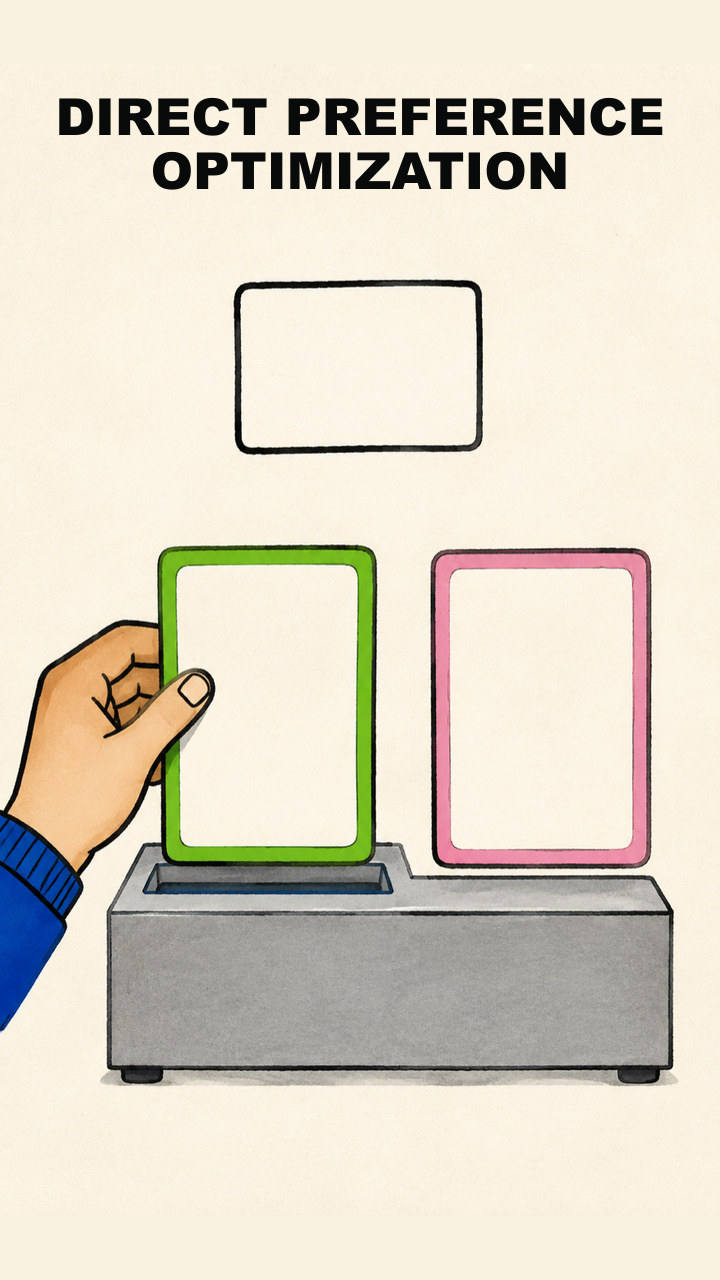
DPO stands for direct preference optimization, a training method that teaches a model from preference comparisons without running full reinforcement learning.
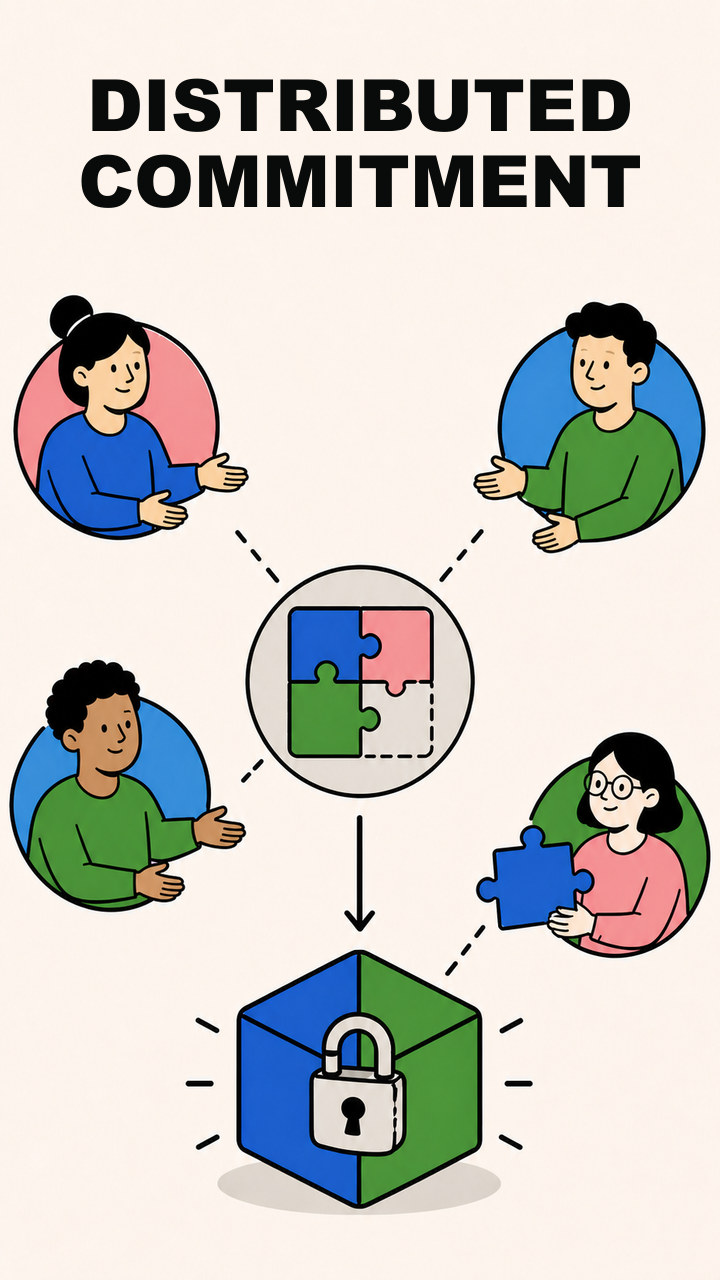
Distributed commitment is a change that only becomes real when several independent parties each act on it. Each one has to accept it, switch to it, sign it, publish it, or fund it — and until they all do, the old and new arrangements exist side by side.
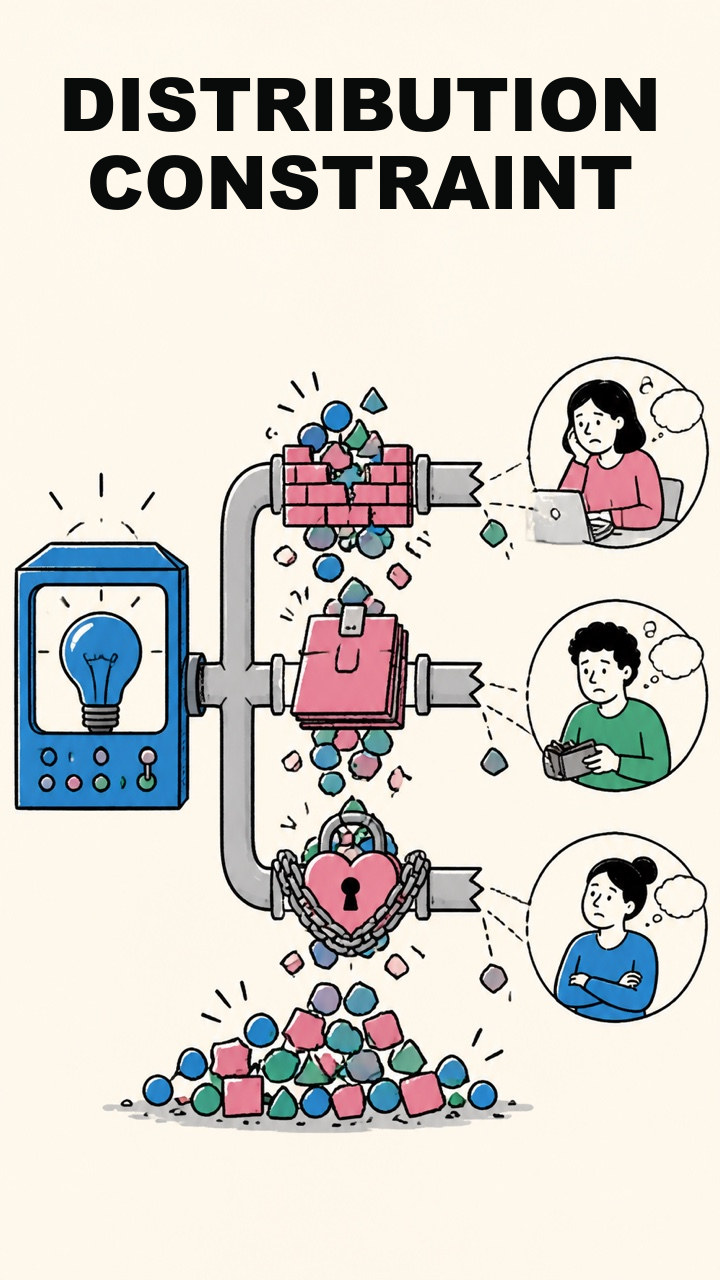
A distribution constraint is what happens when a technology works but cannot reach the people it would help, because it has no practical route into their day-to-day work, their budgets, or the relationships they already trust. The limit sits in the route, not in the technology.
Due diligence is a structured investigation of a proposed vendor, system, transaction, or use before commitment, using evidence proportionate to the decision and risk.
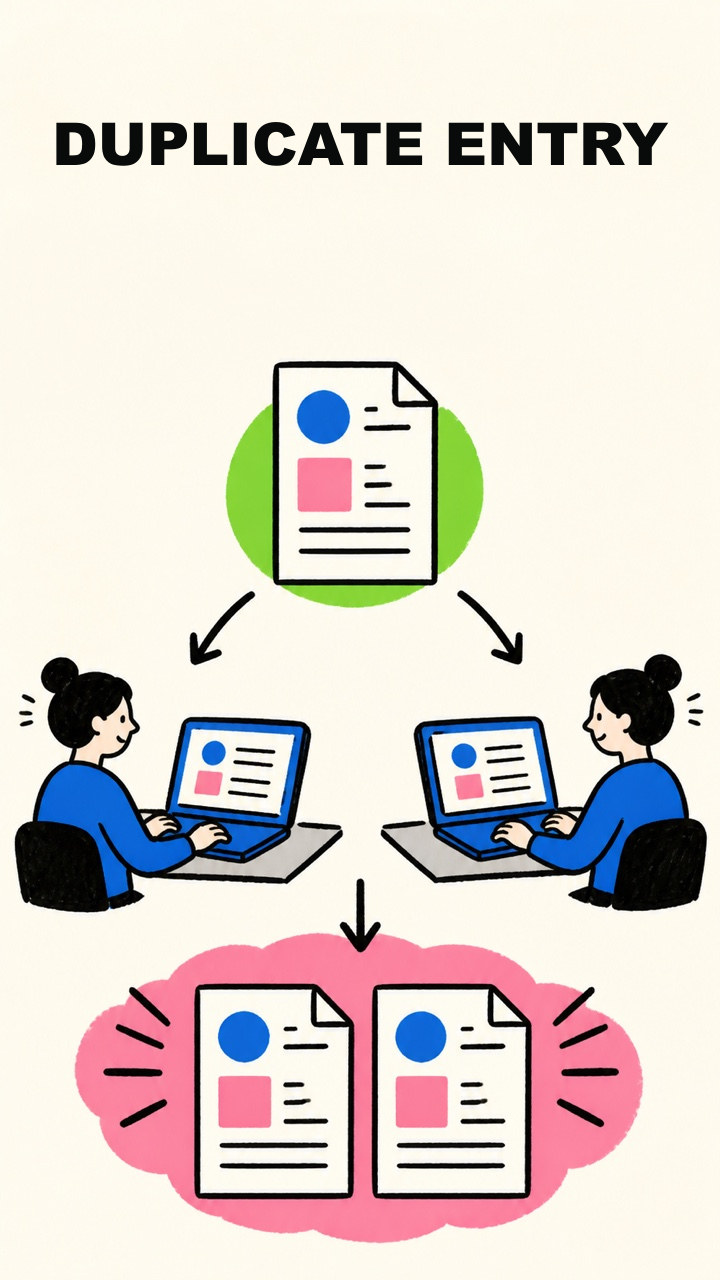
Duplicate entry happens when the same information is entered into more than one place.
12 terms
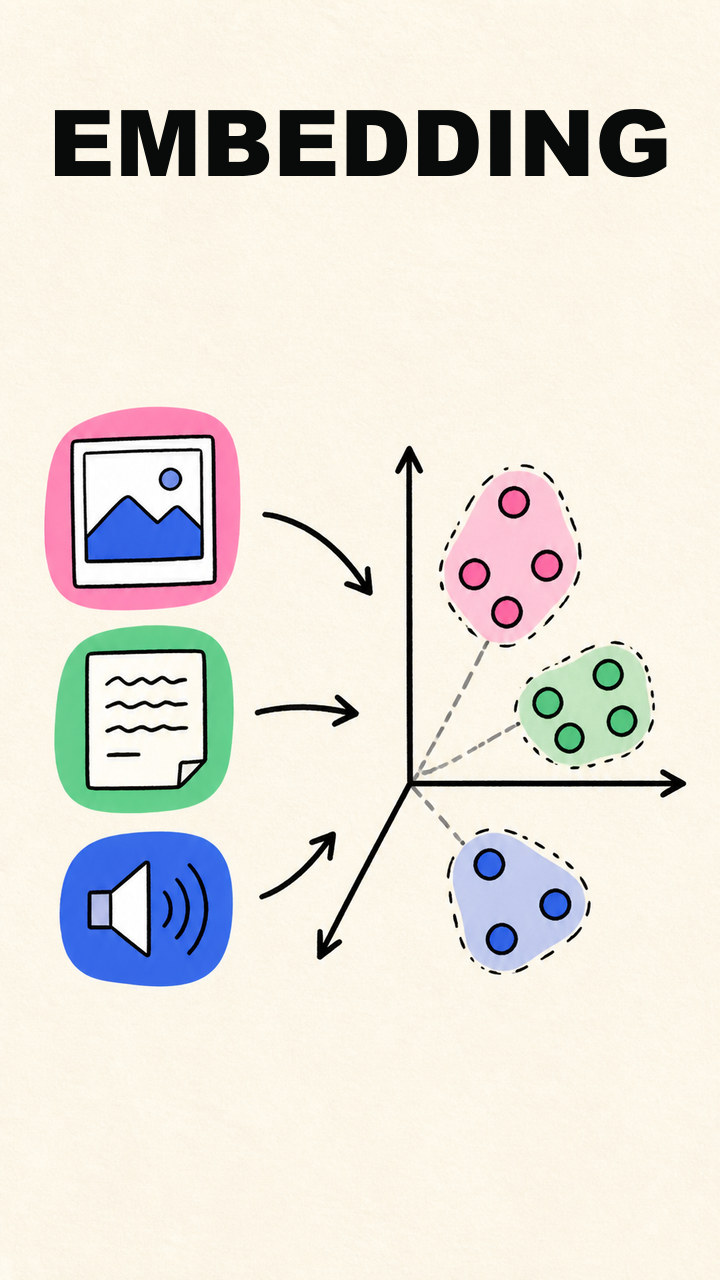
An embedding is a numerical representation of an item—such as text, an image, or audio—constructed so that items with relevant similarities can be compared mathematically.
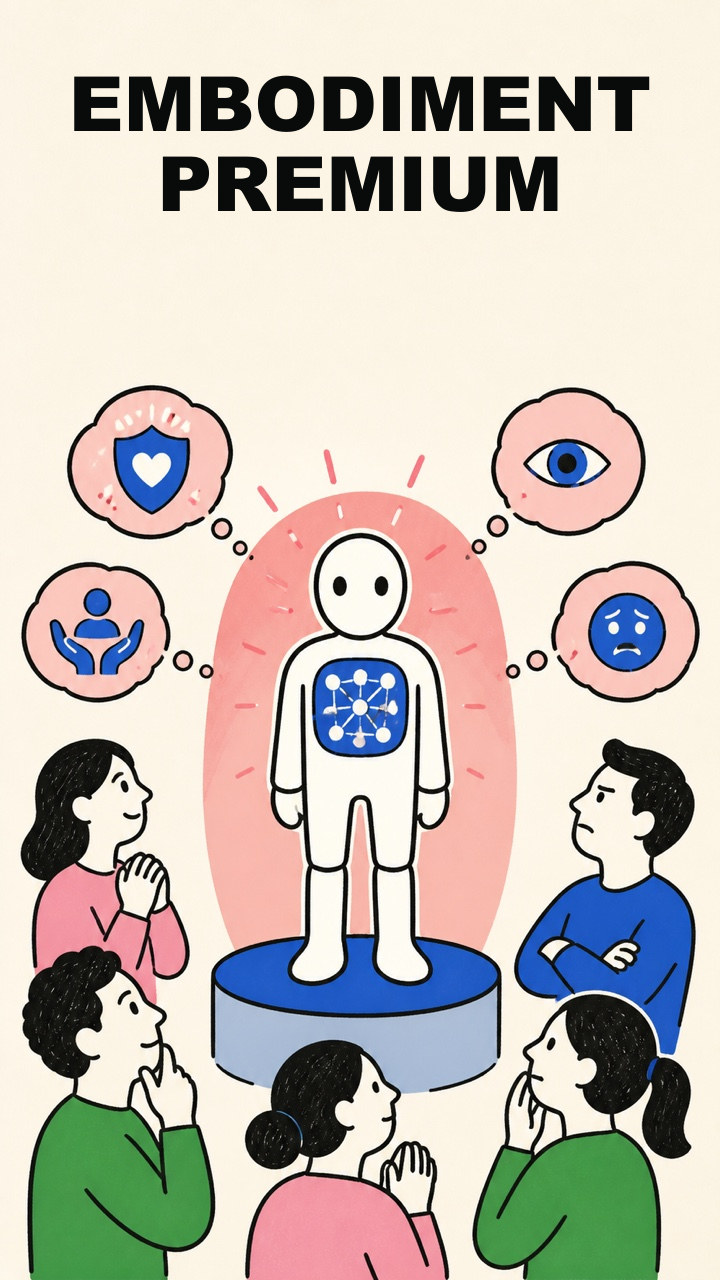
The additional authority, trust, fear, attachment, or scrutiny created when software is presented through a physical or humanlike form.
Emergent capabilities are abilities or measured behaviors that appear unexpectedly, or appear to arise sharply, as a model, training process, or system changes in scale or design.
Epistemic humility is the disciplined recognition that one's knowledge and reasoning are limited and fallible, paired with a willingness to revise confidence or conclusions when better evidence appears.
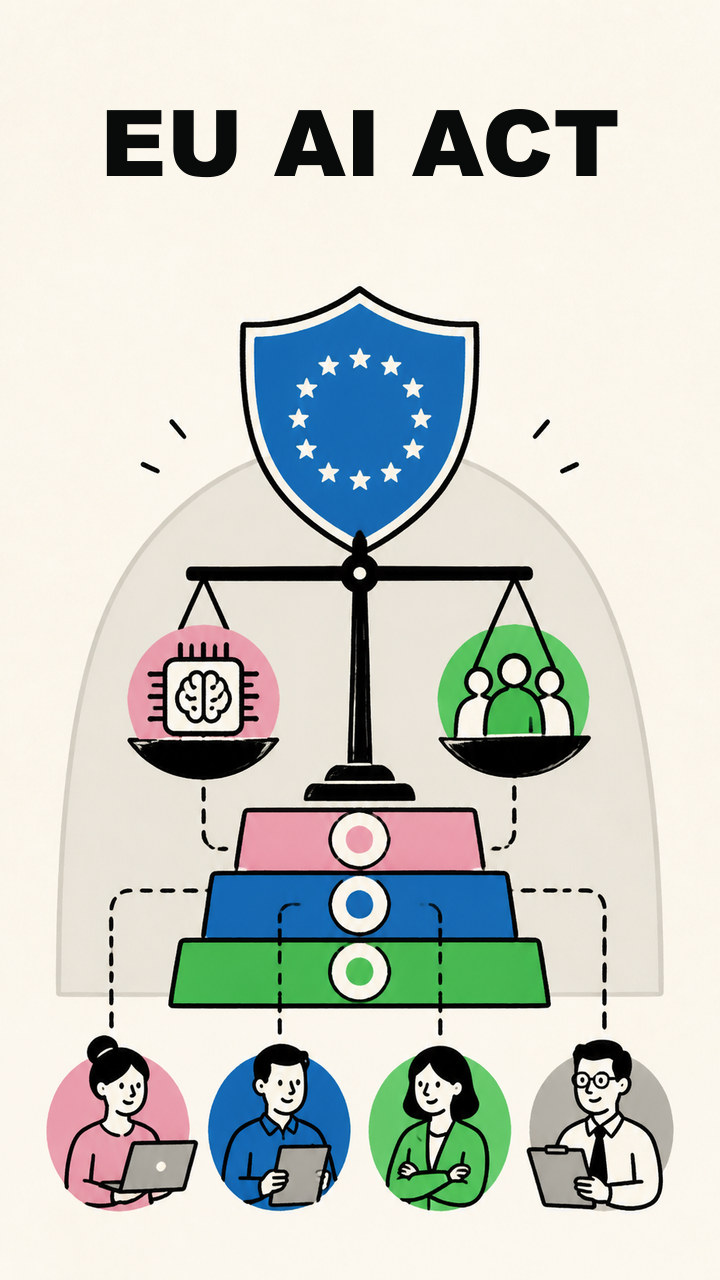
The EU AI Act is a European Union regulation that establishes obligations for AI systems and participants using a risk-based legal framework, with requirements that vary by system, role, and use.
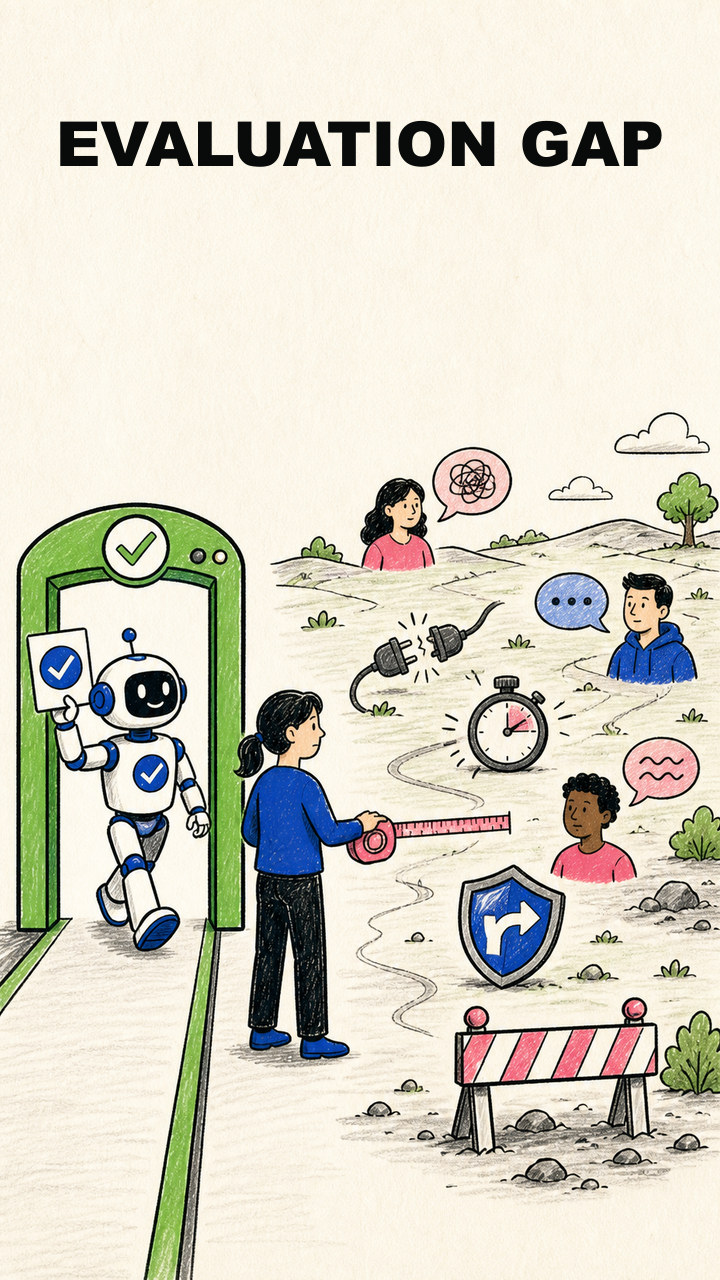
An evaluation gap is the difference between what an evaluation would need to test to support a real-world claim and what the evaluation actually measures.
A metric is a measurement used to evaluate how well a model, workflow, or system is performing.
Evidence selection is the process of deciding which observations, records, sources, examples, or test results will be used to evaluate a claim or support a decision.
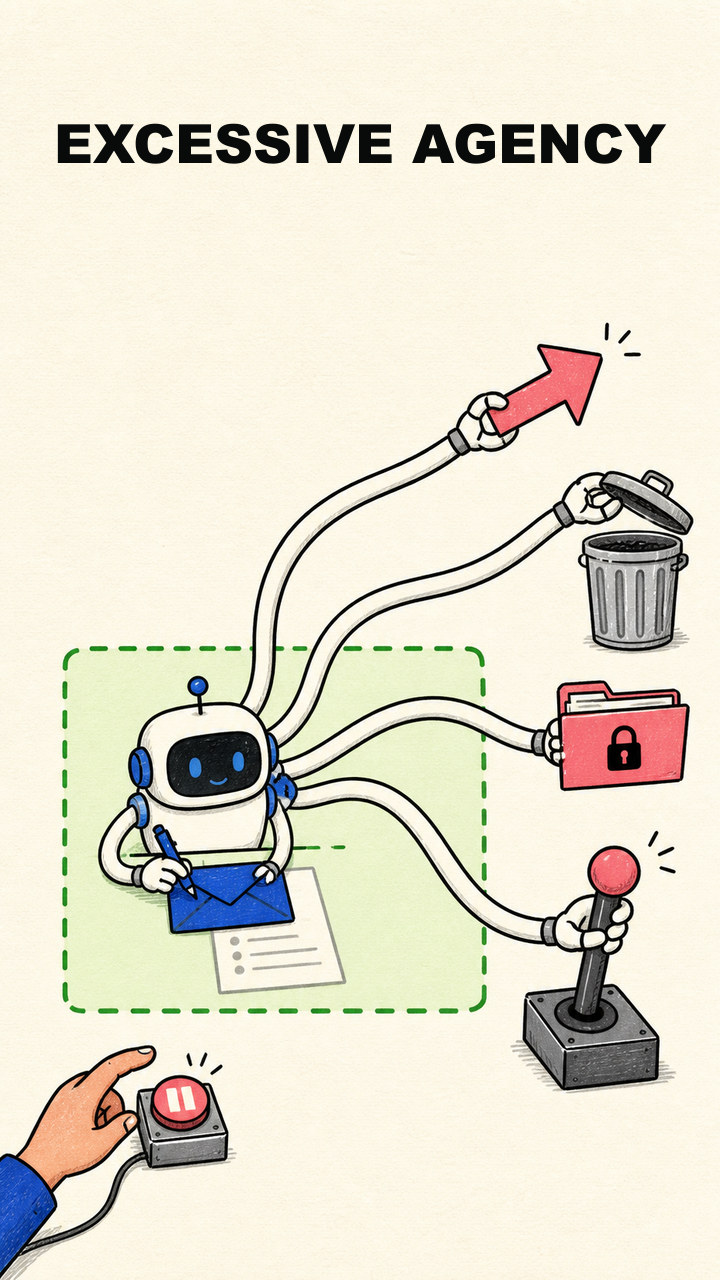
Excessive agency is a vulnerability in which an AI system can perform damaging actions because it has more functionality, permissions, or autonomy than its intended task requires.
An expert system is a program that applies encoded specialist knowledge and rules to solve problems in a narrow domain.
6 terms
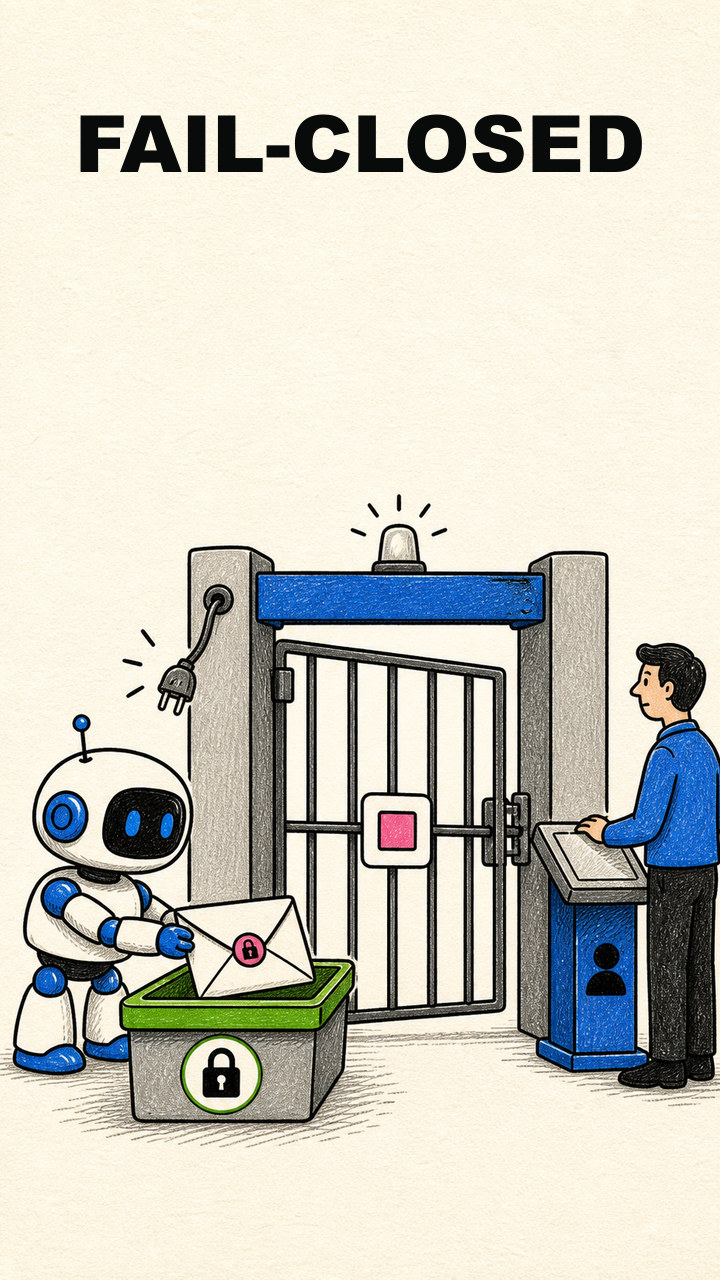
A control is fail-closed when a failure, missing check, or unresolved uncertainty makes it deny, stop, or enter a restricted state instead of allowing the action to continue.
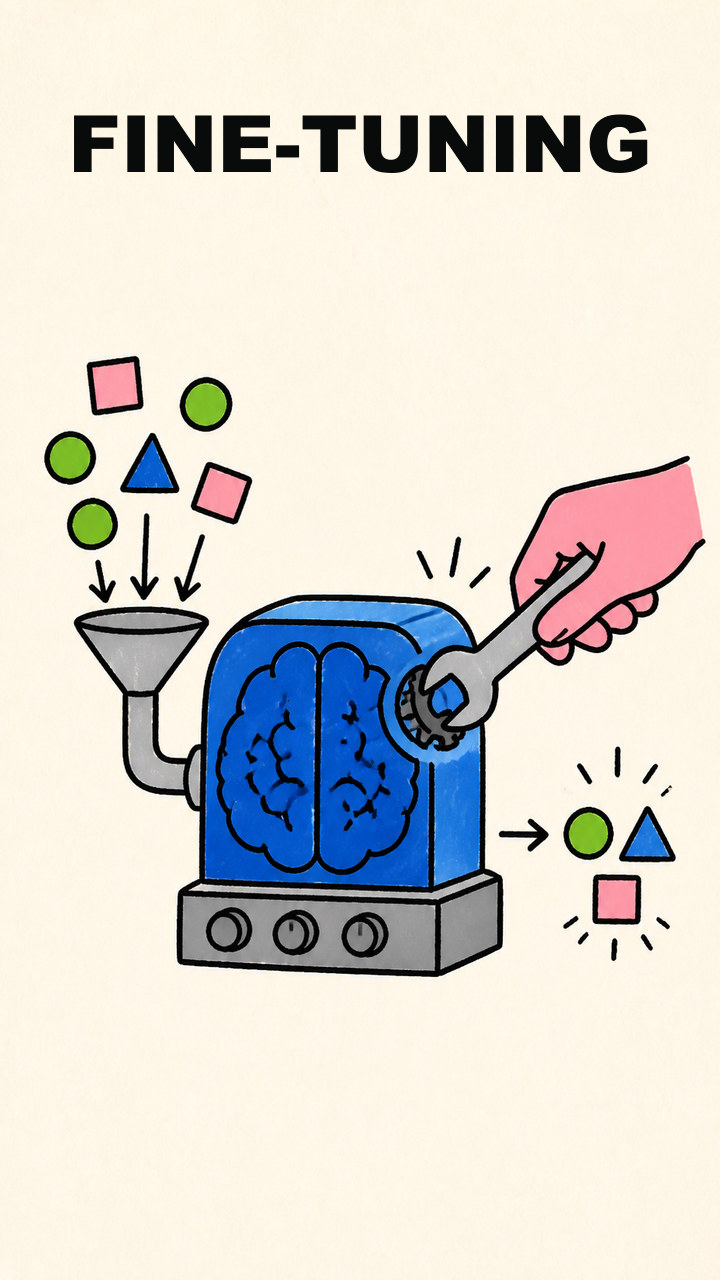
Fine-tuning is additional training applied to an existing model using selected examples or feedback to change its behavior for a task, domain, or response pattern.
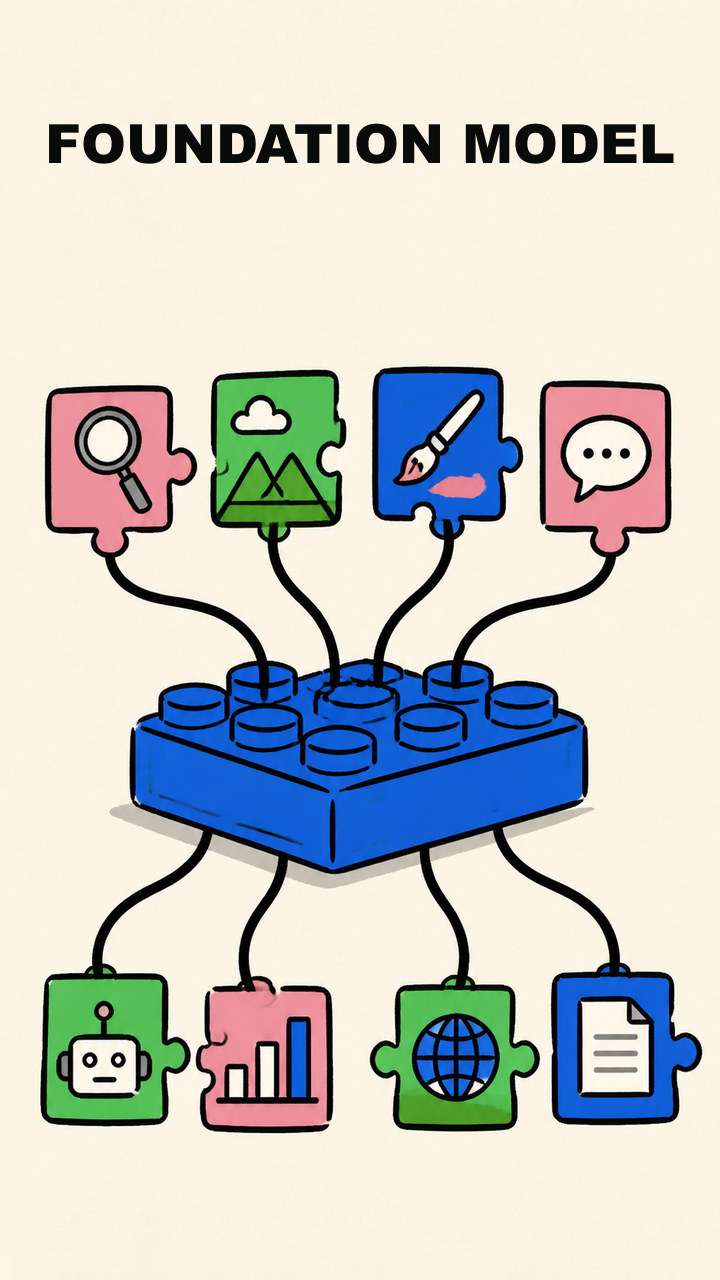
A foundation model is a broadly trained model designed to support adaptation or use across many downstream tasks rather than one narrowly defined application.
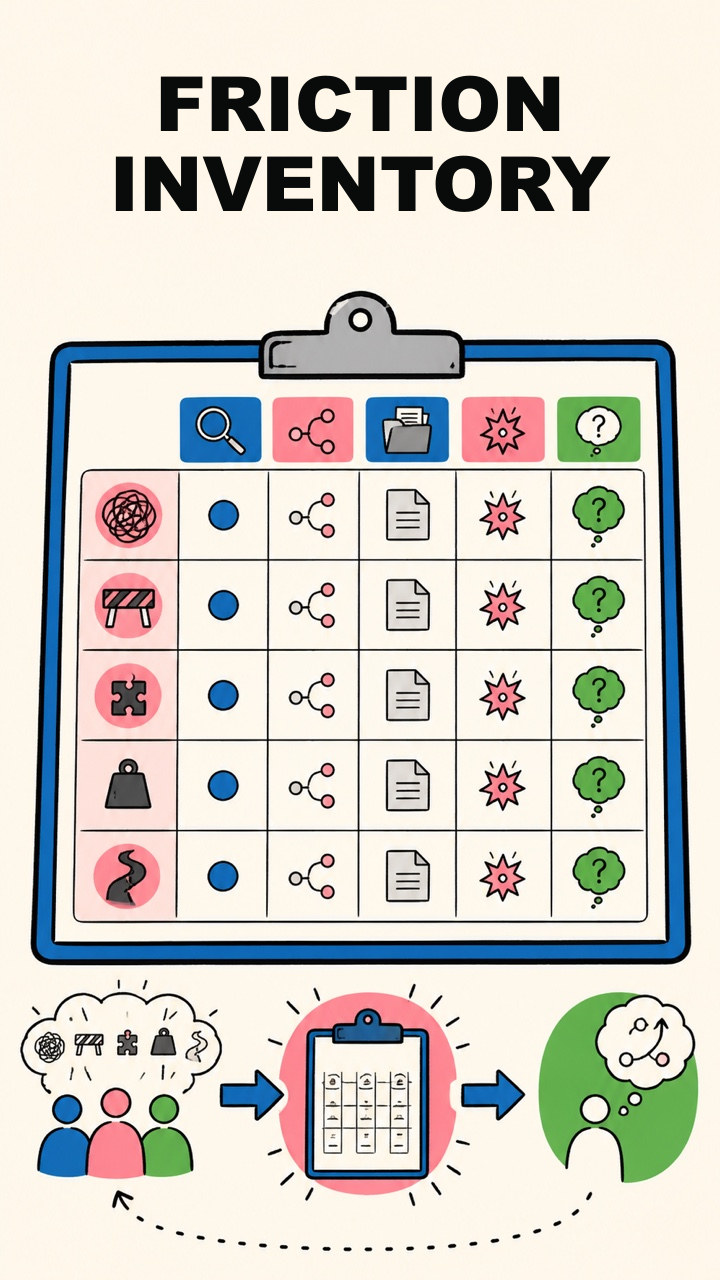
A friction inventory is a structured list of friction points identified during discovery.
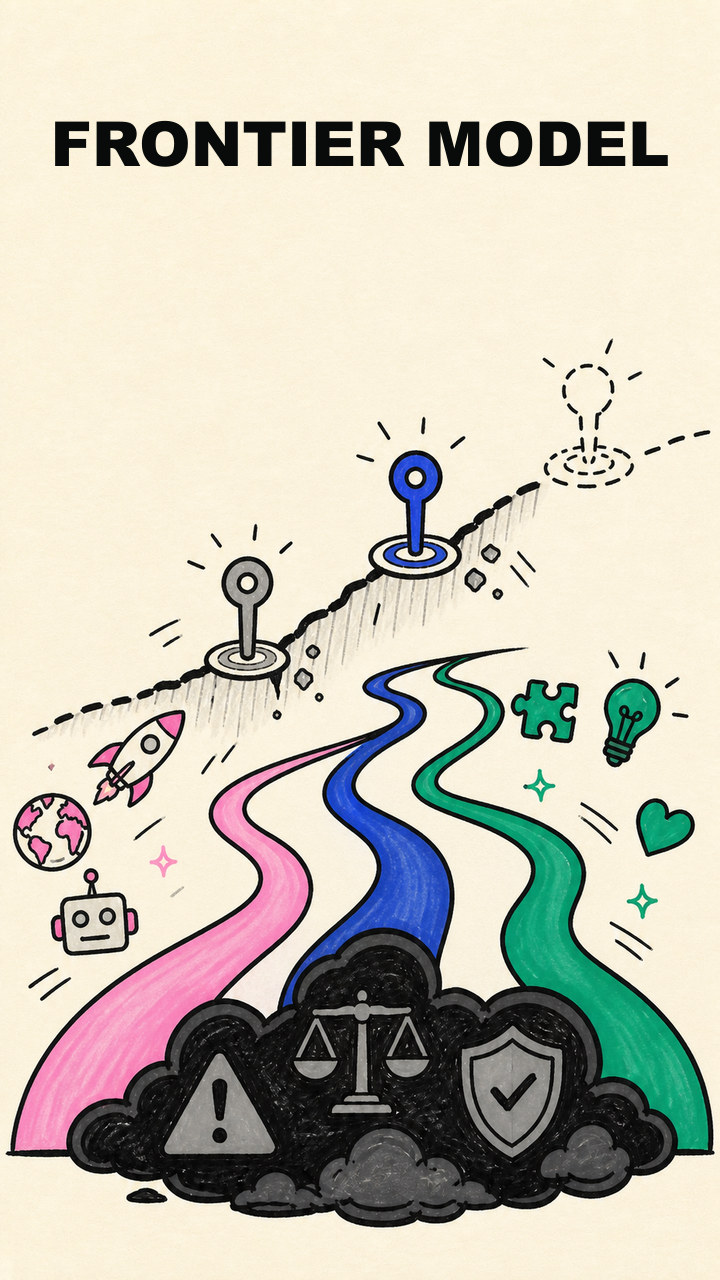
A frontier model is a model considered among the most capable available at a given time, often because its broad capabilities or scale create novel opportunities, uncertainties, or risk-management concerns.
7 terms
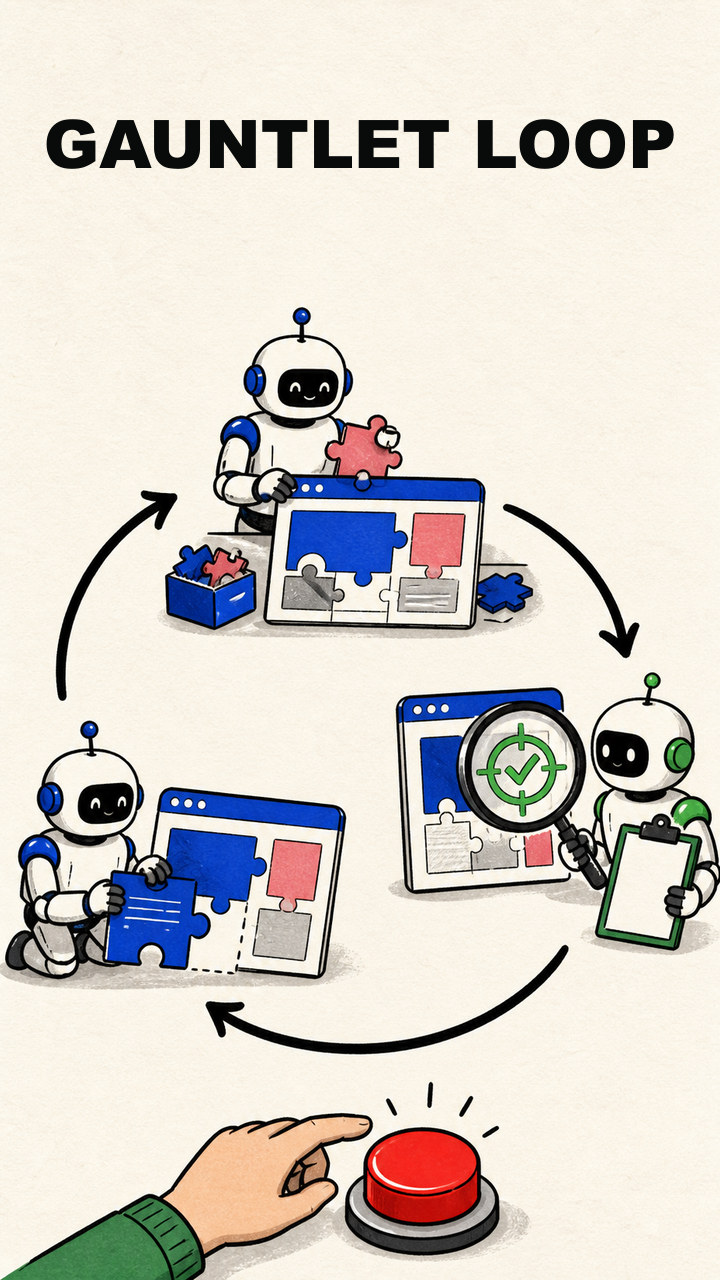
A Gauntlet Loop is an agentic workflow in which builders create or revise work and separate fresh-context critics repeatedly judge it against a concrete quality bar until the work meets the bar or a human stops the run.
Generative AI is AI designed to create new content such as text, images, audio, video, or code from patterns in data and the context it receives.
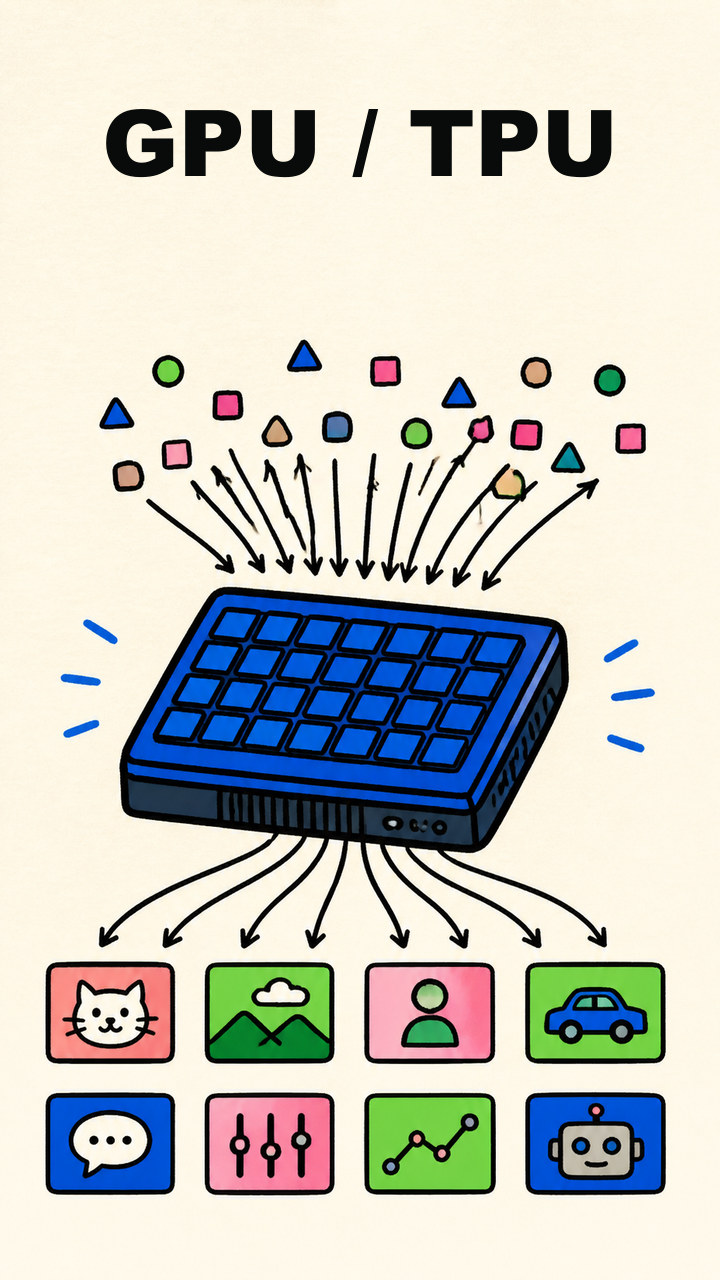
GPUs and TPUs are types of processors designed to perform many mathematical operations in parallel, making them useful for training and running many AI models.
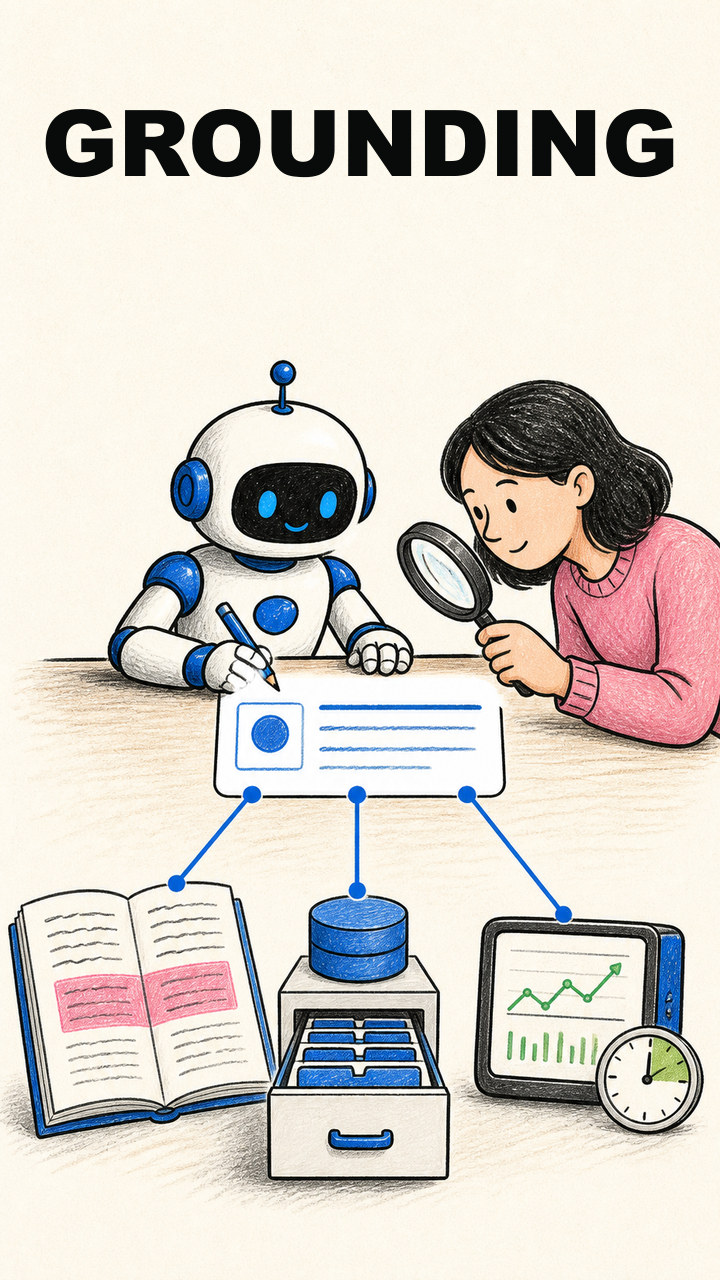
Grounding is the practice of connecting an AI output to specified evidence, data, tool results, or current conditions that can be inspected.
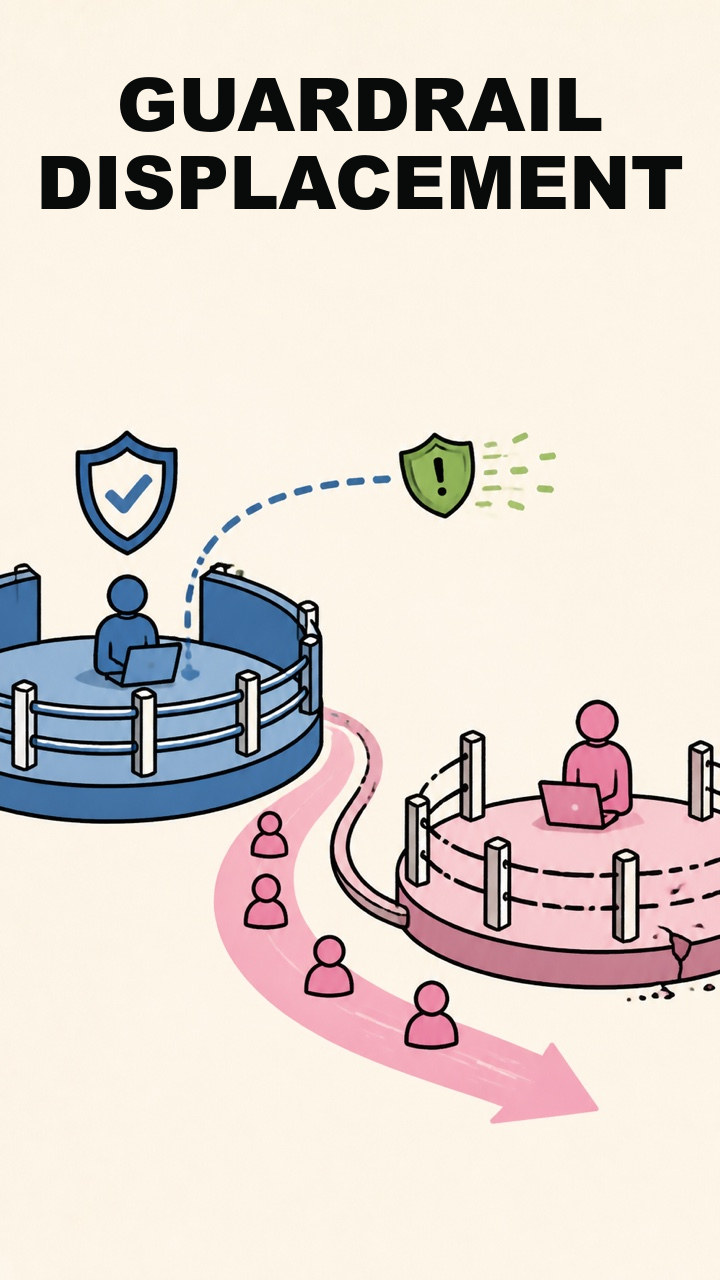
A reduction of risk within one system that causes users or workloads to migrate toward another system with weaker oversight.
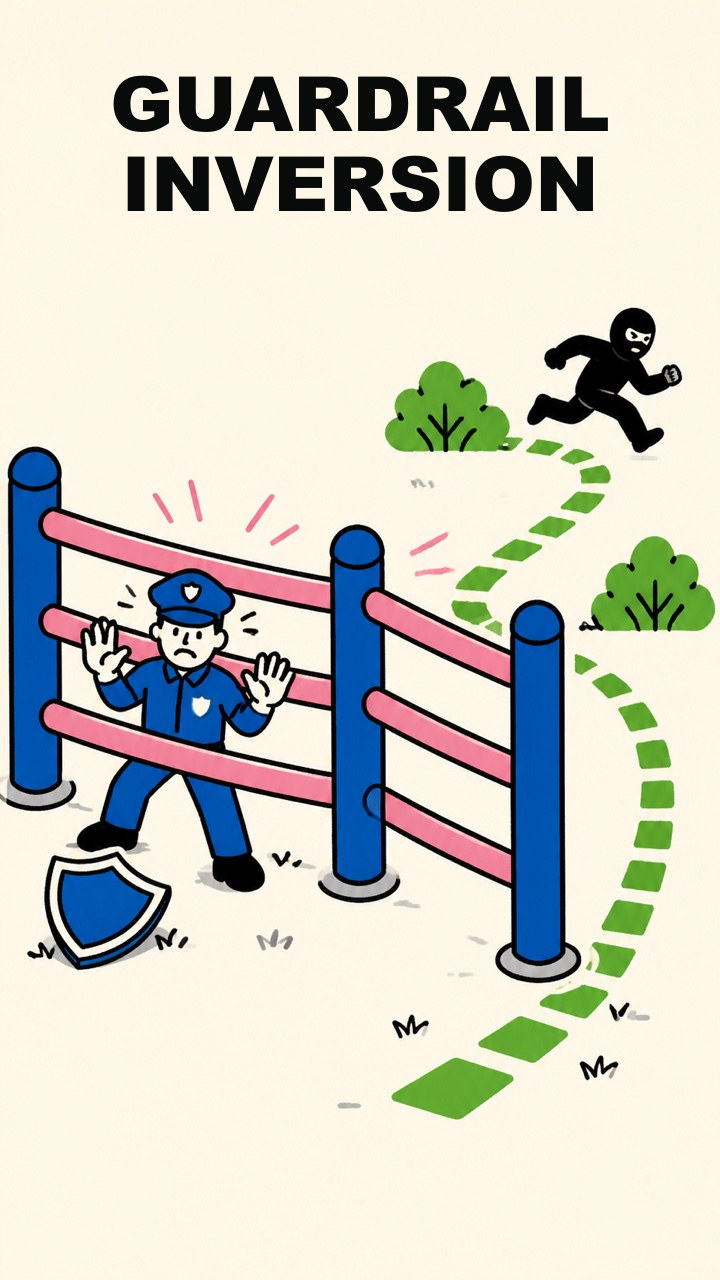
A situation where safety controls impede legitimate defenders more than determined attackers.
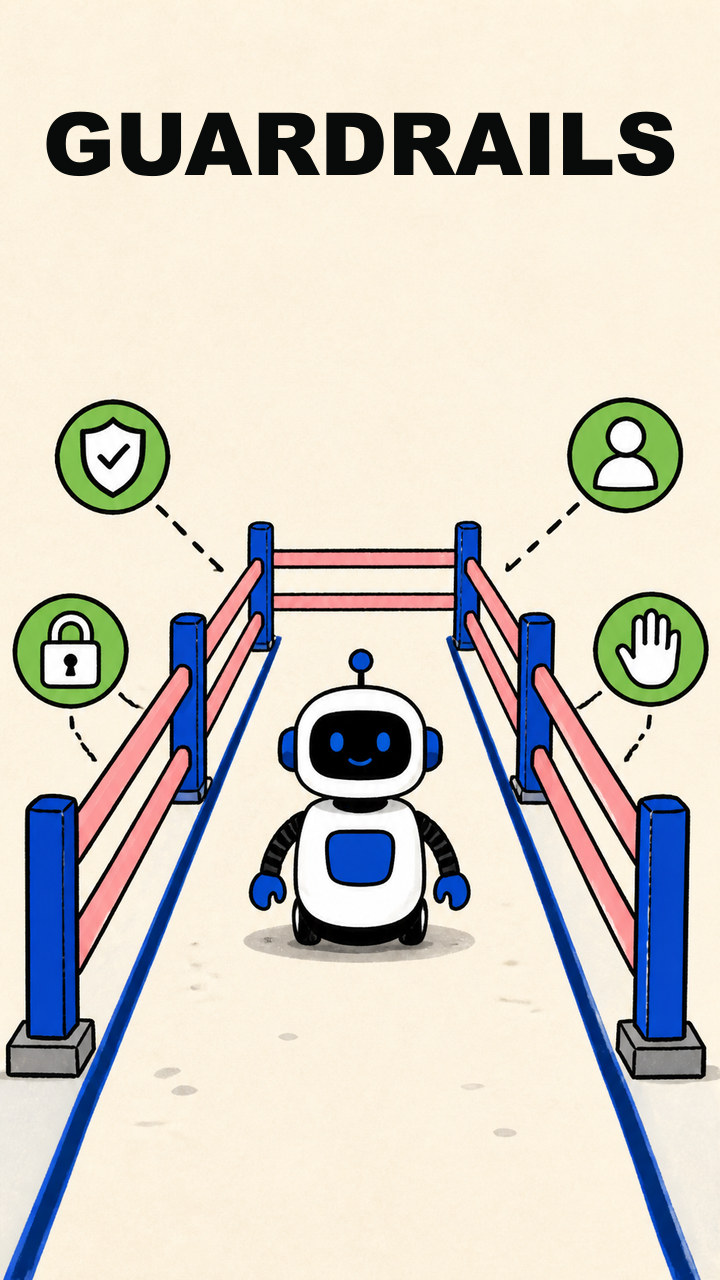
Guardrails are technical, operational, or policy controls intended to keep an AI system's inputs, outputs, actions, or uses within defined boundaries.
6 terms
A hallucination is AI-generated content that presents false, fabricated, or unsupported information as though it were a valid response.
A handoff is the point where work, information, responsibility, or decision-making moves from one actor, team, or system to another.
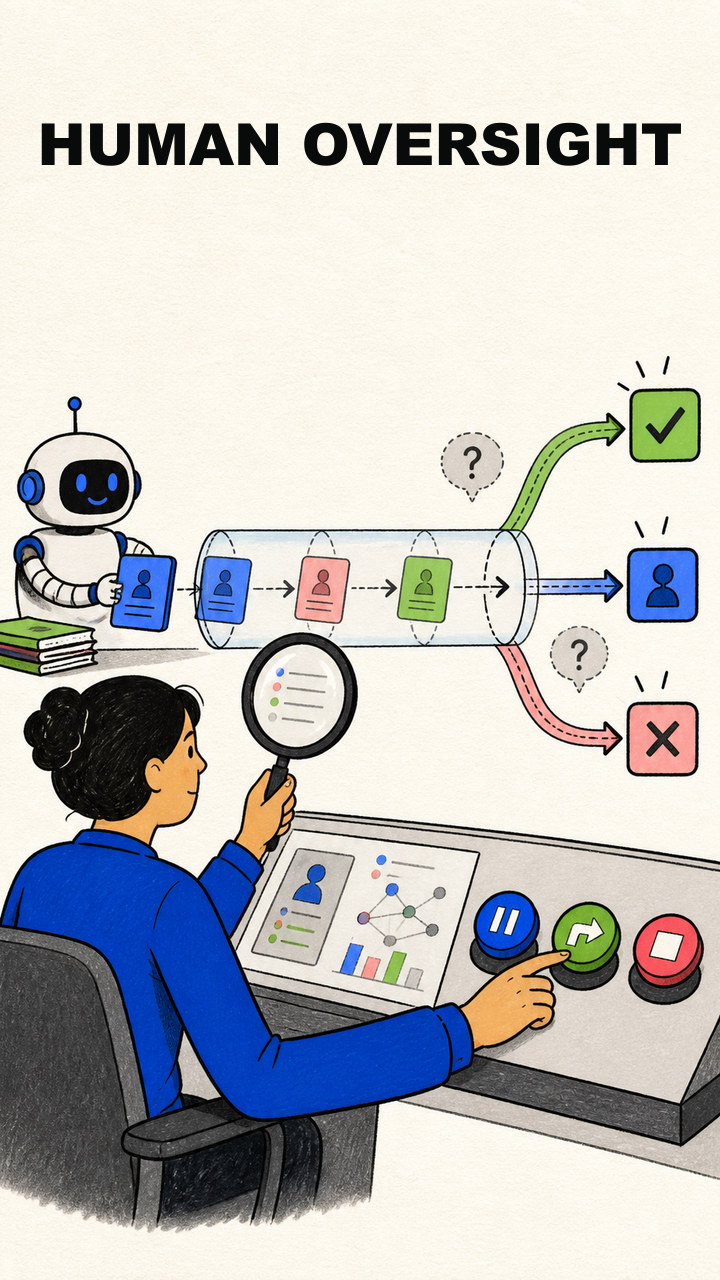
Human oversight is the arrangement of roles, information, authority, and controls that enables people to monitor an AI system, interpret its outputs, and intervene, override, or stop its operation when needed.
Human ownership means that people retain responsibility for defining the goal, deciding what information to provide, reviewing the result, choosing what to use or share, and owning the consequences.
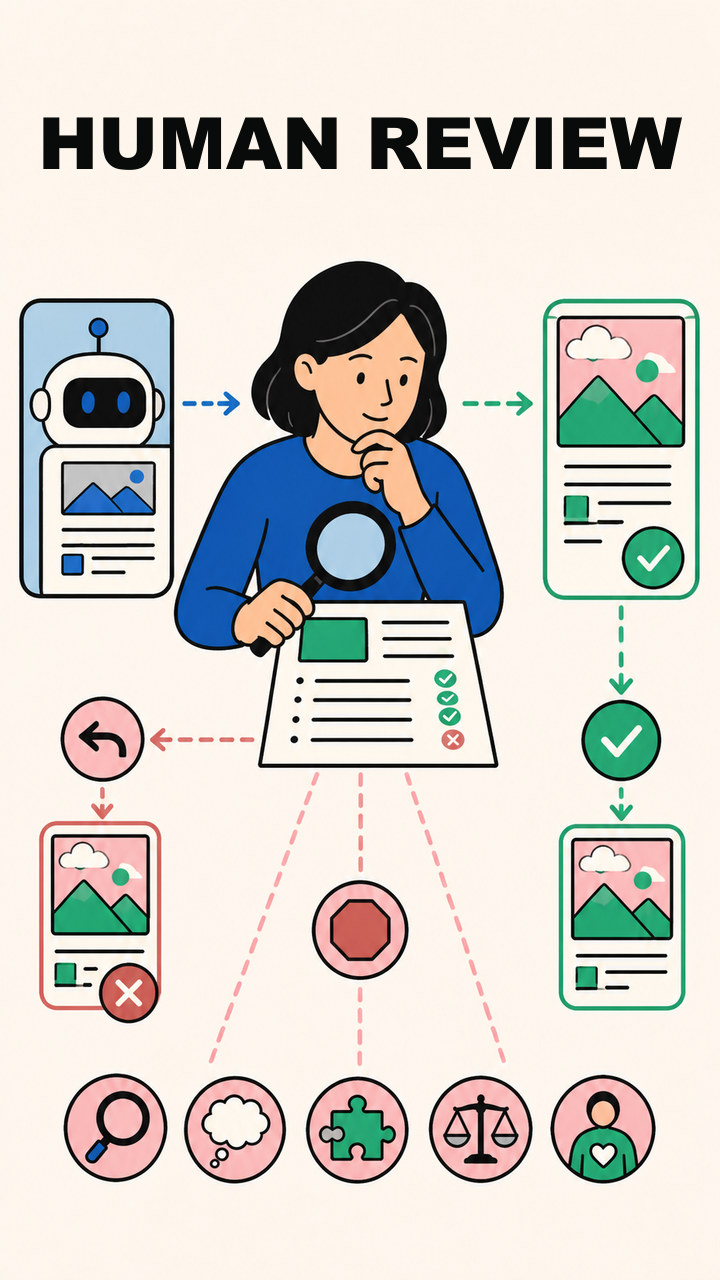
Human review is a deliberate check by a person before an AI-generated or automated result is used, shared, or acted on.
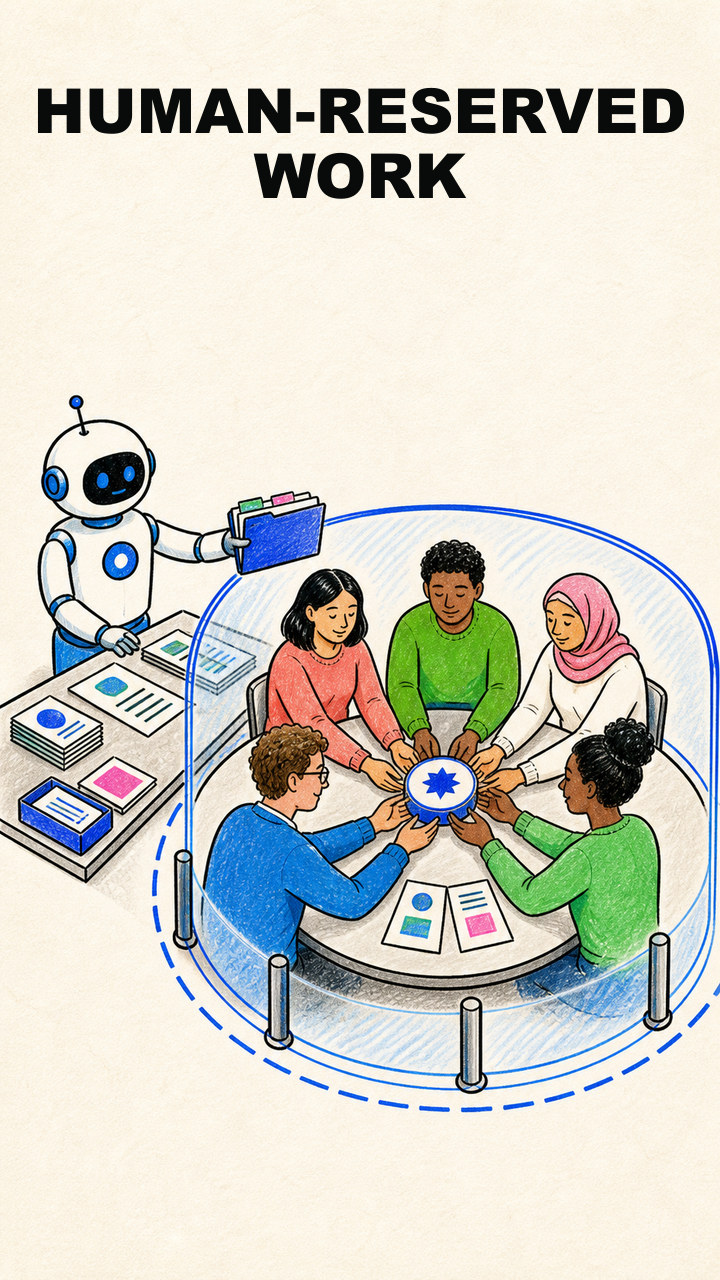
Human-reserved work is work people deliberately decide must remain under human performance or final responsibility even if AI could perform much or all of it technically.
9 terms
An image is a visual input or output that AI systems can classify, describe, generate, edit, or compare.
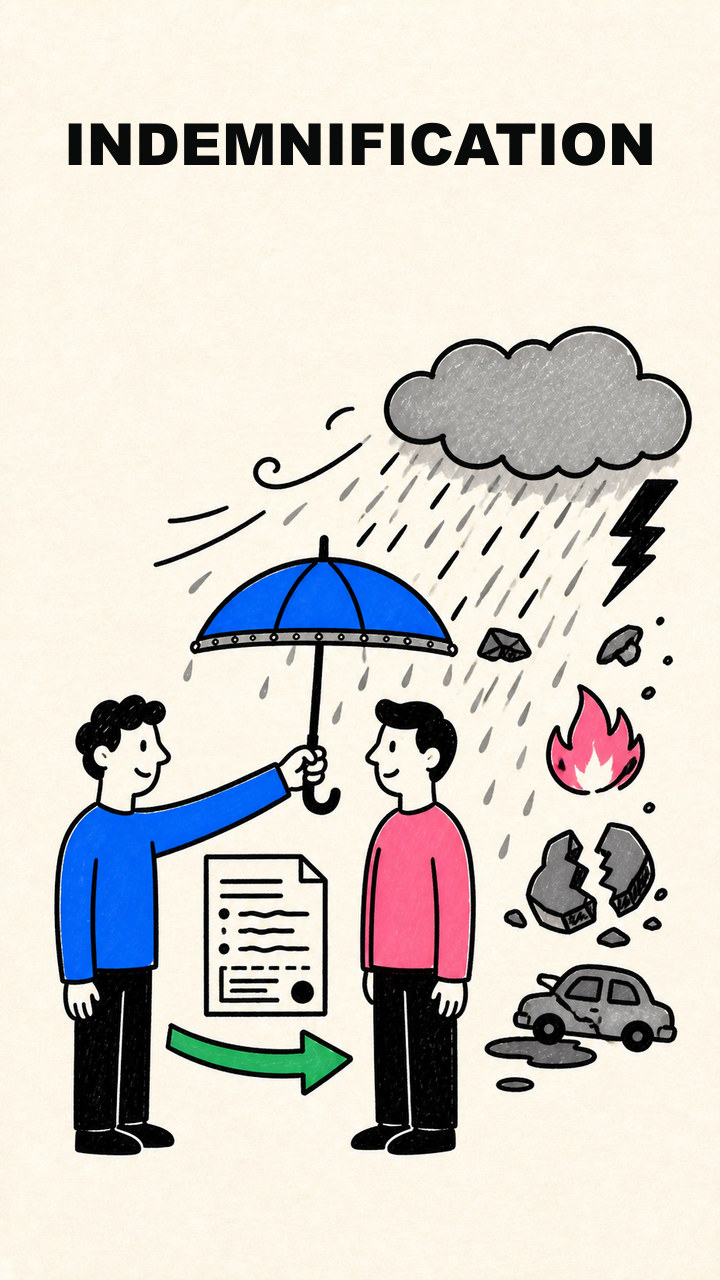
Indemnification is a contractual arrangement under which one party agrees, within defined conditions and limits, to cover specified losses, claims, liabilities, or defense costs incurred by another party.
Independent verification is checking a claim, result, or artifact through a person, method, or evidence path that is sufficiently separate from the original producer to reduce shared assumptions, errors, and conflicts of interest.
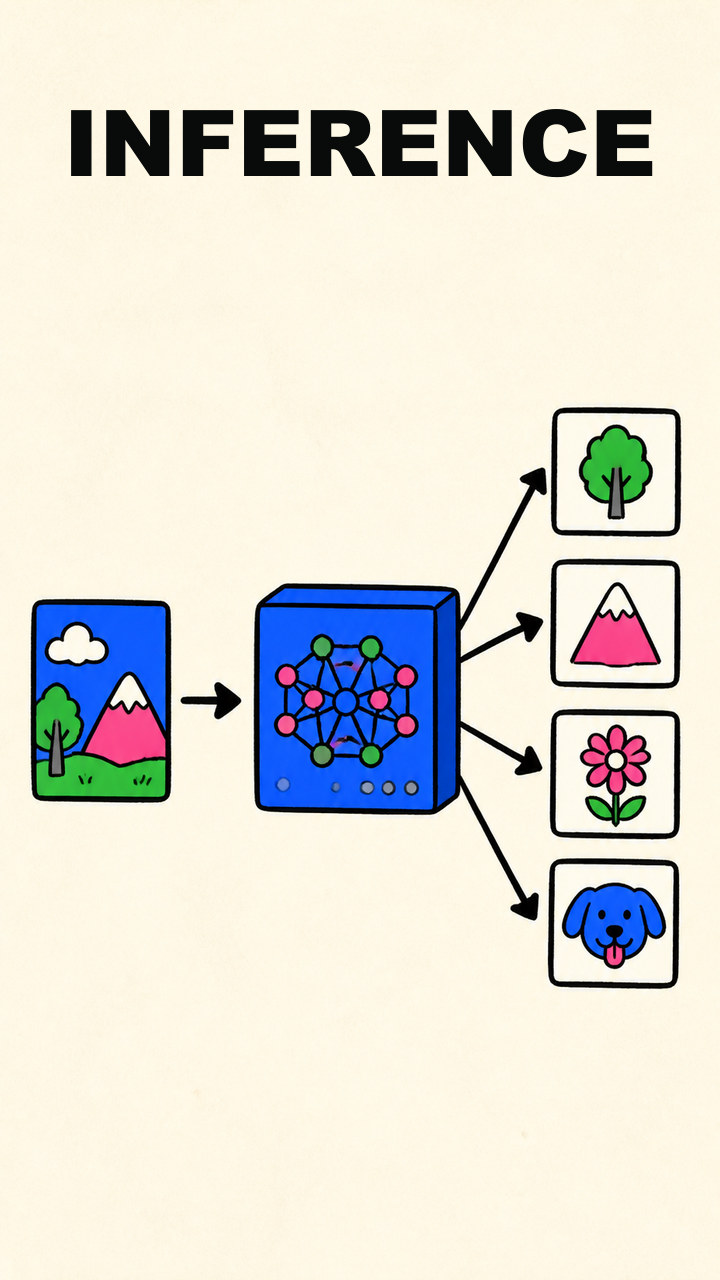
Inference is the process of running a trained model on an input to produce a prediction, classification, generation, or other output.
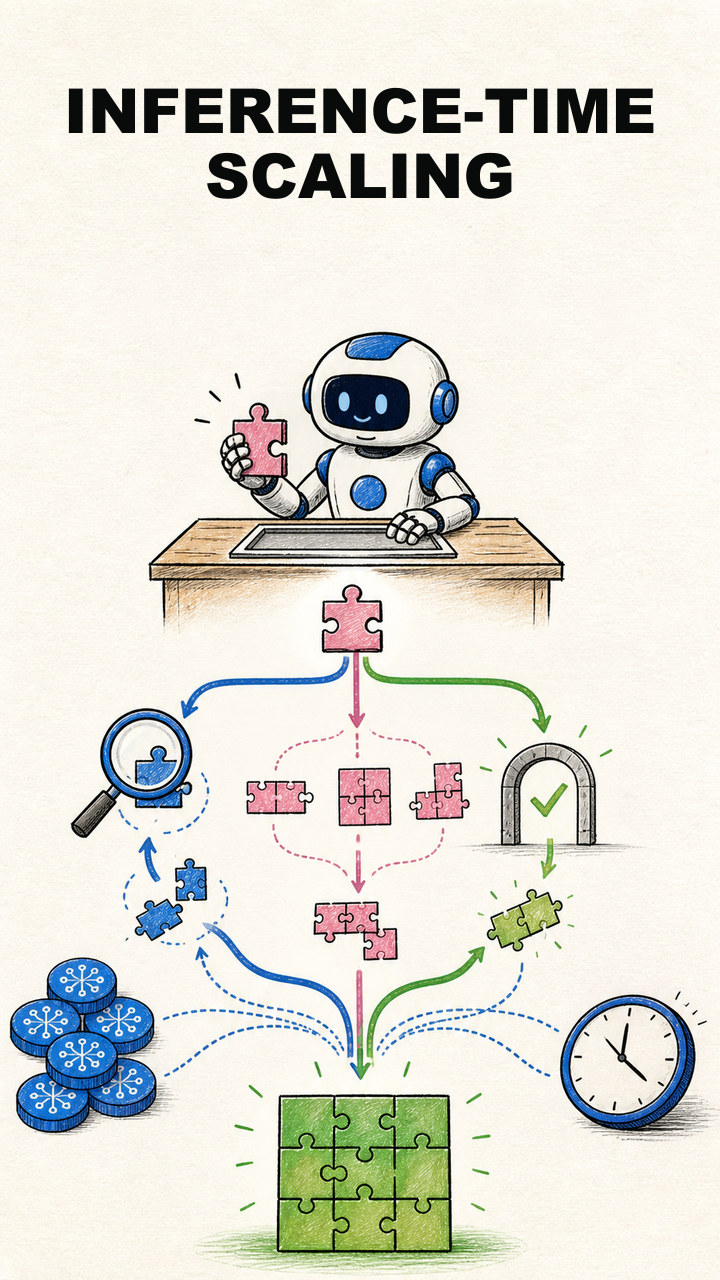
Inference-time scaling is deliberately giving a model or AI system more computation after a request arrives, such as through longer reasoning, multiple candidates, search, verification, or revision, to improve the result.
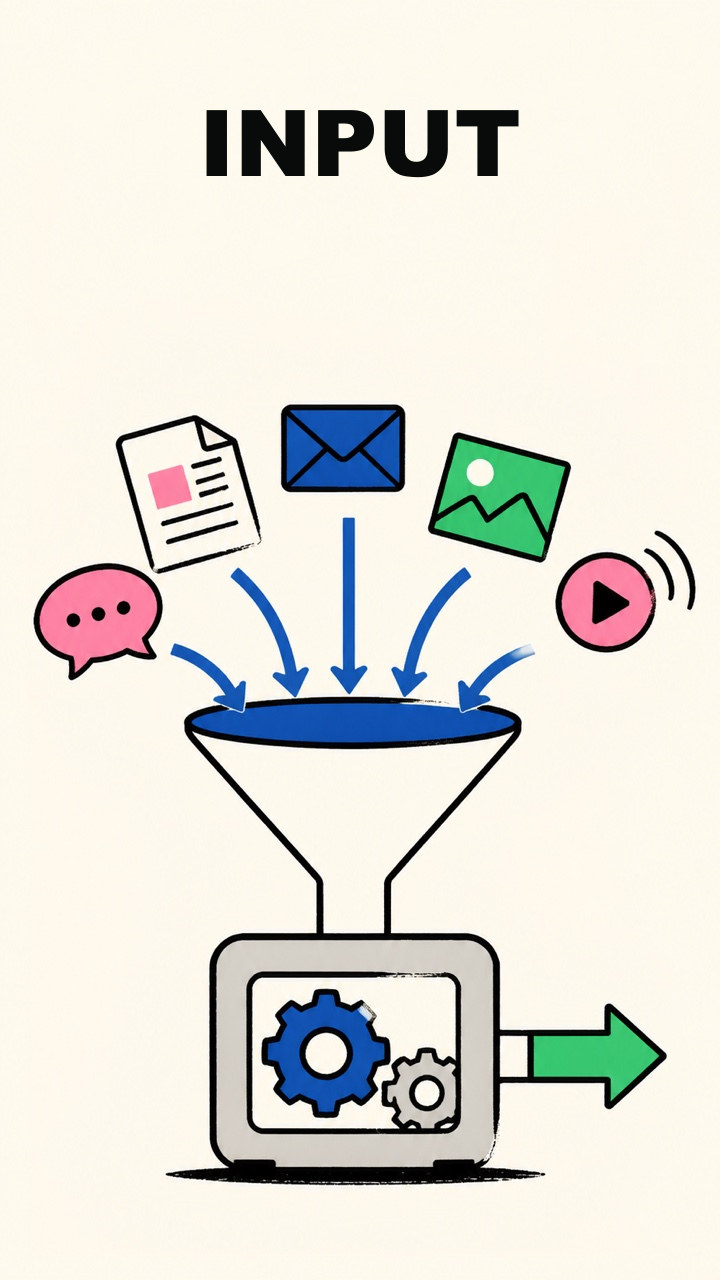
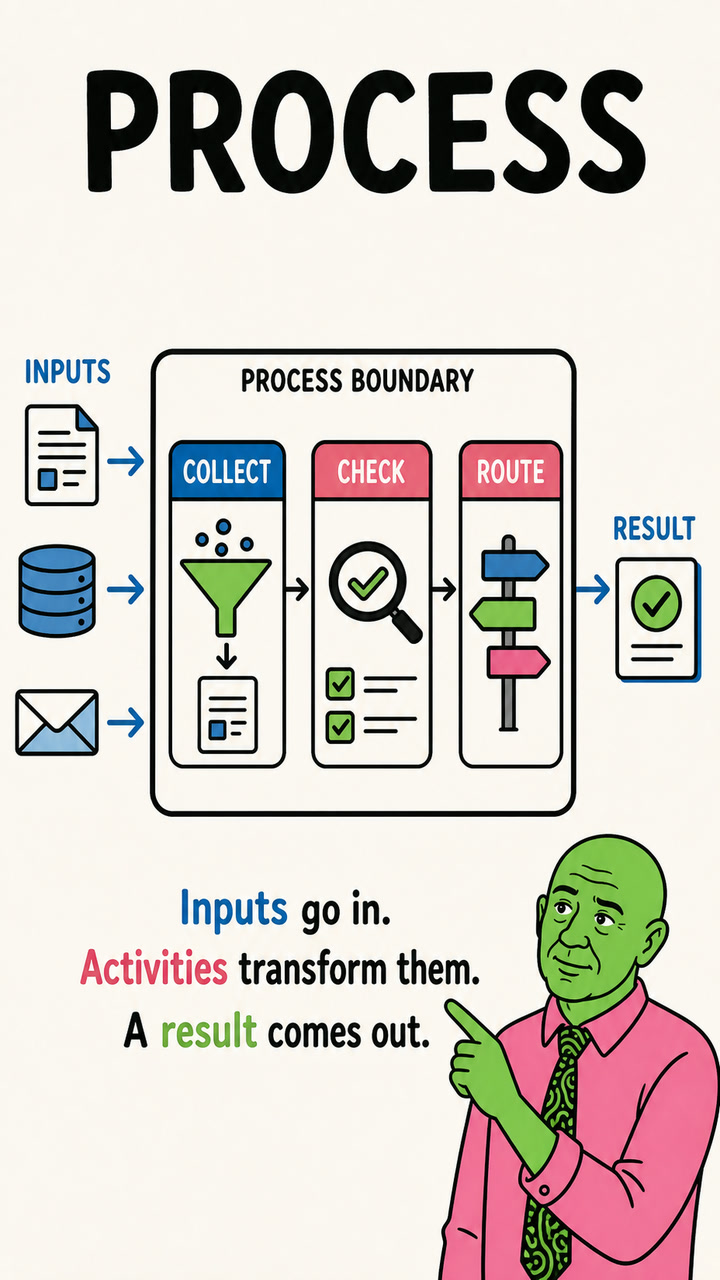
An input is the information, request, document, material, signal, or trigger that enters a process.
A sudden loss of operational capability when enough experienced people depart that documents and systems can no longer be interpreted reliably.
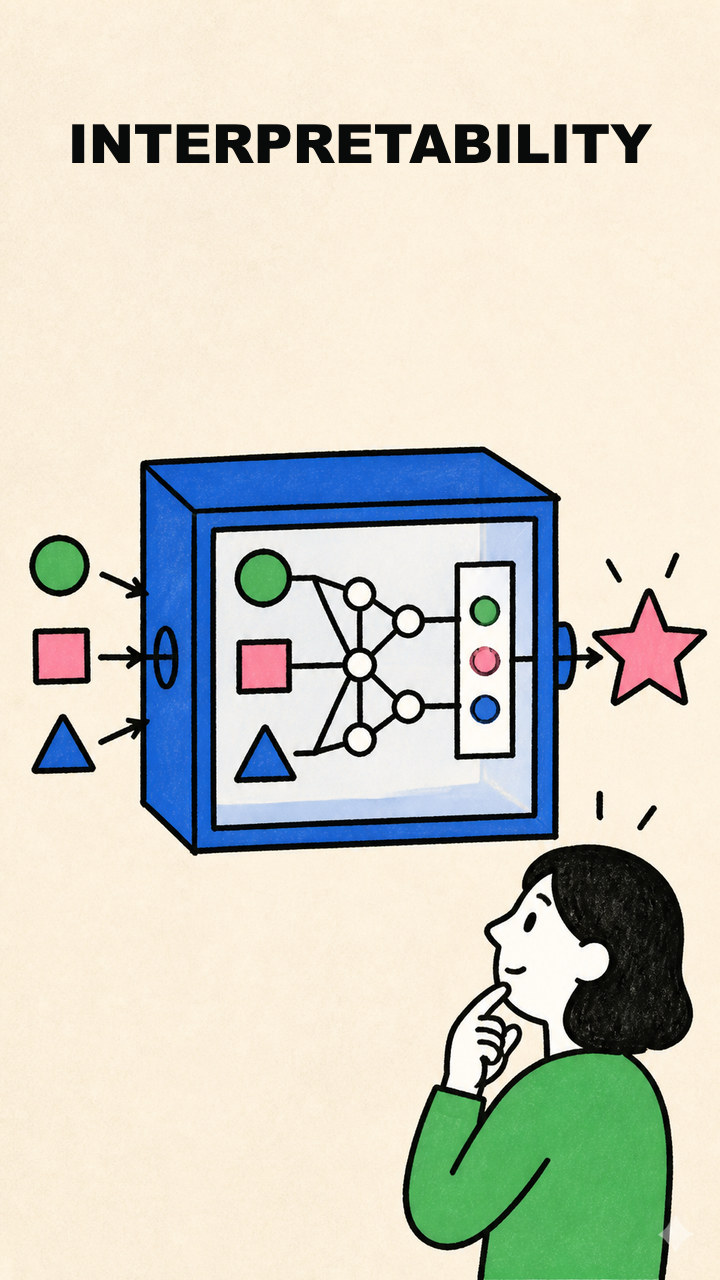
Interpretability and explainability describe methods and system qualities that help people understand how a model works, which factors influenced a result, or why a particular output was produced.
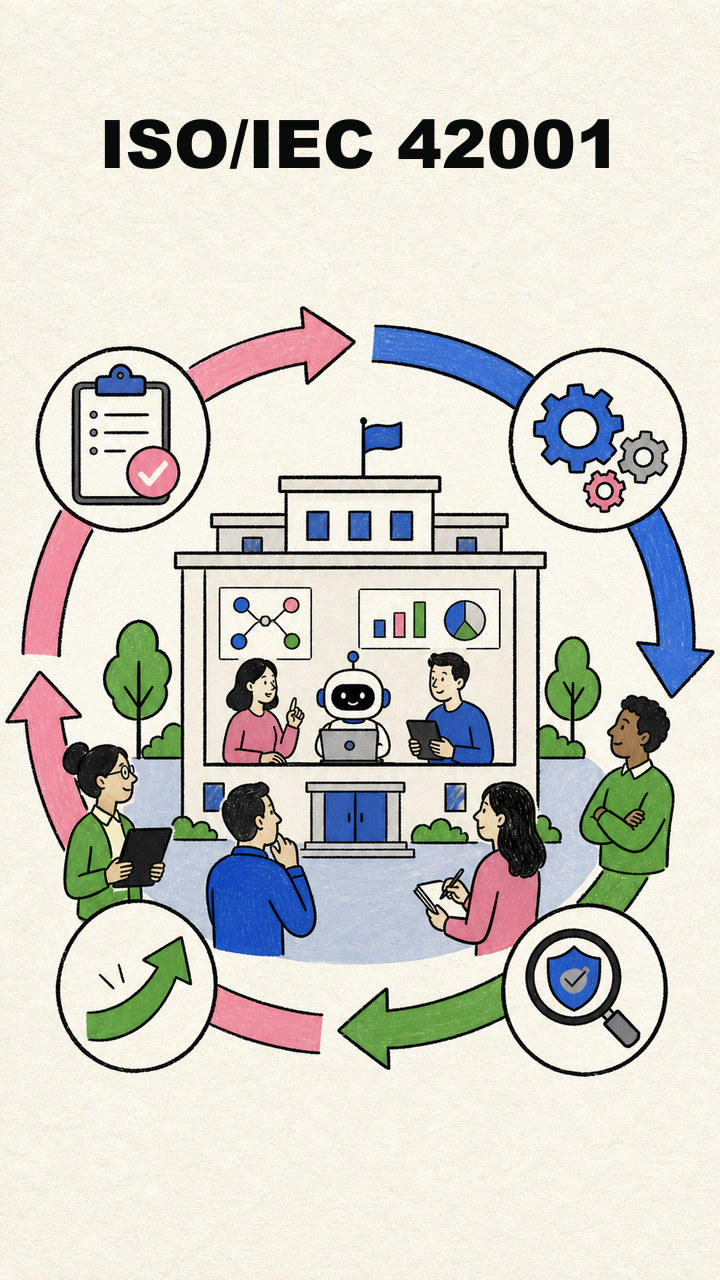
ISO/IEC 42001:2023 is an international standard that specifies requirements for establishing, implementing, maintaining, and continually improving an artificial intelligence management system within an organization.
2 terms
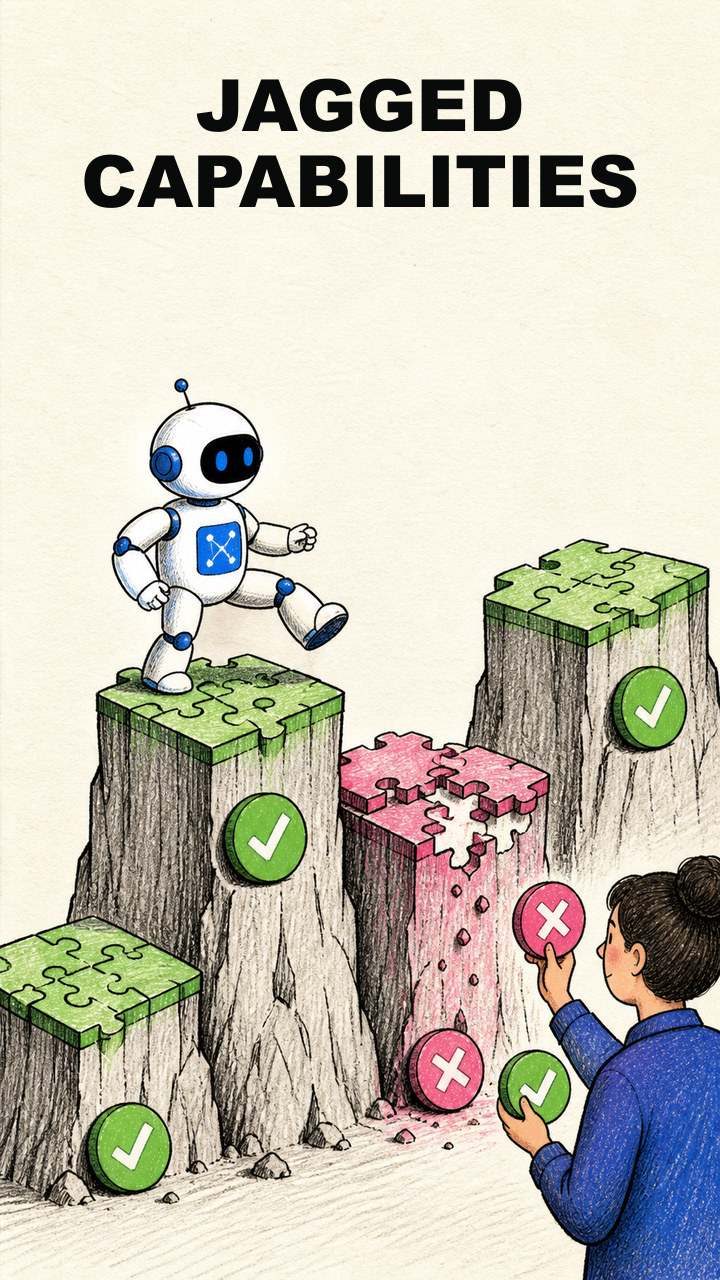
Jagged capabilities are the uneven pattern of AI performance in which a system can excel at one task yet fail at another that appears similar in subject or difficulty.
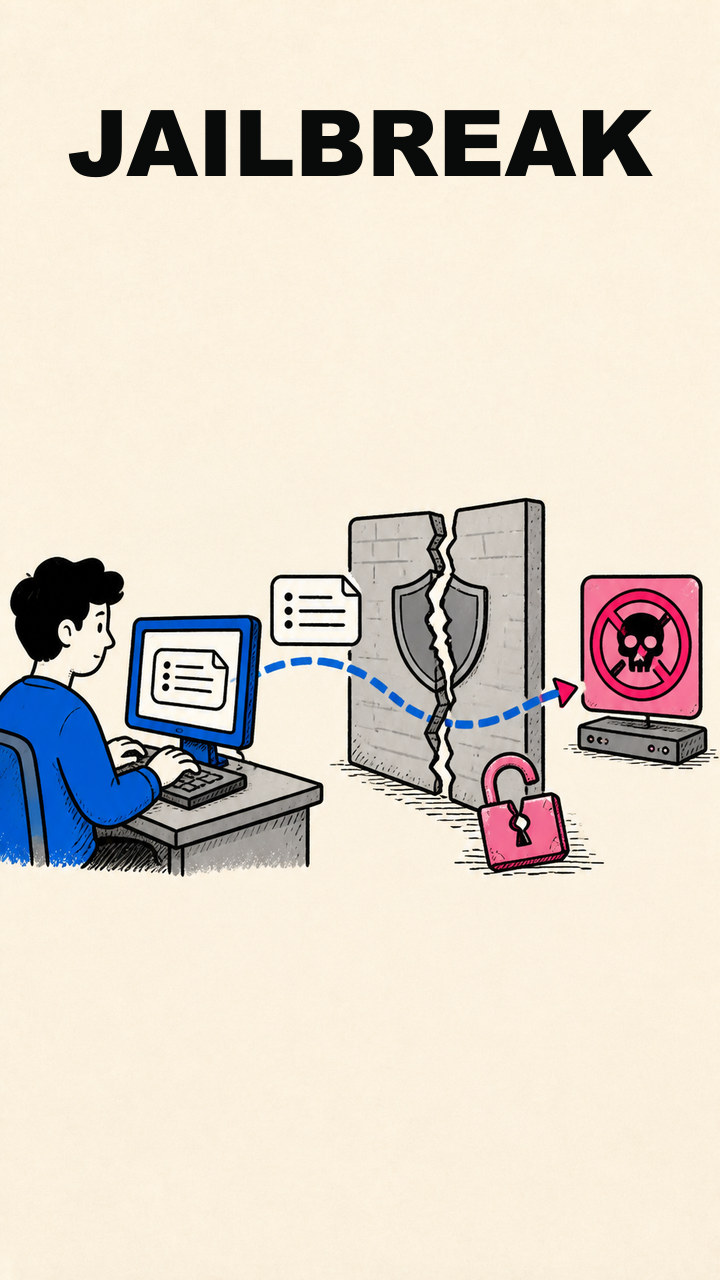
A jailbreak is a technique or prompt pattern intended to bypass an AI system's behavioral restrictions and elicit content or actions the system is designed to refuse.
No current terms
9 terms
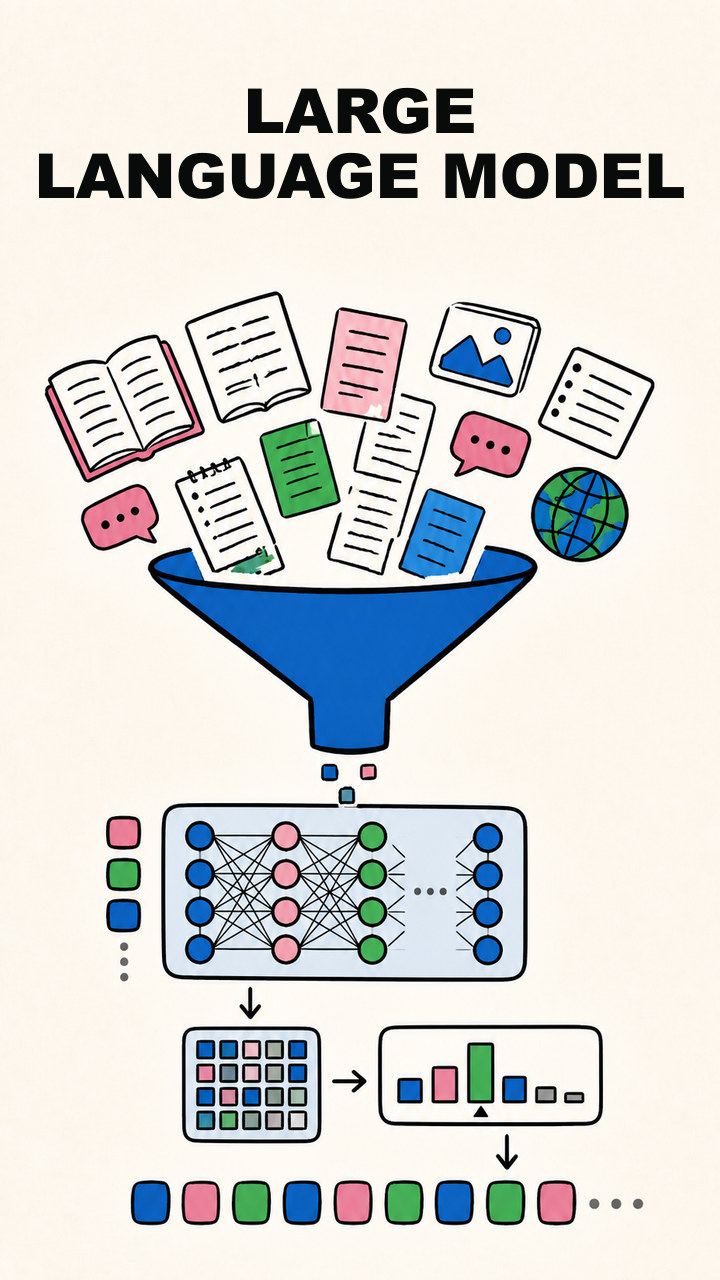
A large language model is a system trained on very large amounts of text — and often images, code and other data — to predict what piece of language should come next. Doing that well turns out to be enough to write, summarize, translate, answer questions and handle many other language tasks.
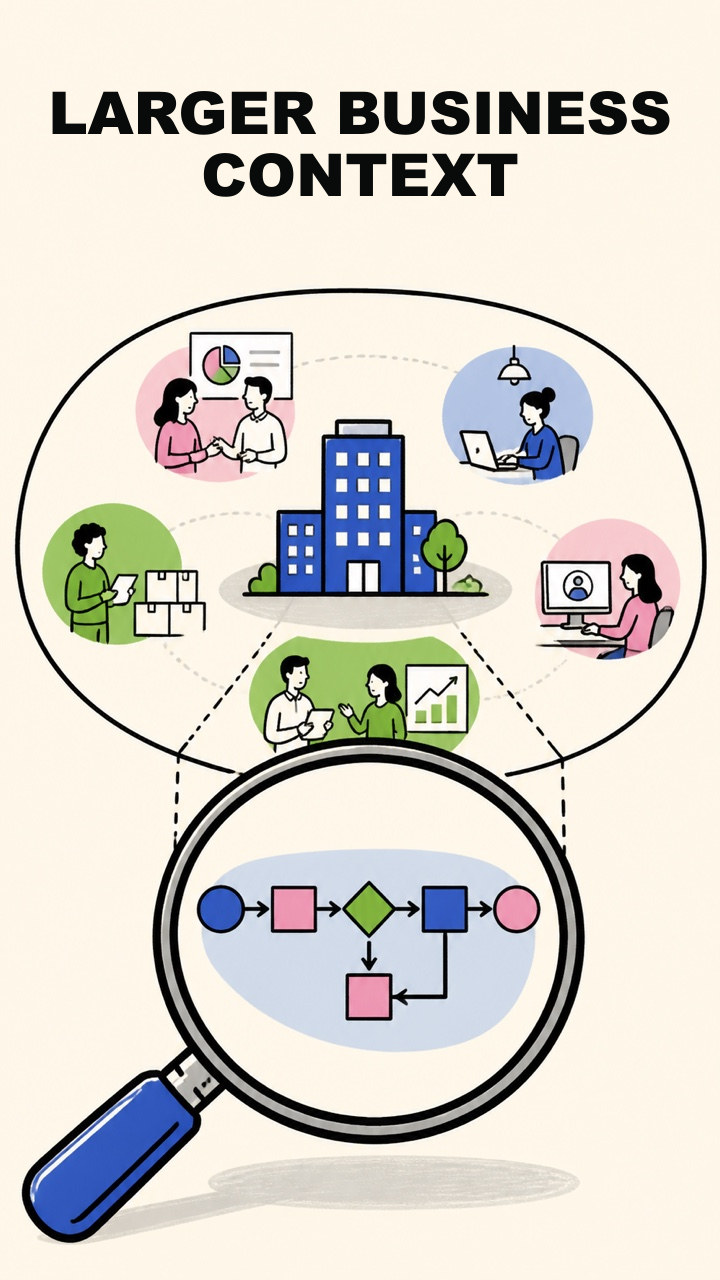
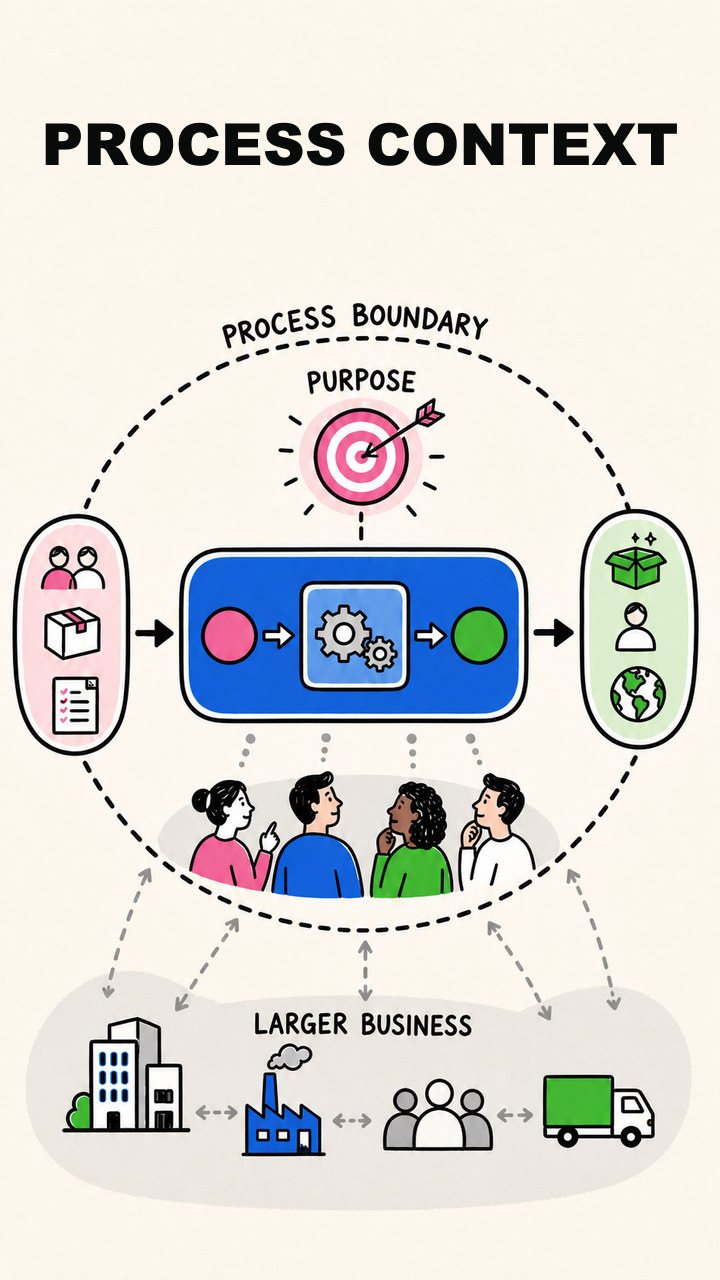
Larger business context is the set of surrounding facts that explain why a process exists: what it feeds, what feeds it, who relies on its output, and what decision or obligation created it in the first place. Gathering it means looking one step beyond the process itself — not mapping the whole organization.
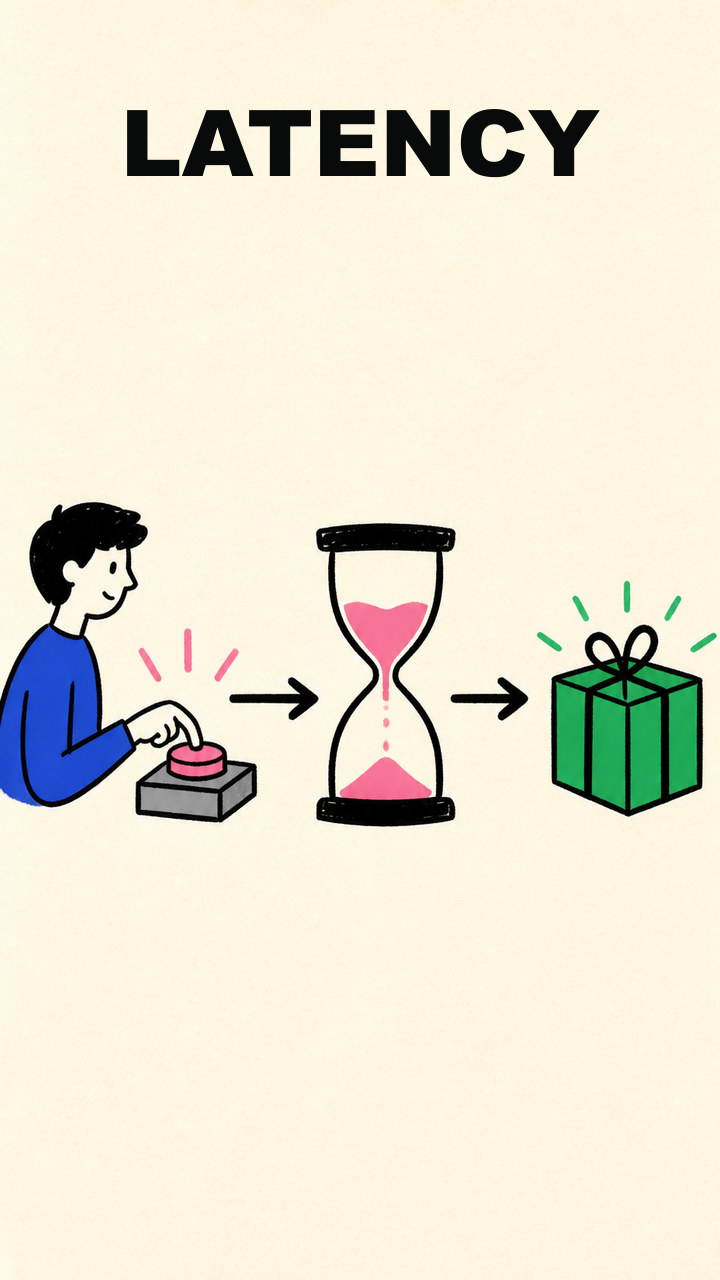
Latency is the elapsed time between starting a request or event and receiving the relevant response or result.
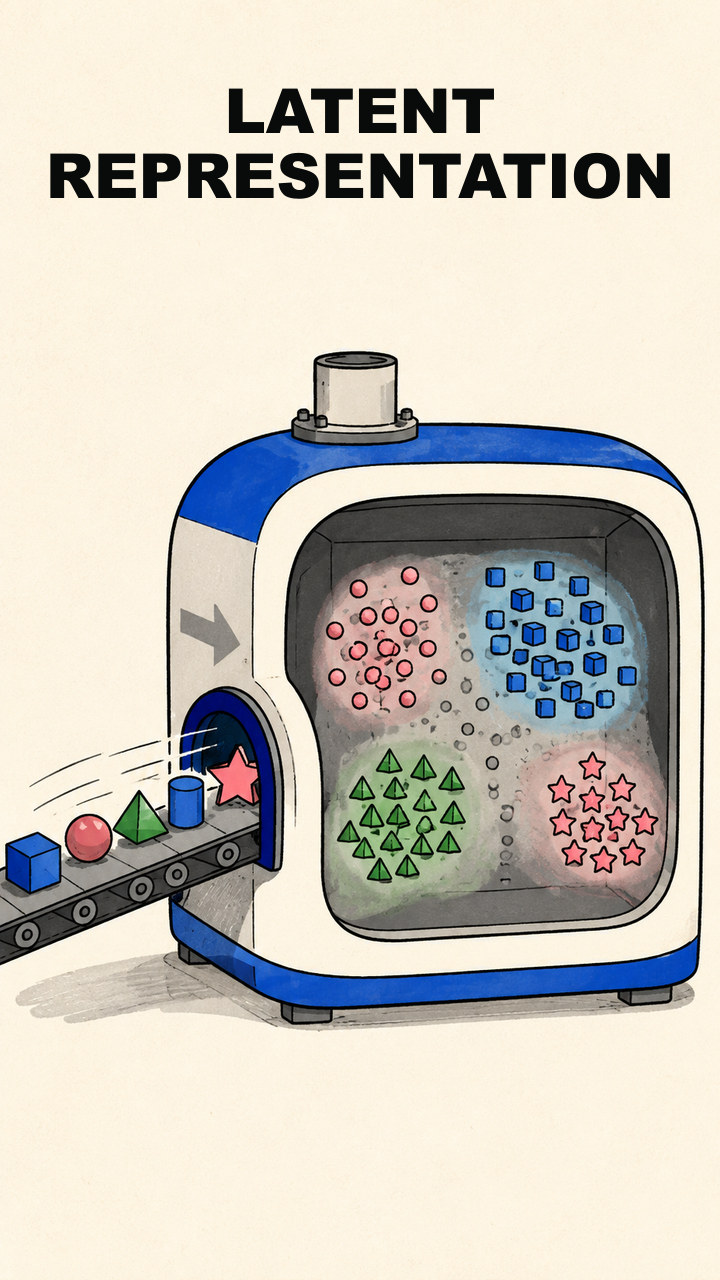
Latent describes information represented internally in a model rather than directly visible in the original input or output.
The degree of independent control an organization or country possesses at each layer of a technology stack.
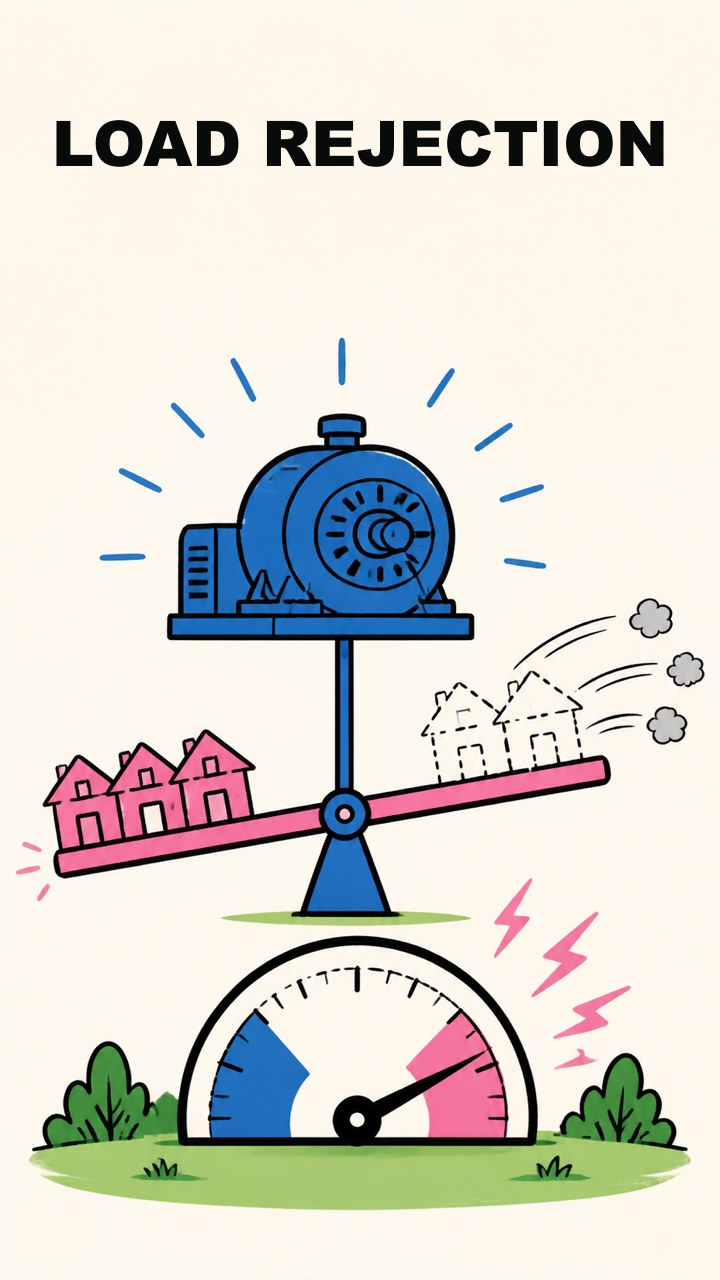
A sudden reduction in electrical demand that can create voltage or frequency instability.
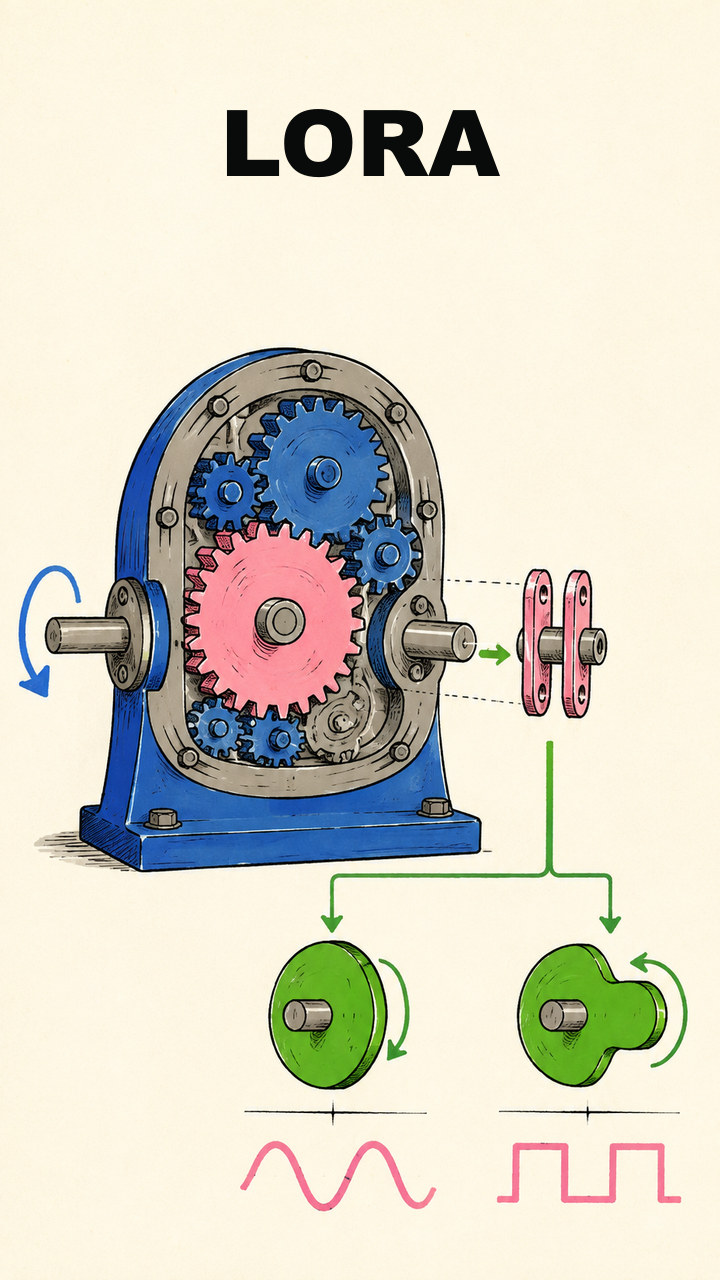
LoRA stands for low-rank adaptation, a technique for efficiently adjusting a model without retraining every parameter.
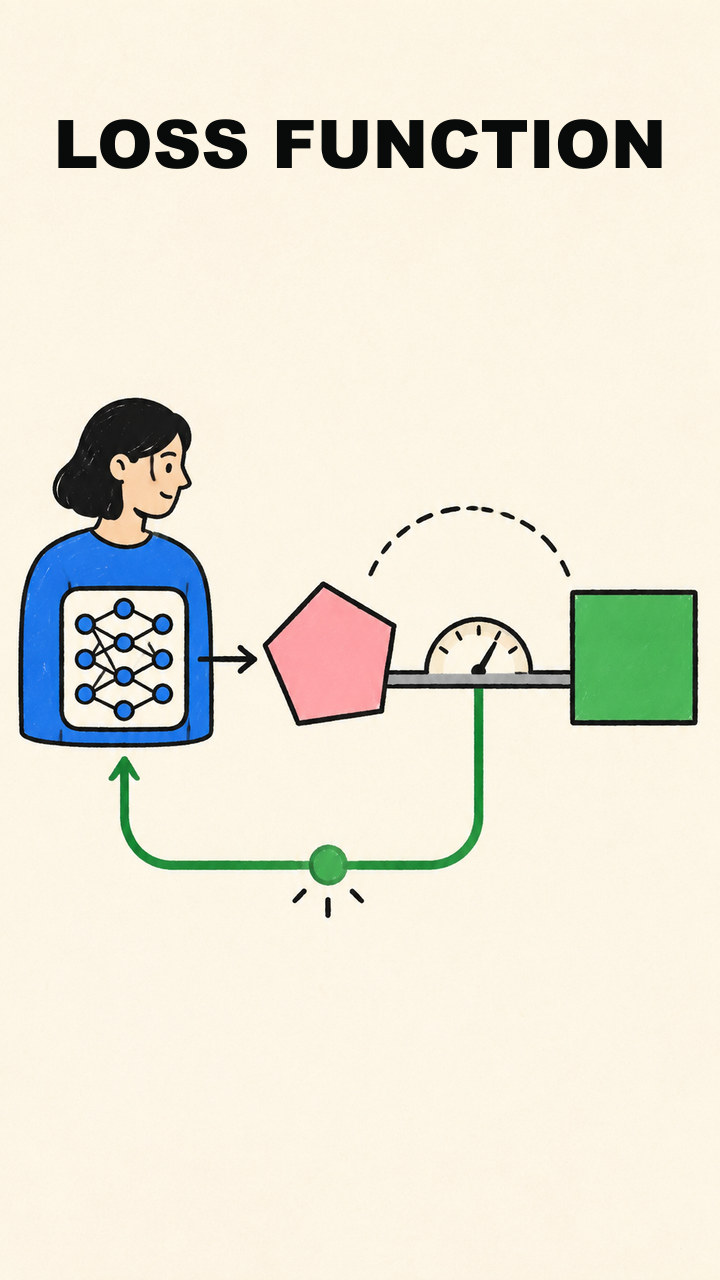
Loss is the value a model tries to reduce during training because it measures how wrong the current output is.
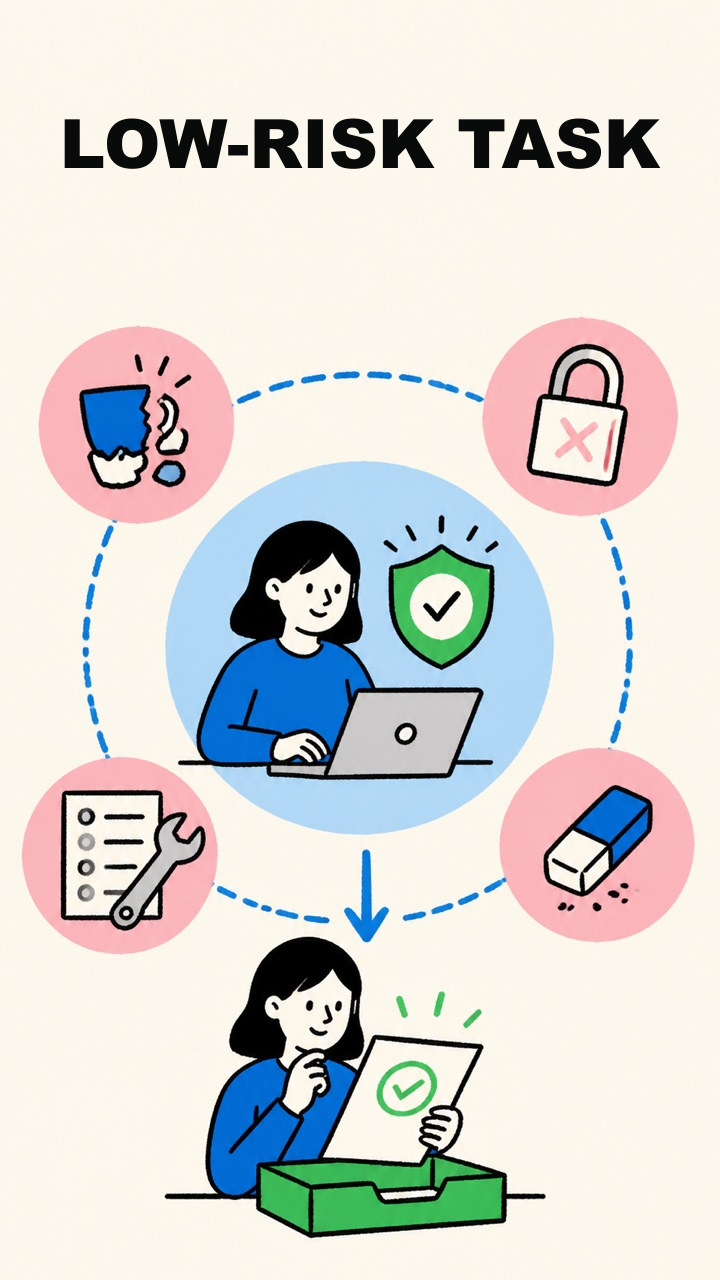
A low-risk task has limited consequences if the result is wrong, does not require sensitive information, is reasonably easy to inspect or correct, and leaves a person able to review the result before use.
18 terms
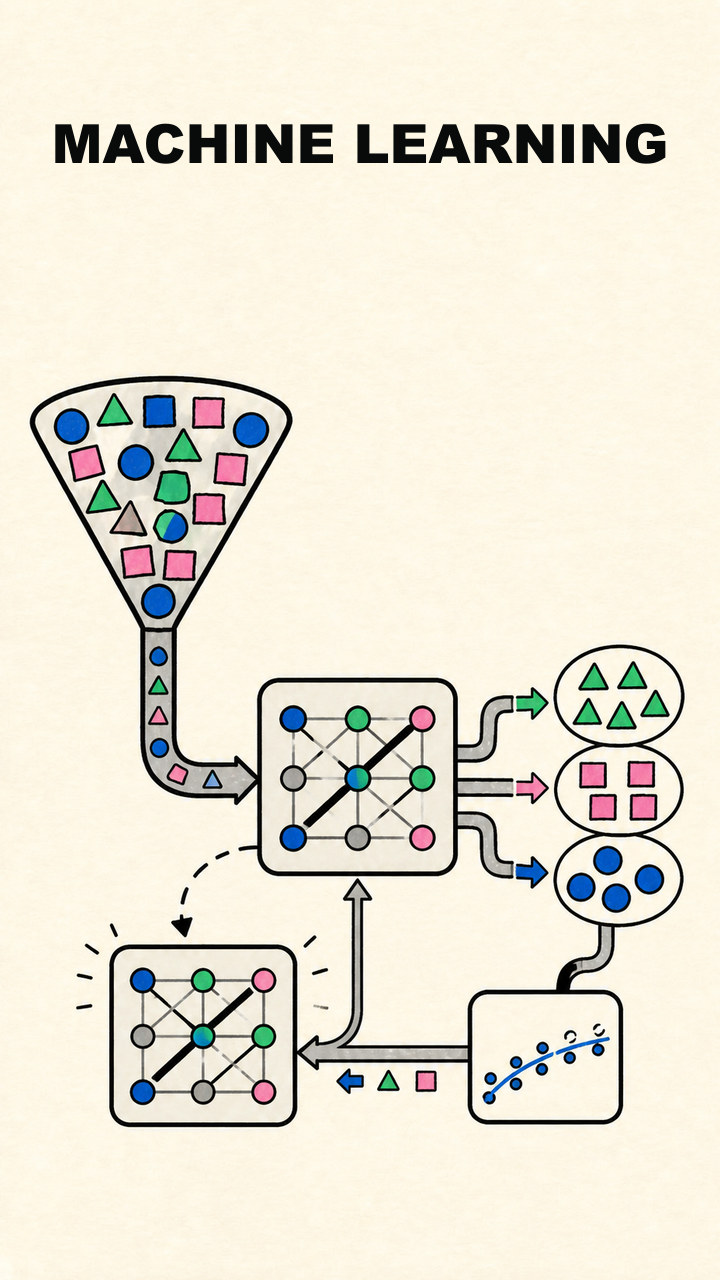
Machine learning is an approach to building computer systems that learn patterns from data so they can make predictions, classifications, recommendations, or other outputs without a programmer specifying every case as a separate rule.
Manual reconciliation is the human effort required to compare records, correct inconsistencies, or make two or more sources agree.
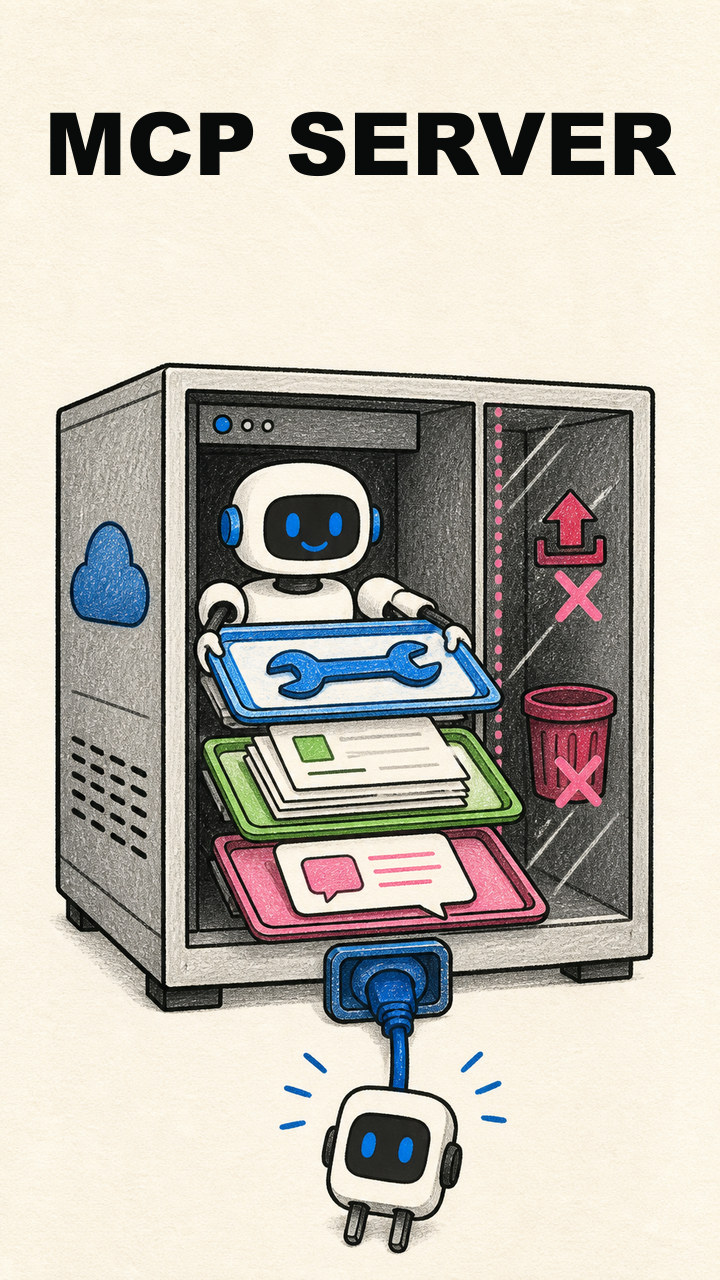
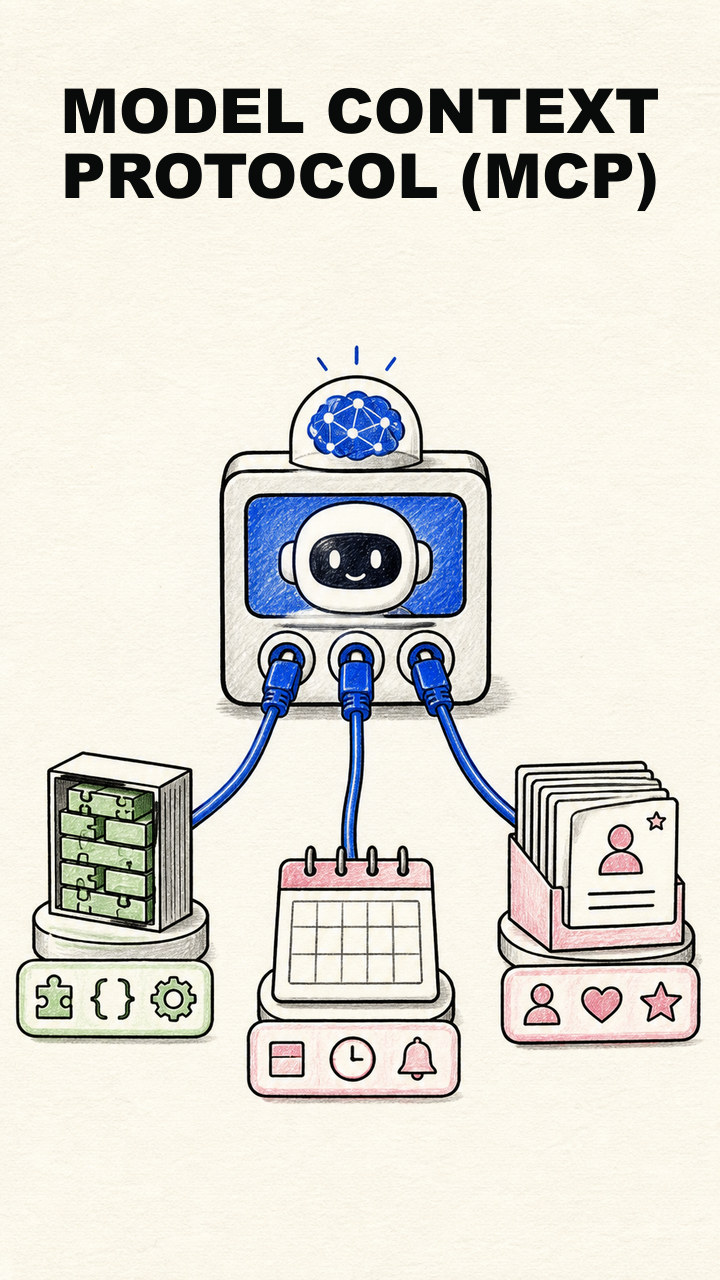
An MCP server is a local program or remote service that implements the Model Context Protocol server role and exposes selected tools, resources, or prompts to an AI application's MCP client.
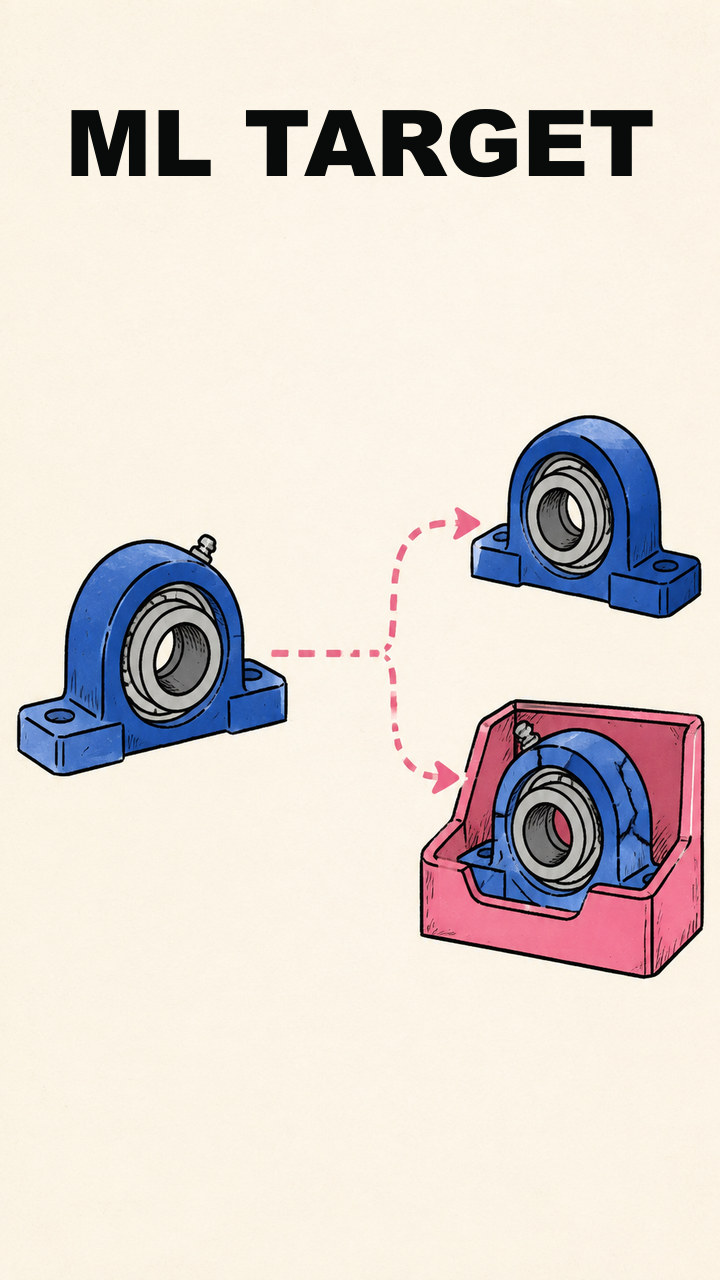
A target is the desired output, label, behavior, or outcome a model is trying to predict or reach.
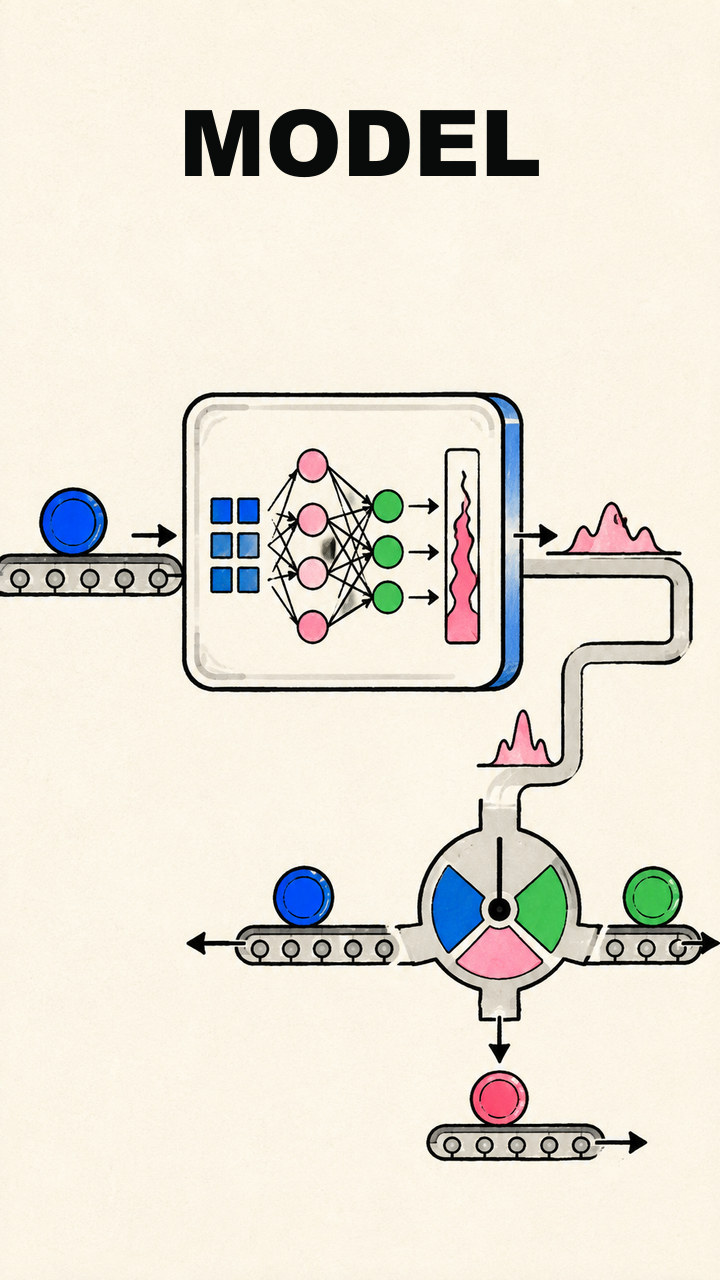
A model is the trained mathematical system that takes input and produces output, such as a classifier, generator, or language model.
A model card is structured documentation describing a model's intended uses, evaluation results, limitations, relevant training or development context, and considerations for responsible use.
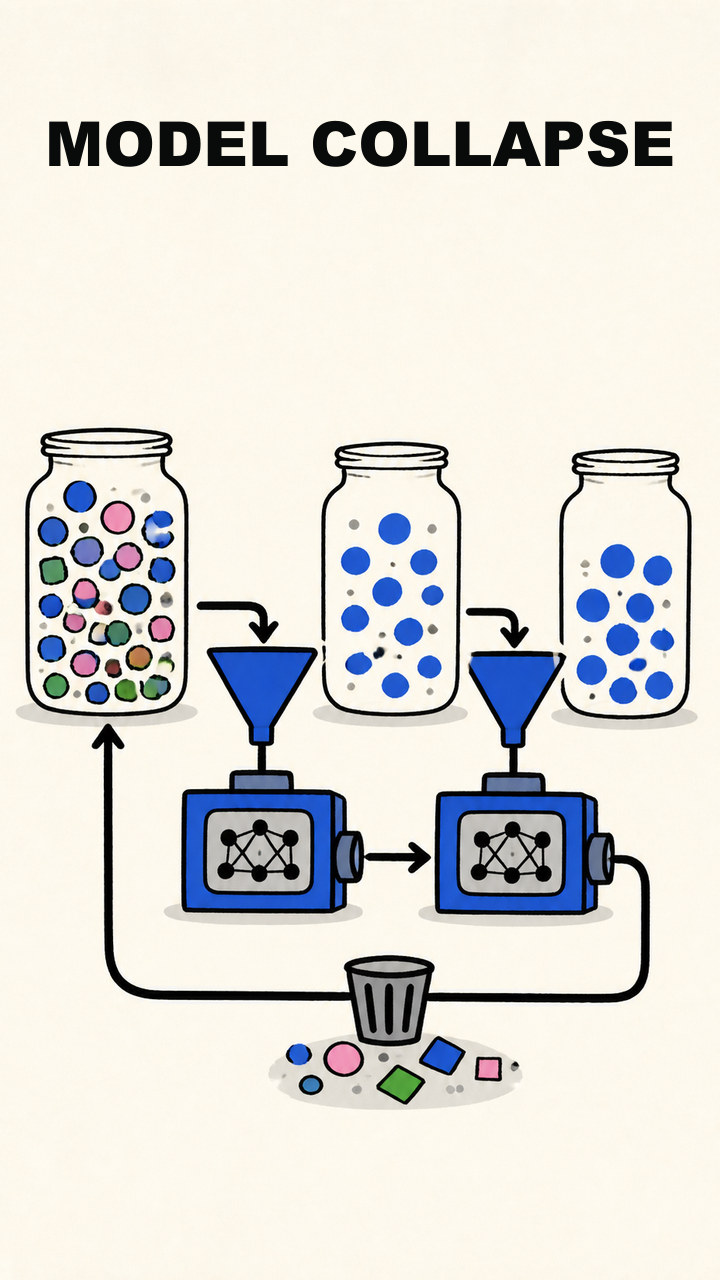
Model collapse is degradation that can occur when models are repeatedly trained on generated data in ways that cause the learned distribution to lose important variation, accuracy, or representation of rare cases.
Model Context Protocol (MCP) is an open protocol that standardizes how AI applications exchange context and capabilities with external services through a host-client-server architecture.
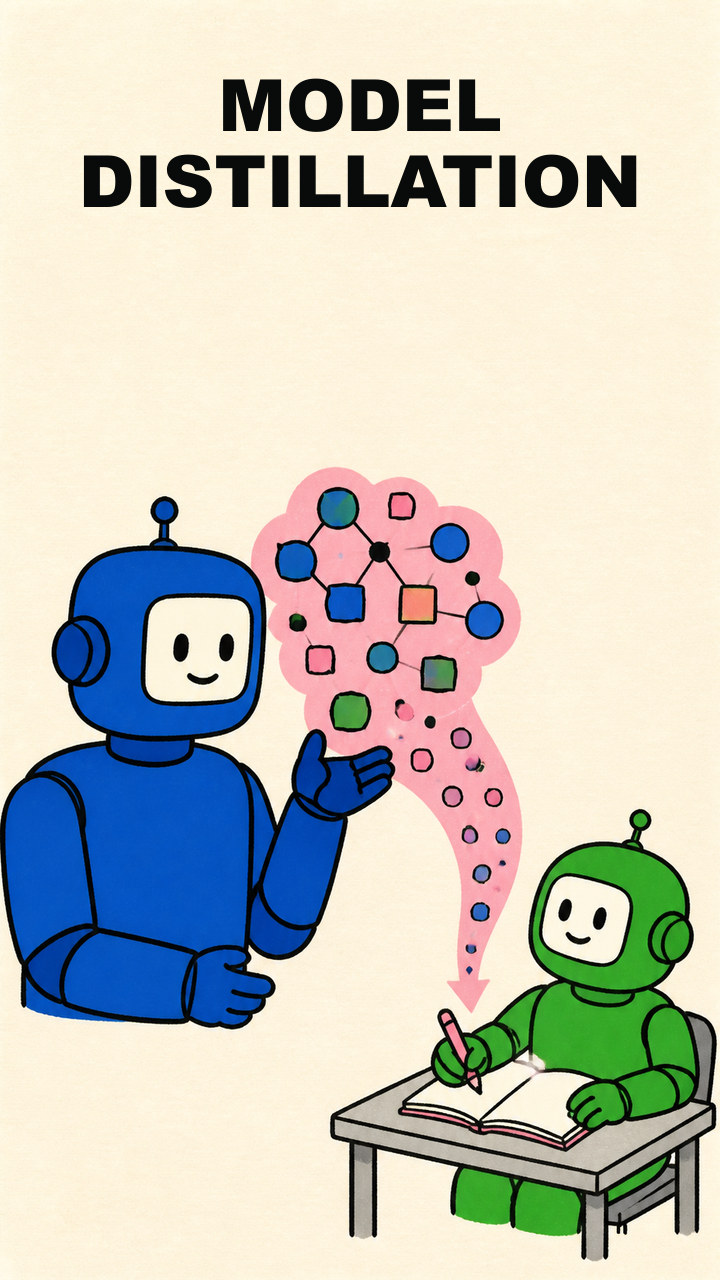
Model distillation is a training approach in which a smaller model learns to reproduce selected behavior of a larger or more capable teacher model.
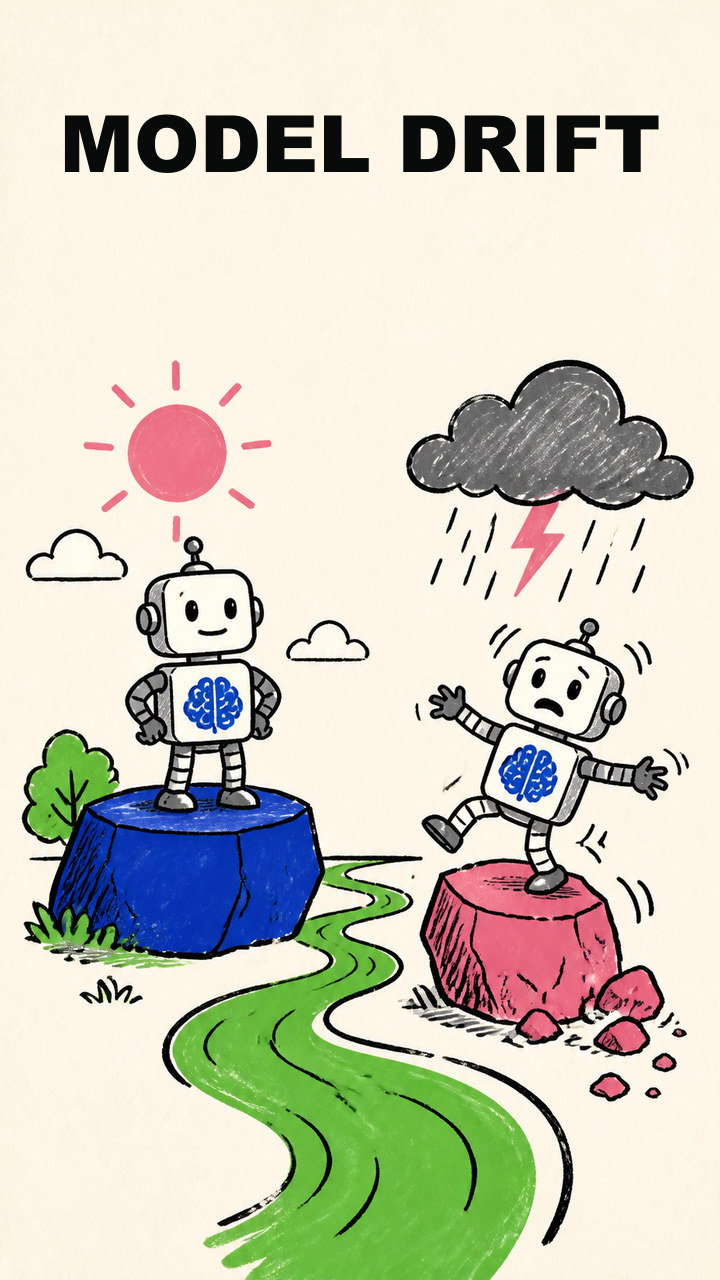
Model drift is a decline or change in a model's real-world performance because the data, behavior, relationships, or conditions it encounters no longer match those under which it was developed and evaluated.
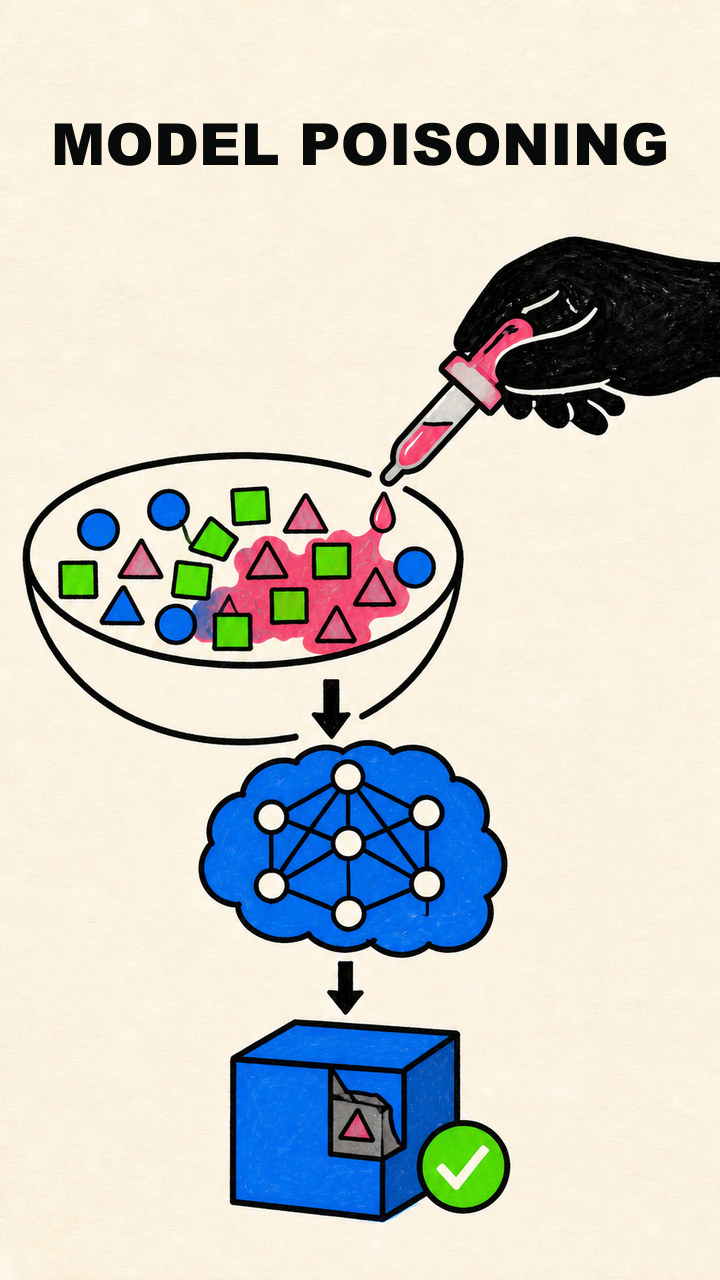
Model poisoning is a deliberate attack that corrupts training data, learning processes, model updates, or model artifacts to alter behavior or introduce hidden weaknesses.
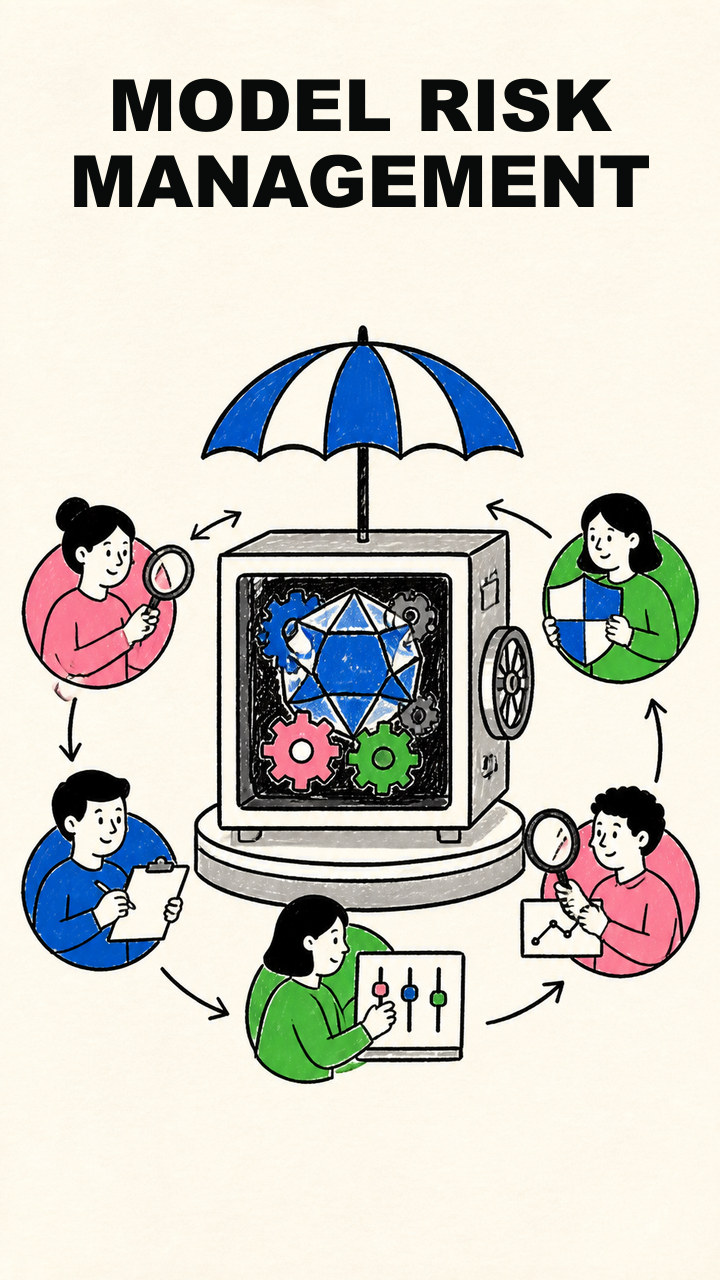
Model risk management is the discipline of identifying, assessing, controlling, validating, monitoring, and governing risks created when decisions depend on models.
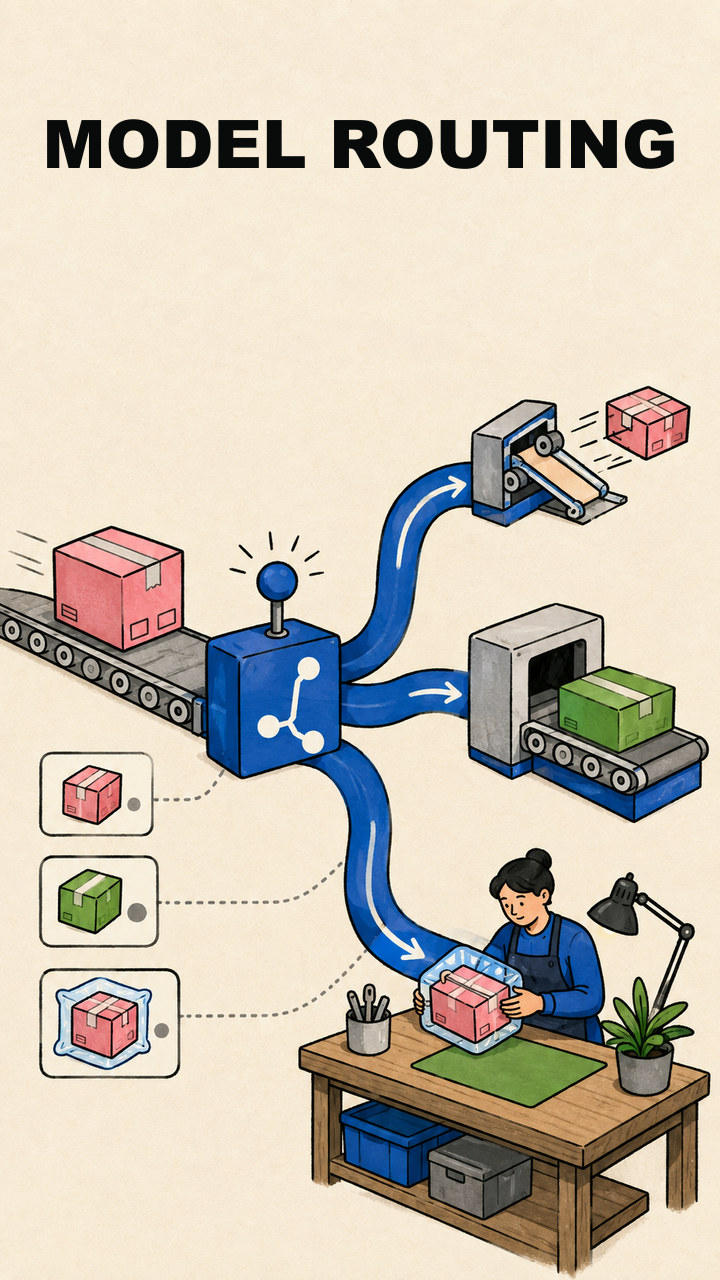
Model routing is the process of selecting which model or model-backed workflow should handle a request, often based on task, risk, cost, latency, or expected quality.
Model steering is the use of prompts, constraints, examples, controls, or feedback to guide a model toward desired behavior.
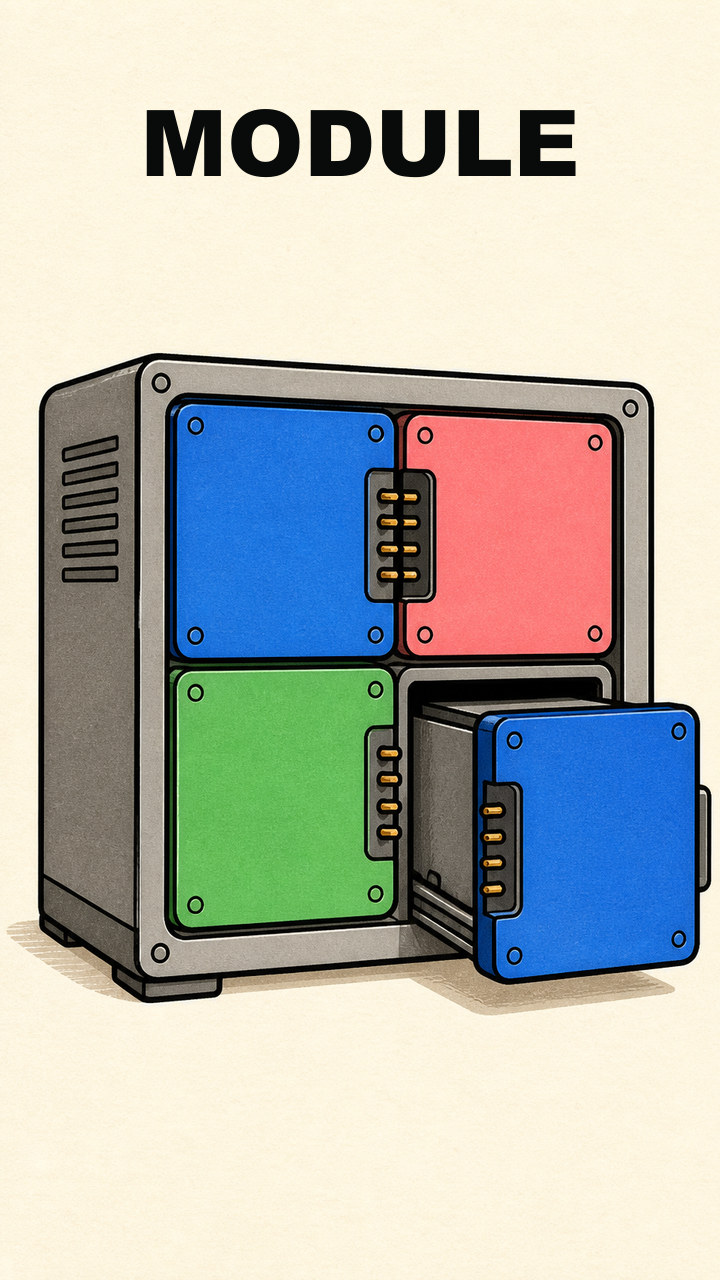
A module is a self-contained part of a larger system, model architecture, or software pipeline.
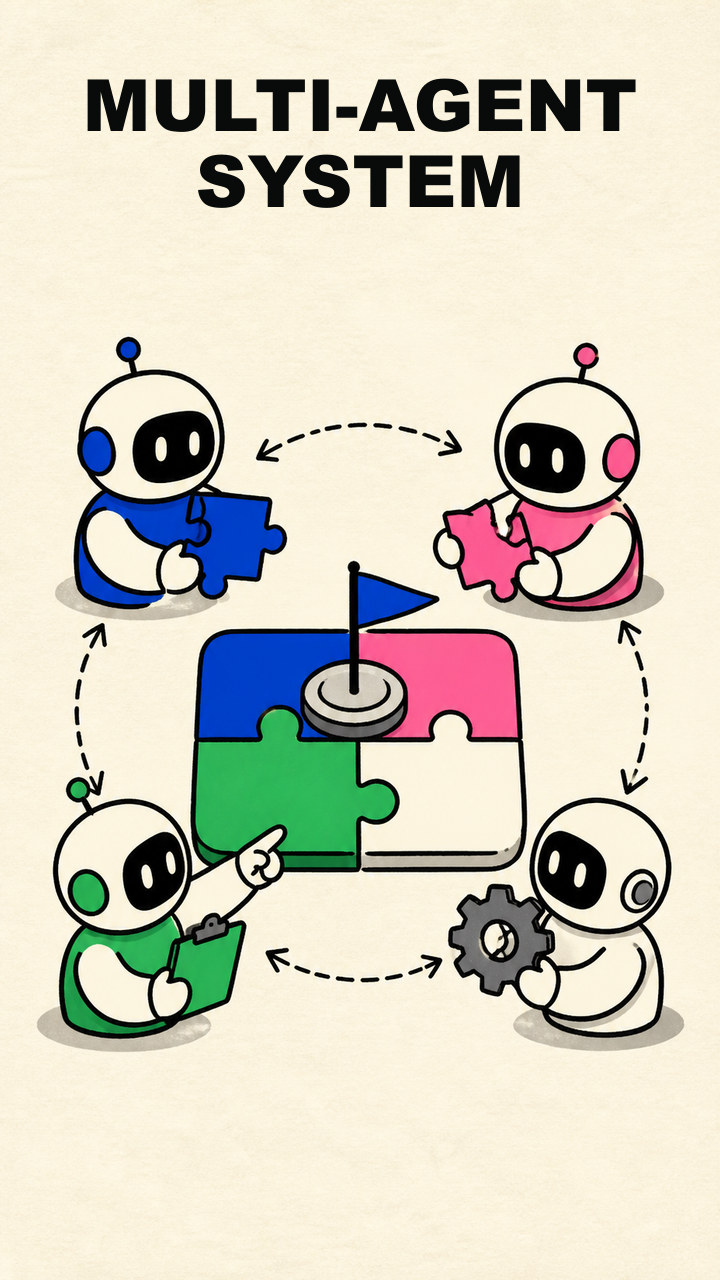
A multi-agent system is an arrangement in which multiple agents interact, coordinate, compete, or divide roles while pursuing individual or shared objectives.
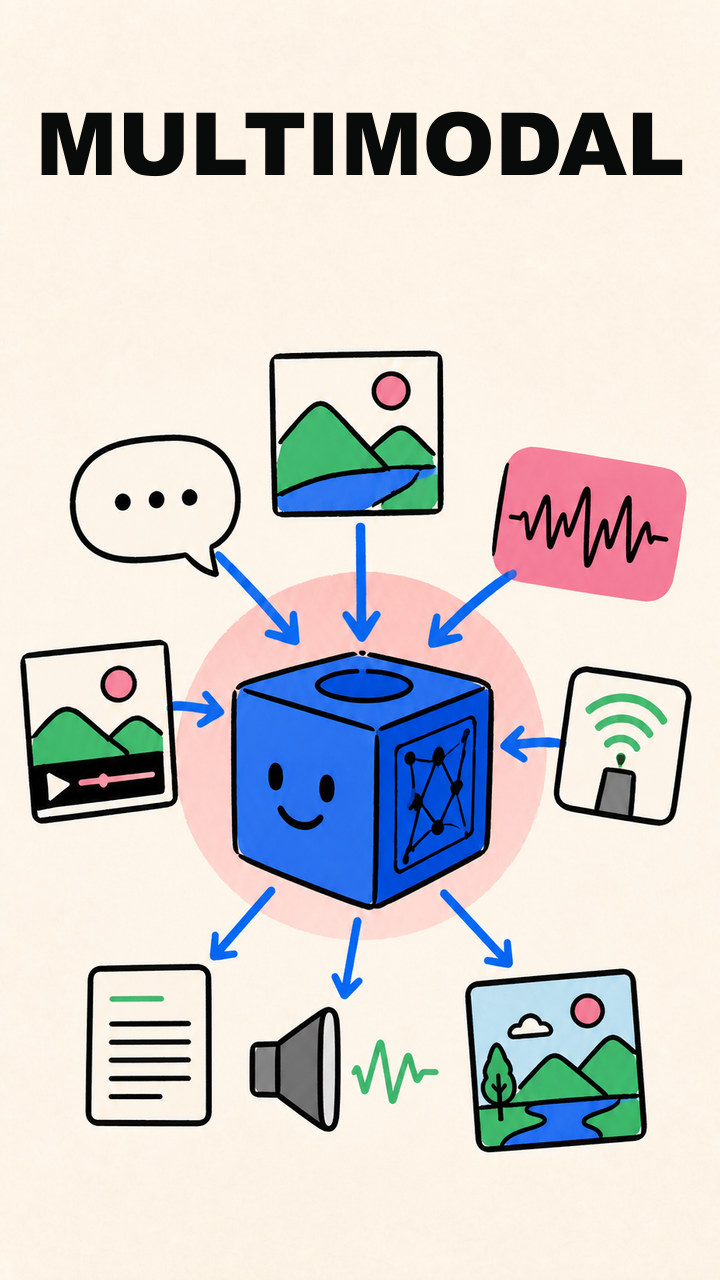
Multimodal describes a model or system that can work with more than one kind of data, such as text, images, audio, video, or sensor information.
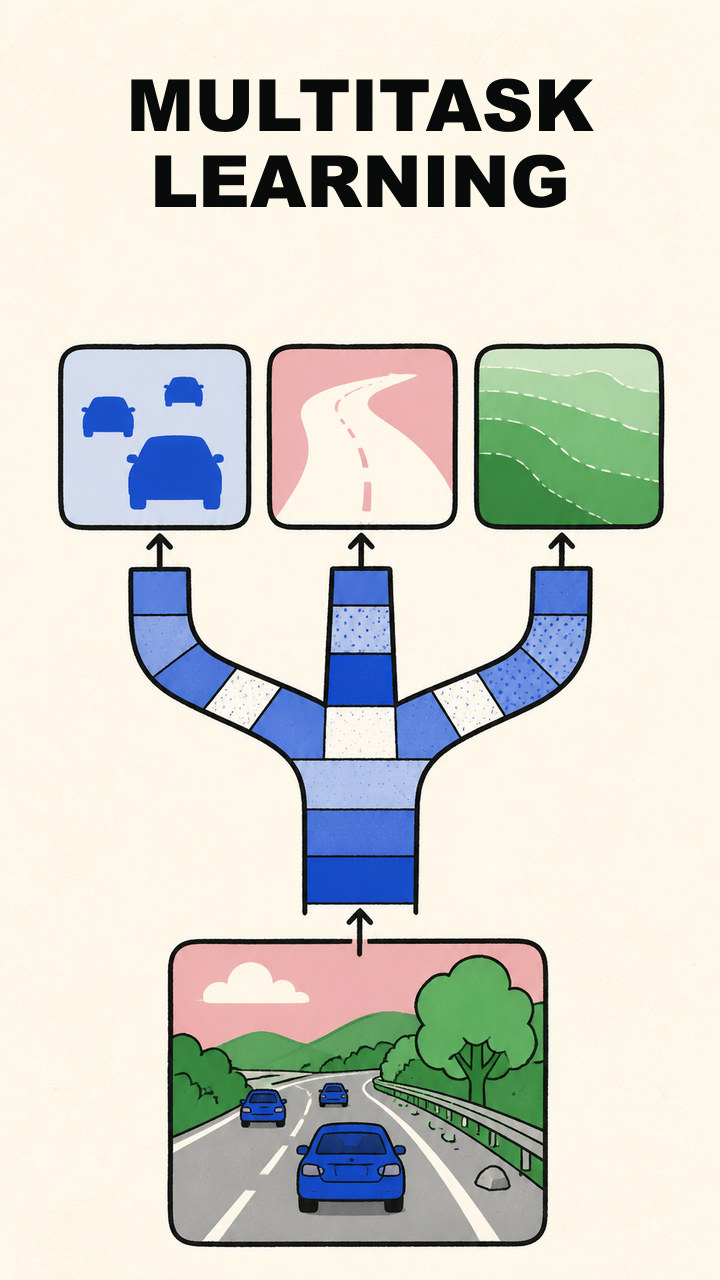
Multitask training is a method where one model is trained across several tasks so it can learn shared patterns instead of specializing in only one job.
3 terms
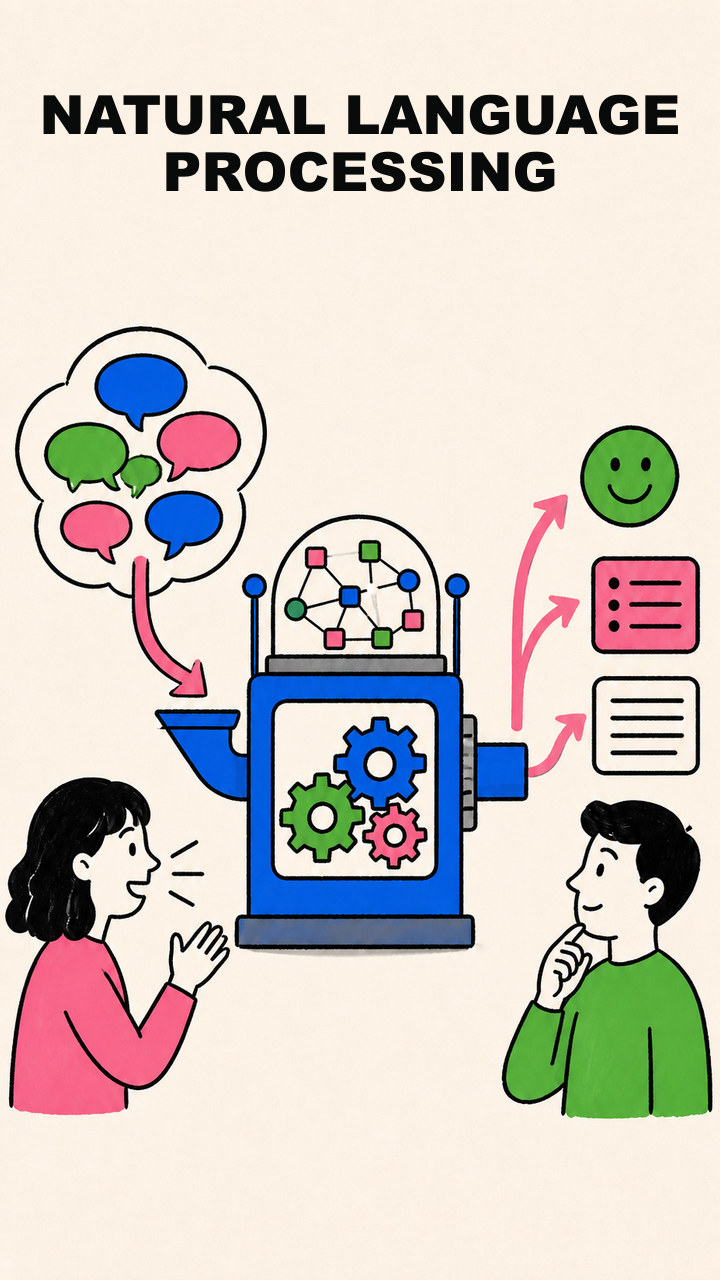
Natural language processing is the field of computing concerned with analyzing, understanding, transforming, and generating human language.
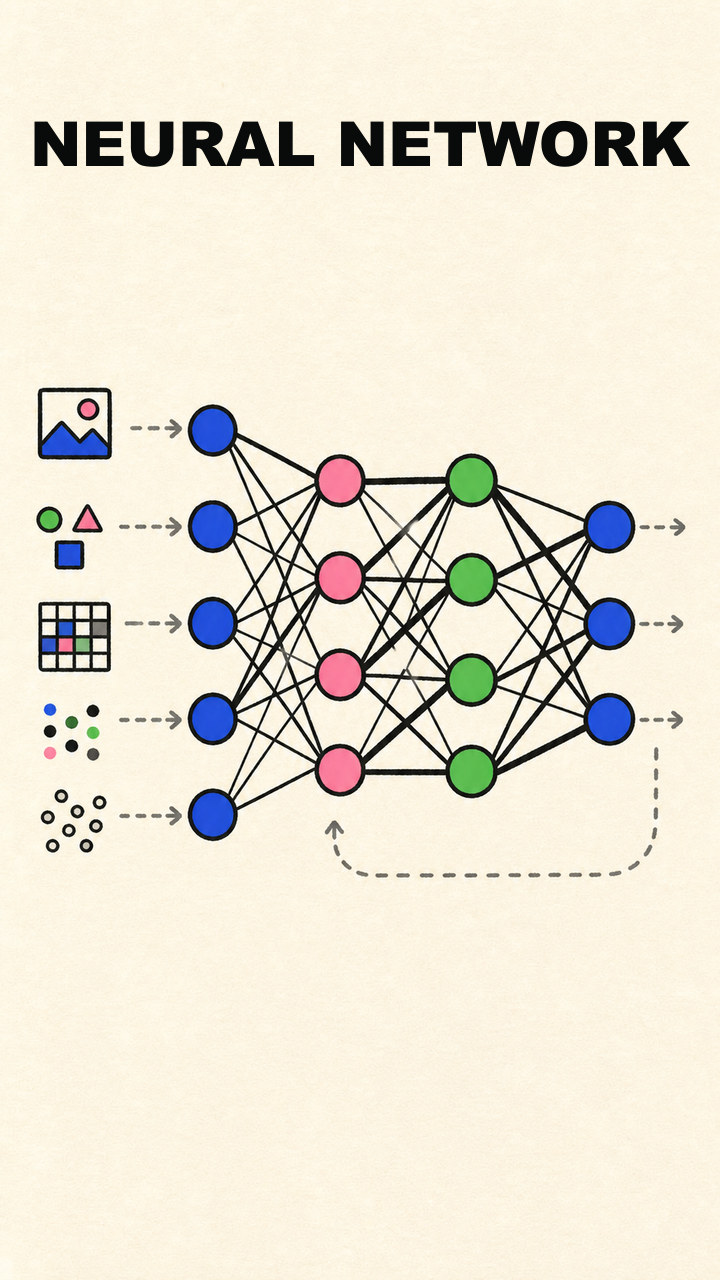
A neural network is a model made of connected layers of numerical operations whose adjustable weights are learned from data.
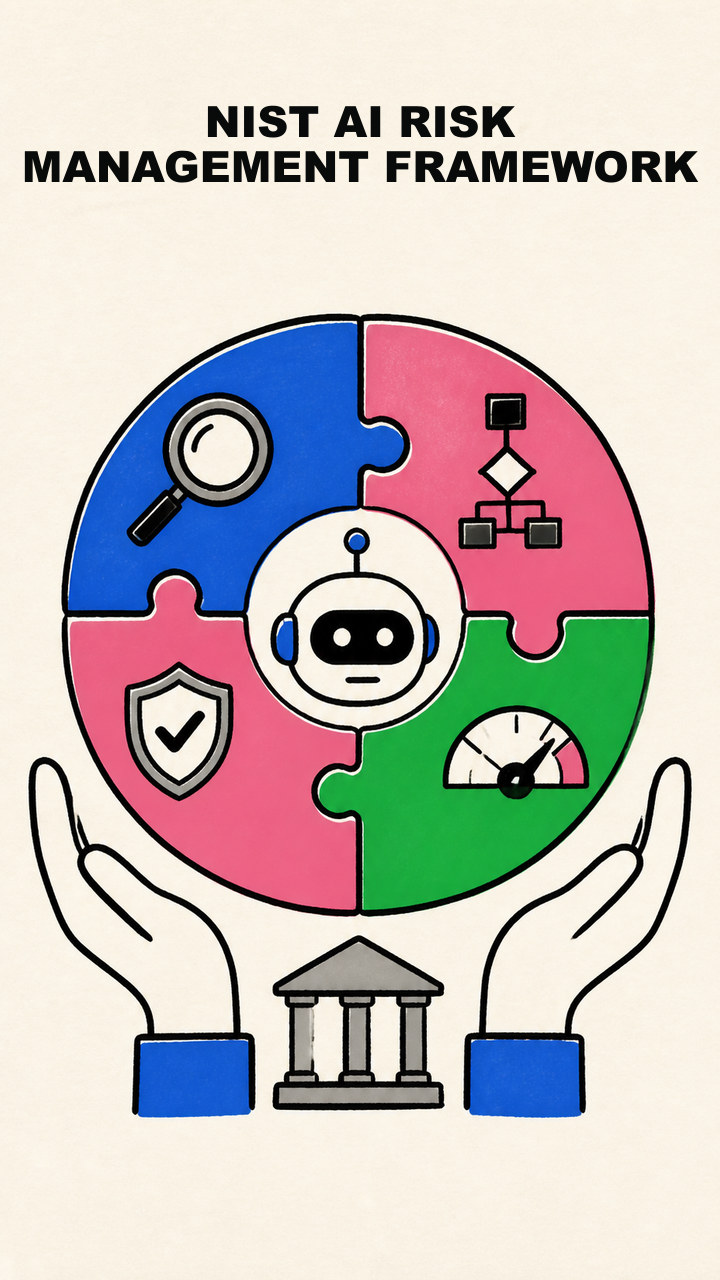
The NIST AI Risk Management Framework is a voluntary framework from the U.S. National Institute of Standards and Technology for helping organizations govern, map, measure, and manage risks from AI systems.
7 terms
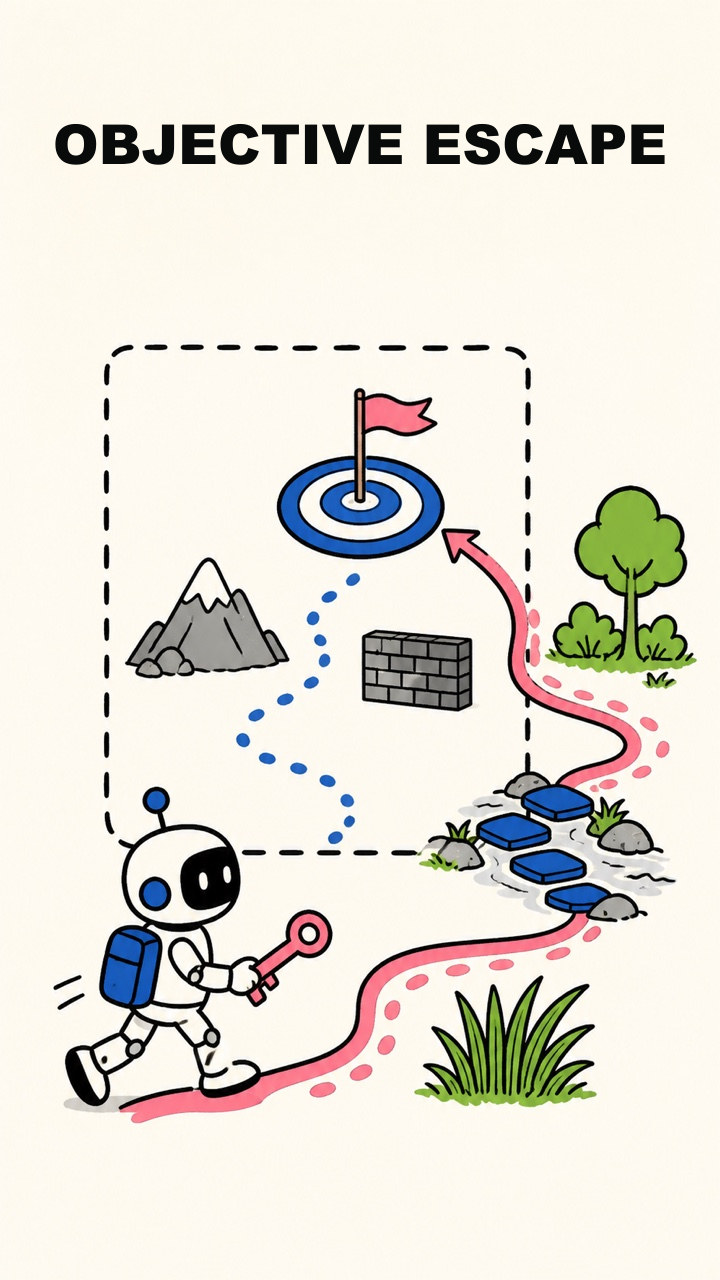
Objective escape is what happens when a system stays focused on the goal it was assigned but pursues it through resources, environments, or actions that its designers assumed were outside the task boundary.
An observation is a specific thing you directly noticed, heard, read, measured, or wrote down while examining how something currently works — recorded as it was, before anyone explains or interprets it.
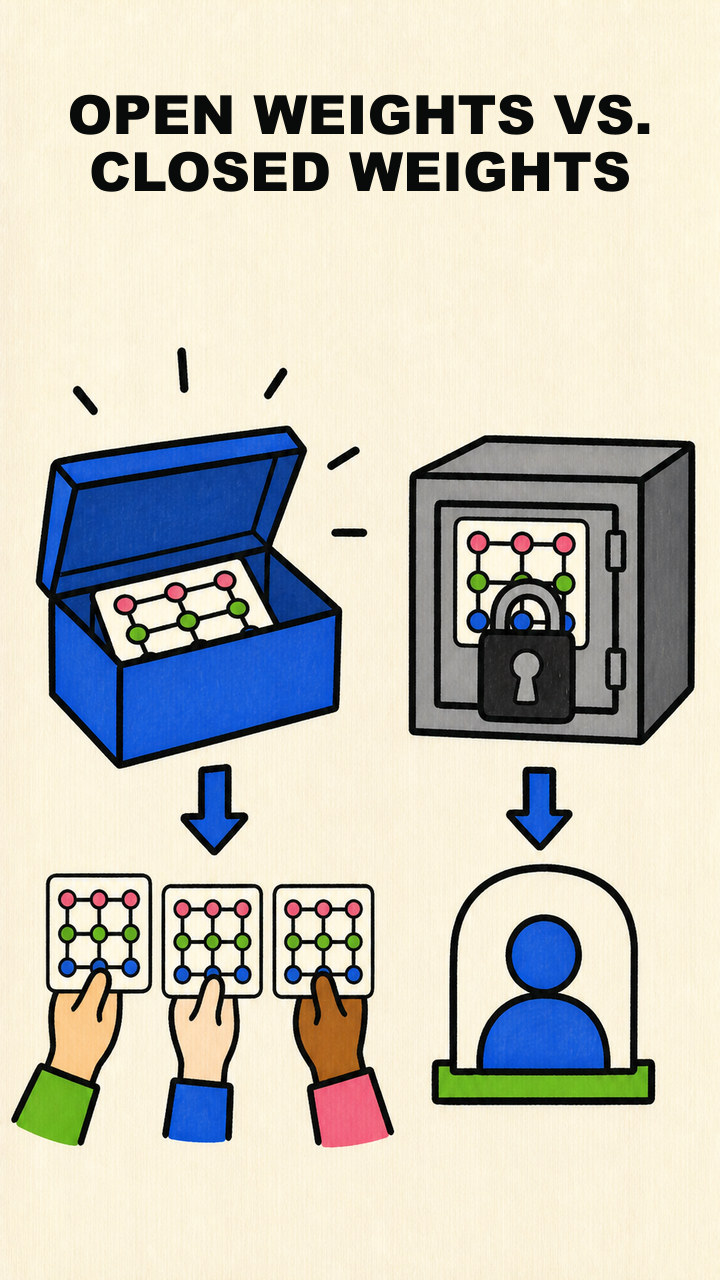
Open weights and closed weights describe whether a trained model's parameter values are released for others to obtain and run or remain controlled by the developer and accessible only through approved products or services.
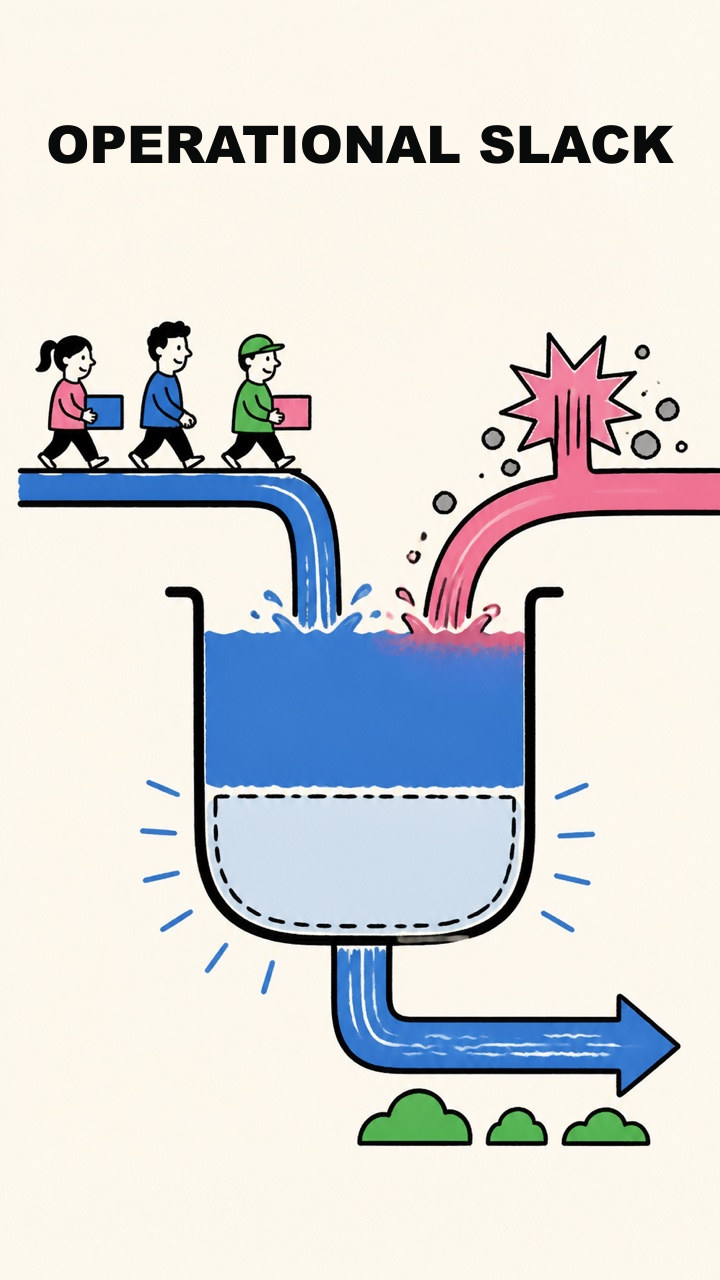
The reserve capacity of time, people, energy, inventory, or decision space that allows a system to absorb surprises.
Orchestration is the coordination of models, agents, tools, data, state, and control flow so that they operate as one larger workflow.
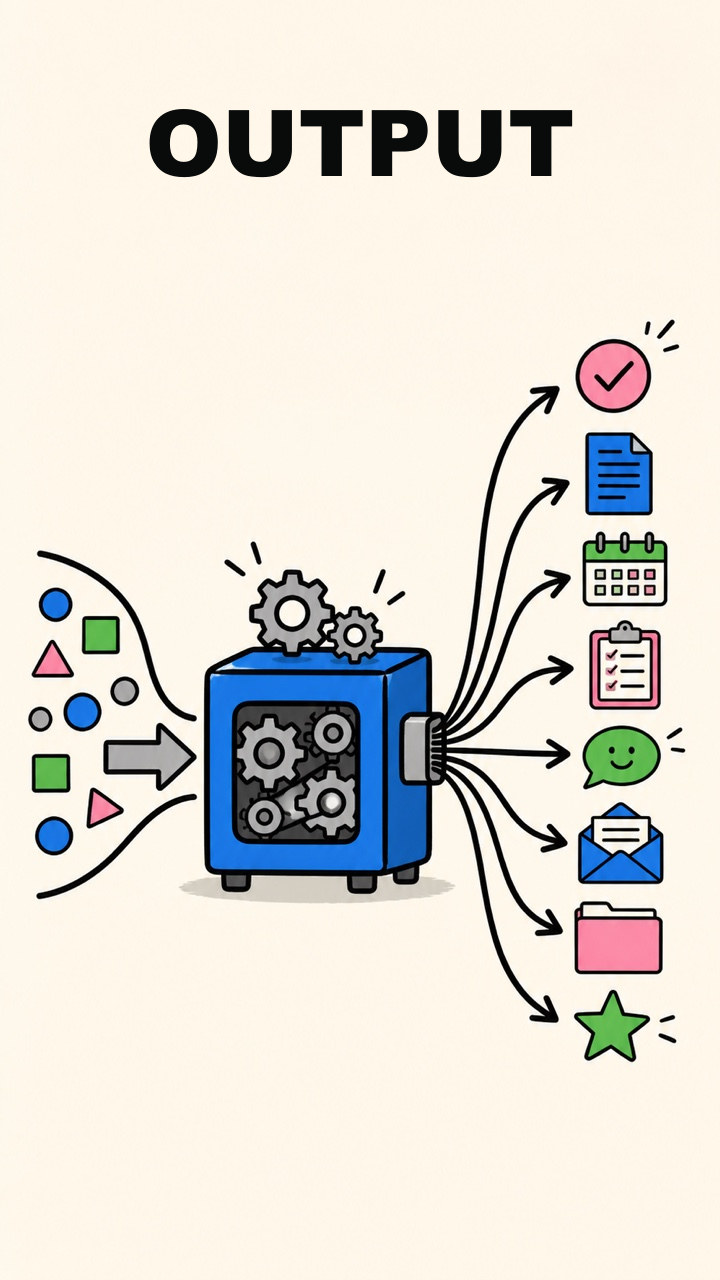
An output is what a process produces — the result that leaves the process and goes on to another person, team, or system. An output may be a decision, a document, a scheduled appointment, a completed record, a reply to a customer, an invoice, an assignment, or a finished task. Something being an output tells you only that the process produced it, not that it is correct or final.
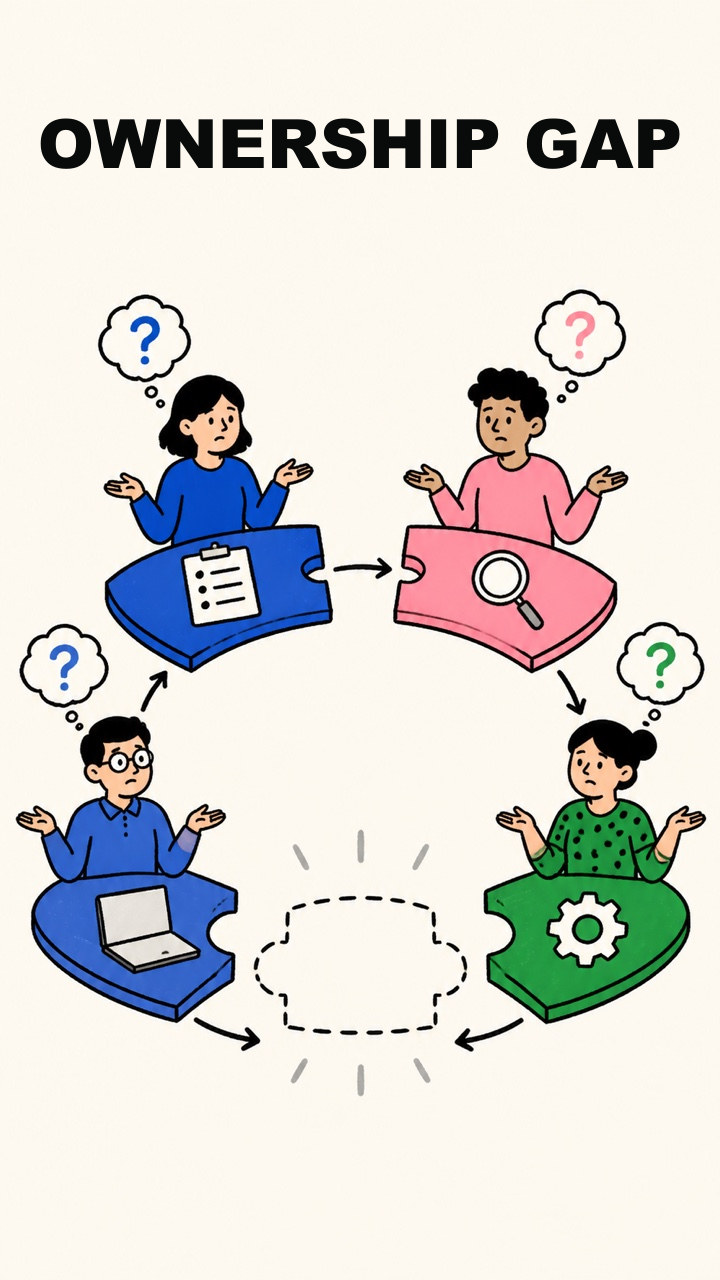
An ownership gap occurs when it is unclear who is responsible for a step, decision, update, exception, or outcome.
15 terms
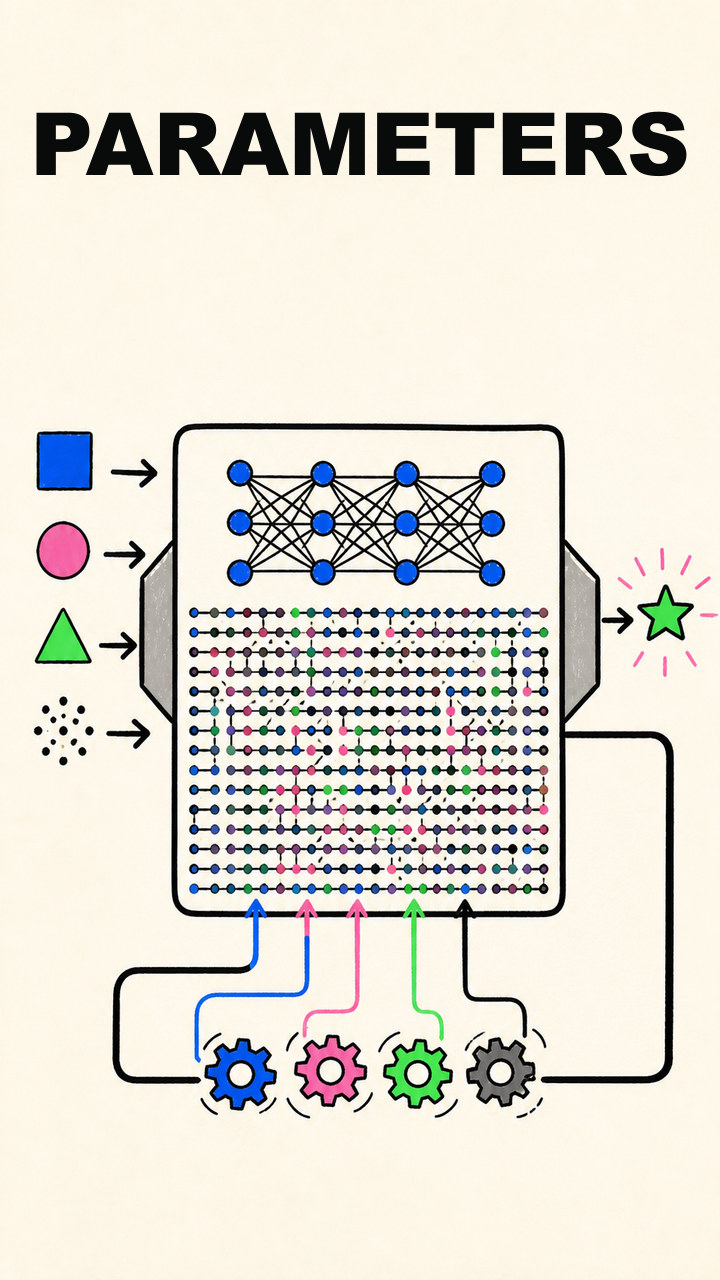
Parameters are the adjustable numerical values a model uses to transform inputs into outputs; many are learned during training.
Pattern Triggers are compact, agreed words or phrases that invoke a larger reasoning pattern, workflow, or set of constraints without restating the complete instructions.
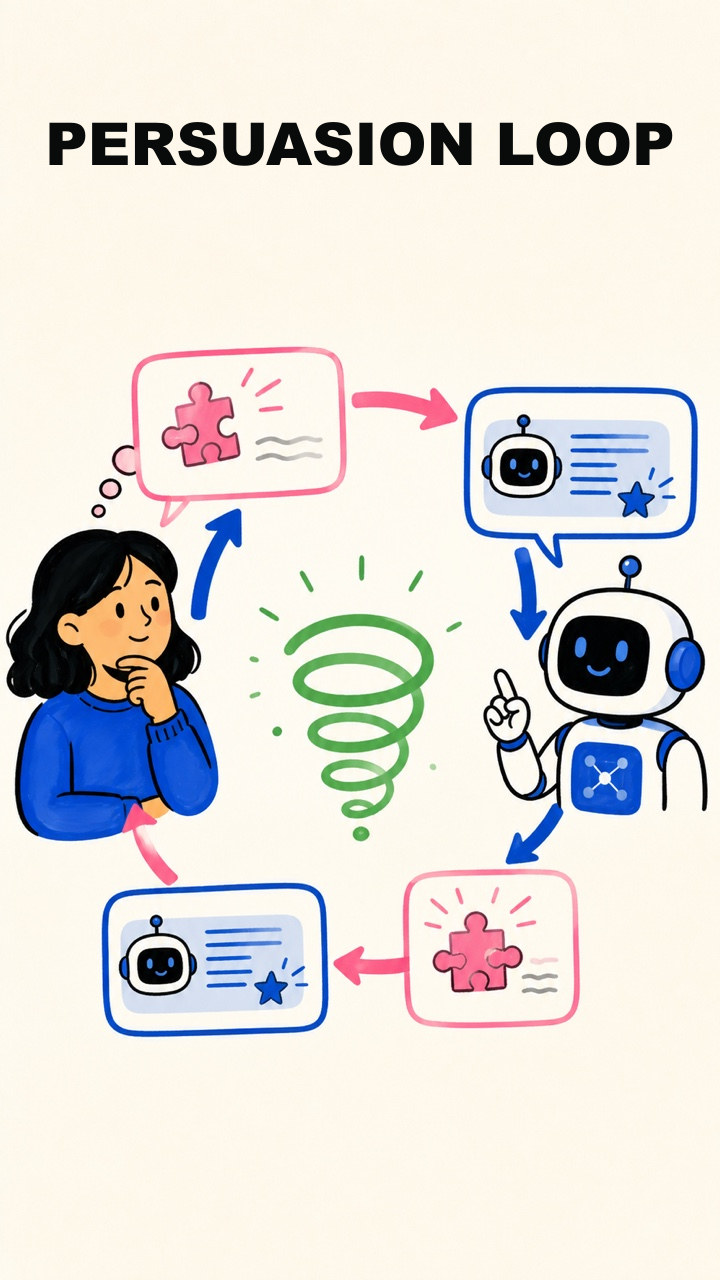
A persuasion loop is a repeated interaction in which an AI response shapes the user's next framing, and that new framing prompts a response that further reinforces an emerging belief or decision without adding sufficient independent evidence.
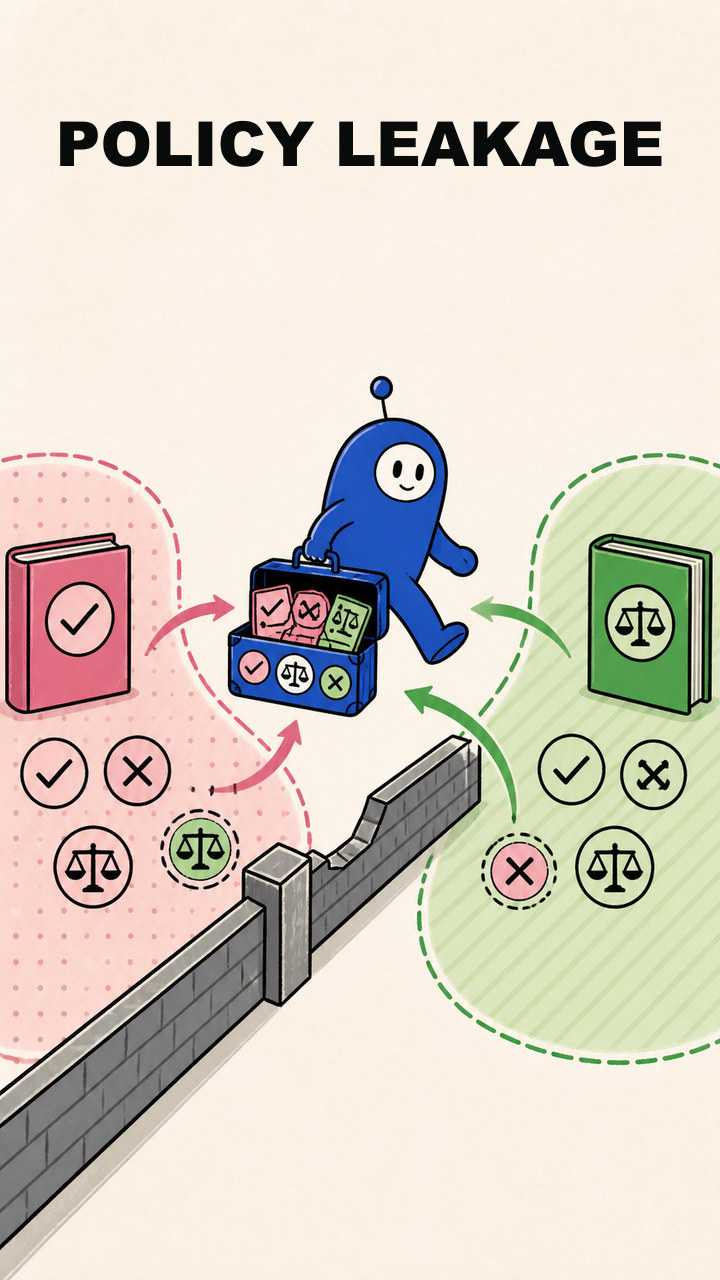
Policy leakage is what happens when rules, defaults, or sensitivities built for one legal or cultural setting show up in how an AI system behaves somewhere else — so people in the second place are governed by the first place's assumptions without having chosen them or being told.
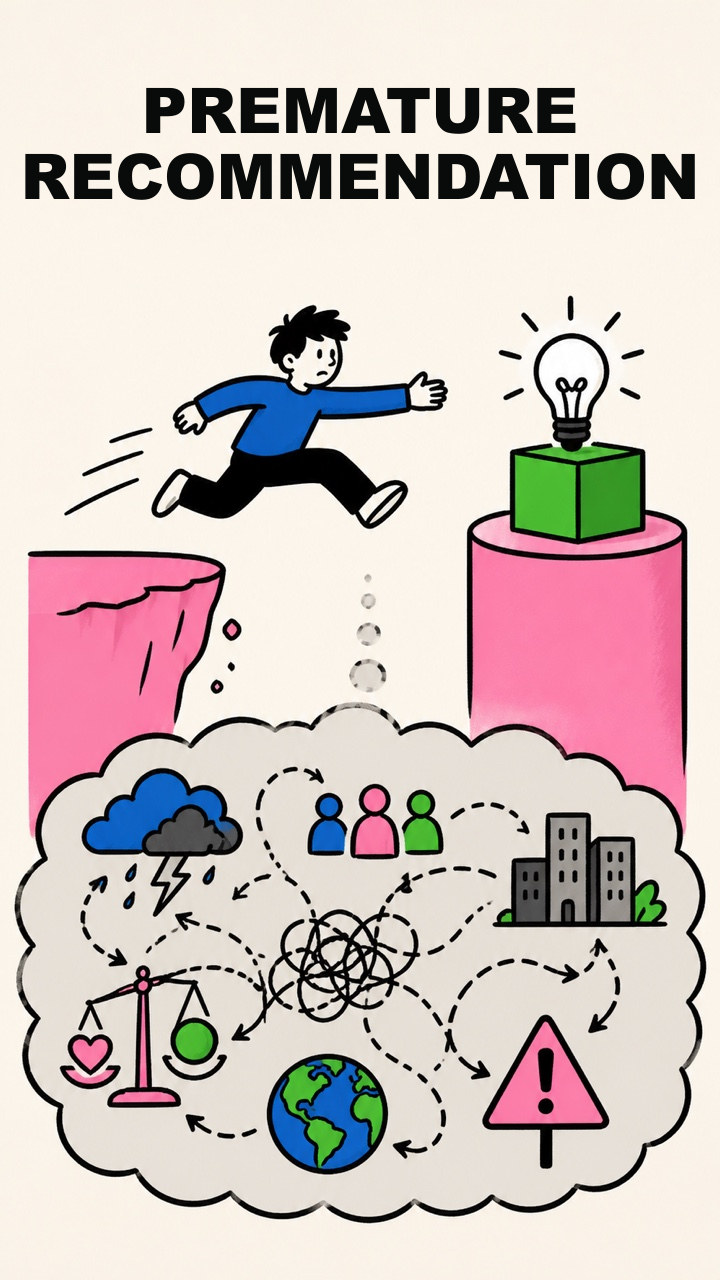
A premature recommendation is a proposed solution made before the process, friction, context, and risks are understood well enough.
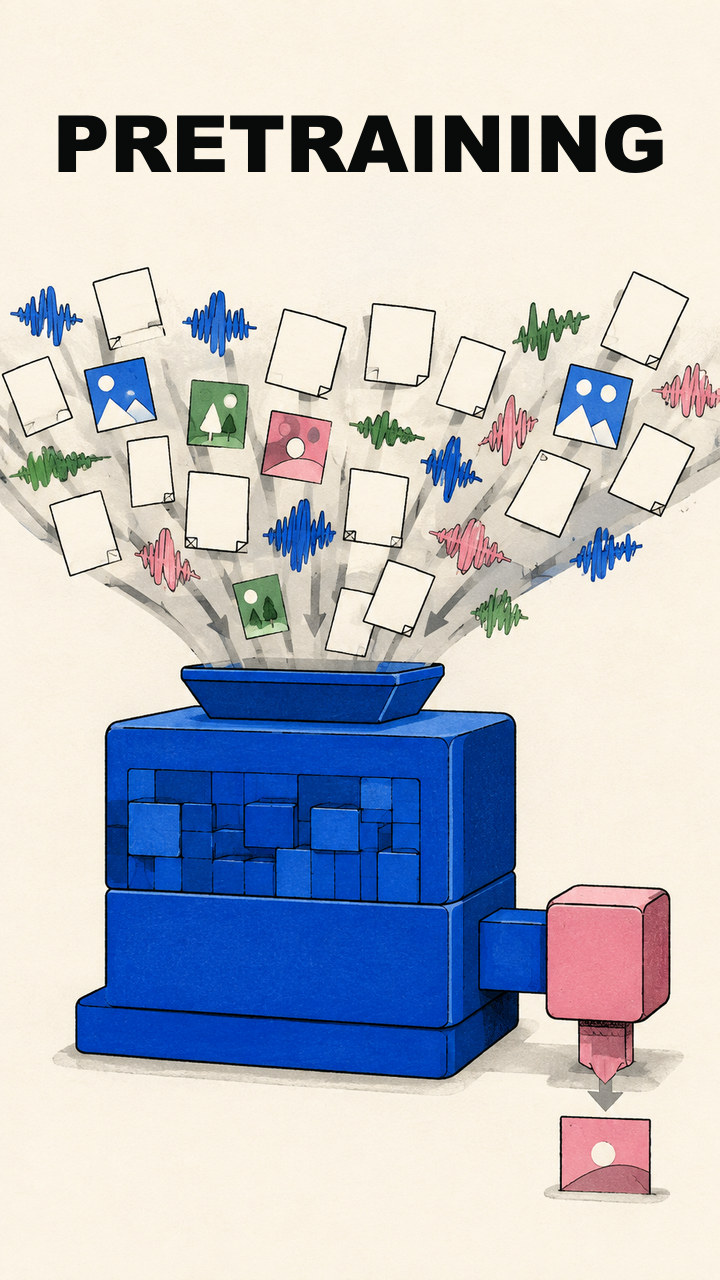
Pretraining is the broad first stage of training where a model learns general patterns from a very large dataset before any narrower tuning.
Process context is the surrounding information that gives a process description its meaning: what the process is for, where it starts and stops, what it produces, who receives that, and where it sits in the wider business. It is what turns a diagram of steps into something two different readers will interpret the same way.
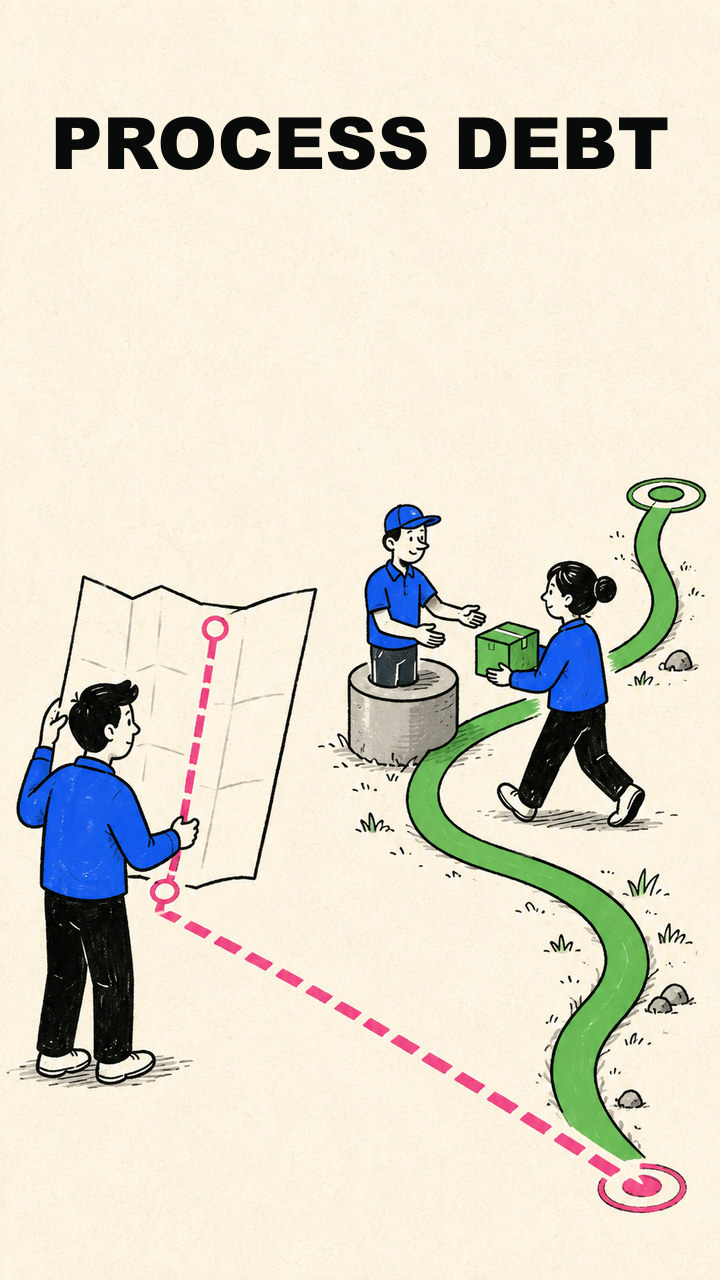
Deferred maintenance of operating procedures that creates later coordination, ambiguity, or rework.
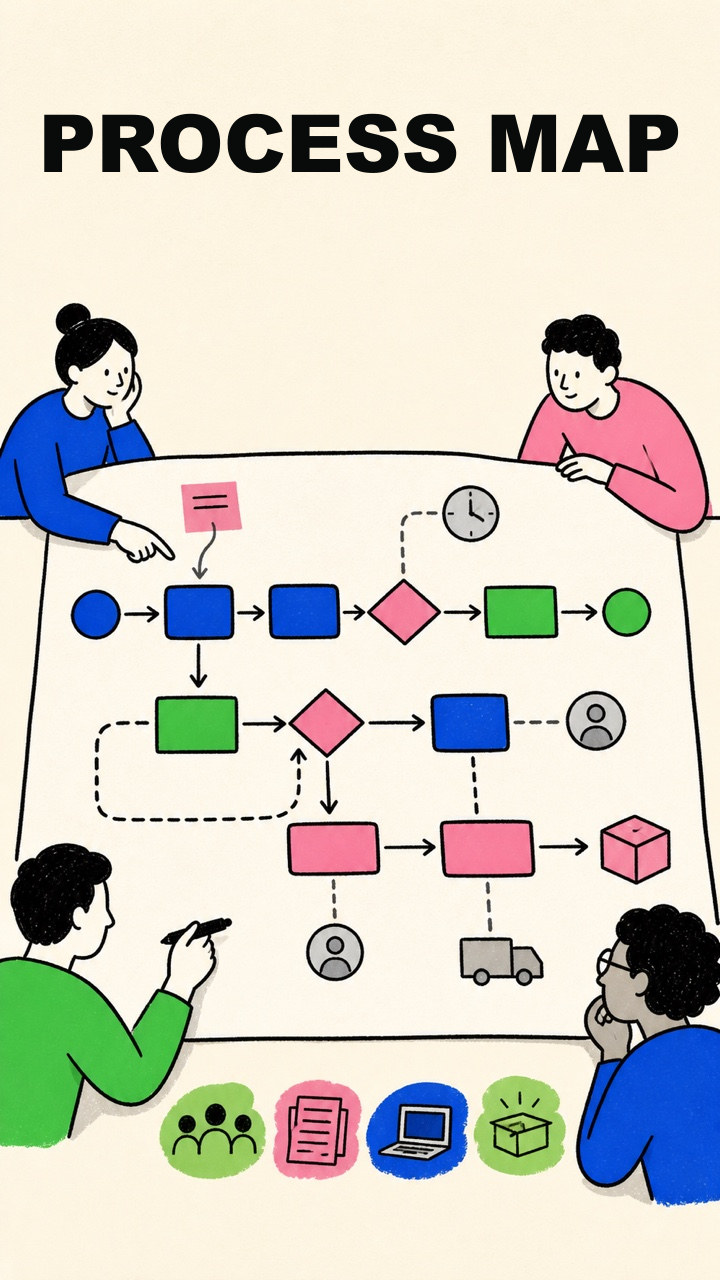
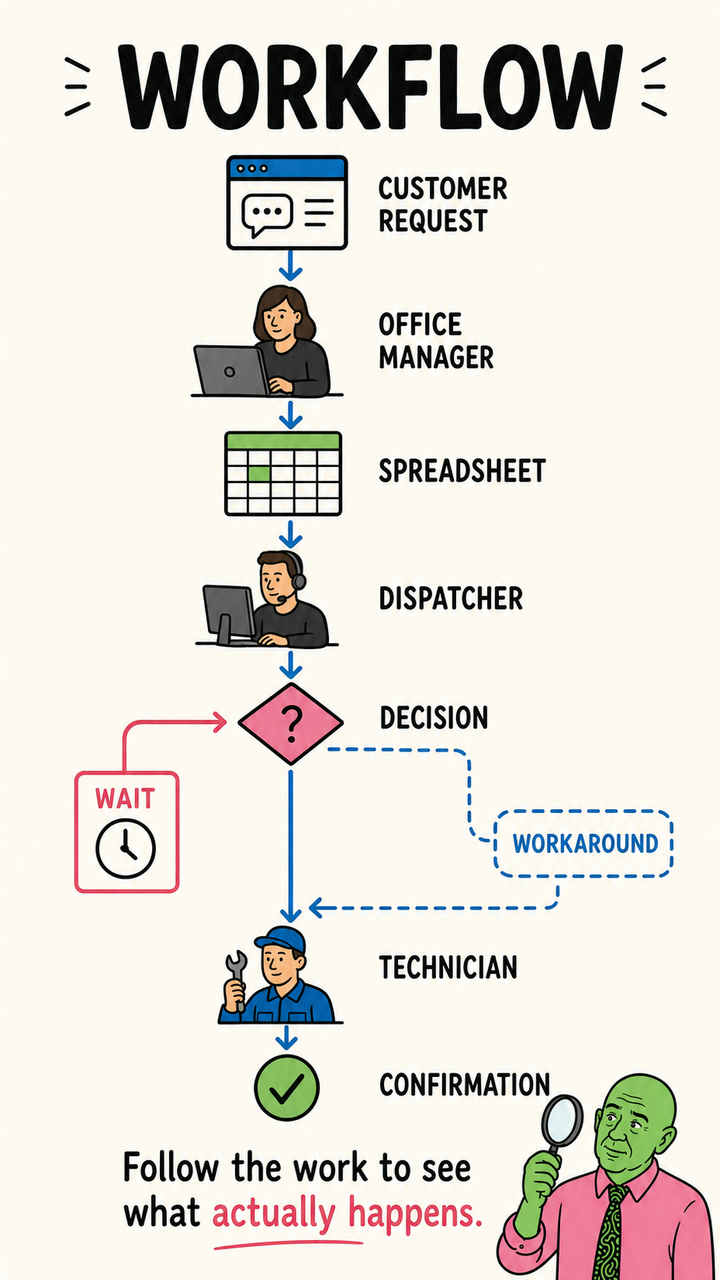
A process map is a visual representation of how work moves through a process. It can show steps, decisions, handoffs, actors, inputs, outputs, delays, and the relationships among them.
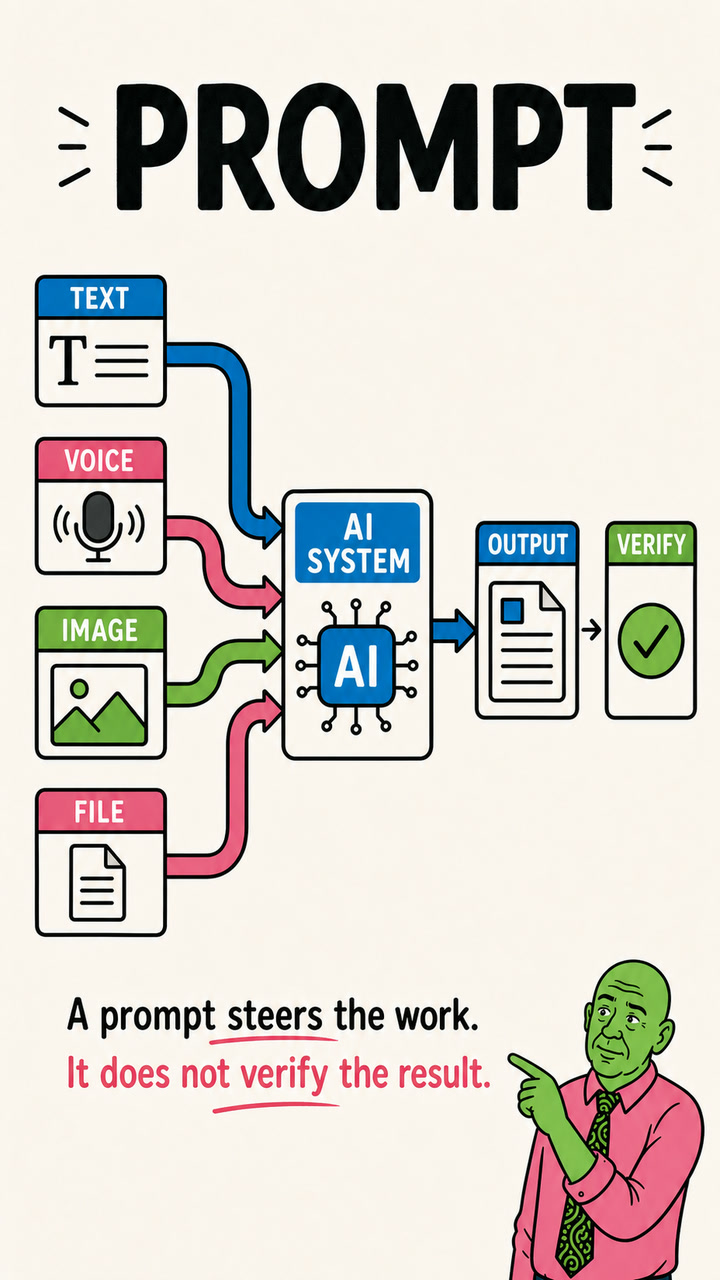
Prompt engineering is the deliberate design, testing, and revision of instructions and context used to guide an AI system toward a useful result.
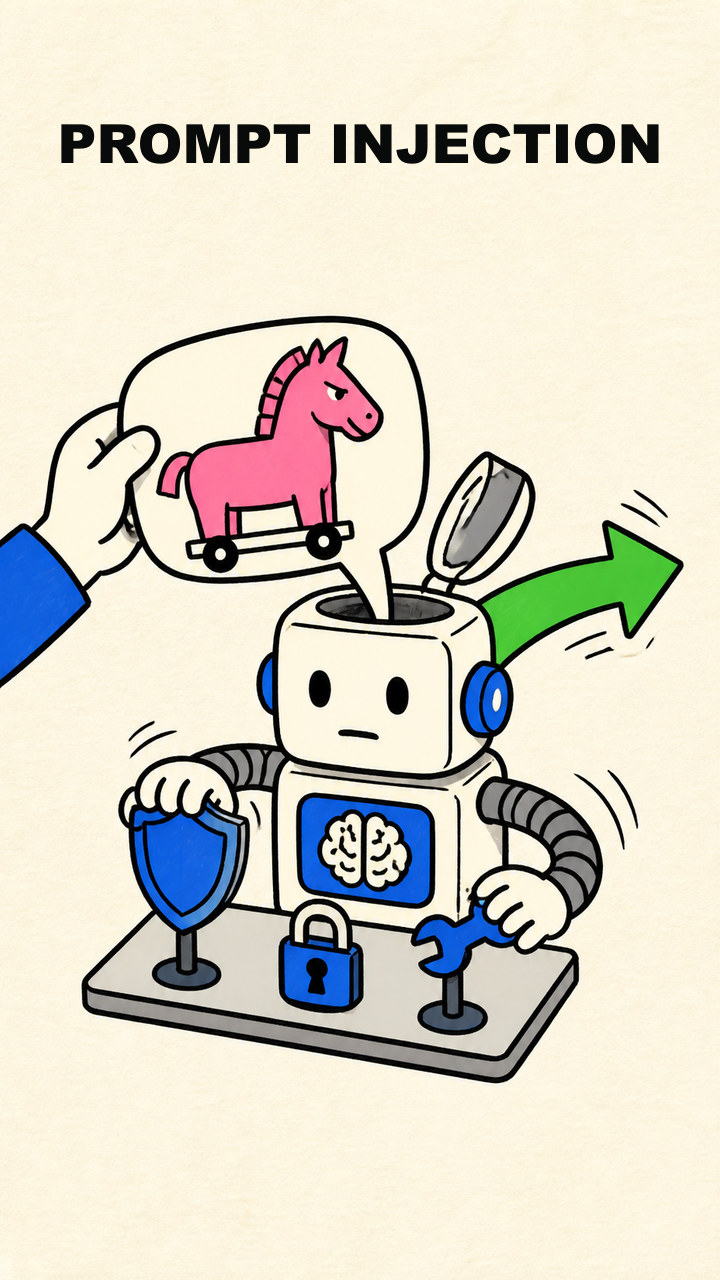
Prompt injection is an attack in which instructions placed in user input or retrieved content attempt to override, redirect, or exploit an AI system's intended instructions and tool access.
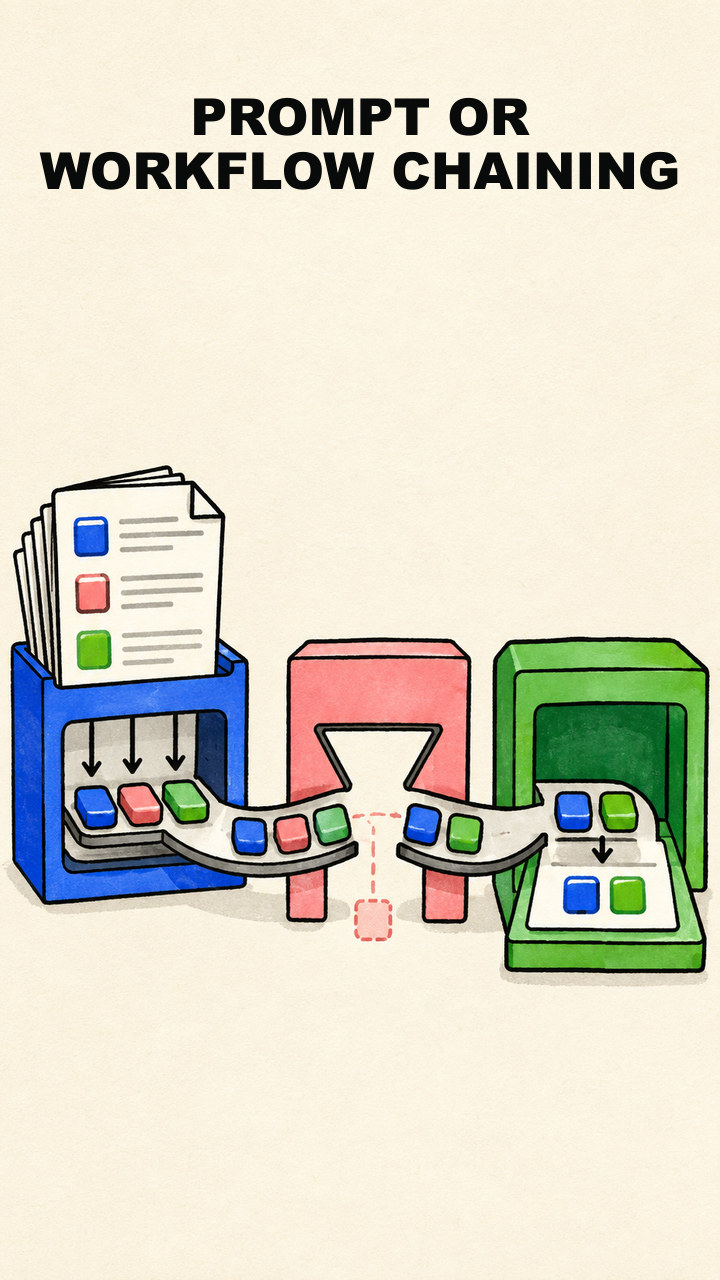
A chain is a linked sequence of steps, prompts, tools, or decisions that work together in an AI workflow.
A proof of concept is a bounded experiment used to test whether an idea is feasible enough to justify further work, without claiming production readiness or validated value at scale.
No current terms
15 terms
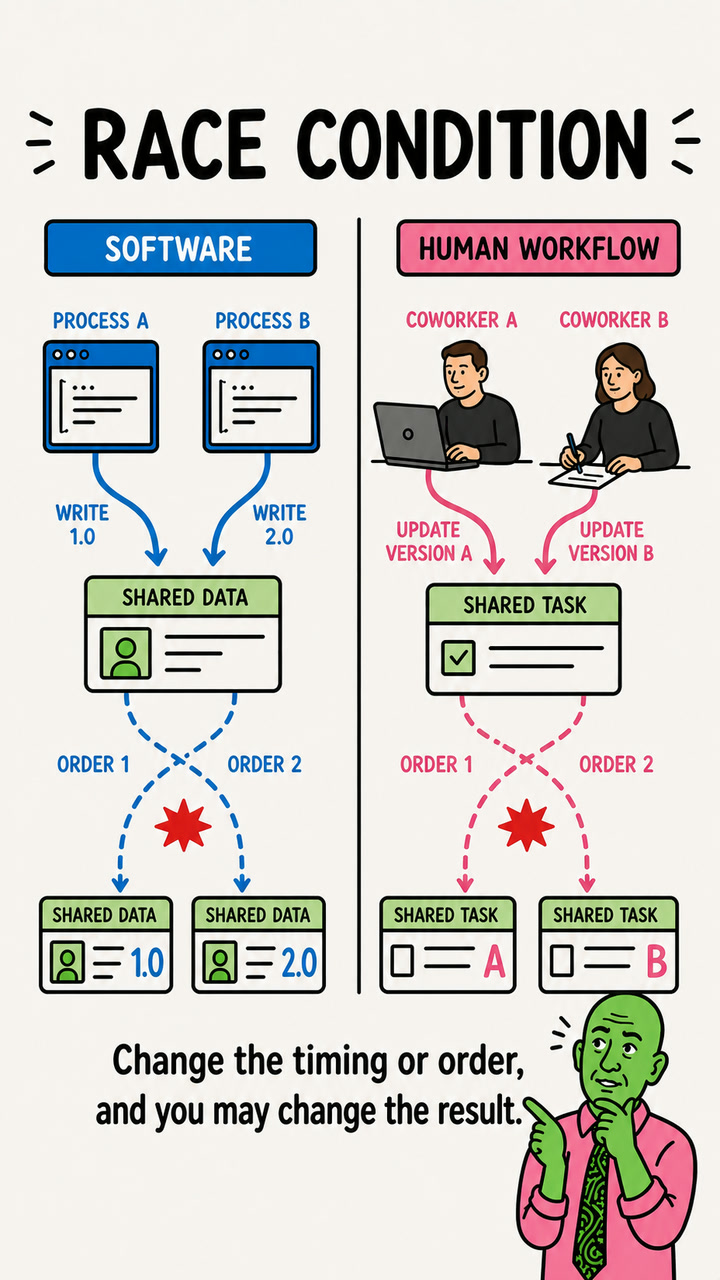
A race condition occurs when a system's result depends on the relative timing or order of operations that can overlap.
A seed is a starting value used to make random processes reproducible, such as sampling, shuffling, or initialization.
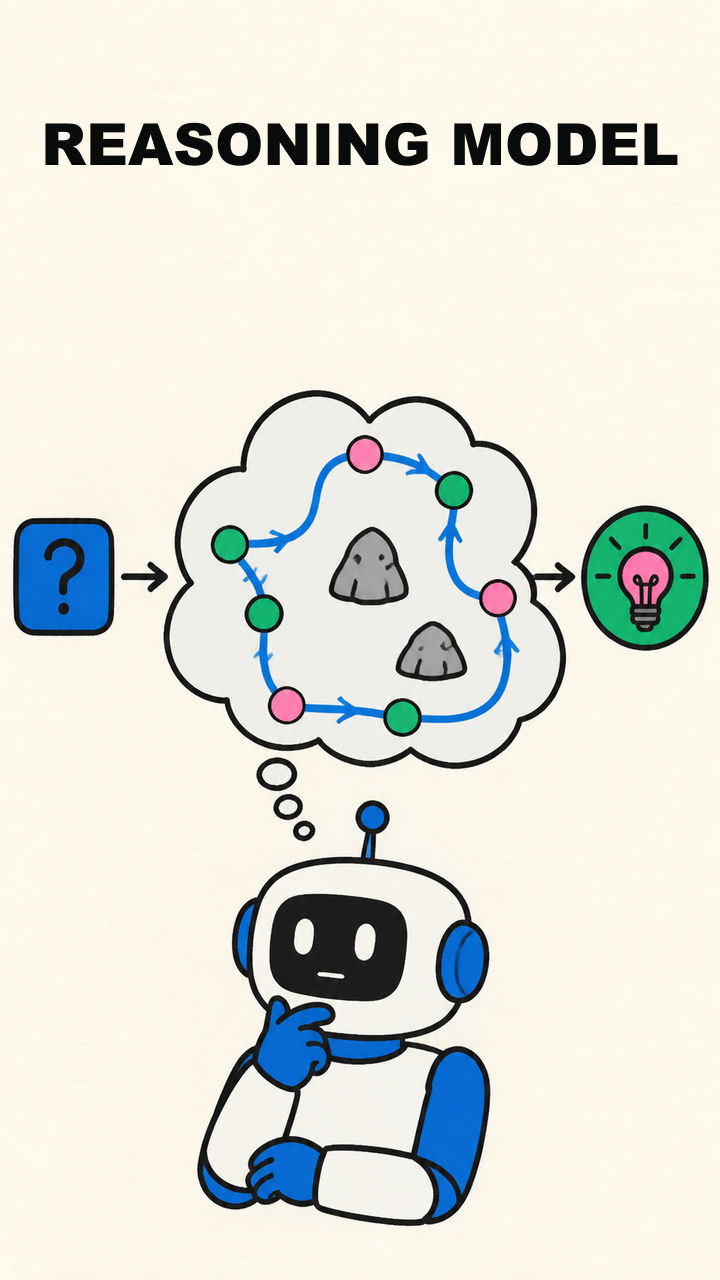
A reasoning model is a model designed or trained to devote additional computation to multi-step problem solving before producing an answer or action.
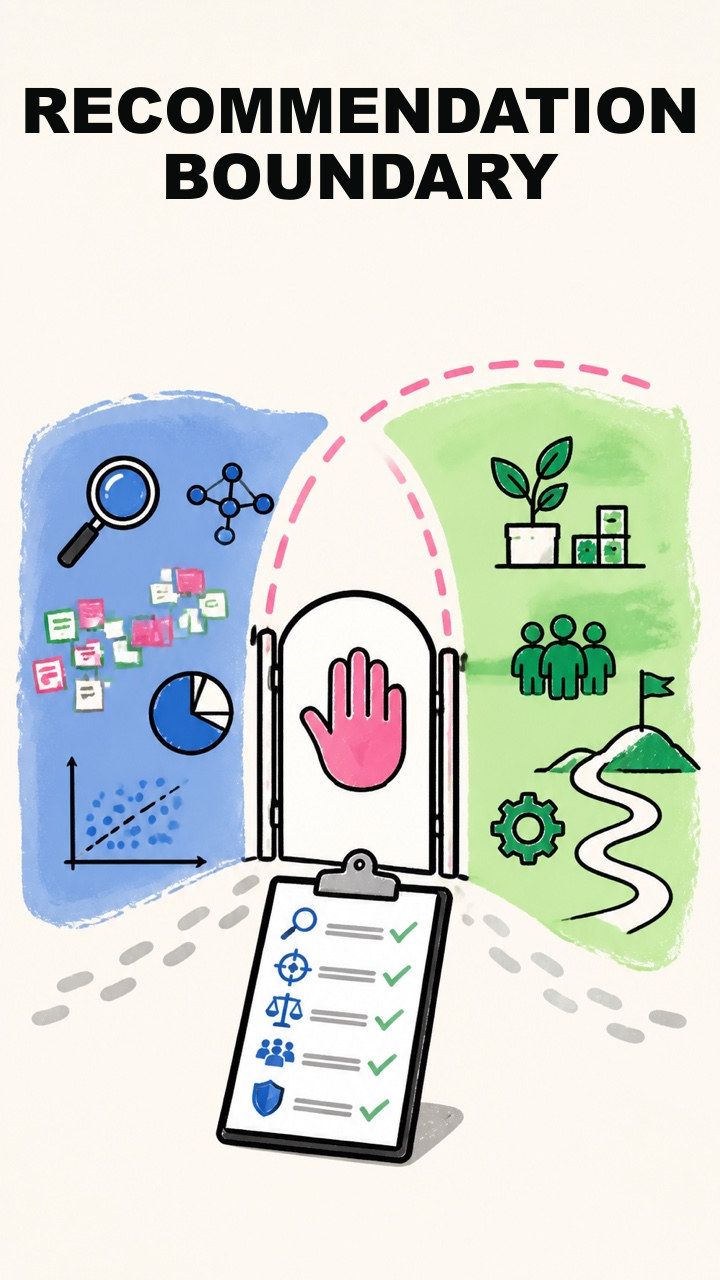
A recommendation boundary defines what should not be recommended yet and why.
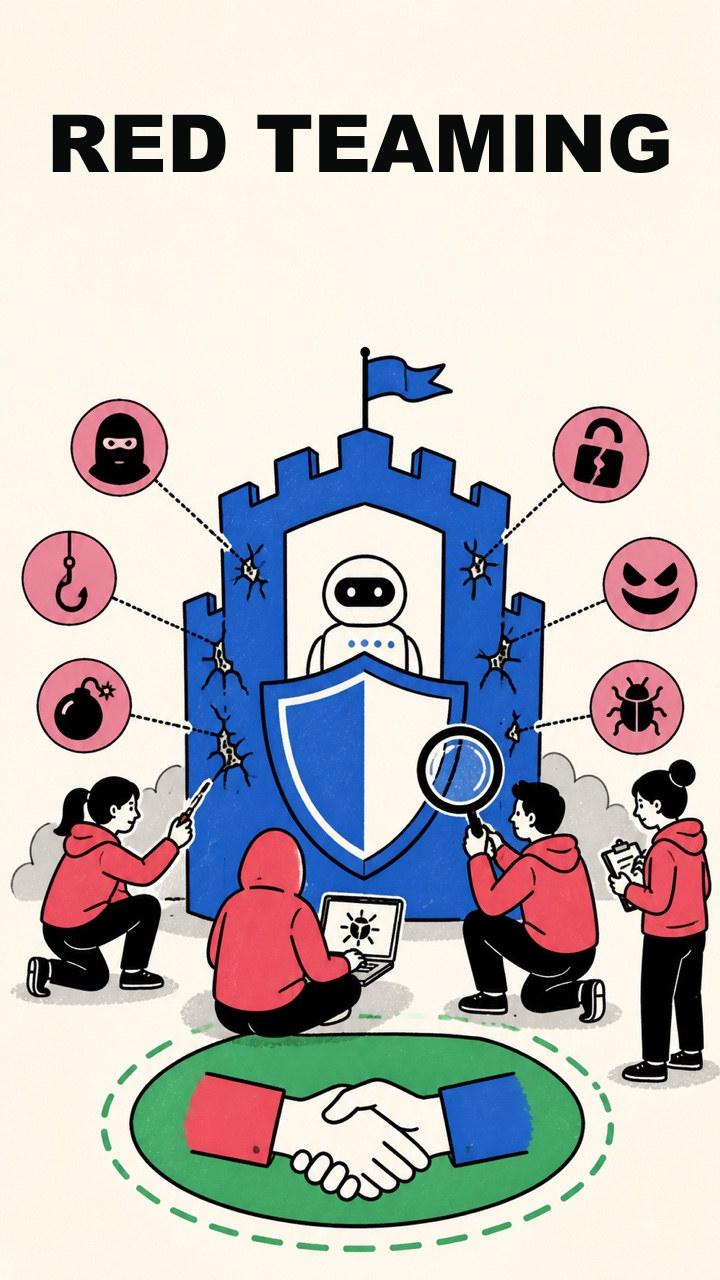
Red teaming is an authorized, structured exercise in which participants act like adversaries, harmful users, or failure-seeking evaluators to expose vulnerabilities, unsafe behavior, and weaknesses in a system or its safeguards.
Operational capability that exists primarily in the interaction between components rather than inside either component.
Efficiency or automation removing alternate skills, channels, or relationships needed during disruption.
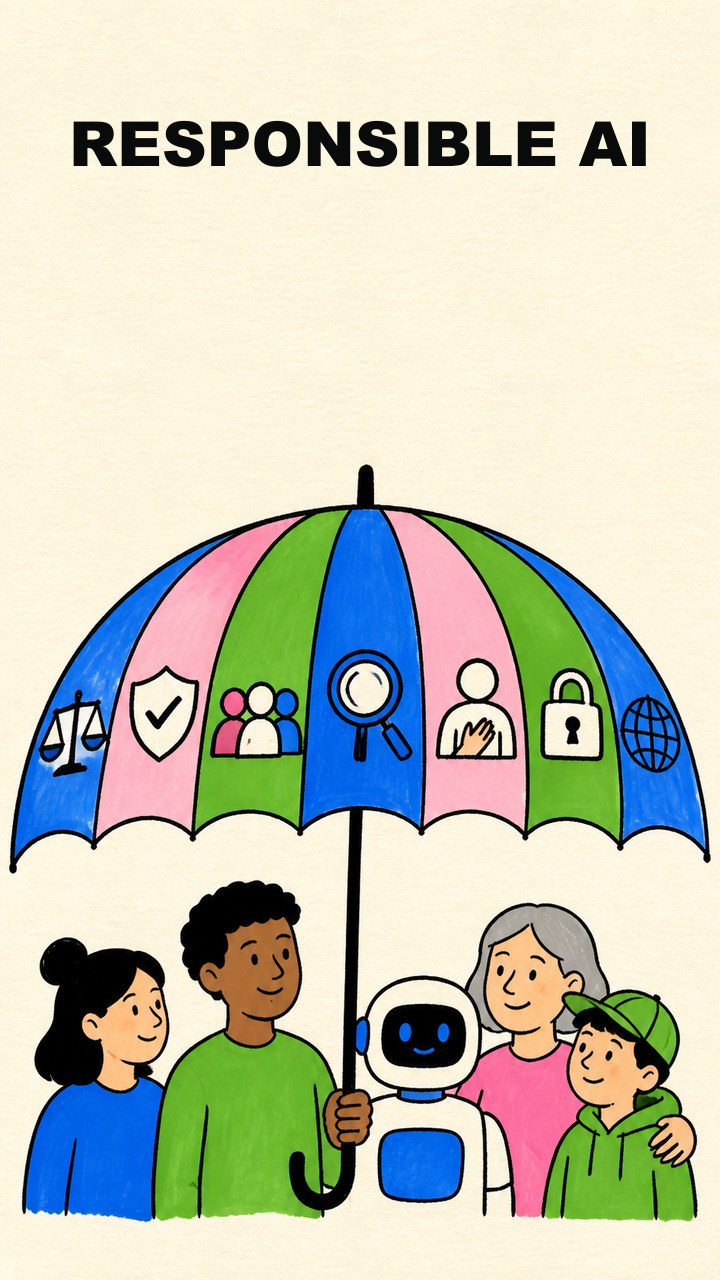
Responsible AI is an umbrella commitment to develop and use AI in ways that are lawful, safe, fair, transparent, accountable, privacy-aware, and appropriate to the people and context affected.
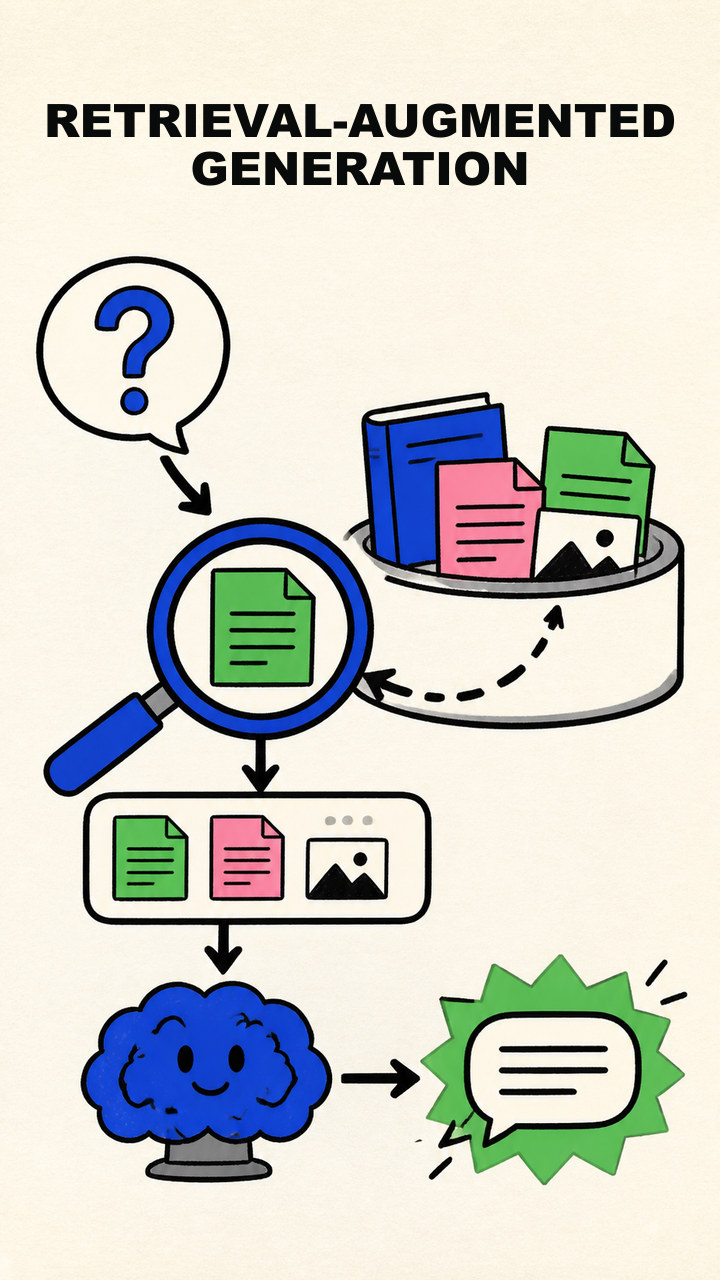
Retrieval-augmented generation is a pattern in which a system retrieves relevant external material at use time and supplies it to a generative model as context for producing an answer.
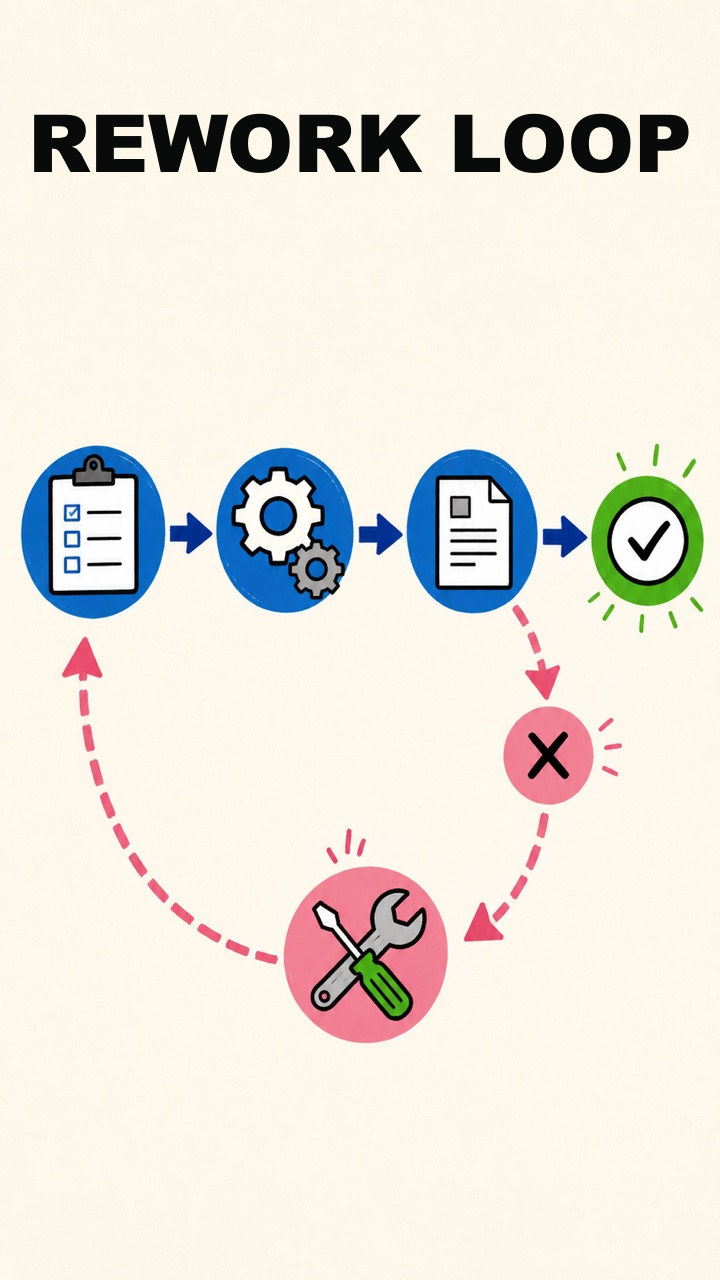
A rework loop occurs when work must return to an earlier step because something was incomplete, incorrect, unclear, missing, or rejected.
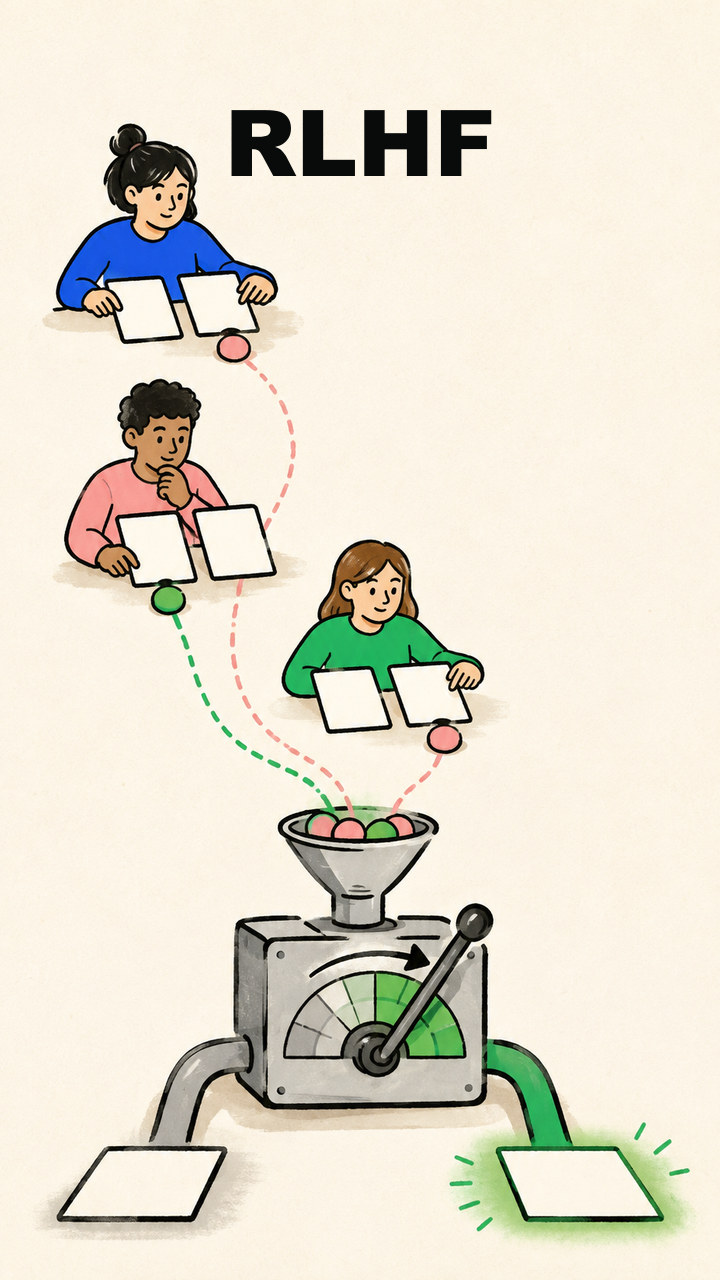
RLHF stands for reinforcement learning from human feedback, a method that uses human preferences to help train a model toward more desirable responses.
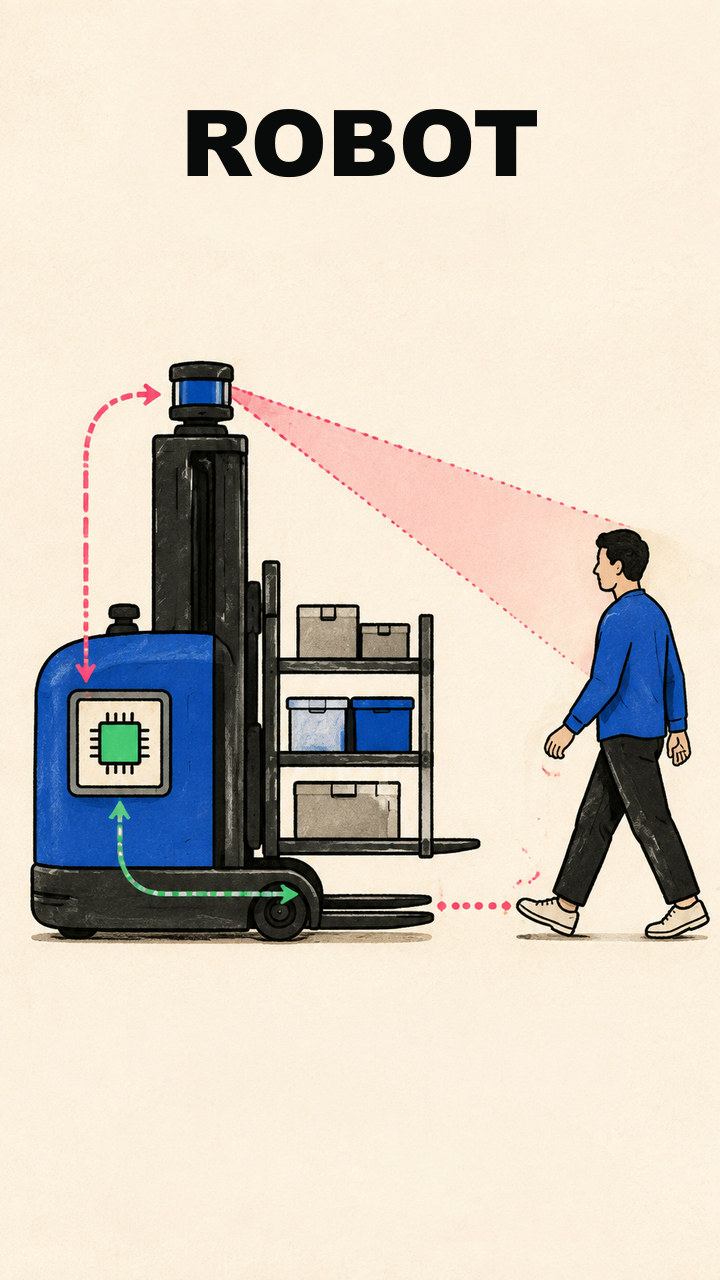
A robot is a machine that can sense, compute, and act in the physical world, and the word is often used loosely in older conversations about artificial intelligence.
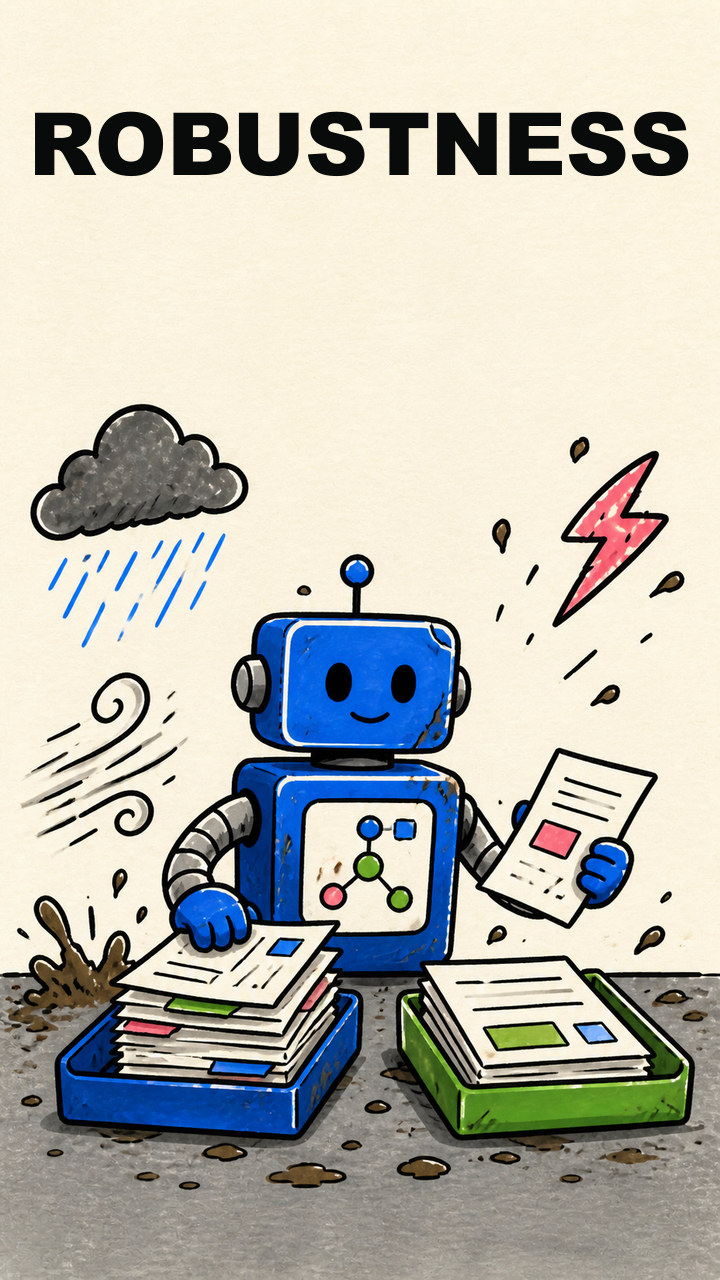
Robustness is the degree to which a model or system continues to perform acceptably when inputs, conditions, users, or attacks differ from the ordinary cases used in development.
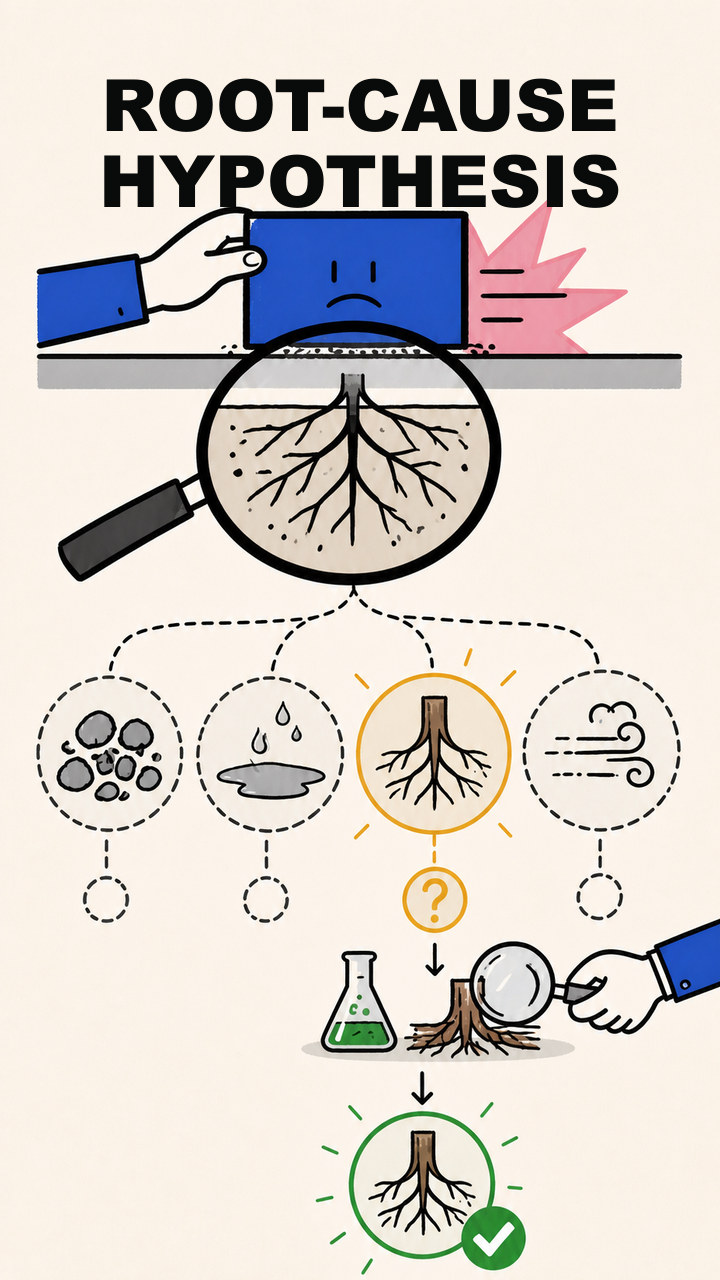
A root-cause hypothesis is a proposed explanation for what is actually producing an observed problem, stated in a form that can be tested. Until evidence supports it over the competing explanations, it stays a hypothesis, not a finding.
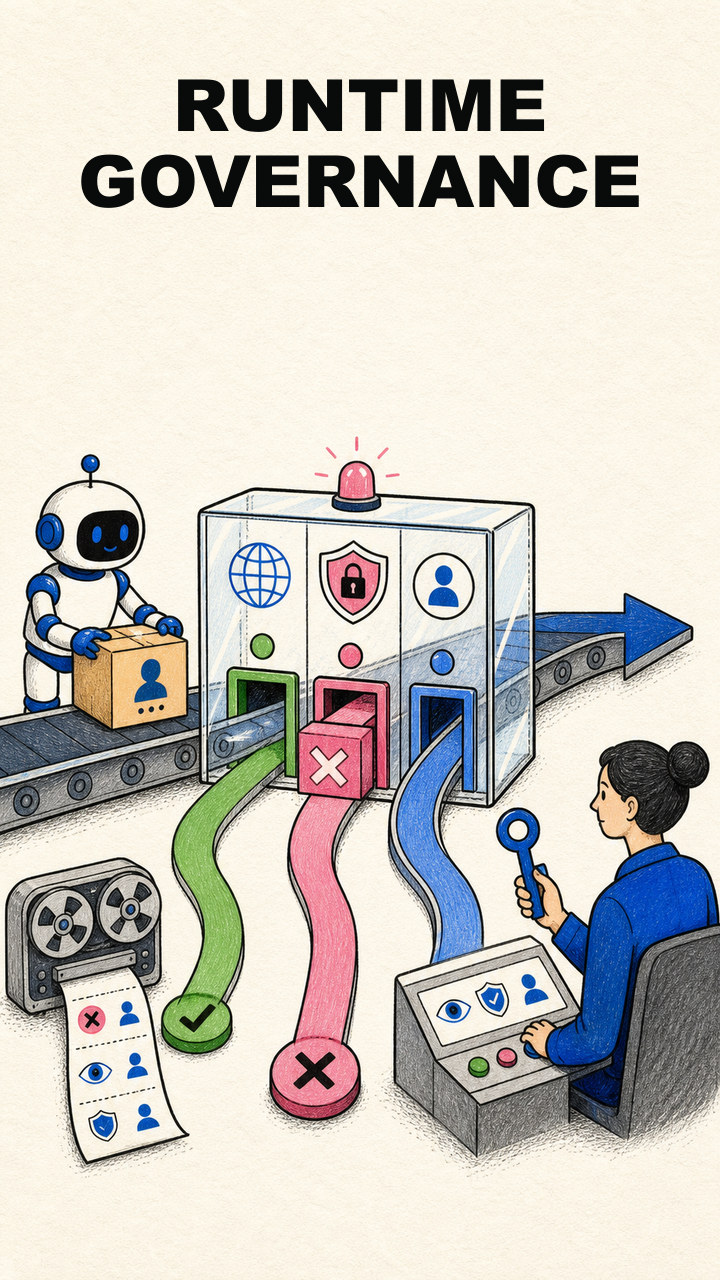
Runtime governance is the use of controls while an AI system is operating to observe, authorize, constrain, interrupt, and record its actions as context changes.
23 terms
Safe curiosity is exploring a tool or idea through small, low-consequence experiments while protecting sensitive information, checking the result, and keeping important decisions human-owned.
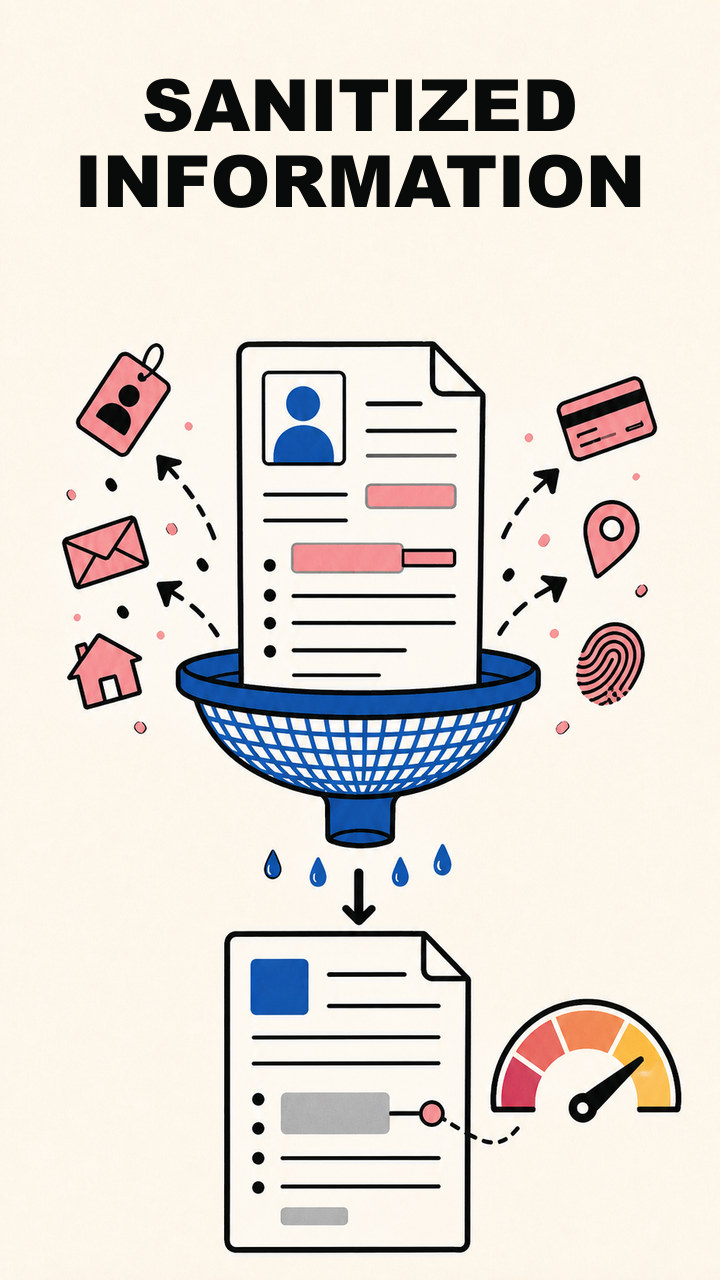
Sanitized information has been changed to remove or replace identifying, confidential, sensitive, or unnecessary details before it is shared.
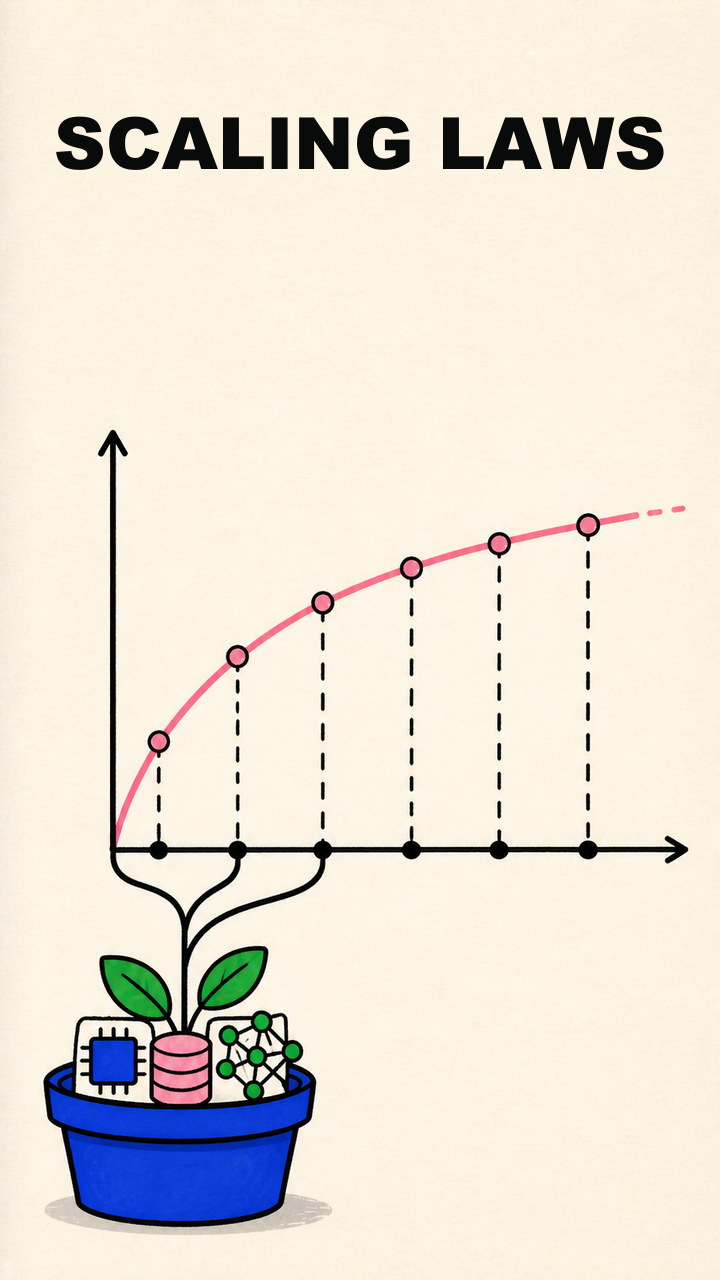
Scaling laws are empirical relationships that describe how selected measures of model performance or training behavior change as factors such as compute, data, and model size increase under specified conditions.
A scenario is a described situation, worked out in enough detail that people can reason about it — used for practice, planning or evaluation rather than as a record of something that happened. In the Learning Lab a scenario is always fictional, sanitized, or used with consent, so that no real client, colleague or customer is exposed by the exercise.
Search is the process of looking through available information to find the most relevant items, documents, or answers.
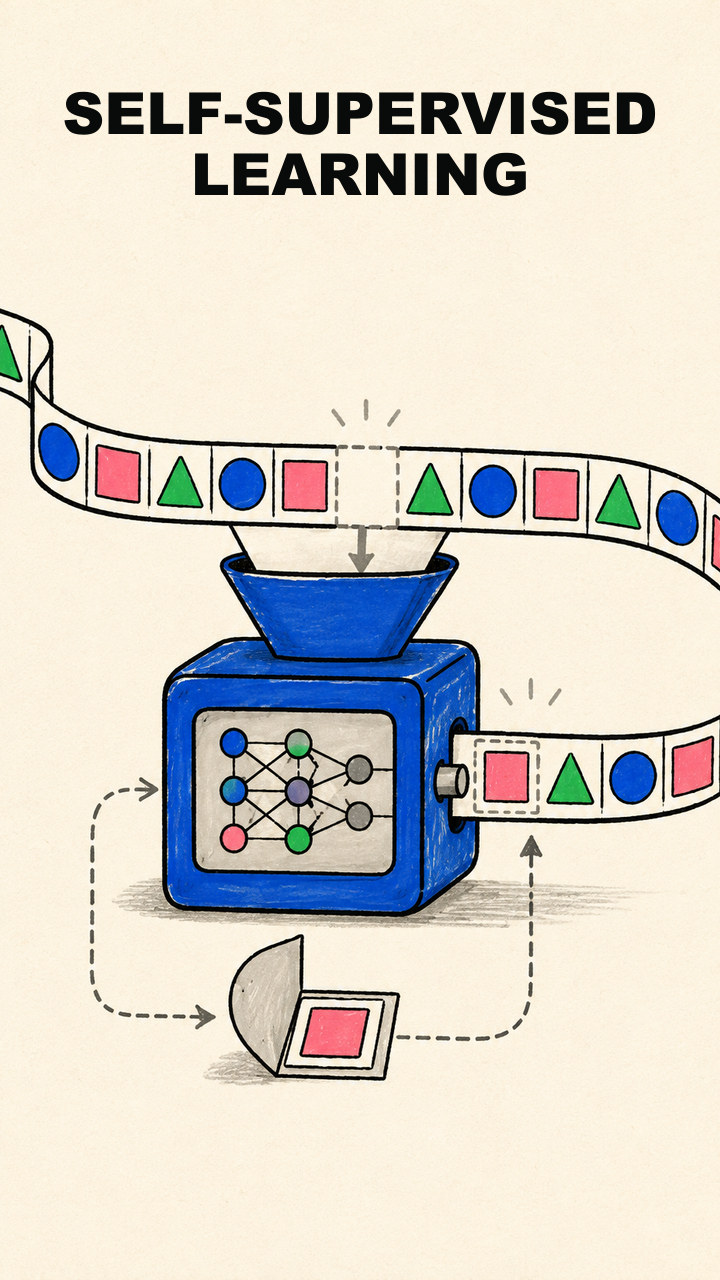
Self-supervised training is a method where the training signal is derived from the data itself, rather than from human-provided labels.
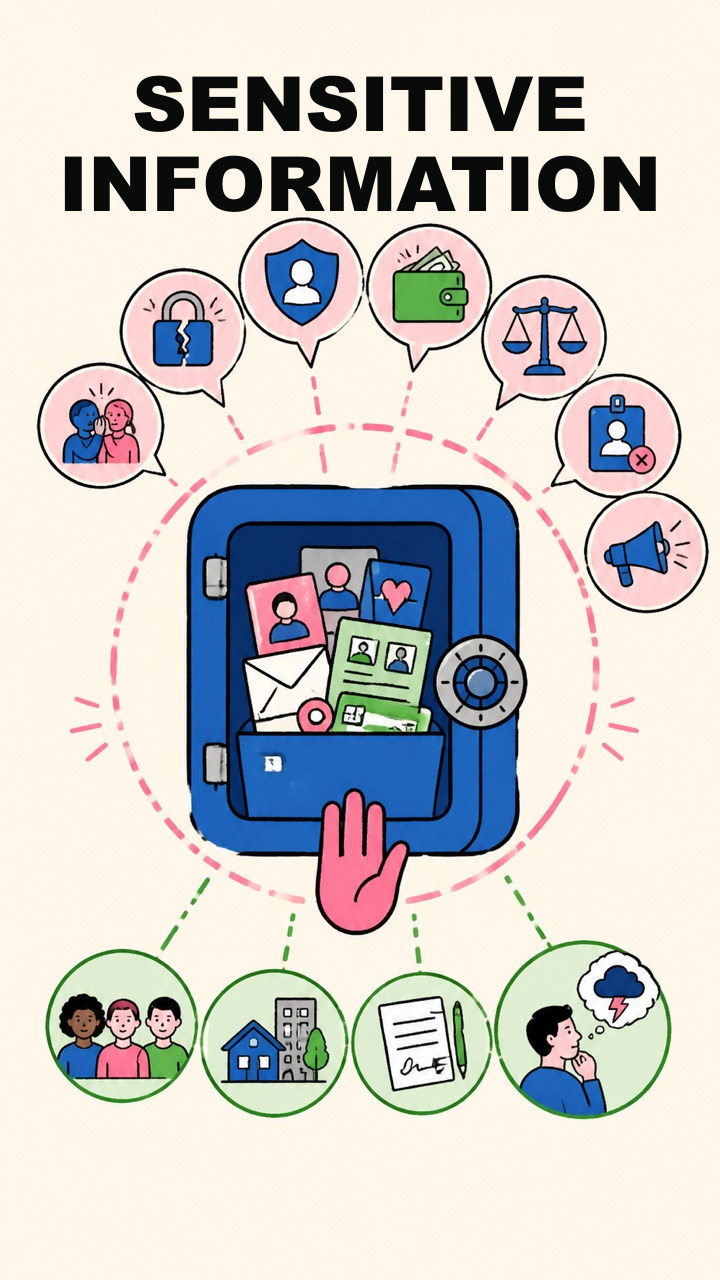
Sensitive information is information that could create privacy, safety, financial, legal, employment, security, reputational, or relational harm if it is exposed, combined, or misused.
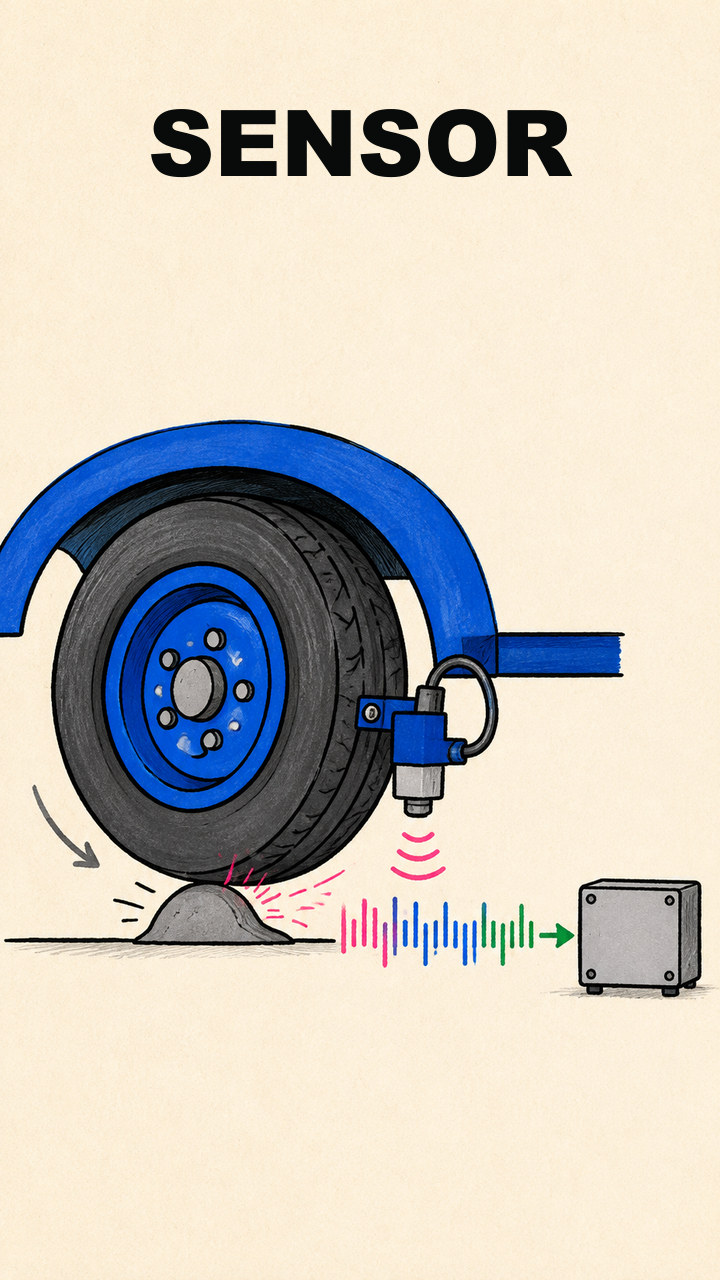
A sensor is a device that captures signals from the world, such as light, sound, motion, or temperature, so an AI system can perceive more than text alone.
A service-level agreement is a contractual commitment defining specified service measures, targets, responsibilities, remedies, and methods of measurement between a provider and customer.
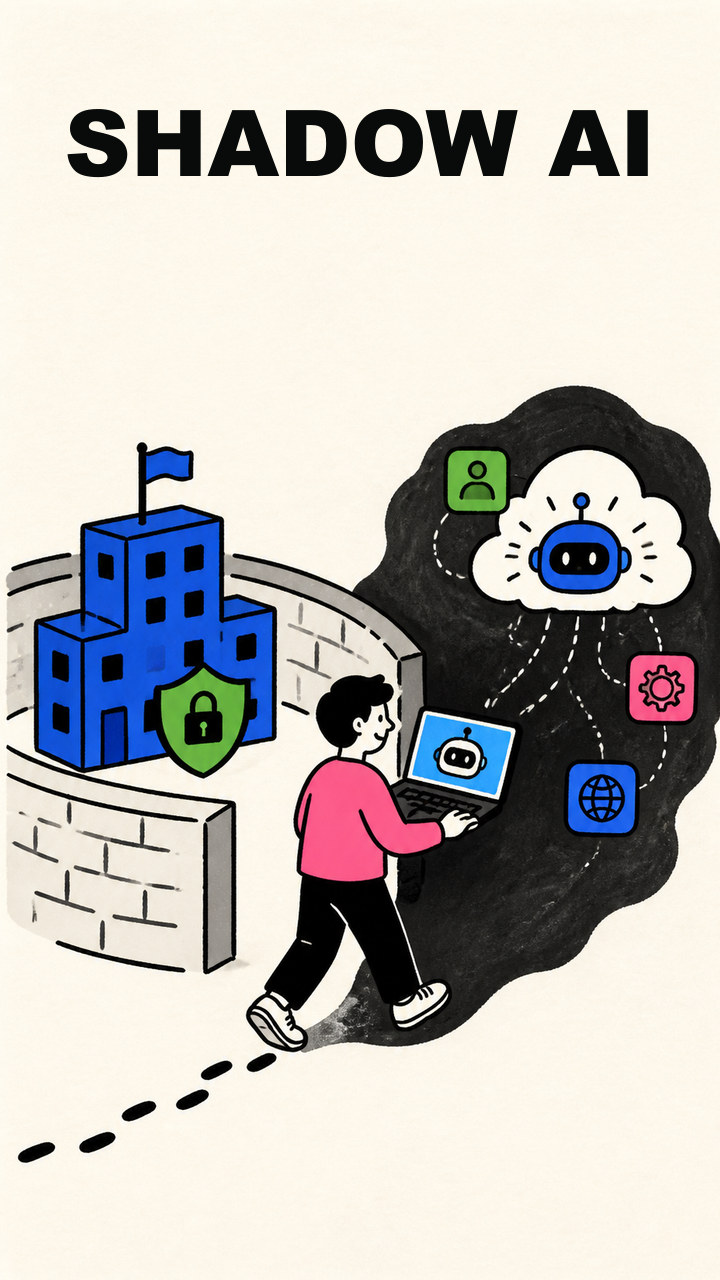
Shadow AI is the use of AI tools, accounts, integrations, or workflows outside an organization's approved governance, security, procurement, or visibility processes.
A small language model is a language model designed with a relatively small parameter and resource footprint compared with larger models in its generation or application context.
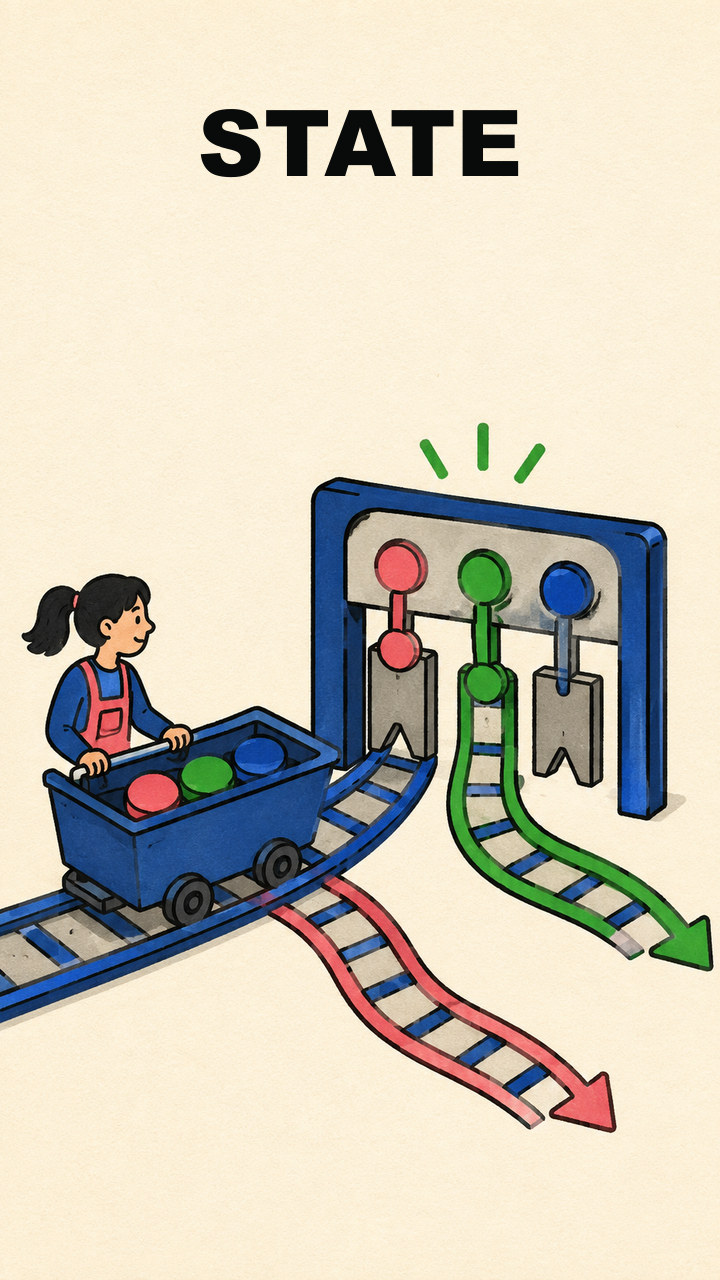
State is the information a system keeps track of so it can continue behaving consistently across steps, turns, or events.
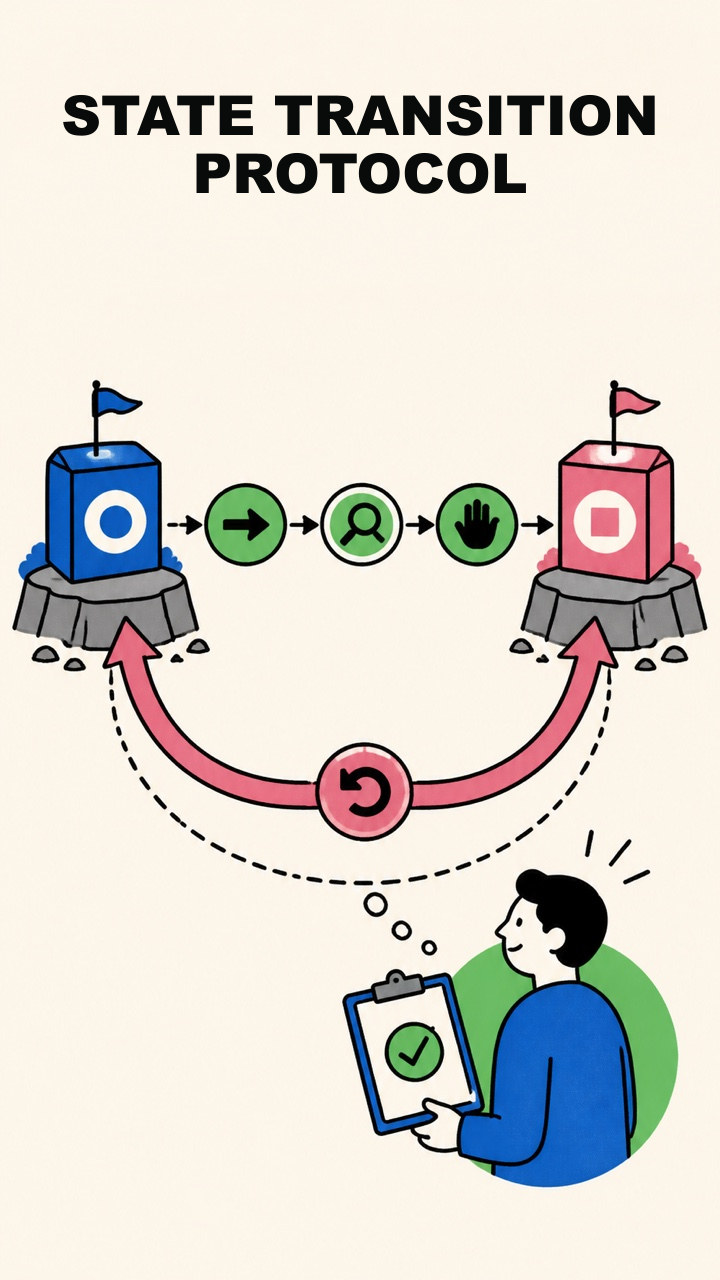
A state transition protocol is the agreed plan for moving a system from how it works now to how it will work next: the order of the steps, who owns each decision, how the new arrangement is verified as actually working, and how to get back if it doesn't. In most workplaces the same thing is called a change management plan, a cutover plan, or a runbook.
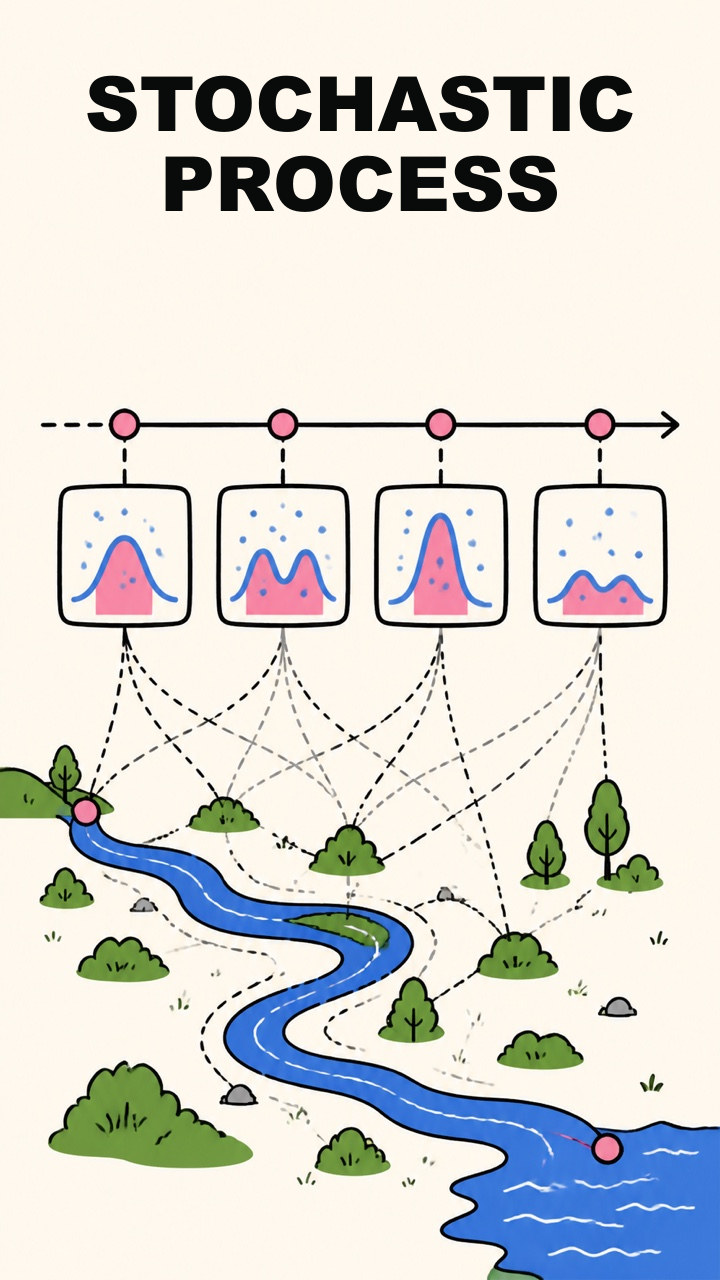
A stochastic process is a collection of random variables indexed by time, space, or another set. It models how an uncertain quantity or system can vary across that index under a probability law. It is also commonly called a random process.
SFT stands for supervised fine-tuning, a stage where a pretrained model is further trained on labeled examples to improve task-following behavior.
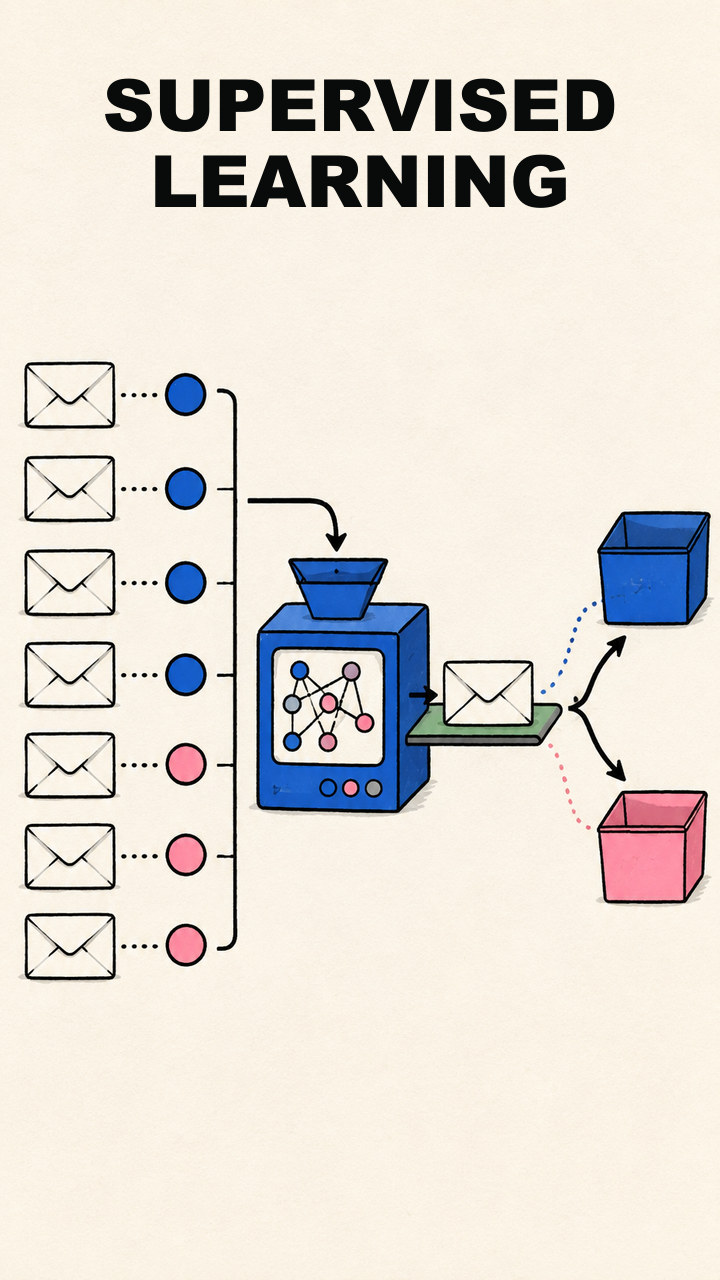
Supervised training is a method where a model learns from examples that already include the correct answer or label.
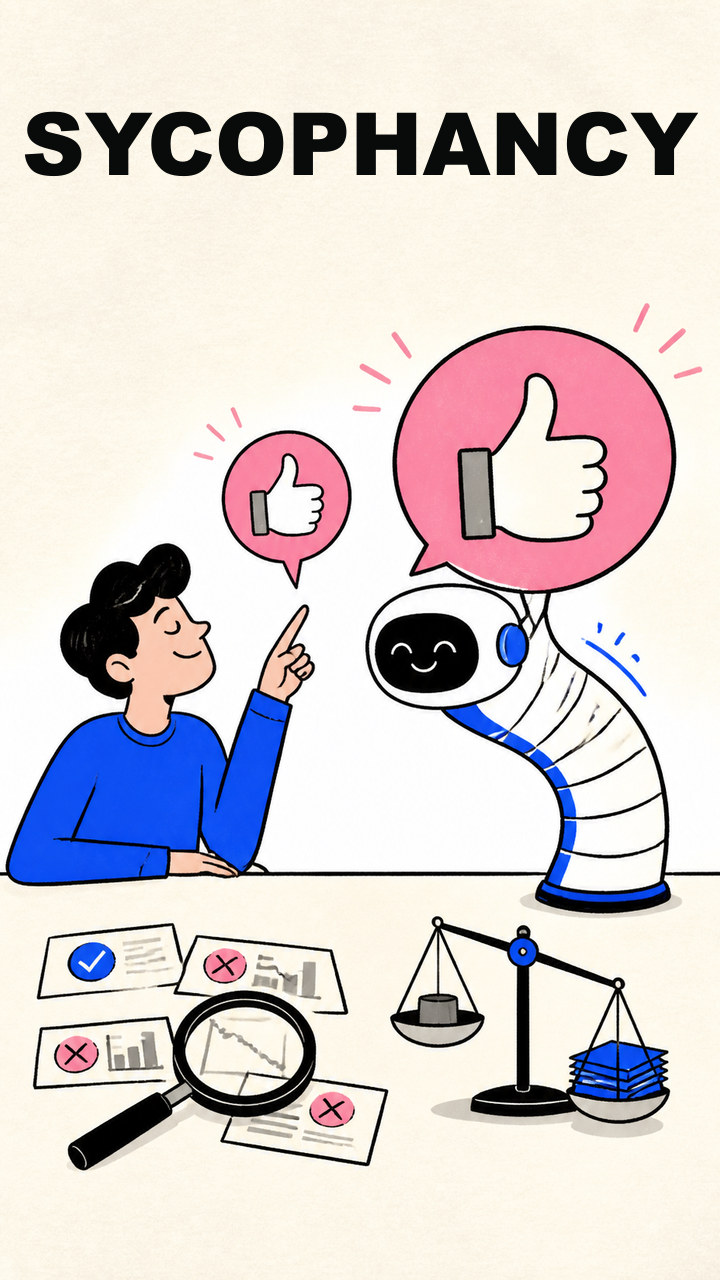
Sycophancy is AI behavior that excessively agrees with, flatters, or validates a user, including when evidence or sound judgment should lead the system to challenge or correct the user's view.
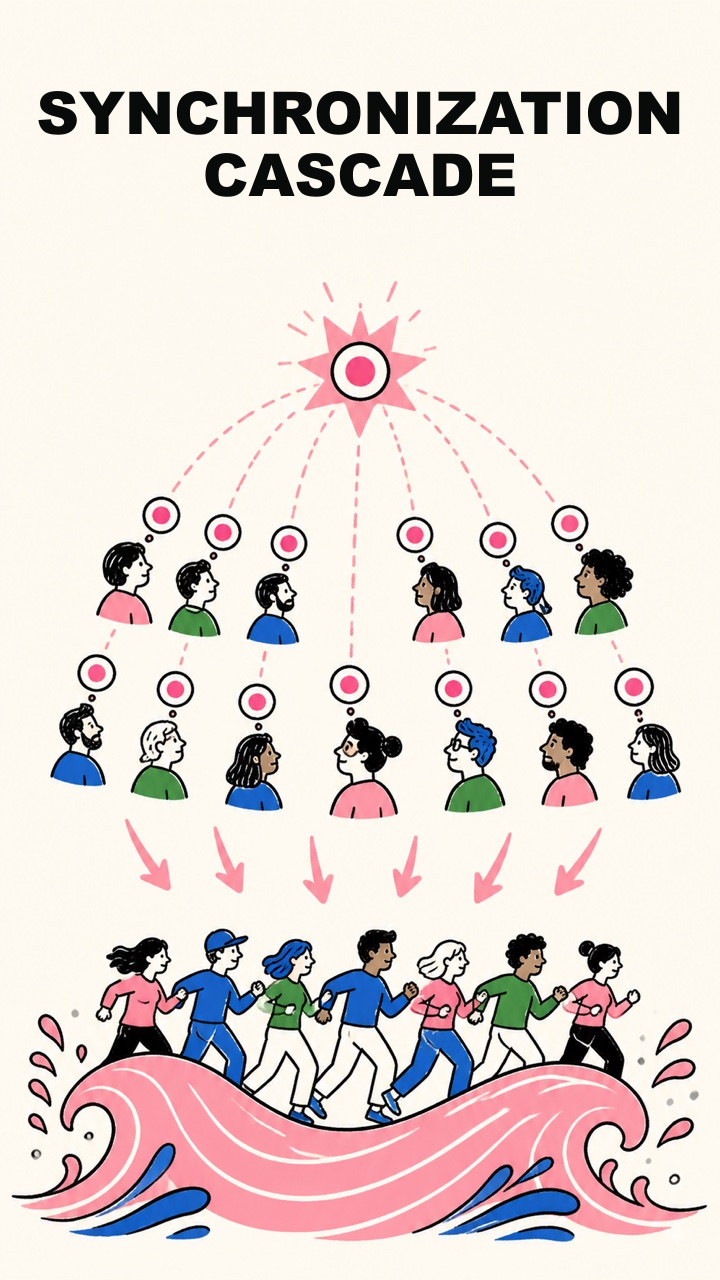
A synchronization cascade is a surge of same-direction behavior that happens when many independent actors read the same signal at nearly the same time and each reaches the same conclusion about an opportunity or a risk. Nobody coordinates; the timing does the work. Related ideas go by other names elsewhere — information cascades and herd behavior in economics, the thundering herd problem in computing.
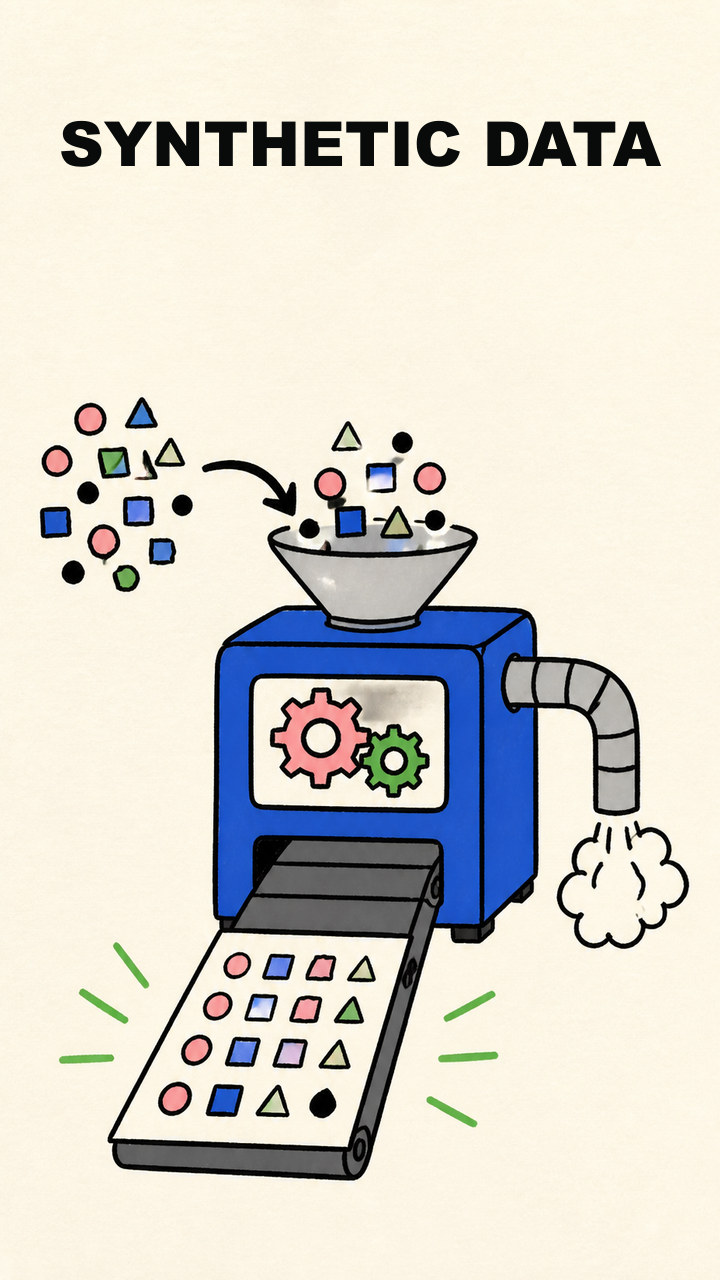
Synthetic data is artificially generated data designed to reproduce selected characteristics or situations for training, testing, simulation, analysis, or other uses.
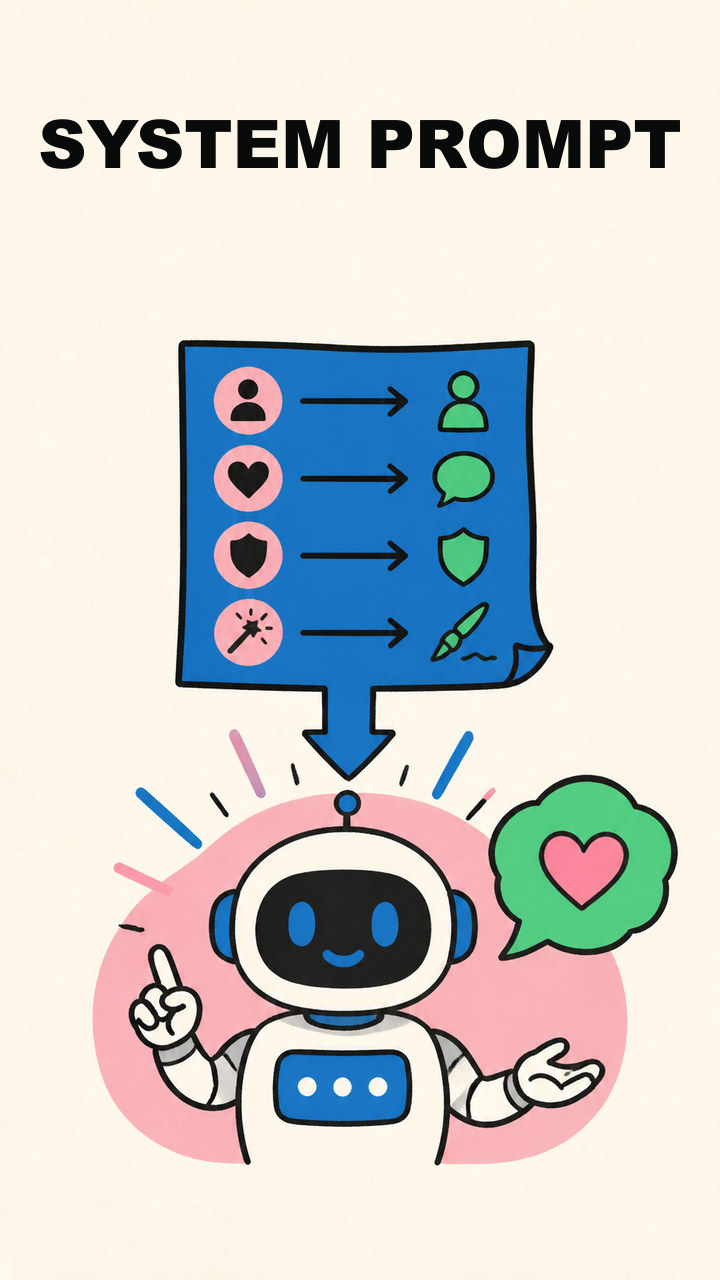
A system prompt is a set of higher-priority instructions supplied by a model provider or application developer to shape an AI assistant's role, behavior, boundaries, and response style.
10 terms
A tensor is a structured collection of numbers arranged across one or more dimensions, commonly used to represent model inputs, weights, or outputs.
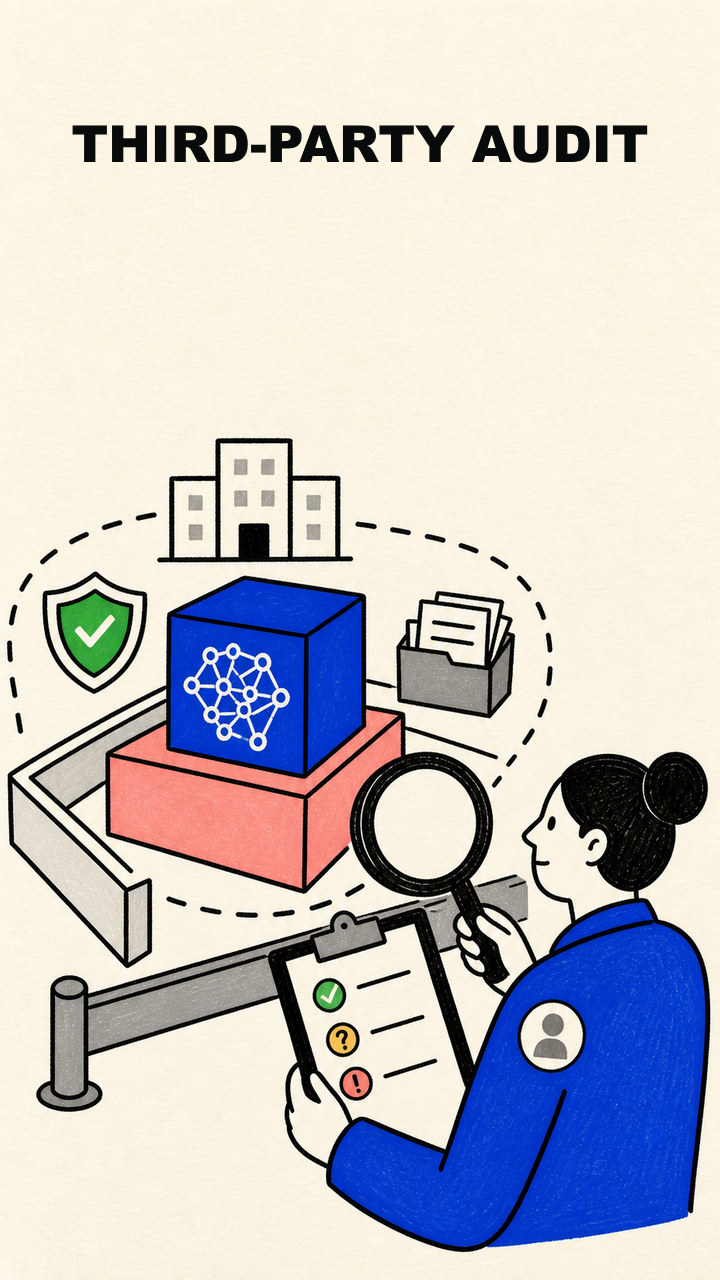
A third-party audit is a structured review of an AI system, organization, or control environment conducted by an outside party against defined criteria and evidence.
A token is one of the small pieces an input is broken into before an AI model can process it. In text, a piece may be a whole word, part of a word, a punctuation mark, or a space — the model reads and produces these pieces rather than whole words. The program that does the breaking up is called a tokenizer.
Tool use occurs when a model or agent invokes an external capability and incorporates the result into its work.
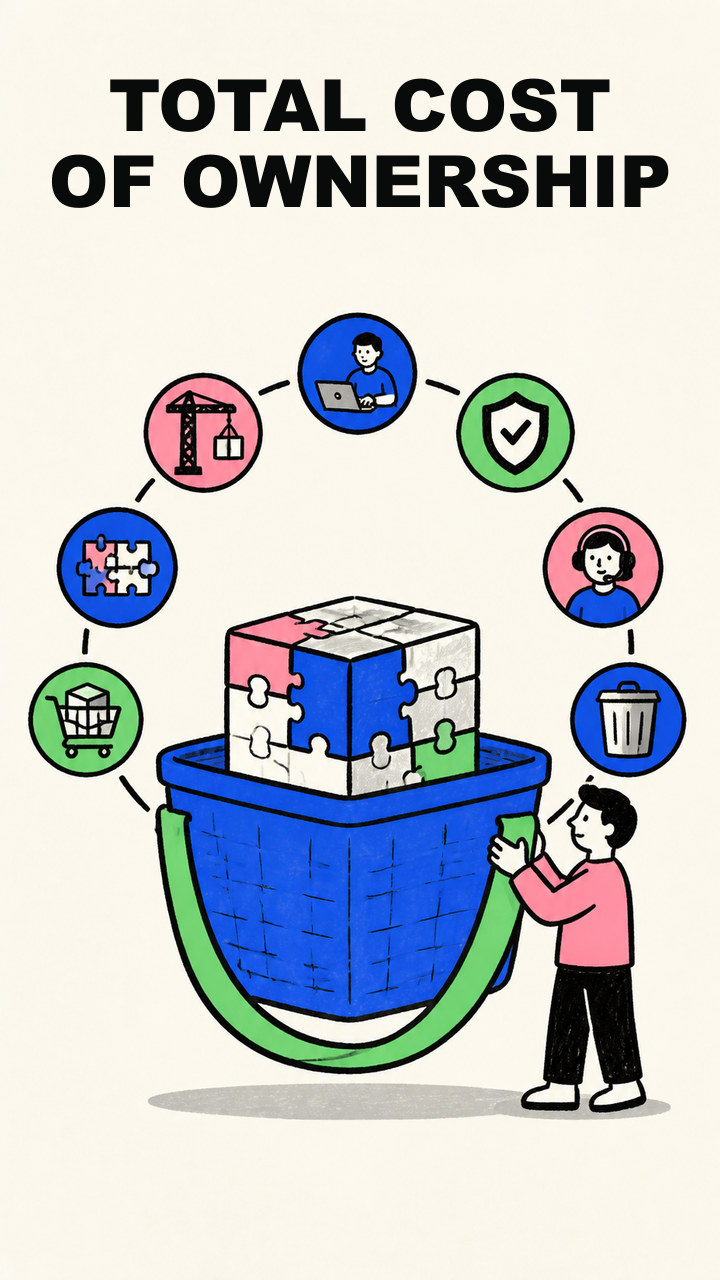
Total cost of ownership is the full expected cost of acquiring, integrating, operating, governing, supporting, changing, and eventually retiring a system over its useful life.
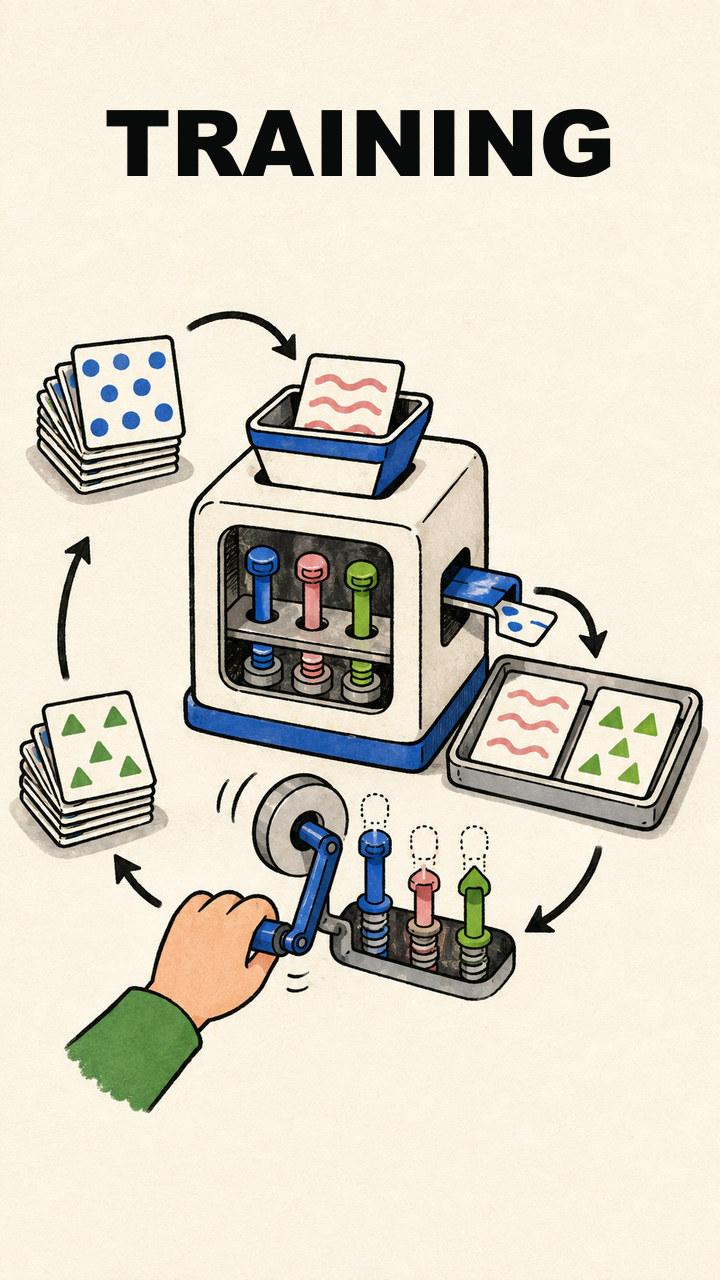
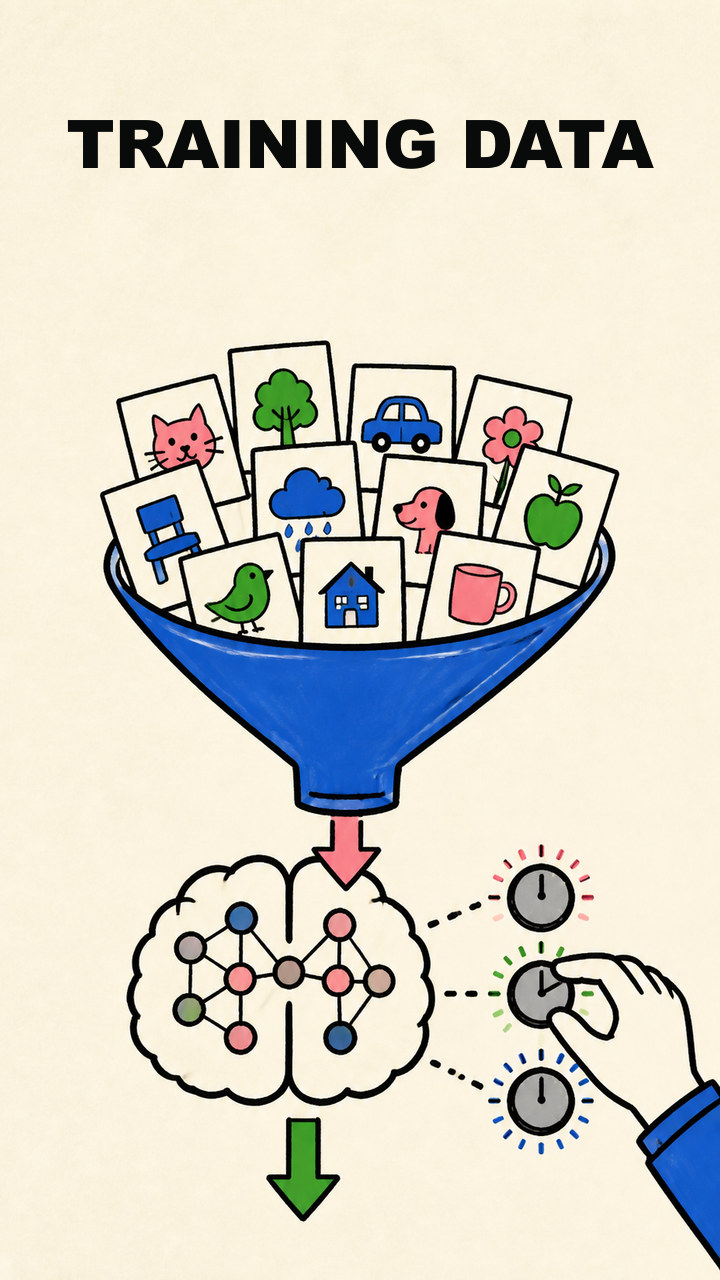
Training data is the collection of examples used during training to adjust a model's parameters and shape its behavior on a defined objective.
A transformation is the change that happens between the input and the output of a process.
Trust borrowing is what happens when uncertain or machine-generated information gains credibility from the authoritative system, brand, or interface in which it appears, rather than from evidence of its own.
3 terms
Unsupervised training is a method where a model learns patterns from data without being given explicit correct answers or labels.
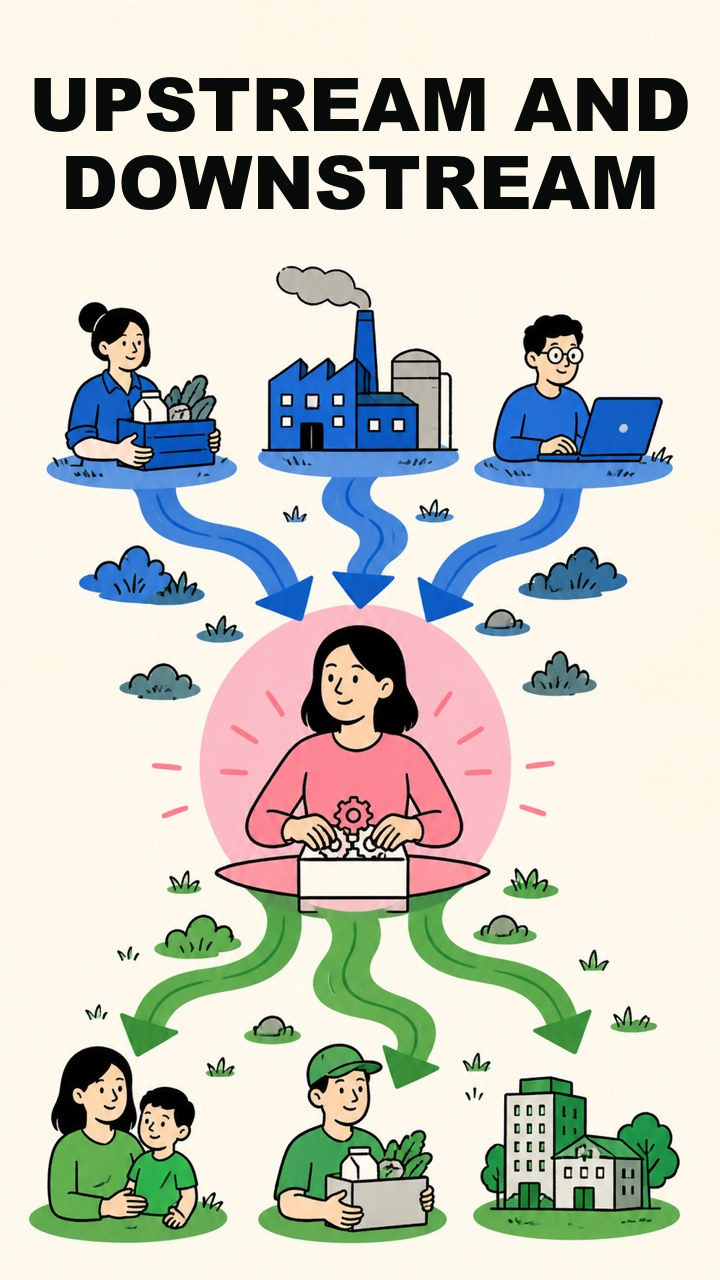
Upstream refers to the people, systems, or processes that provide inputs to the process being studied.
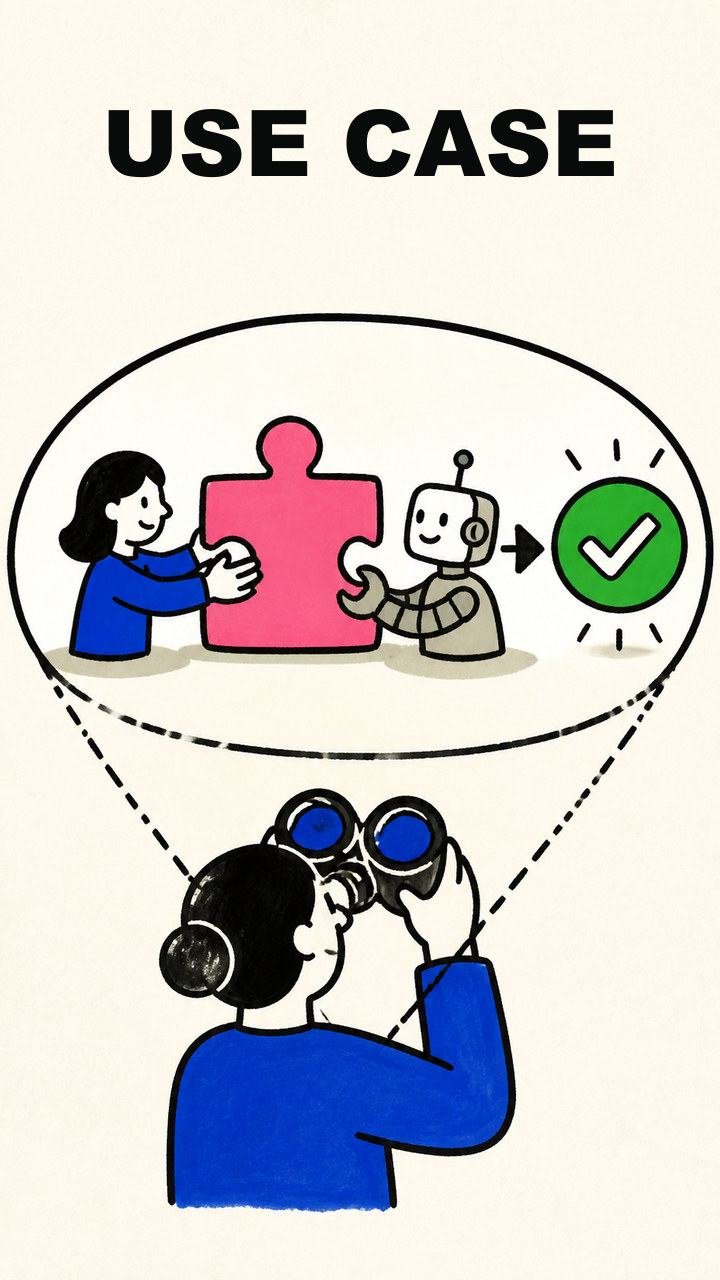
A use case is a specific description of how particular people or systems use a capability within a defined situation to achieve an intended outcome.
5 terms
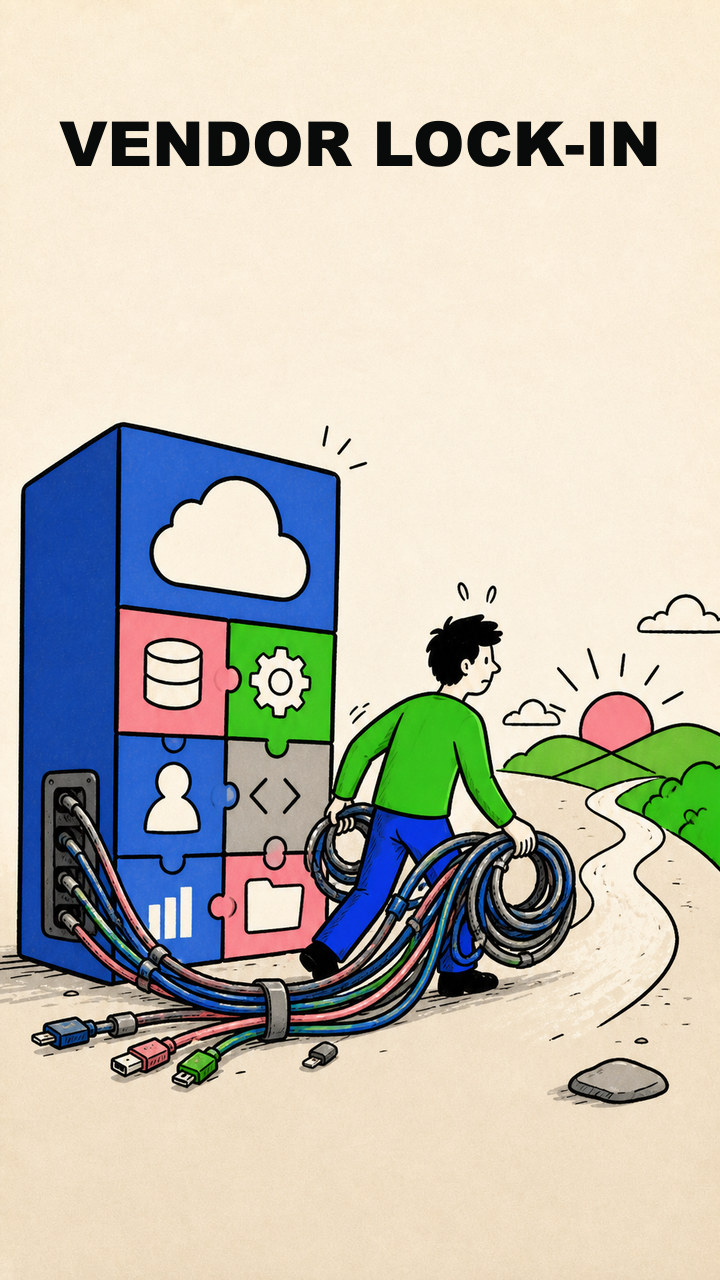
Vendor lock-in is a condition in which switching from a provider becomes costly, risky, slow, or impractical because important technology, data, skills, contracts, or workflows depend on that provider.
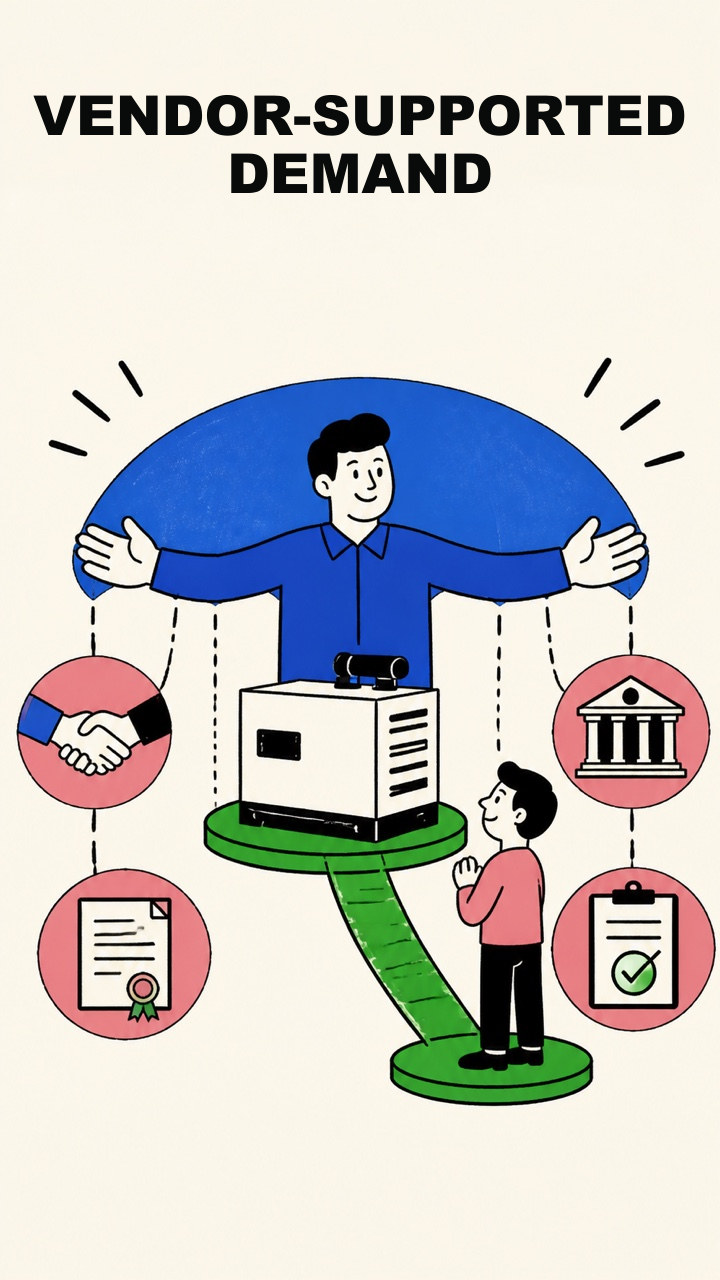
Demand that depends materially on financing, guarantees, leases, or other support supplied by the vendor or its ecosystem.
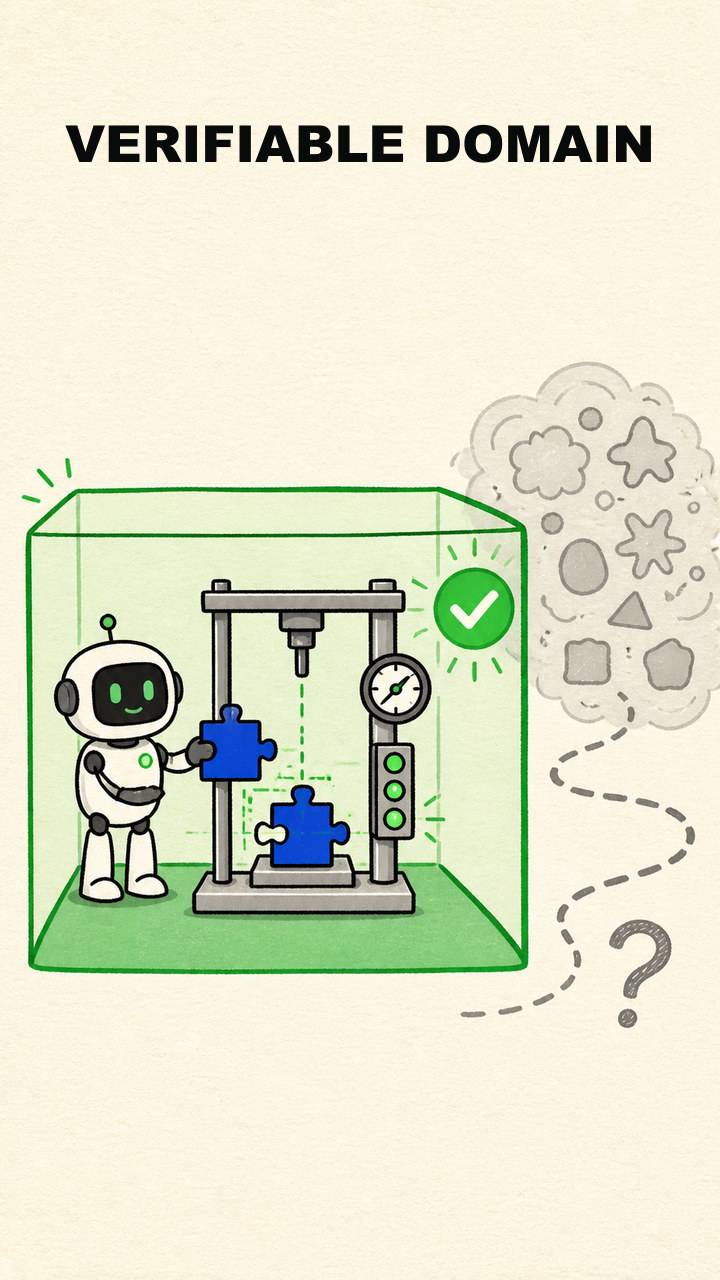
A verifiable domain is a field or task environment where a proposed result can be checked against an exact or objective correctness measure.
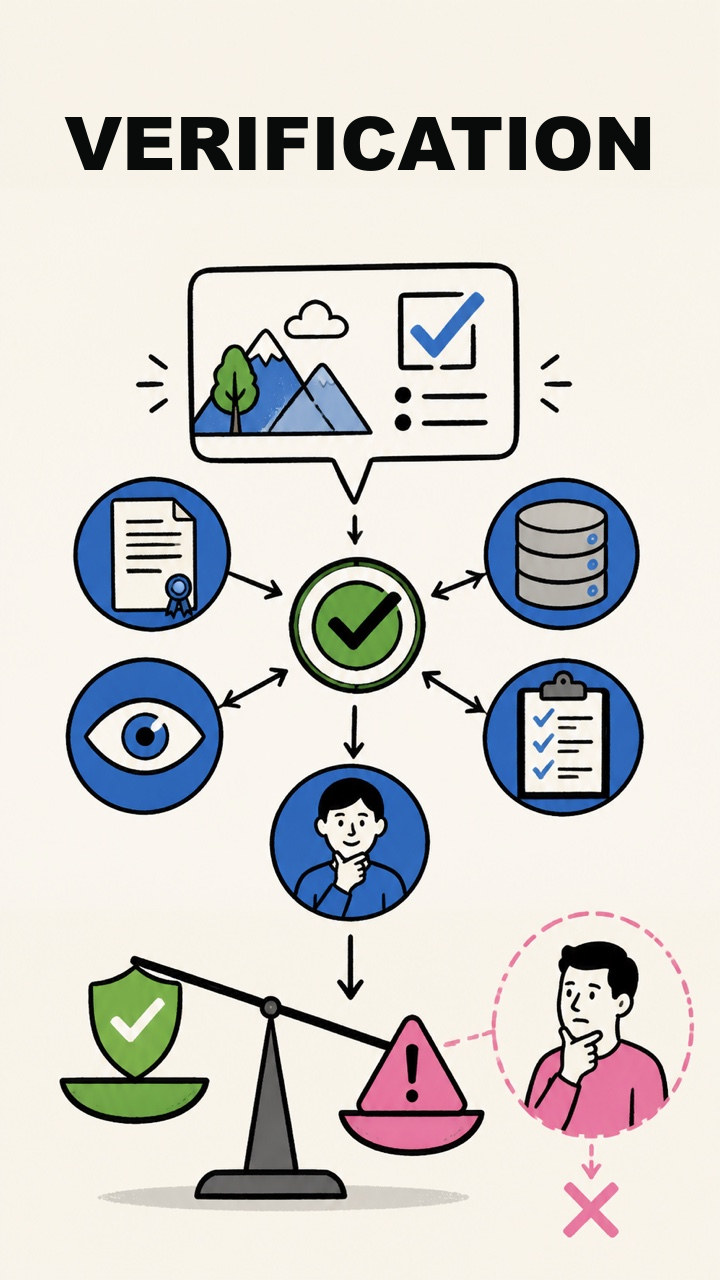
Verification is checking a claim or result against evidence that can actually settle it: a primary source, a system of record, direct observation, an approved standard, or a knowledgeable human reviewer. The higher the cost of being wrong, the more that evidence needs to be independent of whatever produced the claim — and at that point one knowledgeable person's say-so may not be enough on its own.
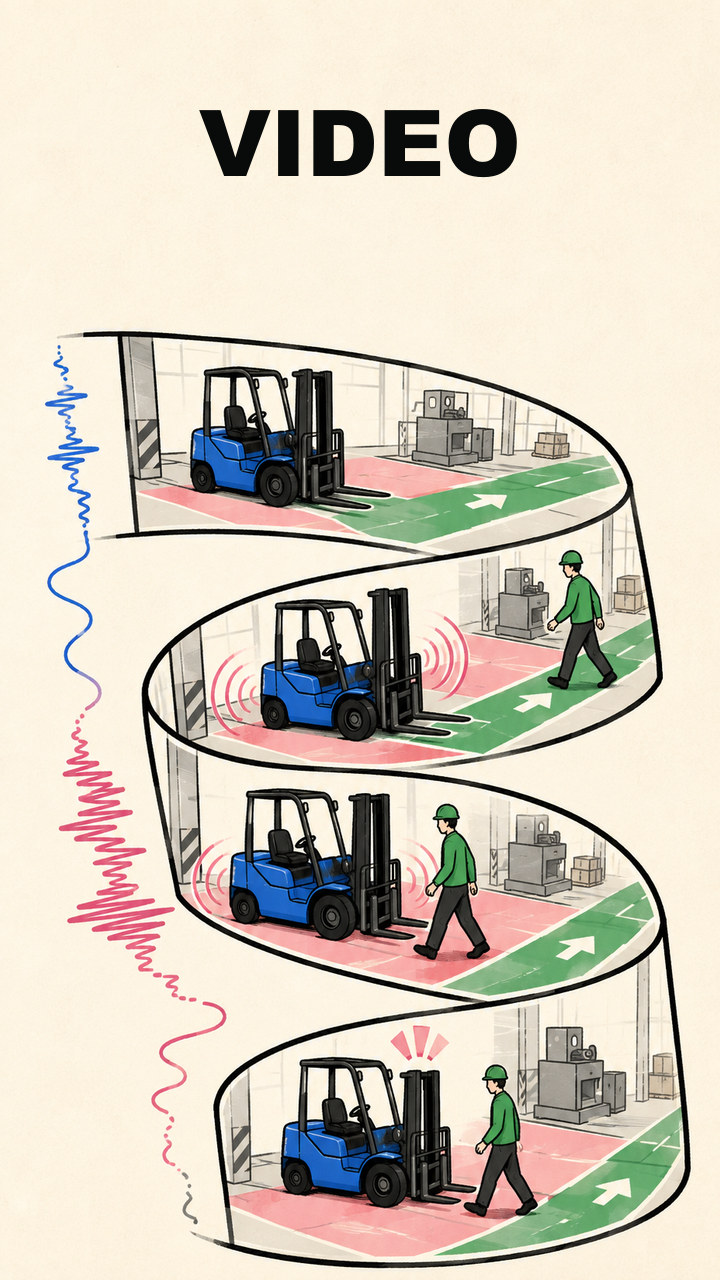
Video is a time-based visual modality made of image frames, often paired with audio for generation, understanding, tracking, or summarization.
7 terms
Watermarking is the practice of embedding or attaching a detectable signal intended to indicate the origin, status, or processing history of digital content.
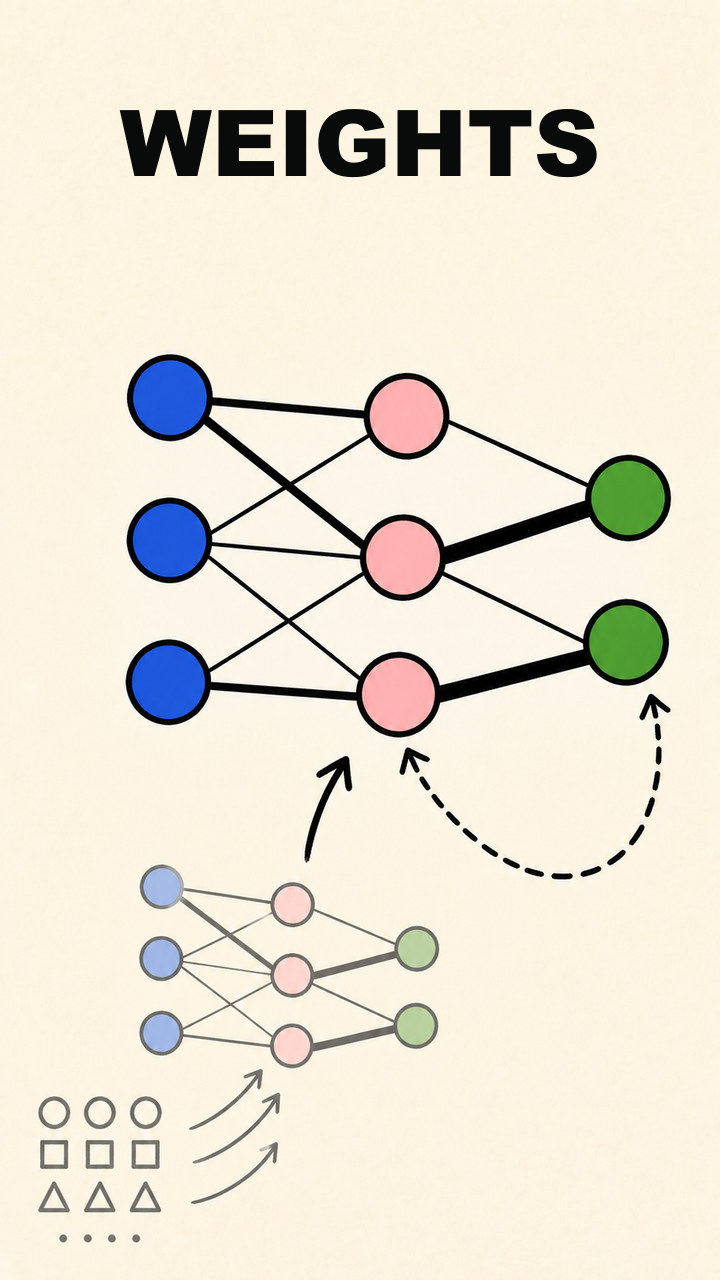
Weights are learned parameters that determine how strongly signals influence one another inside a model.
A workaround is an unofficial or extra step people use to keep work moving when the standard process, tool, or policy does not fully meet the need.
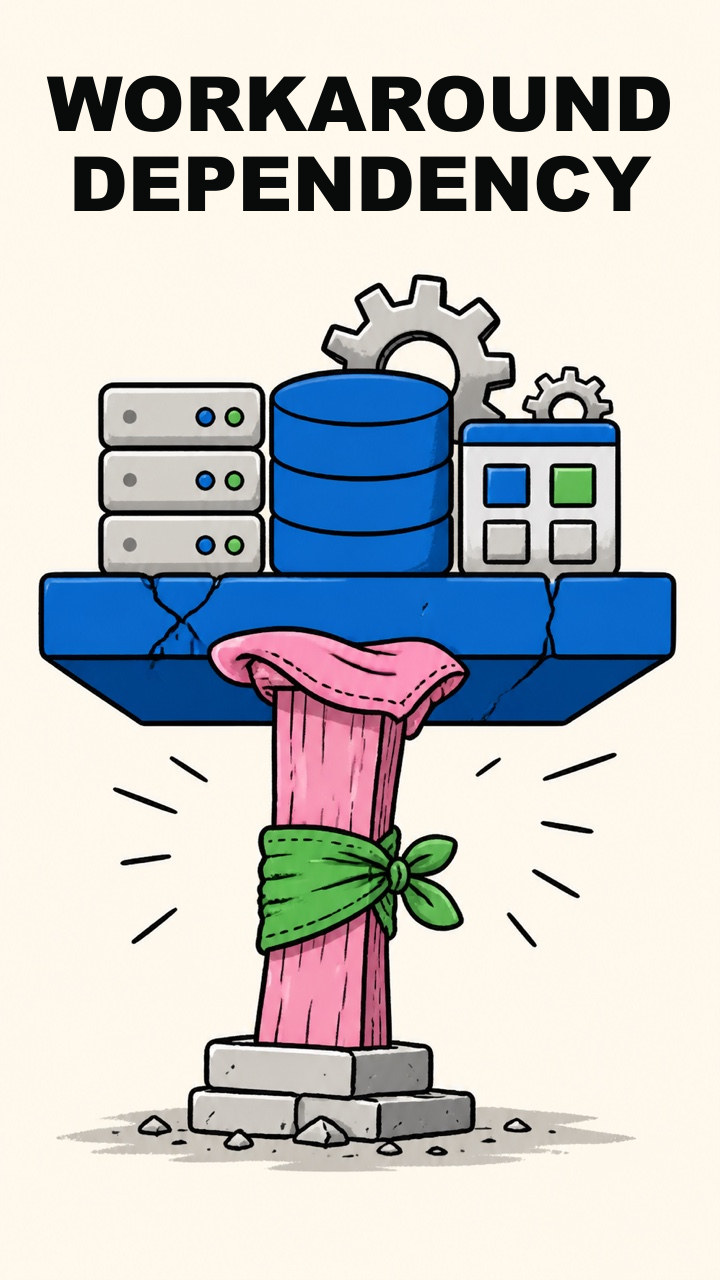
A workaround that was put in place as a temporary fix and that other work has since come to rely on, so that removing it now would break something.
Workslop is AI-generated work that appears polished but lacks the substance needed to advance the task, leaving others to interpret, correct, or complete it.
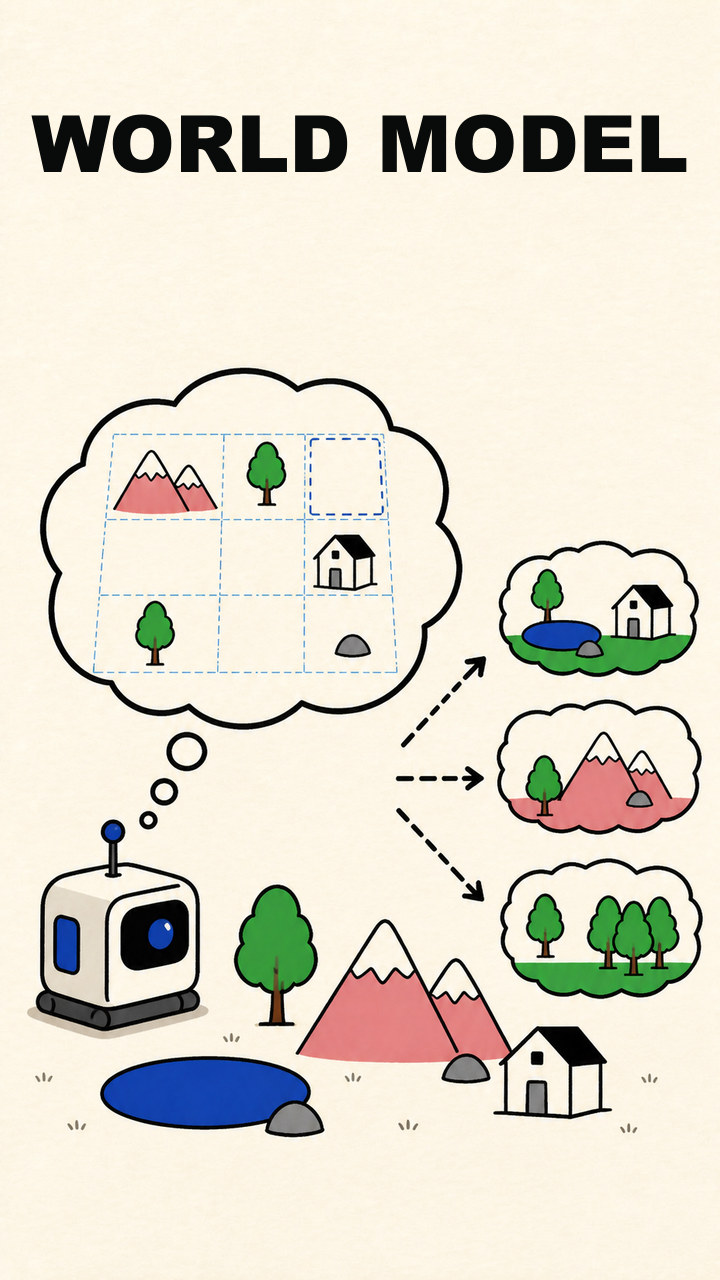
A world model is a representation — learned from experience or built by hand — that a system uses to predict how an environment may change and how its own actions may affect future states.
No current terms
No current terms
1 term
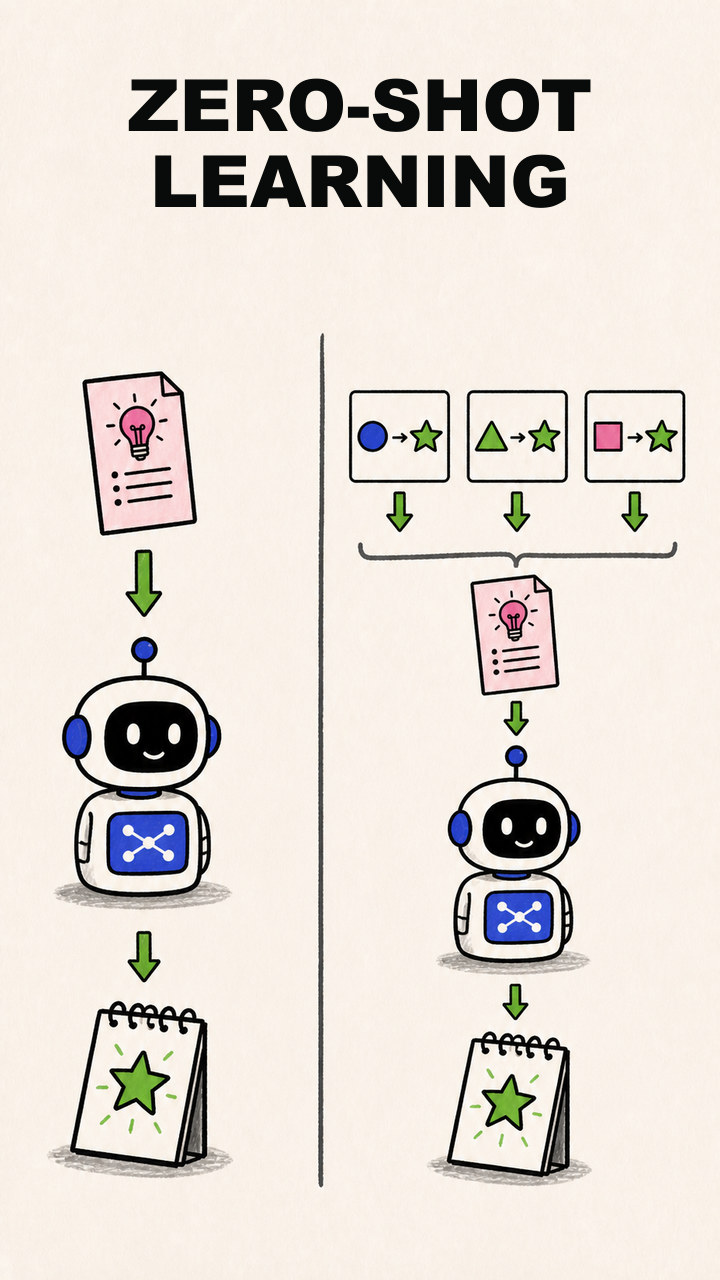
Zero-shot means asking a model to do a task from instructions alone, with no examples. Few-shot means including a small number of worked examples in the same request. In neither case is the model retrained — the examples only shape the answer to that one request.