RS Glossary
Generative AI
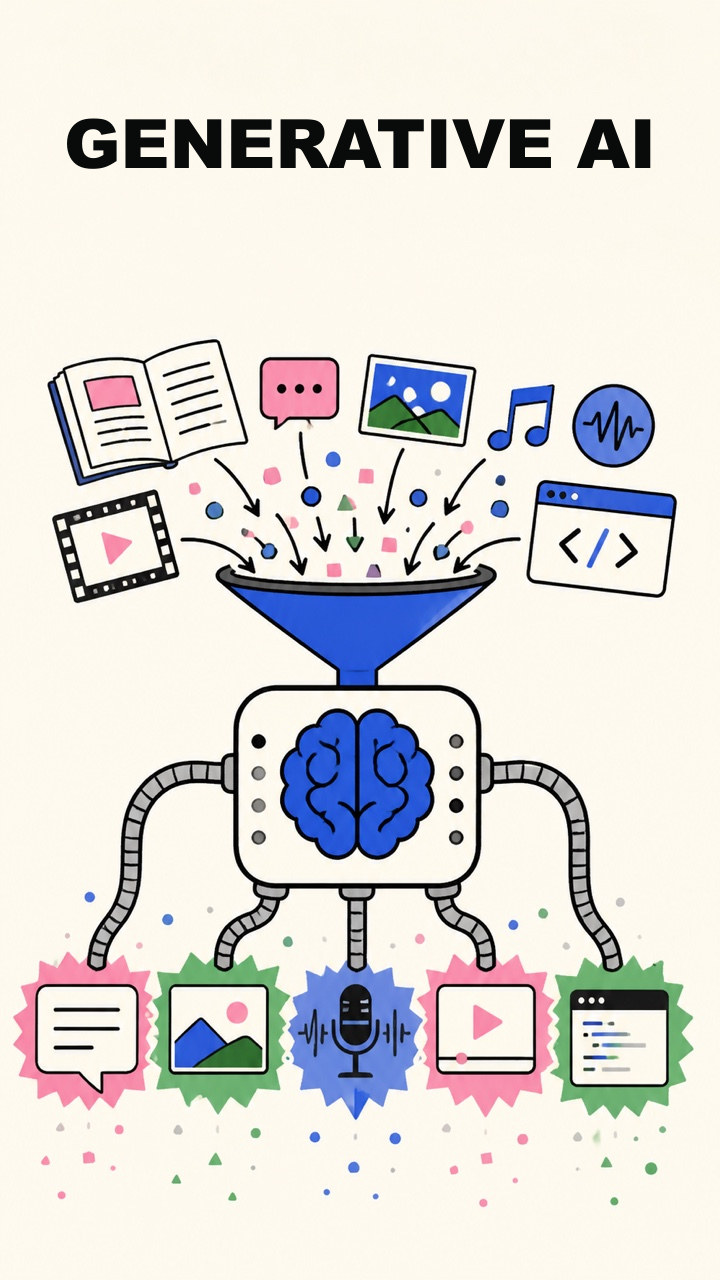
Generative AI is AI designed to create new content such as text, images, audio, video, or code from patterns in data and the context it receives.
- Review state
- Reviewed in POC
- Freshness
- Current
- Version
- 3
- generative-ai
Remember it this wayNo memory aid has been drafted yet.
In plain language
Generative AI is a tool that produces content when you ask it to do something. You might ask it to write a paragraph, create an image, summarize a document, or generate code.
It creates the response from learned patterns and the context you provide. A polished result can still contain mistakes, missing context, or invented details.
Why it matters
Generative AI can produce clear and useful material without guaranteeing that the material is accurate, complete, original, current, or appropriate for the decision.
The output still requires human judgment.
Example
A chatbot turns a fictional neighborhood announcement into a participant checklist.
The checklist may be useful, but a person still needs to check that the chatbot did not add or omit important details.
Common misconception
Generative AI does not automatically verify what it creates. A fluent, detailed response can look researched or checked even when it contains errors or invented material.
Related terms
Sources
No sources recorded yet.
Learn more
No learning links recorded yet.
Public history
30 recorded events · 30 public summaries
Existing glossary content was moved into the unified source-of-truth structure without changing its learner-facing body.
A captured draft entered section-level human review without changing its existing wording.
Missing required wording was proposed while preserving the captured draft.
Radar reviewed the definition section for human consideration.
Radar reviewed the plain-language-explanation section for human consideration.
Radar reviewed the why-it-matters section for human consideration.
Radar reviewed the example section for human consideration.
Radar reviewed the common-misconception section for human consideration.
Radar reviewed the remember-it-this-way section for human consideration.
Radar reviewed the related-terms section for human consideration.
Radar reviewed the sources section for human consideration.
Radar reviewed the learn-more section for human consideration.
definition approved by a human reviewer.
plain-language-explanation approved by a human reviewer.
why-it-matters approved by a human reviewer.
example approved by a human reviewer.
common-misconception returned for revision.
remember-it-this-way approved by a human reviewer.
related-terms approved by a human reviewer.
sources approved by a human reviewer.
learn-more approved by a human reviewer.
plain-language-explanation approved wording became the current section text.
remember-it-this-way approved wording became the current section text.
sources approved wording became the current section text.
learn-more approved wording became the current section text.
Requested wording was prepared without changing approved or existing sections.
Radar reviewed the pending common-misconception section for human consideration.
common-misconception approved by a human reviewer.
common-misconception approved wording became the current section text.
All section gates are approved; content version 3 is now a fully approved term.
Source: vault/Glossary/terms/generative-ai/term.md · sha256:7b2a1a7981f5406902288e7812be00a2c0a411dc2334d596acbbd2b0d4d87d99 · Release: rs-glossary-glossary-team-poc-0.5.5-2026-09-02