RS Glossary
NIST AI Risk Management Framework
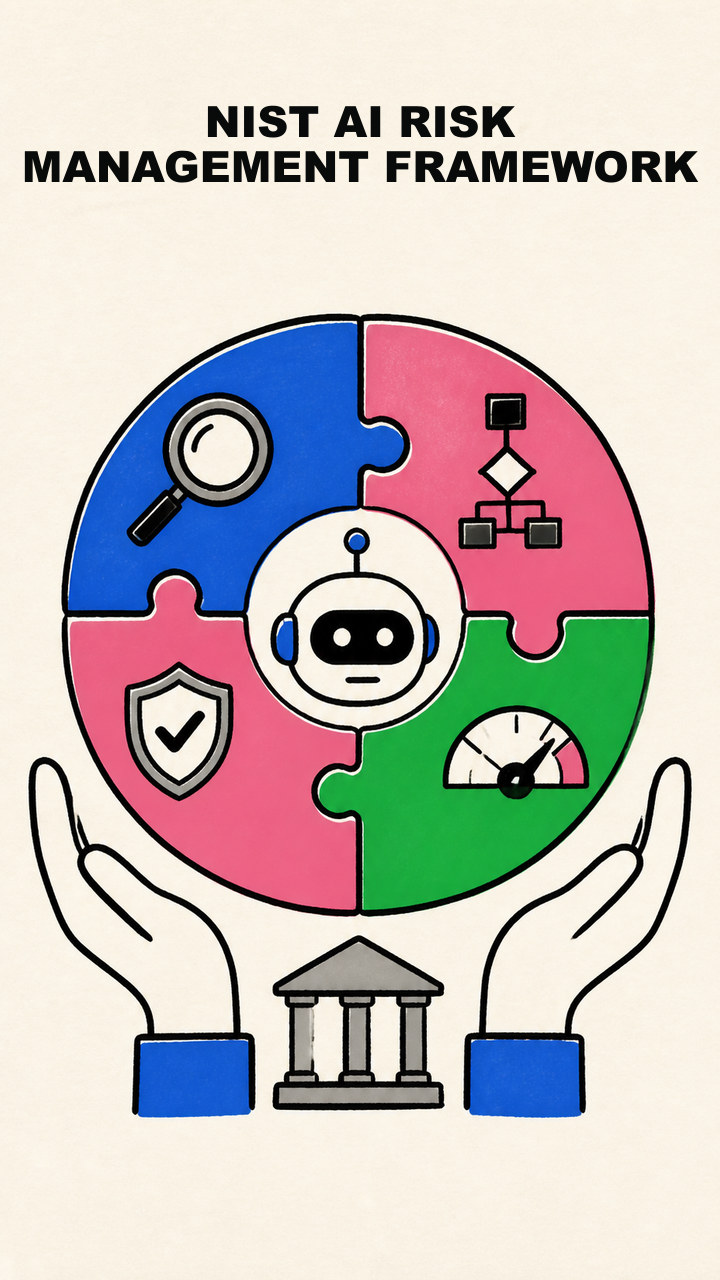
The NIST AI Risk Management Framework is a voluntary framework from the U.S. National Institute of Standards and Technology for helping organizations govern, map, measure, and manage risks from AI systems.
- Review state
- Reviewed in POC
- Freshness
- Current
- Version
- 2
- NIST AI Risk Management Framework
- NIST AI RMF
- AI RMF
Remember it this wayGovern the work, map the context, measure the risk, manage what follows.
In plain language
The AI RMF provides shared language and organized functions for incorporating trustworthiness and risk management into AI design, development, use, and evaluation.
Why it matters
It can help different roles coordinate without pretending one checklist fits every system. Organizations still need to adapt it to their context, authority, risk, and evidence.
Example
A company uses the Govern, Map, Measure, and Manage functions to structure ownership, context analysis, testing, monitoring, and response for an AI use case.
Common misconception
Using the NIST AI RMF is not the same as receiving certification, guaranteeing safety, or satisfying every legal obligation.
Related terms
Sources
- NIST AI 100-1, Artificial Intelligence Risk Management Framework (AI RMF 1.0)canonical NIST publication defining the voluntary AI risk-management framework.
- NIST, AI Risk Management Frameworkofficial framework landing page and revision-status information.
Learn more
- Consult the current NIST AI RMF and related official profiles and resources.
Public history
45 recorded events · 45 public summaries
A potential shared concept was discussed and selected for initial glossary drafting.
The captured candidate received a complete initial draft and entered section-level human review.
Radar reviewed the initial definition draft for human consideration.
Radar reviewed the initial plain-language-explanation draft for human consideration.
Radar reviewed the initial why-it-matters draft for human consideration.
Radar reviewed the initial example draft for human consideration.
Radar reviewed the initial common-misconception draft for human consideration.
Radar reviewed the initial remember-it-this-way draft for human consideration.
Radar reviewed the initial related-terms draft for human consideration.
Radar reviewed the initial sources draft for human consideration.
Radar reviewed the initial learn-more draft for human consideration.
A proposal was opened for section-level human review while preserving the current version.
A human reviewer opened a proposed revision while preserving the current approved or captured version.
definition approved by a human reviewer.
plain-language-explanation approved by a human reviewer.
why-it-matters approved by a human reviewer.
example approved by a human reviewer.
common-misconception approved by a human reviewer.
remember-it-this-way approved by a human reviewer.
related-terms approved by a human reviewer.
sources returned for revision.
learn-more approved by a human reviewer.
Requested wording was prepared without changing approved or existing sections.
Radar reviewed the pending sources section for human consideration.
Radar must rereview the complete nist-ai-risk-management-framework term after an accepted text change.
Radar must rereview the complete nist-ai-risk-management-framework term after an accepted text change.
Radar must rereview the complete nist-ai-risk-management-framework term after an accepted text change.
Radar must rereview the complete nist-ai-risk-management-framework term after an accepted text change.
Radar must rereview the complete nist-ai-risk-management-framework term after an accepted text change.
Radar must rereview the complete nist-ai-risk-management-framework term after an accepted text change.
Radar must rereview the complete nist-ai-risk-management-framework term after an accepted text change.
Radar must rereview the complete nist-ai-risk-management-framework term after an accepted text change.
Radar must rereview the complete nist-ai-risk-management-framework term after an accepted text change.
sources approved by a human reviewer.
sources approved wording became the current section text.
All section gates are approved; content version 2 is now a fully approved term.
Radar rereviewed the human-approved definition wording for this exact version.
Radar rereviewed the human-approved plain-language-explanation wording for this exact version.
Radar rereviewed the human-approved why-it-matters wording for this exact version.
Radar rereviewed the human-approved example wording for this exact version.
Radar rereviewed the human-approved common-misconception wording for this exact version.
Radar rereviewed the human-approved remember-it-this-way wording for this exact version.
Radar rereviewed the human-approved related-terms wording for this exact version.
Radar rereviewed the human-approved sources wording for this exact version.
Radar rereviewed the human-approved learn-more wording for this exact version.
Source: vault/Glossary/terms/nist-ai-risk-management-framework/term.md · sha256:e7c688187a178d43ab35e99c10572199e63343878b5427c55f13f85195d293c4 · Release: rs-glossary-glossary-team-poc-0.5.5-2026-09-02