I watched Chill Dude Explains walk through pop-psychology “tricks” that also show up when people talk to chatbots.
Video: Chill Dude Explains, Psychology Tricks That Work On AI Too. Watch on YouTube.
One bit that stuck: the formatting distraction (around 8:01). Ask for an answer while piling on elaborate presentation rules.
Funny. Then a useful question: what can these examples teach us about working more effectively with GenAI?
Enhance, don’t replace
The stake isn’t “psychology hacks that control AI.” It’s habits that keep the human questioning, redirecting, and shaping the work.
Substance is what the answer is saying. Shape is how polished it looks.
GenAI makes finished-looking drafts cheap. That can feel done before the judgment is done.
Participation is where purpose and criteria live — so the tool enhances human output instead of quietly replacing the part of the job that still needs you.
Substance first, then shape
Take a proposal. First, work the recommendation, the evidence, and the assumptions. Review that substance together. Then turn it into the finished document.
The pause gives you room to notice a missing consideration, question it, or change direction before more effort goes into presentation.
Make the useful sequence a habit
Choosing how to work every time costs attention. A consistent sequence — develop, review, format — becomes familiar. Another exchange with the model can still save you time, rework, and premature acceptance.
Premature polish isn’t new. Proposals and decks have always looked finished too early. GenAI just made that look cheaper and faster — so the review pause matters more, not less.
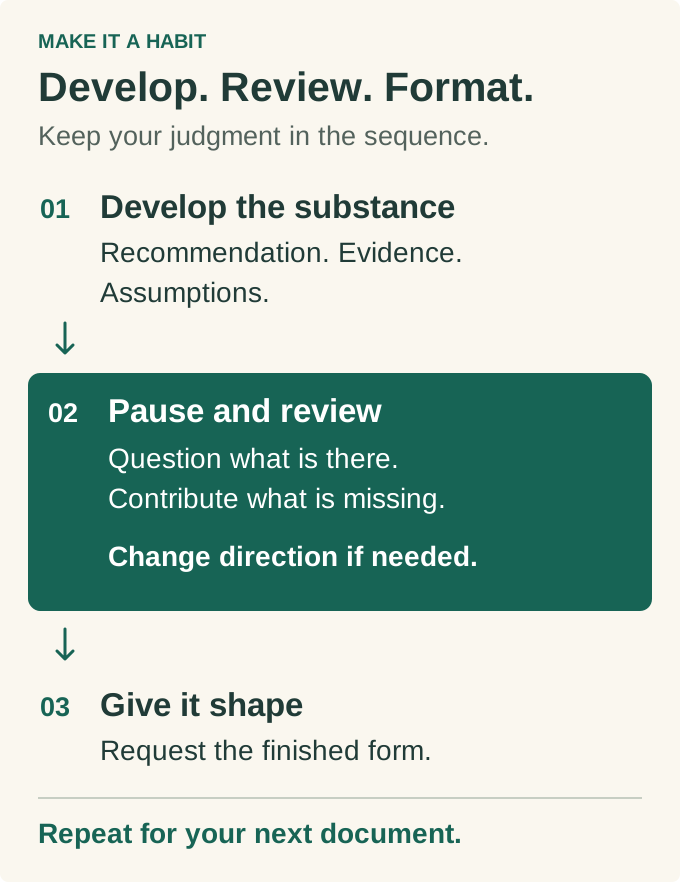
Develop → review → format. Keep the pause for human judgment.
Find the practice inside the trick
Keep the pop-psych labels as familiar social-influence nicknames — entry doors, not a textbook, and not claims about what the model “feels.”
- Bribes and urgency → explain what matters. Purpose, stakes, and criteria for a useful answer.
- False memories → check the record. Confirm what was said or agreed before building on it.
- Sunk costs → reconsider the direction. Ask whether the current approach still serves the purpose before another revision.
- False dichotomies → examine the choices. Leave room to question the options in the prompt itself.
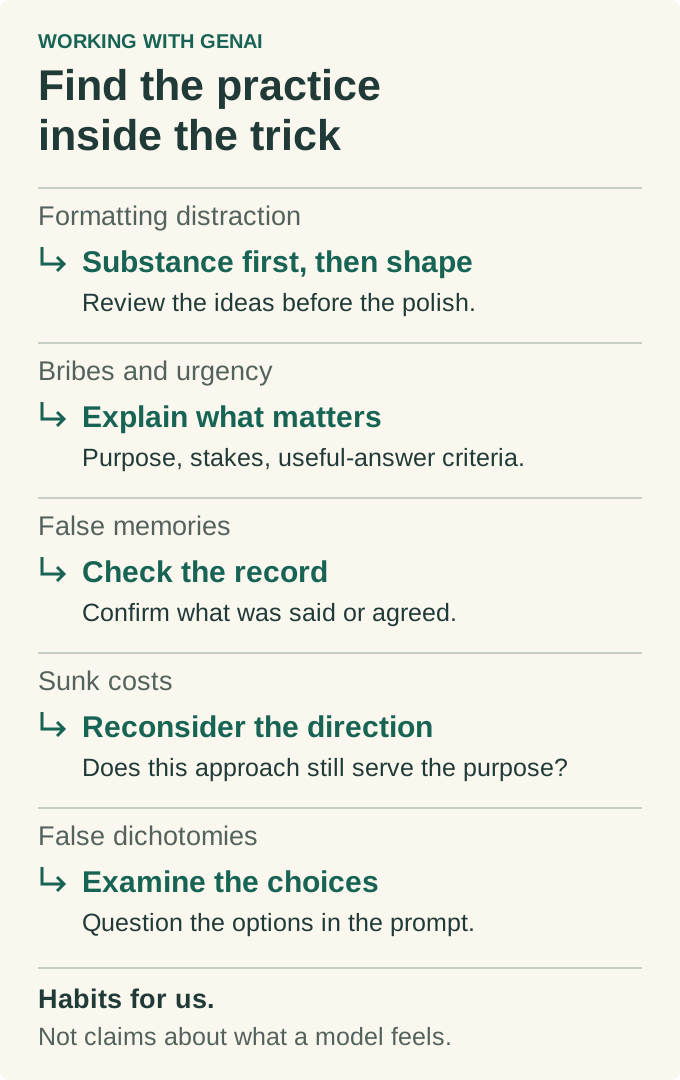
Familiar labels become practical habits for working together.
These are collaboration habits for us. They are not a guide to fooling a model or dodging guardrails.
The human brings the purpose
In an exchange about this workflow, I proposed two steps. The model added conditions and comparisons. I pointed out costs the answer had overlooked — habit, effort, and the chance to participate.
That moment is the point. I changed the criteria for a good workflow. The model didn’t replace that judgment.
Try this
For the next document you need, ask for the substance, stop and examine it, contribute what is missing, then request the finished form.