Explore
Begin with something small enough to try.
Activities are starting places, not assignments. A participant can observe, follow a prepared path, or take an idea much deeper.
conversation first,
technology second.
Five repeatable ways in
Possibilities for tables and small-group experiments—not a finalized program.
 1
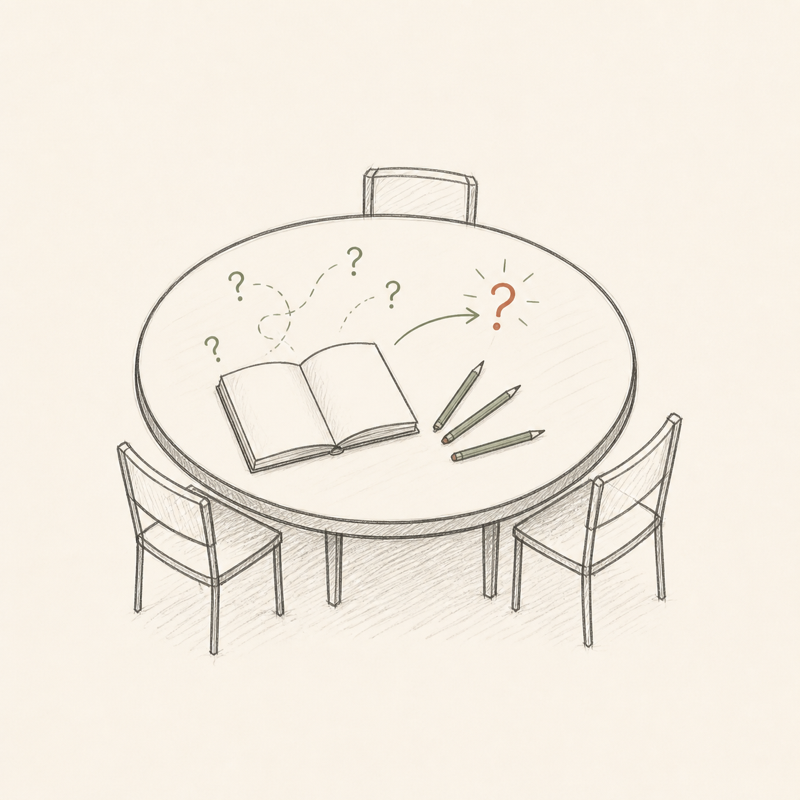
Ask better questions
Turn a vague curiosity into a useful starting question.
 2
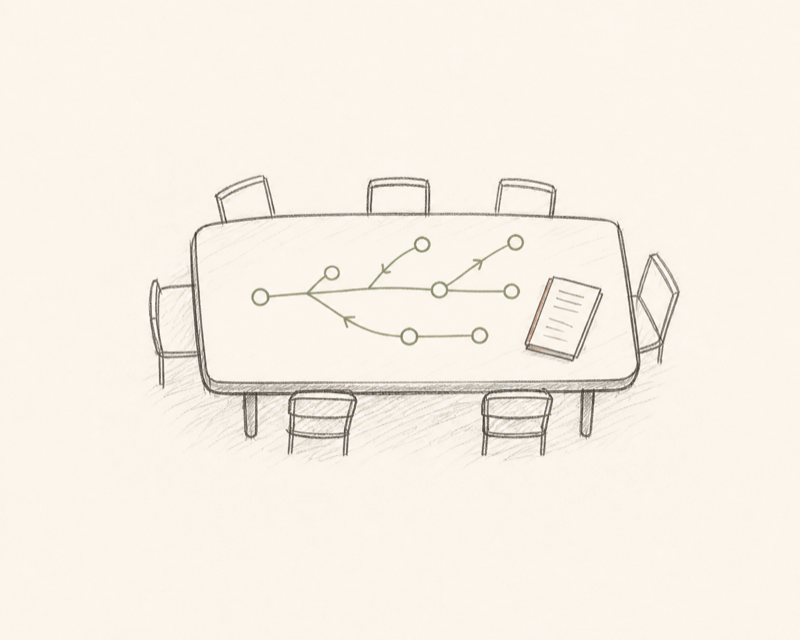
Follow the rabbit hole
Choose one question and intentionally explore several branches.
 3
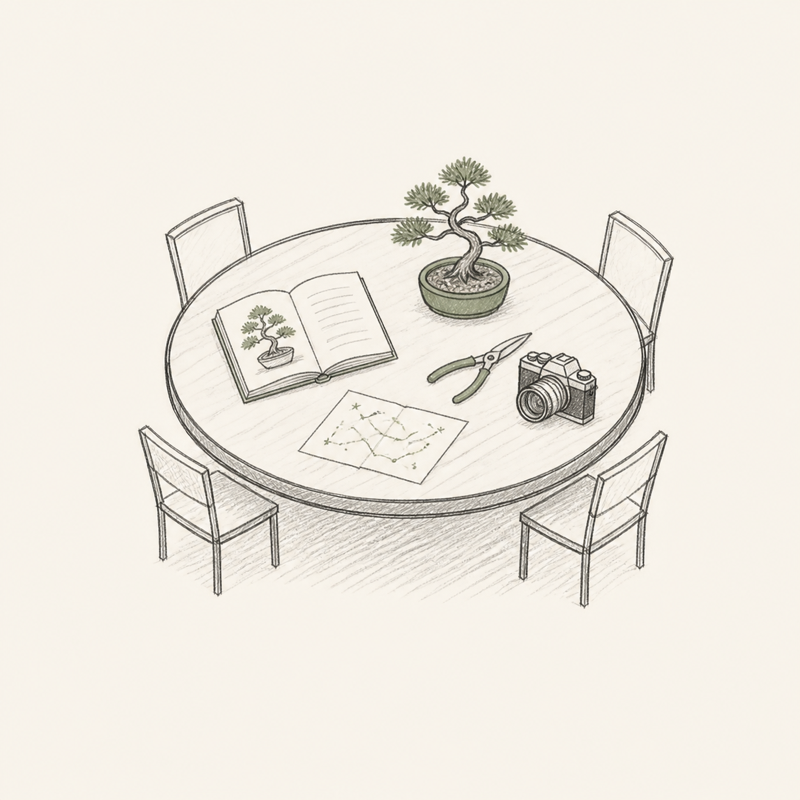
Learn through something you love
Combine two interests: history + cooking, astronomy + photography, statistics + baseball, architecture + travel.
 4
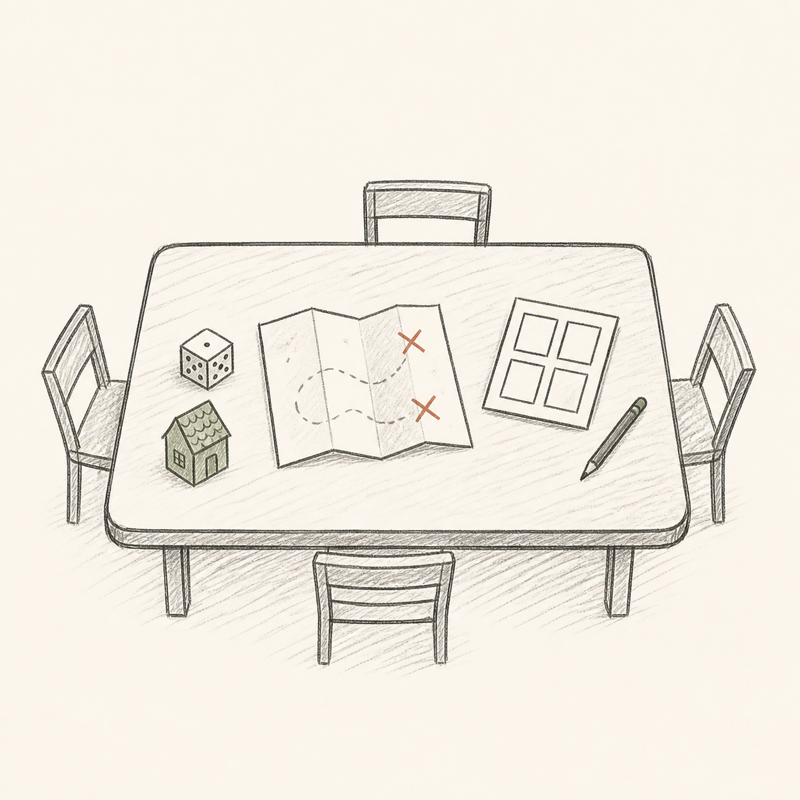
Make a tiny thing
A mini game, map, poem, comic, family timeline, quiz, or visual explanation.
 5
Bring back an old idea
Name what stopped it, which barriers remain, and one tiny experiment to try.
A growing shelf of monthly experiments
We hope to gather monthly. That gives us room to try a few ideas at a time, learn from each evening, and keep adding new possibilities. These are possible spotlights—not a schedule or promise.
Bespoke Stories: From Memory to Story
Explore how permission-cleared interviews and family artifacts might become a short story while people retain responsibility for truth, privacy, voice, and meaning.
See what we might doConstructing the Family Tree
Begin with one relative, one place, and one period; separate family facts, records, historical context, possibilities, and open questions before drawing connections.
See what we might doFrom Scrapbook to Road-Trip Video
Arrange maps, photographs, postcards, notes, and place research into a short narrated journey while keeping sourced history, memory, and creative reconstruction distinct.
See what we might doOne Place, Five Maps
Compare five maps of one place, investigate what changed and what each map omits, then make a sixth map that preserves evidence and uncertainty.
See what we might doWildlife Observation
Organize sightings, photographs, sounds, and field notes to notice patterns and decide what to investigate next.
See what we might doStargazing: The Alignment Detective
Use the Manhattan 1811 thought experiment to see how a real alignment becomes a claim about intent, then take home a method for testing a modern structure against an older sky.
Open the Alignment DetectiveLanguage-Learning Mashups
Pair a language with something you already love—gardening, cooking, music, history, travel, or another interest.
See what we might doStudy Craft: Hunt, Connect, Explain
Turn trusted learning material into a word hunt, grouping challenge, quiz, or visual explanation; check every answer and explain why it belongs.
See what we might doGame Generation: Change One Rule
Add one knowledge mechanic—such as answer-to-claim or answer-to-steal—to a familiar game, build a tiny version, and playtest the rule before expanding it.
See what we might doPop-Culture Data Detective
Turn a show, game, sport, or fandom into a small dataset; investigate patterns and ripple effects while separating correlation from cause.
See what we might doPodcast & Audio Roundtable
Build a short multi-voice episode from a question or source packet; label fiction, verify claims, clear voices and music, and review before sharing.
See what we might doPublic Speaking, Multimodally
Rehearse a short talk using outlines, slides, audio, and video while deciding which feedback is genuinely useful.
See what we might doMotion Rosette: A 3-D Motion Lab
Explore fit, cams, rolling gears, and motion as a staged concept; no physical stage is released until its evidence and safety gates are met.
Explore the illustrated Motion Rosette pathTraffic Optimization Puzzles
Experiment with a small simulated street network, adjust routes or signals, and explore tradeoffs rather than searching for one perfect answer.
See what we might doWhat else might belong here?
Learning without turning the evening into a class
These ideas should emerge from the activities, not become lecture topics.
- question worth asking
- tiny experiment
- evidence and checking
- human choice about sharing
- iterative learning
- conversational AI
- asking better questions
- checking AI answers
- situational awareness
- hallucinations
- experimentation
- friction mapping
- responsible use
- combining interests
- AI as collaborator rather than oracle
Continue the journey
Find the capabilities behind an idea.
The Atlas maps curiosity to tools—and tools back to new curiosities.
Open the Atlas