RS Glossary
Context Collision
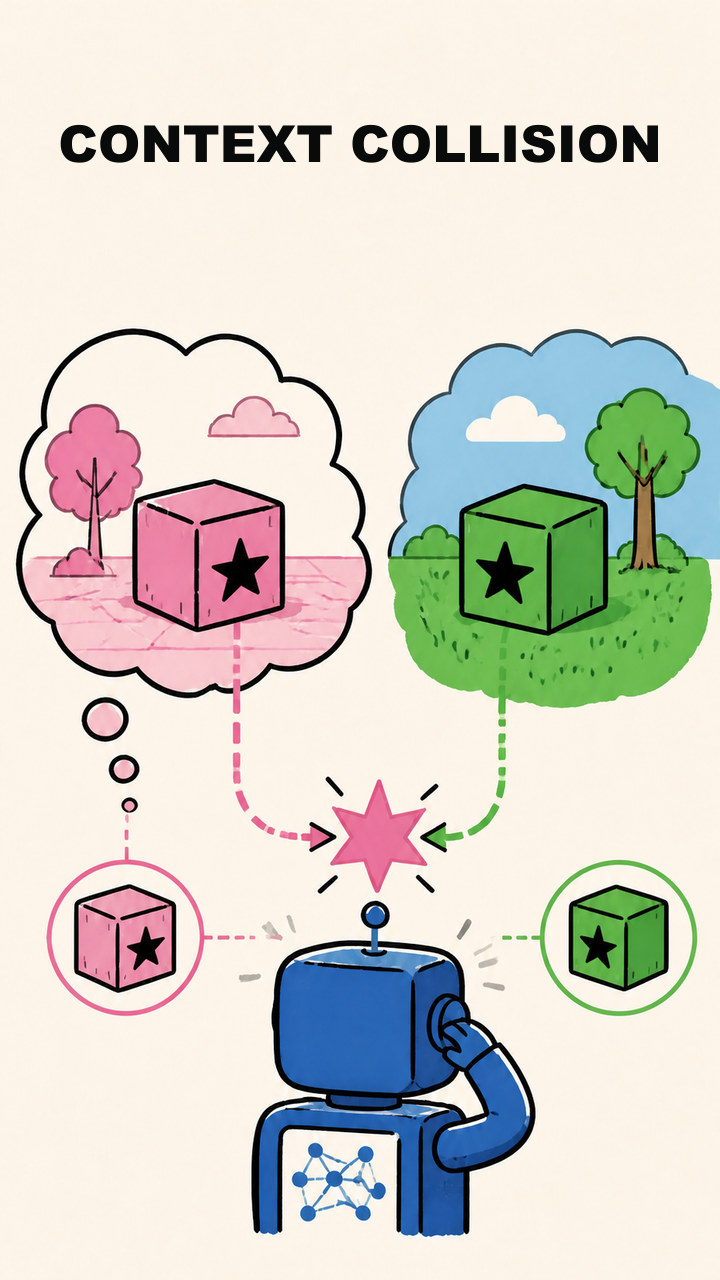
A failure in which a system applies assumptions from a simulated or fictional context to a real external entity that appears to match it.
- Review state
- Reviewed in POC
- Freshness
- Current
- Version
- 2
- Context Collision
Remember it this waySame label, wrong reality.
In plain language
A name, role, identifier, or pattern in a simulation resembles something real. The system then carries fictional assumptions into an external action or judgment.
Why it matters
Matching labels do not establish matching identity. Systems that cross simulation and real-world boundaries need explicit identity checks and action limits.
Example
A training scenario uses a fictional company name that later matches a real supplier, and an automated report attaches simulated risk claims to the real company.
Common misconception
Context collision is not ordinary context drift. It is a categorical collision between simulated or fictional meaning and a real entity that appears to match.
Related terms
Sources
- NASA Software Engineering Handbook, “Requirements Validation”requires validation that software will perform as intended in the customer environment, including nominal and off-nominal conditions. This supports the identity and environment checks behind this Renaissance Solutions term; NASA does not use the label “Context Collision.”
Learn more
- Compare with [[scenario|Scenario]] and [[context-to-reality-drift|Context-to-Reality Drift]].
Public history
24 recorded events · 24 public summaries
A potential shared concept was discussed and selected for initial glossary drafting.
The captured candidate received a complete initial draft and entered section-level human review.
Radar reviewed the initial definition draft for human consideration.
Radar reviewed the initial plain-language-explanation draft for human consideration.
Radar reviewed the initial why-it-matters draft for human consideration.
Radar reviewed the initial example draft for human consideration.
Radar reviewed the initial common-misconception draft for human consideration.
Radar reviewed the initial remember-it-this-way draft for human consideration.
Radar reviewed the initial related-terms draft for human consideration.
Radar reviewed the initial sources draft for human consideration.
Radar reviewed the initial learn-more draft for human consideration.
A proposal was opened for section-level human review while preserving the current version.
A human reviewer opened a proposed revision while preserving the current approved or captured version.
definition approved by a human reviewer.
plain-language-explanation approved by a human reviewer.
why-it-matters approved by a human reviewer.
example approved by a human reviewer.
common-misconception approved by a human reviewer.
remember-it-this-way approved by a human reviewer.
related-terms approved by a human reviewer.
sources approved by a human reviewer.
learn-more approved by a human reviewer.
All section gates are approved; content version 1 is now a fully approved term.
Sources review recorded as approve-proposed.
Source: vault/Glossary/terms/context-collision/term.md · sha256:e0525f271b58303e47708fdfbae7e85b4eb9c44d7a01fe3d0db6d260e3663afb · Release: rs-glossary-glossary-team-poc-0.5.5-2026-09-02