RS Glossary
Tool Use
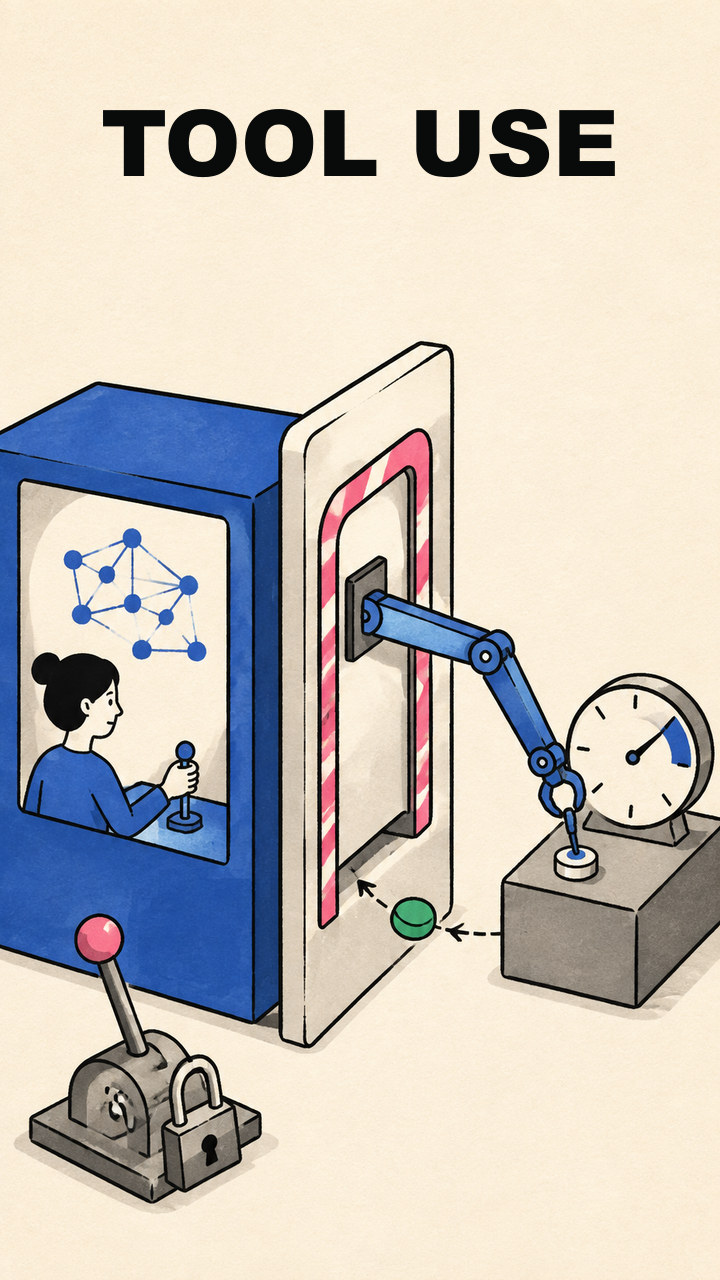
Tool use occurs when a model or agent invokes an external capability and incorporates the result into its work.
- Review state
- Reviewed in POC
- Freshness
- Current
- Version
- 3
- Tool Use
- Tool Calling
Remember it this wayA tool is an external capability; tool use crosses a boundary.
In plain language
Tool use occurs when an AI system invokes an external capability—such as search, a calculator, code execution, or a business API—and incorporates the result into its work.
Why it matters
Tools extend what a model can do and connect it to real systems. They also create authority, security, reliability, and verification questions because a generated request can cause external effects.
Example
An assistant calls a read-only inventory API, checks the returned stock level, and cites the result in its answer. It cannot place an order without a separate approval.
Common misconception
Giving a model a tool does not make it competent or authorized to use that tool in every situation. Selection, permissions, argument validation, and result checking remain necessary.
Related terms
Sources
- Timo Schick and colleagues, “Toolformer: Language Models Can Teach Themselves to Use Tools”studies model decisions about which APIs to call, when to call them, and how to use their results.
Learn more
- Compare [[ai-agent|AI Agent]], [[application-programming-interface|Application Programming Interface]], [[mcp-server|MCP Server]], and [[human-oversight|Human Oversight]] to place Tool Use in the surrounding system.
- Follow the cited source material above for the method, standard, or research context behind this draft.
Public history
24 recorded events · 24 public summaries
A potential shared concept was discussed and selected for initial glossary drafting.
The captured candidate received a complete initial draft and entered section-level human review.
Radar reviewed the initial definition draft for human consideration.
Radar reviewed the initial plain-language-explanation draft for human consideration.
Radar reviewed the initial why-it-matters draft for human consideration.
Radar reviewed the initial example draft for human consideration.
Radar reviewed the initial common-misconception draft for human consideration.
Radar reviewed the initial remember-it-this-way draft for human consideration.
Radar reviewed the initial related-terms draft for human consideration.
Radar reviewed the initial sources draft for human consideration.
Radar reviewed the initial learn-more draft for human consideration.
Definition review recorded as replace.
Radar reviewed Mike's accepted definition replacement for this exact wording version.
Plain-Language Explanation review recorded as approve.
Why It Matters review recorded as approve.
Example review recorded as approve.
Common Misconception review recorded as approve.
Remember It This Way review recorded as approve.
Related Terms review recorded as approve.
Sources review recorded as approve.
Learn More review recorded as approve.
Sources review recorded as replace.
Radar verified the learner-facing sources after personal origin provenance was removed.
All nine current wording approvals were reconciled to Approved term status.
Source: vault/Glossary/terms/tool-use/term.md · sha256:44b16d2bed4c440f579ff34e498e713c443a0eb3ceb90347a382f0f4ebf2322c · Release: rs-glossary-glossary-team-poc-0.5.5-2026-09-02