Kit has returned. The repaired bird chirps as Mara opens the door. Kit reaches towards it, then stops. Mara can hand it back now or invite Kit to try the repair with her.
Your project saves in this browser when saving is available. Check the saving status and keep a download for your own copy.
One story, another way of telling
Go deeper
Optional explorations for your story.
Follow a question that interests you
Your story does not need these exercises to be complete. Explore one when you want to try another possibility or understand why a storytelling choice works.
You can visit at any point, try one idea, and return to your story. There is no checklist to finish here.
Viewpoint: let actions carry meaning
We can let the reader infer a feeling without naming it.
From outside
Before dawn, a child set a brown-paper parcel with no return address outside Mara’s repair shop, then crossed the street and waited.
At nine, Mara carried it to her workbench, while the child waited across the street and pulled both sleeves over small fists.
Mara lifted out a wooden bird with its left wing missing and read a folded note signed Kit: “Can it fly again?”
She held cedar scraps beside the good wing until one grain followed its carved feathers; across the street, Kit stopped pacing.
The next morning, Mara fitted the new wing and wound the small brass key beneath the bird’s tail as Kit edged up to the window.
The bird chirped; Kit pressed both hands to the glass, and Mara opened the door.
Sleeves drawn over fists, stopped pacing, hands on glass, and the open door let the reader supply the feeling.
Stating a feelingKit was nervous.
Giving us something to noticeKit pulled both sleeves over small fists.
The gesture leaves space for interpretation. A reader might sense worry, cold, or hesitation. Add context when a particular meaning matters.
Try it: replace one feeling word in your own draft with an action. Keep the version that says what you mean.
Try another viewpoint — optional
A viewpoint decides whose thoughts the reader can hear, and what that person can see or know. Retell the opening and ending through another character. Your original story stays unchanged.
When saving is available, these notes save with your project. Keep them with Download all project text in the saving information above, or the Go deeper download below.
Framing: what does the picture let us notice?
A wide view can show where a moment happens and who shares the space. A closer view can bring a gesture or object to our attention. Each frame also leaves something outside it.
Try it: imagine the same moment as a wide view and a close view. What becomes clearer? What information disappears? Keep the framing that serves your story.
Keep the pictures connected: reuse character details, a small palette, and one object or shape across the pictures. Let something change: the light, the distance, a gesture, or the state of an object.
Voice: what do pauses and sound invite?
Voice: stress can shift which word carries the question. Try “someone was waiting” with the emphasis on each word in turn.
Silence: a pause gives a listener space to connect an idea. Its meaning depends on context; it need not signal suspense.
Ambient sound: a workshop can suggest a place before anyone names it. Too much detail may compete with the words.
Rhythm and music: repeated sounds can mark time or connect scenes. Their associations vary by listener and culture. Start with what the story needs, and keep silence as an option.
Pacing & order: where does attention go?
Hold the ending: the narrated example leaves the last picture onscreen for four seconds after the audio finishes. That small pause gives the story room to settle. In your own slideshow, try a shorter or longer hold and notice when it feels complete.
Picture order: showing the ending first can turn an outcome into a question: how did we get here? Explore the still pictures below. This is a silent visual comparison; a narrated version would also need its spoken passages rearranged.

A small parcel waits on the doorstep.
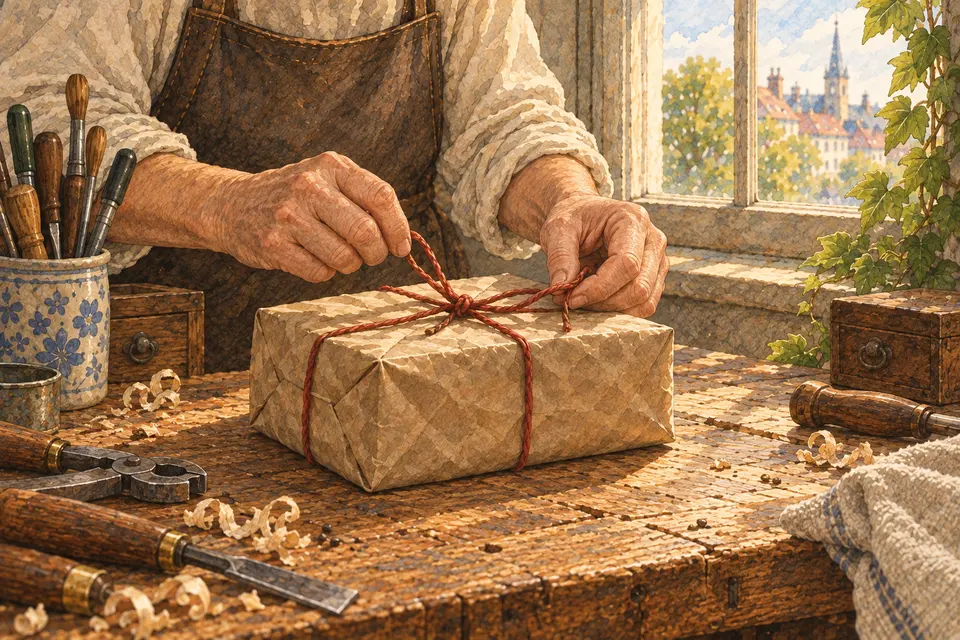
At nine, Mara unties the string.
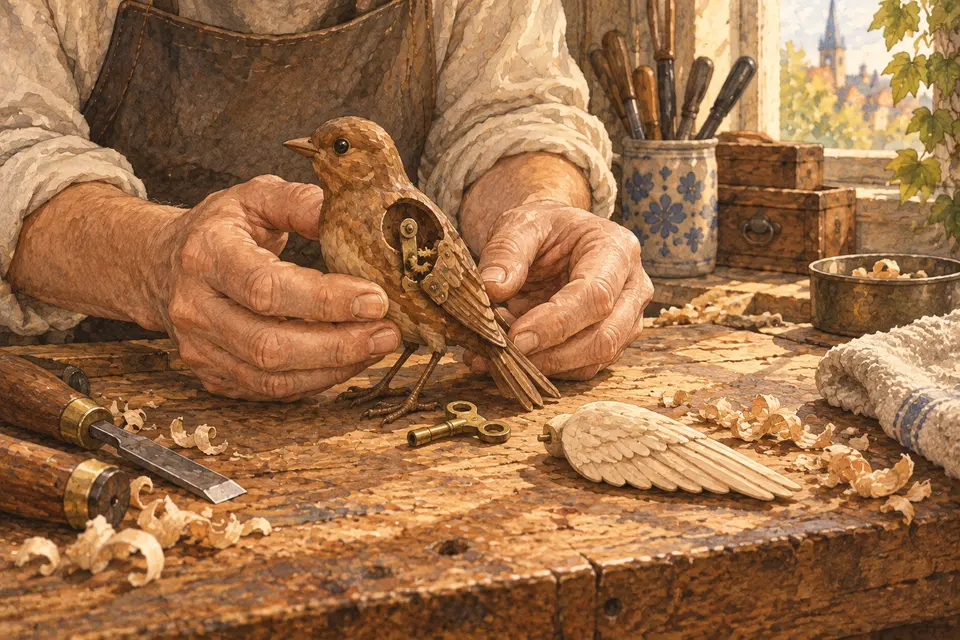
Careful hands mend what is missing.
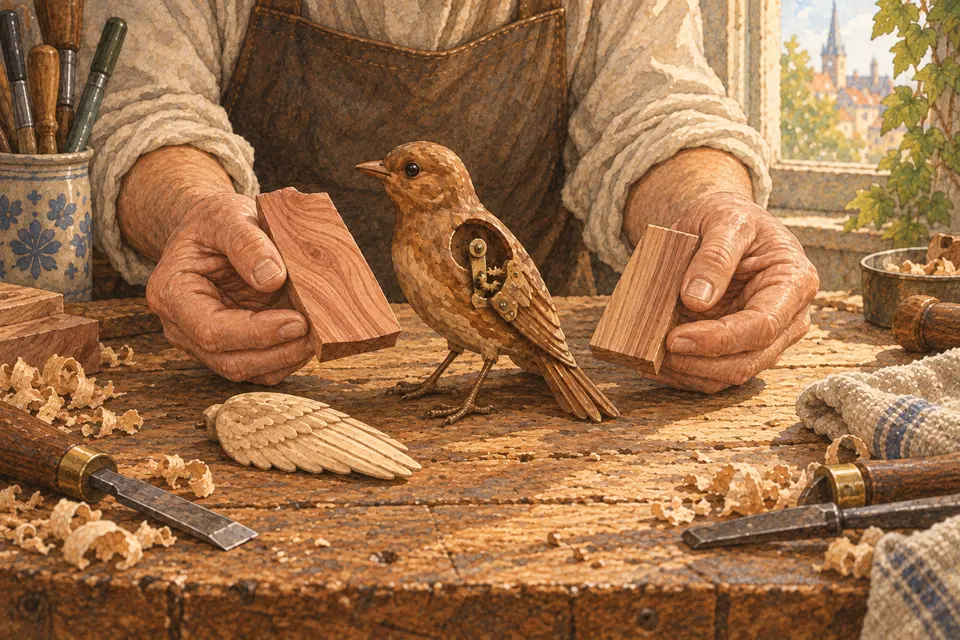
The grain suggests a new wing.
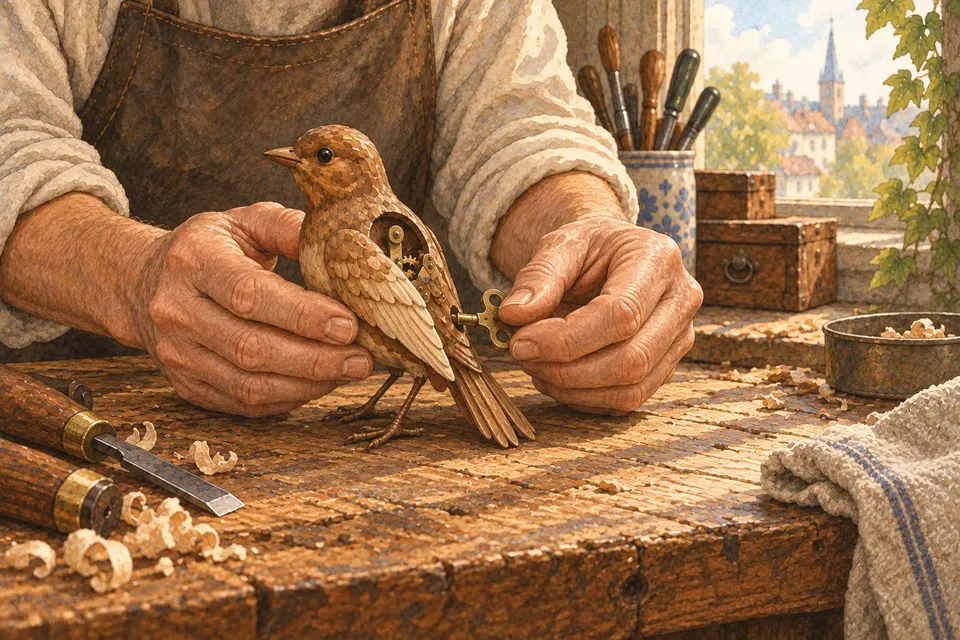
A careful turn brings the bird to life.
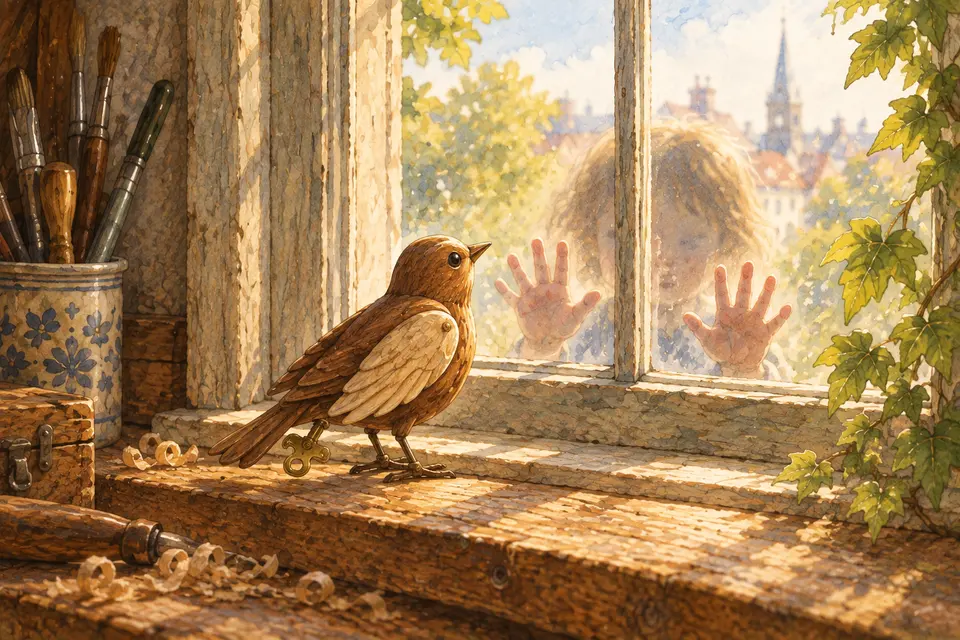
The mended bird meets the light.
Changing this strip does not change the narrated example in Film & Time.
Sound across a picture change: a continuing voice or room sound can connect two images. A pause can separate them. Let the story guide the change, then watch and listen to check it.
Choices & Consequences
Explore another path your story could take.
A different decision can reveal what a character values and what changes for someone else. Try both possibilities to strengthen a linear story, or keep them as an interactive branch. Either way, this is an optional experiment.
Example · A choice in the parcel story
The bird at the window
Two credible actions. Each gives something, and each leaves something unresolved.
What might each response offer Kit? What did you hope would happen? Neither path is the correct answer; each offers a different way to begin a relationship.
Give the reader an informed choice
Agency: a choice matters when the reader can connect an action to a consequence. A label should tell them what they are choosing to do.
Information: readers do not need to know everything, but they need enough to form an intention. A surprise can reveal new information without making their earlier choice meaningless.
Consequences: show a change in a relationship, a resource, or what someone knows. Avoid making one option a disguised test with a single approved answer.
Your turn · Explore a choice in your story
Write a fork in your story
One decision. Two actions a person might choose. Follow each far enough to see what changes.
This is a read-only reference. Changing it keeps your authored branch.
Read the source story
Kit has returned. The repaired bird chirps as Mara opens the door. Kit reaches towards it, then stops. Mara can hand it back now or invite Kit to try the repair with her.
Add a setup, a decision question, and both action labels and consequences to make a playable branch.